Bendamustine Baxter 2.5 mg/ml powder for concentrate for solution for infusion EFG
Spain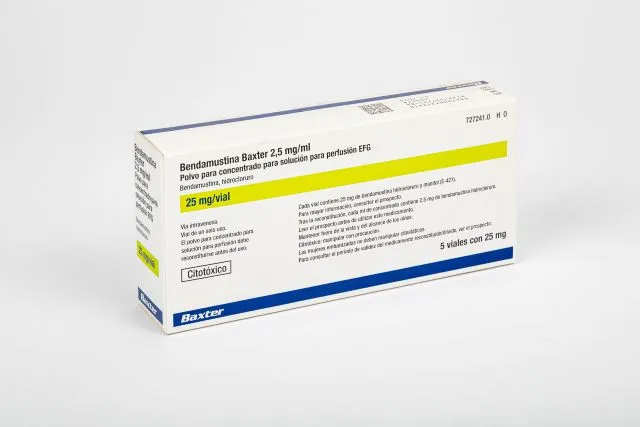
Table of Contents
- Package leaflet: Information for the user
- Introduction
- 1. What Bendamustina Baxter is and what it is used for
- 2. What you need to know before using Bendamustina Baxter
- 3. How to use Bendamustina Baxter
- 4. Possible adverse effects
- 5. Storage of Bendamustina Baxter
- 6. Contents of the pack and other information
Package leaflet: Information for the user
Introduction
Package leaflet: information for the user
Bendamustina Baxter 2.5 mg/ml powder for concentrate for solution for infusion EFG
Bendamustine hydrochloride
Read the entire leaflet carefully before you start using this medicine, because it contains important information for you.
-
Keep this leaflet, as you may need to read it again.
-
If you have any questions, ask your doctor or pharmacist.
-
This medicine has been prescribed for you only, and you should not give it to other people, even if they have the same symptoms as you, because it may harm them.
- If you experience any adverse reactions, consult your doctor or pharmacist, even if they are adverse reactions not listed in this leaflet. See section 4.
Contents of the leaflet
- What Bendamustina Baxter is and what it is used for
- What you need to know before using Bendamustina Baxter
- How to use Bendamustina Baxter
- Possible side effects
- Storage of Bendamustina Baxter
- Contents of the pack and other information
1. What Bendamustina Baxter is and what it is used for
Bendamustina Baxter is a medicine used to treat certain types of cancer (it is a cytotoxic medicine).
Bendamustina Baxter is used alone (monotherapy) or in combination with other medicines to treat the following types of cancer:
- chronic lymphocytic leukemia, if combination chemotherapy with fludarabine is not suitable for you;
- non-Hodgkin's lymphomas that have not responded or have responded only for a short period of time, following previous treatment with rituximab;
- multiple myeloma, if treatments with thalidomide or bortezomib are not suitable for you.
2. What you need to know before using Bendamustina Baxter
Do not use Bendamustina Baxter
- if you are allergic to bendamustine hydrochloride or to any of the other ingredients of this medicine (listed in section 6);
- during breastfeeding; if you require treatment with Bendamustina Baxter while breastfeeding, you must stop breastfeeding (see section “Warnings and precautions” regarding breastfeeding);
- if you have severe hepatic dysfunction (damage to the liver's functional cells);
- if you have yellowing of the skin or whites of the eyes due to liver or blood problems (jaundice);
- if you have severe impairment of bone marrow function (bone marrow suppression) and severe changes in white blood cell and platelet counts;
- if you have undergone major surgery within the previous 30 days before starting treatment;
- if you have had an infection, especially if accompanied by a reduction in white blood cells (leukopenia);
- in combination with yellow fever vaccines.
Warnings and precautions
At any time during or after treatment, immediately inform your doctor if you or someone else notices: memory loss, cognitive difficulties, difficulty walking, or loss of vision. These symptoms may be due to a very rare but serious brain infection that can be fatal (progressive multifocal leukoencephalopathy or PML).
Contact your doctor if you notice any suspicious skin changes, as use of this medicine may increase the risk of certain types of skin cancer (non-melanoma skin cancer).
Consult your doctor, pharmacist, or nurse before starting Bendamustina Baxter:
- if your bone marrow's ability to replace blood cells is reduced. Your white blood cell and platelet counts should be determined before starting bendamustine treatment, before each treatment cycle, and at intervals between cycles;
- if you have infections. If you show signs of infection such as fever or respiratory symptoms, you should contact your doctor;
- if you experience skin reactions during treatment with bendamustine. Reactions may increase in intensity;
- if you develop painful red or purple rashes that spread, or blisters or other lesions beginning to appear on mucous membranes (e.g., mouth and lips), particularly if you have previously had light sensitivity, respiratory tract infections (e.g., bronchitis), and/or fever;
- if you have a heart condition (e.g., heart attack, chest pain, serious heart rhythm disorders);
- if you experience pain on one side or notice blood in your urine or reduced urination. If your condition is very severe, your body may be unable to eliminate waste products from dying cancer cells. This is known as tumor lysis syndrome and may lead to kidney failure and heart problems within 48 hours after the first dose of bendamustine. Your doctor will ensure you are adequately hydrated and will give you other medications to prevent this;
- in case of severe allergic reactions or hypersensitivity. You should be alert for infusion reactions after your first treatment cycle.
Use of Bendamustina Baxter with other medicines
Inform your doctor or pharmacist if you are taking, have recently taken, or might need to take any other medicines.
If bendamustine is used in combination with medicines that suppress bone marrow blood cell formation, the effect on the bone marrow may be intensified.
If bendamustine is used in combination with medicines that affect your immune response, this effect may be intensified.
Cytostatic agents may reduce the effectiveness of live virus vaccines. In addition, cytostatic agents increase the risk of infection following vaccination with live virus vaccines (e.g., viral vaccination).
Bendamustine must not be used with fluvoxamine, ciprofloxacin, aciclovir, or cimetidine due to the possibility of interactions.
Pregnancy, breastfeeding, and fertility
If you are pregnant or breastfeeding, think you may be pregnant, or plan to become pregnant, consult your doctor or pharmacist before using this medicine.
Pregnancy
Bendamustine can cause genetic damage and has caused birth defects in animal studies. It must not be used during pregnancy unless clearly indicated by your doctor. If you receive treatment, you should discuss with your doctor the risk of possible adverse effects of treatment on the fetus. Genetic counseling is recommended.
If you are a woman of childbearing potential, you must use effective contraception before and during treatment with bendamustine. If you become pregnant during treatment with bendamustine, you must inform your doctor immediately and seek genetic counseling.
Breastfeeding
Bendamustine must not be administered during breastfeeding. If you require treatment with bendamustina during breastfeeding, you must stop breastfeeding.
Consult your doctor or pharmacist before using any medicine.
Fertility
Men receiving treatment with bendamustine are advised not to father children during treatment and for 6 months after completion of treatment. Sperm preservation should be discussed before starting treatment due to the possibility of permanent sterility.
Driving and use of machines
The effect of bendamustine on the ability to drive and operate machinery is significant. Do not drive or operate machinery if you experience adverse effects such as drowsiness, lack of coordination, or peripheral nervous system disorders.
3. How to use Bendamustina Baxter
Follow exactly the administration instructions for this medicine given by your doctor or pharmacist. If in doubt, consult your doctor or pharmacist again.
Bendamustina Baxter is administered intravenously over 30 to 60 minutes at various doses, either alone (monotherapy) or in combination with other medicines.
You must not start treatment if the number of white blood cells (leukocytes) and/or platelets falls below certain levels.
Your doctor will periodically determine these values.
Chronic lymphocytic leukemia
Bendamustina Baxter 100 mg per square meter of body surface area (calculated based on weight and height) on days 1 and 2.
This cycle will be repeated every 4 weeks, up to 6 times.
Non-Hodgkin's lymphomas
Bendamustina Baxter 120 mg per square meter of body surface area (calculated based on weight and height) on days 1 and 2.
This cycle will be repeated every 3 weeks for at least 6 cycles.
Multiple myeloma
Bendamustina Baxter 120–150 mg per square meter of body surface area (calculated based on weight and height) on days 1 and 2.
Prednisone 60 mg per square meter of body surface area (calculated based on weight and height) on days 1 and 2 administered intravenously or orally on days 1 to 4.
This cycle will be repeated every 4 weeks for at least 3 cycles.
Treatment must be interrupted if the number of white blood cells (leukocytes) and/or platelets falls below certain levels. Treatment may be resumed when the number of white blood cells and platelets has increased.
Renal or hepatic impairment
Depending on the degree of hepatic impairment, dose adjustment may be necessary (a 30% reduction in case of moderate hepatic impairment). Dose adjustment is not necessary in cases of renal impairment. Your doctor will decide whether dose adjustment is required.
How it is administered
Bendamustina Baxter should only be administered by physicians experienced in the treatment of tumors. Your doctor will administer the exact dose of Bendamustina Baxter and take the necessary precautions.
Your doctor will administer the infusion solution after its proper preparation. The solution is administered intravenously as a short infusion over 30 to 60 minutes.
Duration of treatment
A specific duration of treatment with Bendamustina Baxter has not been defined. The duration of treatment depends on the disease and the response to treatment.
If you have any concerns or questions about treatment with Bendamustina Baxter, speak with your doctor or nurse.
Use in children and adolescents
The safety and efficacy of bendamustine hydrochloride in children have not yet been established. Currently available data are insufficient to make a dosing recommendation.
If you forget to use Bendamustina Baxter
If you miss a dose of Bendamustina Baxter, your doctor will usually continue with the normal dosing schedule.
If you stop treatment with Bendamustina Baxter
Your treating physician will decide whether to discontinue treatment or switch you to a different preparation.
If you have any further questions about using this medicine, ask your doctor or pharmacist.
4. Possible adverse effects
Like all medicines, this medicine can cause adverse effects, although not everyone will experience them.
Some of the manifestations listed below may be observed following tests performed by your doctor.
In very rare cases, tissue damage (necrosis) has been observed following extravasation of bendamustine into the surrounding tissue outside blood vessels (extravascular). If the medicine leaks out of a blood vessel, there may be a burning sensation at the site of needle insertion. Consequences may include pain and poorly healing skin lesions.
The dose-limiting adverse effect of bendamustine is bone marrow failure, which usually resolves after treatment. Suppression of bone marrow function may lead to a reduction in blood cell counts, which in turn may increase the risk of infection, anaemia, or bleeding.
Very common (may affect more than 1 in 10 people)
- Infections.
- Decrease in the number of white blood cells (blood cells that fight disease).
- Decrease in the number of platelets (colourless blood cells that help blood clotting).
- Nausea.
- Vomiting.
- Inflammation of mucous membranes.
- Fatigue.
- Fever.
- Decrease in red blood pigment (haemoglobin: a protein in red blood cells that carries oxygen throughout the body).
- Increased creatinine levels (a chemical waste product produced by your muscles) in blood.
- Increased urea levels (a chemical waste product) in blood.
- Headache.
Common (may affect up to 1 in 10 people)
- Metabolic disturbances caused by dying cancer cells releasing their contents into the bloodstream (tumour lysis syndrome).
- Bleeding (haemorrhage).
- Decrease in red blood cells, which may cause pale skin and lead to weakness or difficulty breathing (anaemia).
- Decrease in neutrophils (a common type of white blood cell necessary to fight infections).
- Hypersensitivity reactions, such as allergic skin inflammation (dermatitis) or hives (urticaria).
- Insomnia.
- Impaired cardiac function (e.g., angina).
- Changes in heart rhythm (arrhythmia).
- Low or high blood pressure (hypotension or hypertension).
- Impaired lung function.
- Diarrhoea.
- Constipation.
- Mouth ulcers (stomatitis).
- Hair loss.
- Skin changes.
- Absence of menstruation (amenorrhoea).
- Pain.
- Chills.
- Dehydration.
- Dizziness.
- Itchy rash (urticaria).
- Loss of appetite.
- Increased liver enzymes AST/ALT (may indicate inflammation or damage to liver cells).
- Increased alkaline phosphatase enzyme (an enzyme produced mainly in the liver and bones).
- Increased bile pigment (a substance produced during normal breakdown of red blood cells).
- Low potassium levels (a nutrient necessary for nerve and muscle cell function, including in the heart) in blood.
Uncommon (may affect up to 1 in 100 people)
- Fluid accumulation in the sac surrounding the heart (fluid leakage into the pericardial space).
- Ineffective production of blood cells in the bone marrow (spongy material inside bones where blood cells are formed).
- Acute leukaemia.
- Heart attack, chest pain (myocardial infarction).
- Heart failure.
Rare (may affect up to 1 in 1,000 people)
- Blood infection (sepsis).
- Severe allergic and hypersensitivity reactions (anaphylactic reactions).
- Symptoms similar to anaphylactic reactions (anaphylactoid reactions).
- Decreased bone marrow function, which may make you feel unwell or show up in blood tests.
- Drowsiness.
- Loss of voice (aphonia).
- Acute circulatory failure (failure of blood circulation, primarily of cardiac origin, with inability to maintain oxygen and other nutrients to tissues and removal of toxins).
- Redness of the skin (erythema).
- Skin inflammation (dermatitis).
- Itching (pruritus).
- Skin rash (macular exanthem).
- Excessive sweating (hyperhidrosis).
Very rare (may affect up to 1 in 10,000 people)
- Primary atypical inflammation of the lungs (pneumonia).
- Breakdown of red blood cells in the blood.
- Rapid drop in blood pressure, sometimes with skin reactions or rashes (anaphylactic shock).
- Altered sense of taste.
- Altered sensation (paraesthesia).
- Discomfort and pain in the limbs (peripheral neuropathy).
- Serious condition causing blockage of specific receptors in the nervous system.
- Disorders of the nervous system.
- Lack of coordination (ataxia).
- Inflammation of the brain (encephalitis).
- Increased heart rate (tachycardia).
- Inflammation of veins (phlebitis).
- Formation of tissue in the lungs (lung fibrosis).
- Haemorrhagic inflammation of the throat (haemorrhagic oesophagitis).
- Gastric or intestinal bleeding.
- Infertility.
- Multi-organ failure.
Frequency not known (cannot be estimated from available data)
- Liver failure.
- Kidney failure.
- Irregular and often rapid heart rate (atrial fibrillation).
- Painful red or purple rashes that spread and blister or other lesions starting in mucous membranes (e.g., mouth and lips), particularly if you previously had light sensitivity, respiratory tract infections (e.g., bronchitis), and/or fever.
- Drug rash during combination therapy with rituximab.
- Pneumonitis.
- Bleeding from the lungs.
Cases of tumours (myelodysplastic syndromes, acute myeloid leukaemia, bronchial carcinoma) have been reported after treatment with bendamustine. A clear relationship with bendamustine could not be established.
Consult your doctor or seek immediate medical attention if you experience any of the following adverse effects (frequency not known):
Severe skin rashes including Stevens-Johnson syndrome and toxic epidermal necrolysis. These may appear as macules or circular red spots, often with central blisters on the trunk, skin peeling, mouth, throat, nose, genital and eye ulcers, and may be preceded by fever and flu-like symptoms.
Widespread rash, high body temperature, swollen lymph nodes, and involvement of other body organs (drug reaction with eosinophilia and systemic symptoms, also known as DRESS or drug hypersensitivity syndrome).
If you consider any of the adverse effects you experience to be severe, or if you notice any adverse effects not listed in this leaflet, inform your doctor.
Reporting of adverse effects
If you experience any type of adverse effect, talk to your doctor, pharmacist, or nurse, even if it is a possible adverse effect not listed in this leaflet. You may also report them directly via the national reporting system: Spanish Pharmacovigilance System for Human Medicines: www.notificaRAM.es
By reporting adverse effects, you can help provide more information on the safety of this medicine.
5. Storage of Bendamustina Baxter
Keep this medicine out of the sight and reach of children.
Do not use this medicine after the expiry date stated on the label and the carton after EXP. The expiry date refers to the last day of the month indicated.
No special storage conditions are required.
Note on the shelf life after opening or preparation of the solution
Infusion solutions prepared according to the above-mentioned guidelines are stable in Viaflo bags made of polypropylene, polyamide, and polyethylene for 3.5 hours at room temperature and for 2 days if stored in a refrigerator. Bendamustina Baxter does not contain preservatives. From a microbiological standpoint, the medicine should be used immediately. Otherwise, the storage times and conditions prior to use are the responsibility of the user and should normally not exceed 24 hours at a temperature between 2 and 8°C, unless reconstitution/dilution (etc.) has taken place under controlled and validated aseptic conditions. Once these time limits have been exceeded, the solutions must not be used.
It is the user's responsibility to maintain aseptic conditions.
Medicines must not be disposed of via wastewater or household waste. Ask your pharmacist how to dispose of medicines and packaging that you no longer need. This will help protect the environment.
6. Contents of the pack and other information
Composition of Bendamustina Baxter
- The active substance is bendamustine hydrochloride.
Each vial contains 25 mg of bendamustine hydrochloride.
Each vial contains 100 mg of bendamustine hydrochloride.
After reconstitution, each ml of concentrate contains 2.5 mg of bendamustine hydrochloride.
- The other component is mannitol.
Appearance of the product and contents of the pack
Amber-colored glass vials with grey-dark rubber stoppers made of bromobutyl rubber and an overcap of aluminum.
The powder is white to off-white in appearance and is lyophilized.
Bendamustina Baxter is marketed in packs containing:
1, 5, 10 and 20 vials of 20 ml with 25 mg of bendamustine hydrochloride, and 1 and 5 vials of 50 ml with 100 mg of bendamustine hydrochloride.
Only certain pack sizes may be commercially available.
Marketing Authorization Holder and Manufacturer
Marketing Authorization Holder
Baxter, S.L.
Pouet de Camilo, 2
46394 Ribarroja del Turia (Valencia)
Spain
Manufacturer
Baxter Oncology GmbH
Kantstrasse 2
33790 Halle/Westfalen
Germany
This medicinal product is authorized in the Member States of the European Economic Area under the following names:
Germany: Bendamustin Baxter 2,5 mg/ml Pulver für ein Konzentrat zur Herstellung einer Infusionslösung
Spain: Bendamustina Baxter 2,5 mg/ml powder for concentrate for solution for infusion EFG
France: Bendamustine Baxter 2.5 mg/ml poudre pour solution à diluer pour perfusion
Netherlands: Bendamustine Baxter 2,5 mg/ml poeder voor concentraat voor oplossing voor infusie
United Kingdom: Bendamustine hydrochloride 2,5 mg/ml Powder for concentrate for solution for infusion
Date of the most recent review of this leaflet: December 2020
This information is intended for healthcare professionals only:
As with all similar cytotoxic agents, nursing staff and physicians must take extreme safety precautions due to the potential genotoxic and carcinogenic properties of this preparation. Avoid inhalation and contact with skin and mucous membranes when handling Bendamustina Baxter (wear gloves, protective clothing, and, if possible, a mask). If any part of the body becomes contaminated, wash carefully with water and soap, and rinse eyes with 9 mg/ml sodium chloride (0.9%) (isotonic) injectable solution. Whenever possible, it is recommended to work on a special safety cabinet (laminar flow hood) using a liquid-proof disposable absorbent pad. Contaminated materials are cytostatic waste. Please follow national regulations regarding the disposal of cytostatic material. Pregnant women should not handle cytostatics.
The ready-to-use solution should be prepared by dissolving the contents of one vial of Bendamustina Baxter exclusively in water for injections, as follows:
-
Preparation of the concentrate
- First, dissolve one vial of Bendamustina Baxter containing 25 mg of bendamustine hydrochloride in 10 ml, by gentle agitation.
- First, dissolve one vial of Bendamustina Baxter containing 100 mg of bendamustine hydrochloride in 40 ml, by gentle agitation.
-
Preparation of the infusion solution
Immediately after obtaining a clear solution (usually within 5 to 10 minutes), the recommended total dose of Bendamustina Baxter should be diluted immediately with 9 mg/ml sodium chloride (0.9%) (isotonic) injectable solution to achieve a final volume of approximately 500 ml. Bendamustina Baxter must not be diluted with other infusion or injectable solutions. Bendamustina Baxter must not be mixed in the same infusion with other substances.
- Administration
The solution is administered by intravenous infusion over 30–60 minutes.
The vials are for single use only.
Disposal of unused medication and of all materials that have come into contact with it must be carried out in accordance with local regulations.
If the product is inadvertently injected into the tissue surrounding blood vessels (extravasation), the infusion must be stopped immediately. The needle should be withdrawn after brief aspiration. The affected tissue area should then be cooled and the arm elevated. It is unclear whether additional treatments (such as corticosteroids) are beneficial (see section 4).
Note on shelf life after opening or preparation of the solution
Infusion solutions prepared according to the above guidelines are stable in Viaflo bags made of polypropylene, polyamide and polyethylene for 3.5 hours at room temperature and 60% relative humidity, and for 2 days if stored in a refrigerator. Bendamustina Baxter does not contain preservatives. From a microbiological standpoint, the product should be used immediately. Otherwise, the storage conditions and times prior to use are the responsibility of the user and should normally not exceed 24 hours at a temperature between 2 and 8°C, unless reconstitution/dilution (etc.) has taken place under controlled, validated aseptic conditions. Once these time limits have been exceeded, the solutions must not be used.