Beloken 1 mg/ml solution for injection
SpainTable of Contents
- Package leaflet: Information for the user
- Introduction
- 1. What Beloken 1 mg/ml is and what it is used for
- 2. What you need to know before using Beloken 1 mg/ml
- ***Do not use Beloken 1 mg/ml***
- 3. How Beloken 1 mg/ml will be administered
- 4. Possible adverse effects
- 5. Storage of Beloken 1 mg/ml
- 6. Contents of the pack and other information
Package leaflet: Information for the user
Introduction
Package leaflet: information for the patient
Beloken 1 mg/ml injectable solution
metoprolol tartrate
Read the entire leaflet carefully before you are administered this medicine, because it contains important information for you.
- Keep this leaflet, as you may need to read it again.
- If you have any questions, ask your doctor or pharmacist.
- This medicine has been prescribed for you only, and you should not give it to other people, even if they have the same symptoms as you, because it could harm them.
- If you experience any adverse effects, consult your doctor or pharmacist, even if they are adverse effects not listed in this leaflet. See section 4.
Leaflet contents
- What Beloken 1 mg/ml is and what it is used for
- What you need to know before being administered Beloken 1 mg/ml
- How Beloken 1 mg/ml is administered
- Possible side effects
- Storage of Beloken 1 mg/ml
Pack contents and other information
1. What Beloken 1 mg/ml is and what it is used for
The active substance is metoprolol tartrate, which belongs to a group of medicines called beta-blockers. These medicines reduce the effect of stress-related hormones on certain parts of the body. Thus, metoprolol is able to act on blood vessels and the heart, reducing blood pressure and heart rate.
This medicine is used in adults for the treatment of:
- Heart rhythm disorders, especially rapid heartbeats (supraventricular tachycardia).
- Treatment of hemodynamically stable patients with definite or suspected acute myocardial infarction. (Early intervention in the acute phase, prior to oral therapy).
2. What you need to know before using Beloken 1 mg/ml
Do not use Beloken 1 mg/ml
- if you are allergic to metoprolol or to any of the other components of this medicine (listed in section 6).
- if you have uncompensated heart failure, heart block (a cardiac conduction disorder), or acute myocardial infarction.
- if you have ever experienced very slow or very irregular heartbeats or circulatory failure.
The use of Beloken 1 mg/ml is not recommended in children.
Warnings and precautions
Consult your doctor or pharmacist before starting to use Beloken:
- if you have signs/symptoms of low blood sugar levels (hypoglycemia).
- if you have health conditions such as asthma or breathing difficulties, circulatory disorders, or heart, kidney, or thyroid problems.
- if, during treatment with this medicine, your heart rate becomes progressively slower.
- if you have ever been diagnosed with pheochromocytoma (a tumor of the adrenal glands).
- if you have very low blood pressure or severely impaired blood circulation.
- if you have uncontrolled heart failure.
- if you are allergic to insect stings, food, or other substances.
Inform your doctor about any health problems you have had in the past.
If you are an athlete, be aware that this medicine contains a component that may result in a positive analytical finding in doping controls.
If you have not informed your doctor about any of the above conditions or if you have any doubts, consult your doctor or pharmacist before starting treatment with this medicine.
Use of Beloken 1 mg/ml with other medicines
Tell your doctor or pharmacist if you are taking, have recently taken, or might need to take any other medicines. Some medicines may affect the action of other medicines.
In particular, inform your doctor if you are taking any of the following medicines, as dose adjustments may be necessary:
- Medicines used in heart and blood vessel treatments (such as digitalis/digoxin, calcium channel blockers (verapamil or diltiazem), antiarrhythmic agents (quinidine or amiodarone), sympathetic ganglion blockers, hydralazine, clonidine).
- Other drugs such as monoamine oxidase inhibitors (MAOIs), inhaled anesthetics, antibiotics (rifampicin), antiulcer drugs (cimetidine), non-steroidal anti-inflammatory drugs (e.g., indomethacin, celecoxib), certain antidepressants and antipsychotics, antihistamines, other beta-blockers (e.g., eye drops, medicines for asthma treatment), and other substances (e.g., alcohol, certain hormones such as adrenaline), or oral antidiabetic agents.
Please consider the following:
-
If you are taking clonidine and Beloken 1 mg/ml together and need to discontinue clonidine, you must stop taking metoprolol several days before stopping clonidine.
-
If you are taking oral antidiabetic agents, your doctor may need to adjust the dose.
-
Blood levels of this medicine may be increased when taken concomitantly with antiarrhythmics, antihistamines, antidepressants, antipsychotics, non-steroidal anti-inflammatory drugs, alcohol, or hydralazine.
-
Blood levels of this medicine may be decreased by rifampicin.
-
Concomitant administration of this medicine with antiarrhythmic drugs (quinidine or amiodarone) increases the effect of these drugs.
-
The effects of this medicine may be enhanced when administered together with calcium channel blockers (verapamil or diltiazem). Concomitant use of these medicines should be avoided.
-
The effects of this medicine may be reduced when administered together with adrenaline or indomethacin.
Taking Beloken 1 mg/ml with alcohol
Consumption of alcohol may increase metoprolol blood levels, thereby enhancing the medicine's effect. Avoid taking alcohol with this medicine.
Pregnancy and breastfeeding
If you are pregnant or breastfeeding, think you may be pregnant, or are planning to become pregnant, consult your doctor or pharmacist before receiving this medicine.
Beta-blockers, including metoprolol, may harm the fetus and cause premature delivery.
Inform your doctor if you are breastfeeding, as Beloken 1 mg/ml may cause adverse effects in the infant, such as slowing of the heart rate.
Driving and use of machines
Some patients may feel tired or dizzy when taking Beloken. If this happens to you, do not drive or operate tools or machinery.
Beloken 1 mg/ml contains sodium
This medicine contains less than 23 mg of sodium (1 mmol) per 5 ml of injectable solution (one ampoule); hence, it is essentially "sodium-free".
3. How Beloken 1 mg/ml will be administered
Intravenous metoprolol injection is used in acute situations where a rapid onset of action is required and should only be administered by experienced personnel who can provide further information.
Your doctor will determine the duration of treatment with this medicine. Do not stop treatment unless instructed by your doctor.
Treatment of hemodynamically stable patients with definite or suspected acute myocardial infarction (early intervention in the acute phase, prior to oral therapy): During the acute phase and as soon as possible after the patient's arrival at the hospital, 5 mg of metoprolol will be administered intravenously as a bolus. A second and third 5 mg intravenous injection will be repeated at 2-minute intervals, depending on the patient's hemodynamic status. (See "Before using Beloken 1 mg/ml.")
Patients who have tolerated the total intravenous dose of 15 mg will receive, 15 minutes after the last injection, 50 mg metoprolol succinate or tartrate tablets four times daily for 48 hours.
For patients who do not tolerate the total intravenous dose of 15 mg, oral treatment should be initiated cautiously, starting with a lower dose.
Cardiac rhythm disturbances, particularly especially rapid heartbeats (supraventricular tachycardia): Initially up to 5 mg administered intravenously at a rate of 1–2 mg/min. This dose may be repeated at 5-minute intervals until the desired effect is achieved. A total dose of 10–15 mg generally achieves this effect.
Doses of 20 mg or more are unnecessary, as they do not provide additional therapeutic benefit.
Use in children and adolescents
Not recommended due to limited experience with Beloken in children and adolescents.
Use in elderly patients
Dosage adjustment of this medicine is not required in elderly patients.
If you feel that the effect of this medicine is too strong or too weak, inform your doctor, healthcare professional, or pharmacist.
If you are given more Beloken 1 mg/ml than you should
If you think you have been given too much Beloken 1 mg/ml, consult your doctor or pharmacist immediately.
If a dose of this medicine higher than recommended is taken and is sufficiently high, you may experience poisoning with one or more of the following symptoms: slow or irregular heartbeat, difficulty breathing, swollen ankles, palpitations, fainting, dizziness, chest pain, cold skin, weak pulse, mental confusion, anxiety, cardiac arrest, partial or complete loss of consciousness (or even coma), nausea, vomiting, bluish skin discoloration, or hypotension (low blood pressure).
The first signs of overdose may appear between 20 minutes and 2 hours after drug administration. If you experience any of these symptoms, contact your doctor, pharmacist, or nearest hospital immediately.
If alcohol, antihypertensive drugs, quinidine, or sedatives (barbiturates) are taken concomitantly with metoprolol, symptoms may worsen.
Treatment:
In cases of severe hypotension and shock, plasma or plasma substitutes will be administered, and you will be kept under observation in the intensive care unit.
If the heart rate is excessively slow or irregular, intravenous atropine and/or a pacemaker may be used. If necessary, glucagon and/or dobutamine may also be administered, and calcium ions may be considered.
Bronchospasm can be reversed with a bronchodilator. For further information, see the Summary of Product Characteristics.
4. Possible adverse effects
Like all medicines, this medicine can cause adverse effects, although not everyone will experience them.
Beloken 1 mg/ml is well tolerated and any undesirable effects that may occur are generally mild and disappear when treatment is stopped.
The following adverse effects have been reported in patients treated with metoprolol, although the relationship with metoprolol treatment has not been established in all cases. If you experience any of the adverse reactions listed below persistently, inform your doctor.
Very common (may affect more than 1 in 10 people):
- fatigue.
Common (may affect up to 1 in 10 people):
- dizziness, headache,
- slowing of the heart rate, dizziness upon changing position (very rarely with loss of consciousness), cold hands and feet, palpitations,
- nausea, abdominal pain, diarrhoea, constipation,
- sensation of breathlessness during exertion.
Uncommon (may affect up to 1 in 100 people):
- sensation of warmth/tingling/numbness, muscle cramps,
- symptoms of heart disease such as breathlessness, fatigue and swelling of the ankles may worsen temporarily,
- during a heart attack, blood pressure may drop excessively (cardiogenic shock), minor changes in the electrocardiogram without affecting heart function, swelling, chest pain,
- depression, difficulty concentrating, drowsiness, insomnia, nightmares,
- skin rash, increased sweating,
- sensation of tightness in the airways,
- vomiting,
- weight gain.
Rare (may affect up to 1 in 1,000 people):
- disturbances in cardiac conduction on electrocardiogram, irregular heartbeats,
- restlessness, anxiety,
- liver problems (abnormalities in liver function tests),
- hair loss,
- runny nose due to allergic reaction,
- vision disorders, dryness and/or irritation of eyes,
- dry mouth, tearing or eye irritation due to allergic reaction,
- impotence/sexual dysfunction.
Very rare (may affect up to 1 in 10,000 people):
- worsening of circulatory problems in the limbs in patients with severe circulatory disorders,
- joint pain,
- memory loss or impairment, confusion, hallucinations,
- skin reaction due to increased sensitivity to sunlight, worsening of psoriasis,
- tinnitus,
- taste disturbances,
- blood disorders (reduction in the number of platelets in the blood),
- hepatitis.
Reporting of adverse effects
If you experience any type of adverse effect, consult your doctor, pharmacist or nurse, even if it is a possible adverse effect not listed in this leaflet. You may also report them directly via the Spanish Pharmacovigilance System for Human Medicines: https://www.notificaram.es. By reporting adverse effects, you can help provide more information on the safety of this medicine.
5. Storage of Beloken 1 mg/ml
Keep this medicine out of the sight and reach of children.
Do not use this medicine after the expiry date stated on the container, after EXP. The expiry date refers to the last day of the month indicated.
Do not store above 25°C.
Keep the ampoules in the original packaging until the time of use.
6. Contents of the pack and other information
Composition of Beloken 1 mg/ml
-
The active substance is metoprolol tartrate 5 mg.
-
The other components (excipients) are: sodium chloride, water for injections, q.s. 5 ml.
Appearance of the product and contents of the pack
Beloken 1 mg/ml is supplied in a pack of 5 glass ampoules containing 5 mg (1 mg/ml).
Marketing Authorization Holder and Manufacturer
Marketing Authorization Holder:
Recordati Industria Chimica e Farmaceutica S.p.A.
Via Matteo Civitali, 1
20148 Milano
Italy
Manufacturer:
Cenexi
52 Rue Marcel et Jacques Gaucher
94120 Fontenay Sous Bois
France
or
CIT S.r.l.
Via Primo Villa, 17
20875 Burago di Molgora (MB)
Italy
For further information about this medicinal product, please contact the local representative of the Marketing Authorization Holder:
Casen Recordati, S.L.
Autovía de Logroño, km 13.300
50180 Utebo - Zaragoza
Spain
Date of most recent review of this leaflet: January 2021
This information is intended for healthcare professionals only:
DIRECTIONS FOR USE
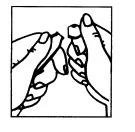
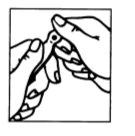
Figure 1 Figure 2
- The ampoule has a mark below the blue dot (Figure 1).
- Place your thumb on the blue dot and break the ampoule at the neck (Figure 2).
Detailed and up-to-date information on this medicinal product is available on the website of the Spanish Agency of Medicines and Health Products (AEMPS) http://www.aemps.gob.es/