Belmazol 20 mg gastro-resistant hard capsules
Spain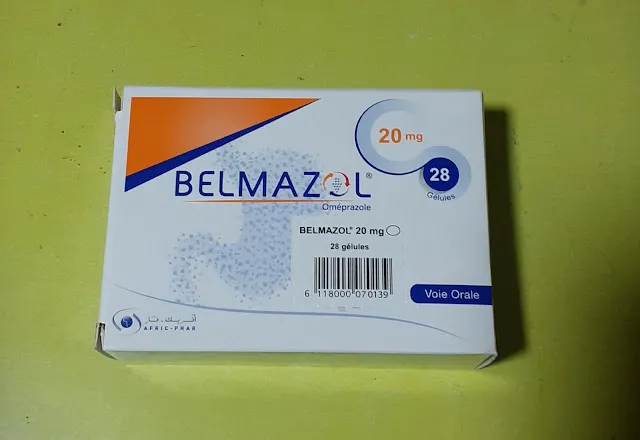
Table of Contents
Package leaflet: Information for the user
Introduction
Package leaflet: information for the user
Belmazol 20 mg gastro-resistant hard capsules
Omeprazole
Read the entire leaflet carefully before you start taking this medicine, as it contains important information for you.
- Keep this leaflet, as you may need to read it again. If you have any questions, ask your doctor or pharmacist.
- This medicine has been prescribed for you only, and you should not give it to other people, even if they have the same symptoms as you, because it may harm them.
- If you experience any adverse effects, consult your doctor or pharmacist, even if they are adverse effects not listed in this leaflet. See section 4.
Contents of the leaflet
- What Belmazol 20 mg is and what it is used for
- What you need to know before taking Belmazol 20 mg
- How to take Belmazol 20 mg
- Possible side effects
- How to store Belmazol 20 mg
- Contents of the pack and other information
1. What Belmazol 20 mg is and what it is used for
Belmazol contains the active substance omeprazole. It belongs to a group of medicines called "proton pump inhibitors". These medicines work by reducing the amount of acid produced by the stomach.
Belmazol is used to treat the following conditions:
In adults:
- “Gastro-oesophageal reflux disease” (GORD). In this disorder, stomach acid passes into the oesophagus (the tube connecting the throat to the stomach), causing pain, inflammation, and heartburn.
- Ulcers in the upper part of the intestine (duodenal ulcer) or in the stomach (gastric ulcer).
- Ulcers infected with a bacterium called “Helicobacter pylori”. If you have this condition, your doctor may also prescribe antibiotics to treat the infection and allow the ulcer to heal.
- Ulcers caused by a group of medicines called NSAIDs (non-steroidal anti-inflammatory drugs). Belmazol may also be used to prevent the formation of ulcers if you are taking NSAIDs.
- Excess stomach acid caused by a tumour in the pancreas (Zollinger-Ellison syndrome).
In children:
Children over 1 year of age and ≥ 10 kg
- “Gastro-oesophageal reflux disease” (GORD). In this disorder, stomach acid passes into the oesophagus (the tube connecting the throat to the stomach), causing pain, inflammation, and heartburn.
In children, symptoms of the disease may include regurgitation of stomach contents into the mouth, vomiting, and inadequate weight gain.
Children over 4 years of age and adolescents
Ulcers infected with a bacterium called “Helicobacter pylori”. If your child has this condition, their doctor may also prescribe antibiotics to treat the infection and allow the ulcer to heal.
2. What you need to know before taking Belmazol 20 mg
Do not take Belmazol
- if you are allergic to omeprazole or any of the components of this medicine (listed in section 6).
- if you are allergic to medicines containing proton pump inhibitors (e.g. pantoprazole, lansoprazole, rabeprazole, esomeprazole).
- if you are taking a medicine containing nelfinavir (used for HIV infection).
If you are unsure, talk to your doctor or pharmacist before taking Belmazol 20 mg gastro-resistant hard capsules.
Warnings and precautions
Belmazol may mask symptoms of other diseases. Therefore, if you experience any of the following conditions before starting or during treatment with Belmazol 20 mg gastro-resistant hard capsules, consult your doctor immediately:
-
Unintentional weight loss and difficulty swallowing.
-
Stomach pain or indigestion.
-
New onset of vomiting food or vomiting blood.
-
Black stools (stools stained with blood).
-
Severe or persistent diarrhoea, as omeprazole has been associated with a slight increase in infectious diarrhoea.
-
You have severe liver problems.
-
You have ever had a skin reaction after treatment with a medicine similar to Belmazol used to reduce stomach acid.
-
If you develop a skin rash, especially in areas of skin exposed to sunlight, consult your doctor as soon as possible, as treatment with Belmazol may need to be discontinued. Remember to mention any other symptoms you may notice, such as joint pain.
-
You are scheduled to have a specific blood test (chromogranin A).
When taking omeprazole, kidney inflammation may occur. Signs and symptoms may include decreased urine volume or blood in the urine and/or hypersensitivity reactions such as fever, skin rash, and joint stiffness. You should report these signs to your treating doctor.
If you take Belmazol for a long period (more than 1 year), your doctor will likely perform periodic check-ups. You should report any new or unusual symptoms or circumstances during visits to your doctor.
If you are taking proton pump inhibitors such as omeprazole, especially for more than one year, there may be a slight increase in the risk of fractures of the hip, wrist, and spine. Inform your doctor if you have osteoporosis or if you are taking corticosteroids (which may increase the risk of osteoporosis).
Omeprazole may interfere with certain diagnostic tests (chromogranin A). To avoid such interference, treatment with omeprazole should be discontinued at least five days before measurement.
This medicine may affect how your body absorbs vitamin B12, especially if you need to take it for a long time. Contact your doctor if you notice any of the following symptoms, which could indicate low vitamin B12 levels:
- Extreme tiredness or lack of energy
- Tingling sensations
- Tongue pain or red, sore tongue, mouth ulcers
- Muscle weakness
- Changes in vision
- Memory problems, confusion, depression
Taking Belmazol with other medicines
Tell your doctor or pharmacist if you are using, have recently used, or might need to use any other medicines. Belmazol may affect how some medicines work, and some medicines may affect Belmazol.
Do not take Belmazol if you are taking a medicine containing nelfinavir (used to treat HIV infection).
Inform your doctor or pharmacist if you are taking any of the following medicines:
- Ketoconazole, itraconazole, posaconazole, or voriconazole (used to treat fungal infections)
- Digoxin (used to treat heart problems)
- Diazepam (used to treat anxiety, relax muscles, or in epilepsy)
- Phenytoin (used in epilepsy). If you are taking phenytoin, your doctor will need to monitor you when starting or stopping omeprazole treatment.
- Medicines used to prevent blood clots, such as warfarin or other vitamin K antagonists. Your doctor will need to monitor you when starting or stopping omeprazole treatment.
- Rifampicin (used to treat tuberculosis)
- Atazanavir (used to treat HIV infection)
- Tacrolimus (used in organ transplantation)
- St John’s wort (Hypericum perforatum) (used to treat mild depression)
- Cilostazol (used to treat intermittent claudication)
- Saquinavir (used to treat HIV infection)
- Clopidogrel (used to prevent blood clots (thrombi))
- Erlotinib (used to treat cancer)
- Methotrexate (a chemotherapy medicine used in high doses to treat cancer). If you are taking a high dose of methotrexate, your doctor will need to temporarily stop omeprazole treatment.
If your doctor has prescribed Belmazol along with the antibiotics amoxicillin and clarithromycin to treat ulcers caused by Helicobacter pylori infection, it is very important that you inform them of any other medicines you are taking.
Taking Belmazol with food and drinks
You may take your capsules with food or on an empty stomach.
Fertility, pregnancy, and breastfeeding
If you are pregnant or breastfeeding, think you may be pregnant, or are planning to become pregnant, consult your doctor or pharmacist before using this medicine. Your doctor will decide whether you can take Belmazol during this time.
Omeprazole passes into breast milk but is unlikely to affect the infant when therapeutic doses are used. Your doctor will decide whether you can take Belmazol while breastfeeding.
Driving and using machines:
Belmazol is unlikely to affect your ability to drive or use tools or machinery. However, adverse effects such as dizziness and visual disturbances may occur (see section 4). If these occur, you should not drive or use machinery.
Belmazol contains sucrose and sodium
This medicine contains sucrose. If your doctor has told you that you have an intolerance to certain sugars, consult with them before taking this medicine.
Belmazol contains less than 1 mmol of sodium (23 mg) per capsule; this is essentially "sodium-free".
3. How to take Belmazol 20 mg
Follow exactly the instructions for use of this medicine as given by your doctor or pharmacist. If in doubt, consult your doctor or pharmacist again.
Your doctor will tell you how many capsules to take and for how long. This will depend on your condition and your age.
The usual doses are indicated below.
Use in adults:
Treatment of symptoms of GERD (gastroesophageal reflux disease), such as heartburn and acid regurgitation:
- If your doctor has confirmed that you have mild damage to the esophagus, the usual dose is 20 mg once daily for 4–8 weeks. Your doctor may prescribe a dose of 40 mg for another 8 weeks if the esophagus has not yet healed.
- Once the esophagus has healed, the usual dose is 10 mg once daily.
- If you do not have esophageal damage, the usual dose is 10 mg once daily.
Treatment of ulcers in the upper intestine (duodenal ulcer):
- The usual dose is 20 mg once daily for 2 weeks. Your doctor may prescribe the same dose for another 2 weeks if the ulcer has not yet healed.
- If the ulcer does not heal completely, the dose may be increased to 40 mg once daily for 4 weeks.
Treatment of stomach ulcers (gastric ulcer):
- The usual dose is 20 mg once daily for 4 weeks. Your doctor may prescribe the same dose for another 4 weeks if the ulcer has not yet healed.
- If the ulcer does not heal completely, the dose may be increased to 40 mg once daily for 8 weeks.
Prevention of recurrence of stomach and duodenal ulcers:
- The usual dose is 10 mg or 20 mg once daily. Your doctor may increase the dose to 40 mg once daily.
Treatment of stomach and duodenal ulcers caused by NSAIDs (non-steroidal anti-inflammatory drugs):
- The usual dose is 20 mg once daily for 4–8 weeks.
Prevention of stomach and duodenal ulcers during treatment with NSAIDs:
- The usual dose is 20 mg once daily.
Treatment of ulcers caused by Helicobacter pylori infection and prevention of their recurrence:
- The usual dose is 20 mg of omeprazole twice daily for one week.
- Your doctor will also instruct you to take two of the following antibiotics: amoxicillin, clarithromycin, and metronidazole.
Treatment of excess stomach acid caused by a tumor in the pancreas (Zollinger-Ellison syndrome):
- The usual dose is 60 mg per day.
- Your doctor will adjust the dose according to your needs and will also decide how long you should take the medicine.
Use in children and adolescents:
Treatment of symptoms of GERD, such as heartburn and acid regurgitation:
- Children over one year of age who weigh more than 10 kg may take omeprazole. The dose for children is based on body weight, and the doctor will determine the correct dose.
Treatment of ulcers caused by Helicobacter pylori infection and prevention of their recurrence:
- Children over 4 years of age may take omeprazole. The dose for children is based on body weight, and the doctor will determine the correct dose.
- The doctor will also prescribe two antibiotics for your child: amoxicillin and clarithromycin.
How to take this medicine
- It is recommended to take the capsules in the morning.
- You may take your capsules with food or on an empty stomach.
- Swallow the capsules whole with half a glass of water. Do not chew or crush the capsules, as they contain coated granules that prevent the medicine from breaking down due to stomach acid. It is important not to damage the granules.
What to do if you or your child have difficulty swallowing the capsules
- If you or your child have difficulty swallowing the capsules:
- Open the capsule and swallow the contents directly with half a glass of water, or pour the contents into a glass of still water, acidic fruit juice (e.g., apple, orange, or pineapple), or apple puree.
- Always shake the mixture well just before drinking (the mixture will not be clear). Then drink the mixture immediately or within 30 minutes.
- To ensure that all the medicine is taken, refill the glass with water up to the halfway point, swirl well, and drink the water. The solid particles contain the medicine; do not chew or crush them.
If you take more Belmazol than you should
If you have taken more Belmazol than prescribed by your doctor, consult your doctor or pharmacist immediately. You may also call the Toxicology Information Service at telephone number 91 562 04 20, stating the medicine and the amount ingested.
If you forget to take Belmazol
If you forget to take a dose, take it as soon as you remember. However, if it is almost time for the next dose, skip the missed dose. Do not take a double dose to make up for forgotten doses.
If you stop taking Belmazol
Do not stop treatment with omeprazole without first talking to your doctor or pharmacist.
If you have any further questions about the use of this medicine, ask your doctor or pharmacist.
4. Possible adverse effects
Like all medicines, this medicine can cause adverse effects, although not everyone will experience them.
If you experience any of the following adverse effects, contact your doctor or go to hospital immediately:
- Sudden wheezing, swelling of the lips, tongue, throat or body, skin rash, fainting, or difficulty swallowing (severe allergic reaction). (Rare)
- Reddening of the skin with blistering or peeling. Severe blisters and bleeding in the lips, eyes, mouth, nose, and genitals may also occur. These could be signs of “Stevens-Johnson syndrome” or “toxic epidermal necrolysis”. (Very rare)
- Widespread rash, high body temperature, and swollen lymph nodes (DRESS syndrome or drug hypersensitivity syndrome). (Rare)
- A widespread, red, scaly rash with bumps under the skin and blisters, accompanied by fever. Symptoms usually appear at the beginning of treatment (acute generalized exanthematous pustulosis). (Rare)
- Yellowing of the skin, dark urine, and tiredness, which may be symptoms of liver problems. (Rare)
Other adverse effects are:
Frequent adverse effects (may affect up to 1 in 10 people)
- Headache.
- Stomach or intestinal effects: diarrhoea, stomach pain, constipation, and gas (flatulence).
- Nausea or vomiting.
- Benign stomach polyps.
Uncommon adverse effects (may affect up to 1 in 100 people)
- Swelling of the feet and ankles.
- Sleep disorders (insomnia).
- Dizziness, tingling sensation, drowsiness.
- Sensation of spinning (vertigo).
- Abnormalities in blood tests used to check liver function.
- Skin rash, hives, and itching.
- General feeling of being unwell and lack of energy.
- Wrist, hip, or spinal fracture.
Rare adverse effects (may affect up to 1 in 1,000 people)
- Blood problems, such as reduced white blood cells or platelets. This may cause weakness, bruising, and increased risk of infections.
- Allergic reactions, sometimes severe, including swelling of the lips, tongue, and throat, fever, and wheezing.
- Low sodium levels in the blood. This may cause weakness, vomiting, and cramps.
- Restlessness, confusion, or depression.
- Taste disturbances.
- Vision problems, such as blurred vision.
- Sudden sensation of difficulty breathing (bronchospasm).
- Dry mouth.
- Inflammation inside the mouth.
- A fungal infection called “candidiasis” that may affect the intestine.
- Liver problems, such as jaundice, which may cause yellowing of the skin, dark urine, and tiredness.
- Hair loss (alopecia).
- Skin rash upon exposure to sunlight.
- Joint pain (arthralgia) or muscle pain (myalgia).
- Serious kidney problems (interstitial nephritis).
- Increased sweating.
Very rare adverse effects (may affect up to 1 in 10,000 people)
- Blood count abnormalities, such as agranulocytosis (lack of white blood cells).
- Aggressiveness.
- Seeing, feeling, or hearing things that are not real (hallucinations).
- Serious liver problems leading to liver failure and brain inflammation.
- Erythema multiforme.
- Muscle weakness. Enlargement of the breasts in males.
In very rare cases, omeprazole may affect the white blood cells and cause immunodeficiency. If you develop an infection with symptoms such as fever accompanied by a very poor general condition, or fever with signs of localized infection such as neck, throat, or mouth pain, or difficulty urinating, you should consult your doctor as soon as possible for a blood test to rule out a deficiency in white blood cells (agranulocytosis). It is important that you inform your doctor about the medicines you are taking at that time.
Frequency not known (cannot be estimated from available data)
-
Inflammation of the intestine (causing diarrhoea).
-
If you are taking omeprazole for more than three months, your blood magnesium levels may decrease. Low magnesium levels can cause fatigue, involuntary muscle contractions, disorientation, seizures, dizziness, and increased heart rate. If you experience any of these symptoms, contact your doctor immediately. Low magnesium levels may also lead to decreased levels of potassium and calcium in the blood. Your doctor may decide to perform periodic blood tests to monitor your magnesium levels.
-
Skin rash, possibly with joint pain.
Reporting of adverse effects:
If you experience any adverse effect, talk to your doctor or pharmacist, even if it is an effect not listed in this leaflet. You can also report them directly via the Spanish Pharmacovigilance System for Human Medicines: http;//www.notificaram.es. By reporting adverse effects, you can help provide more information on the safety of this medicine.
5. Storage of Belmazol 20 mg
Keep this medicine out of the sight and reach of children.
Do not use this medicine after the expiry date which is stated on the packaging after EXP. The expiry date refers to the last day of the month indicated.
Store below 30°C.
Keep the bottle tightly closed to protect it from moisture.
Medicines must not be disposed of via wastewater or household waste. Dispose of unused medicines and their containers at the SIGRE Point at your pharmacy. If you are in doubt, ask your pharmacist how to properly dispose of unused medicines and their packaging. This will help protect the environment.
6. Contents of the pack and other information
Composition of Belmazol 20 mg gastro-resistant hard capsules
-
The active substance is omeprazole. Each capsule contains 20 mg of omeprazole.
-
The other components (excipients) are: sugar spheres (sucrose and maize starch), sodium carboxymethyl starch type A (from potato), sodium lauryl sulfate, povidone, trisodium phosphate dodecahydrate, hypromellose, methacrylic acid-ethyl acrylate copolymer (1:1), triethyl citrate, titanium dioxide (E171), talc and sodium hydroxide.
The capsule shell consists of: erythrosine (E127), indigo carmine (E132), titanium dioxide (E171), gelatin and quinoline yellow (E104).
Printing ink: Shellac, propylene glycol, sodium hydroxide, polyvinylpyrrolidone and titanium dioxide (E171).
Nature and contents of the container
Belmazol 20 mg capsules consist of an orange body marked with a "20" and a blue cap marked with "O", containing white-beige microgranules of omeprazole.
Pack sizes:
HDPE bottles containing 14, 28 and 56 capsules.
Blister packs containing 14, 28 and 56 capsules.
Only certain pack sizes may be marketed.
Marketing Authorization Holder and Manufacturer:
Marketing Authorization Holder
TEVA PHARMA, S.L.U.
C/ Anabel Segura 11, Edificio Albatros B, 1st floor
28108 Alcobendas, Madrid
Spain
Manufacturer
TEVA PHARMA, S.L.U.
Polígono Malpica, Calle C nº 4
50016 Zaragoza
Spain
Date of the most recent revision of this leaflet: July 2025
Detailed information on this medicinal product is available on the website of the Spanish Agency of Medicines and Medical Devices (AEMPS): http://www.aemps.gob.es/