Beclo-Asma 50 micrograms/dose inhalation solution in pressurized container
Spain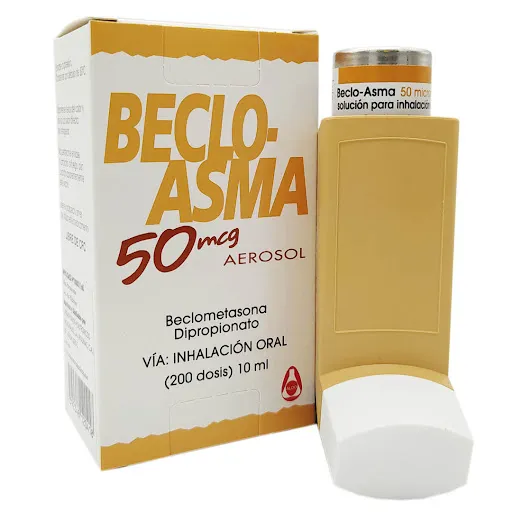
Table of Contents
- Package leaflet: Information for the user
- Introduction
- 1. What Beclo-Asma 50 micrograms/dose is and what it is used for
- 2. What you need to know before using Beclo-Asma 50 micrograms/dose
- 3. How to use Beclo-Asma 50 micrograms/dose
- 4. Possible adverse effects
- 5. Storage of Beclo-Asma 50 micrograms/actuation
- 6. Contents of the pack and other information
Package leaflet: Information for the user
Introduction
Package leaflet: information for the patient
Beclo-Asma 50 micrograms/dose inhalation solution in pressurised container
Beclometasone dipropionate
Read the entire leaflet carefully before you start using this medicine, because it contains important information for you.
- Keep this leaflet, as you may need to read it again.
- If you have any questions, ask your doctor or pharmacist.
- This medicine has been prescribed for you only, and you should not give it to other people, even if they have the same symptoms as you, because it may harm them.
- If you experience any adverse effects, consult your doctor or pharmacist, even if they are adverse effects not listed in this leaflet. See section 4.
Leaflet contents
- What Beclo-Asma 50 micrograms/dose is and what it is used for
- What you need to know before using Beclo-Asma 50 micrograms/dose
- How to use Beclo-Asma 50 micrograms/dose
- Possible side effects
- How to store Beclo-Asma 50 micrograms/dose
- Contents of the pack and other information
1. What Beclo-Asma 50 micrograms/dose is and what it is used for
Beclo-Asma 50 micrograms/dose contains the active substance beclometasone dipropionate, which belongs to a group of medicines called corticosteroids. Corticosteroids are used in the treatment of asthma because they have, among other effects, an anti-inflammatory action. They reduce swelling and irritation in the walls of the small airways in the lungs, thereby making breathing easier.
Beclo-Asma is used to prevent asthma symptoms in people who require regular treatment.
Corticosteroids also help prevent asthma attacks.
It is not indicated for the relief of acute bronchospasm.
2. What you need to know before using Beclo-Asma 50 micrograms/dose
Do not use Beclo-Asma 50 micrograms/dose:
- If you are allergic to beclometasone dipropionate or to any of the other ingredients of this medicine (listed in section 6).
- To treat a sudden attack of breathing difficulty.
Warnings and precautions
Consult your doctor or pharmacist before starting to use Beclo-Asma 50 micrograms/dose:
-
If you have had mouth ulcers
-
If you are taking or have recently taken any type of steroid tablets or injections
-
If you are being or have been treated for tuberculosis
-
If you have a history of diabetes mellitus (since this medicine may increase blood glucose levels)
-
If you have used high doses of this medicine for a prolonged period of time and experience any of the following symptoms:
-
Weight gain and facial rounding (moon face) (Cushing's syndrome),
-
Vague symptoms such as abdominal pain, nausea, diarrhoea, headache or drowsiness (adrenal suppression, acute adrenal crisis). These symptoms are more likely during an infection, such as viral infections or stomach upset,
-
Loss of bone mass,
-
Eye problems (cataracts and glaucoma),
-
Growth retardation (this mainly occurs in children and adolescents).
Contact your doctor if you experience blurred vision or other visual disturbances.
Patients previously treated with beclometasone should be aware that this medicine does not contain chlorofluorocarbon propellants (CFCs). The active ingredient is the same. The only differences you may notice are the taste and sensation of the spray in the mouth, as well as the sound of the inhaler during use.
This medicine should be used exactly as directed by your doctor. Your doctor may change your dosage regimen.
Use in athletes
Athletes should be informed that this medicine contains beclometasone dipropionate, which may result in a positive doping test.
Other medicines and Beclo-Asma 50
Inform your doctor or pharmacist if you are taking, have recently taken, or might take any other medicines.
Some medicines may increase the effects of Beclo-Asma 50 micrograms/dose, so your doctor will closely monitor you if you are taking these medicines (including some used for HIV: ritonavir, cobicistat).
Tell your doctor if you are taking disulfiram or metronidazole, as there is a potential risk of interaction in particularly sensitive individuals.
Pregnancy and breastfeeding
If you are pregnant or breastfeeding, think you may be pregnant, or are planning to become pregnant, consult your doctor or pharmacist before using this medicine.
Pregnancy: There is insufficient evidence regarding the use of this product during pregnancy.
The use of beclometasone dipropionate during pregnancy requires careful assessment of the potential benefits of the drug against possible risks.
Breastfeeding: Beclometasone is likely excreted in breast milk. However, considering the relatively low doses used by inhalation, levels are likely to be low. In breastfeeding mothers, the therapeutic benefits of the drug should be weighed against the potential risks to both mother and infant.
Driving and using machines
Beclo-Asma 50 micrograms/dose has no known effects on driving and the use of machines.
Beclo-Asma 50 micrograms/dose contains ethanol
This medicine contains approximately 4.7 mg of alcohol (ethanol) per inhalation. The amount per inhalation of this medicine is equivalent to less than 1 ml of beer or 1 ml of wine. The small amount of alcohol contained in this medicine does not produce any perceptible effect.
3. How to use Beclo-Asma 50 micrograms/dose
Follow exactly the administration instructions for this medicine as given by your doctor. If in doubt, consult your doctor or pharmacist again.
Remember to use your medicine.
Beclo-Asma must only be used by inhalation.
Your doctor will determine the duration of your treatment with Beclo-Asma. Do not stop treatment early, even if you feel better, unless your doctor advises you to do so, or you notice that your breathing worsens when taking the medicine. The usual recommended doses are as follows:
Adults and children over 12 years of age
The initial dose for mild or moderate asthma is one inhalation (50 micrograms) twice daily. This dose may be increased to two inhalations (100 micrograms) twice daily.
For more severe asthma, the usual dose is up to four inhalations (200 micrograms) twice daily.
The maximum recommended dose is 800 micrograms per day.
Children aged 6 to 11 years
The dose must be determined by the doctor and depends on the individual patient's response. In general, half the doses recommended for adults are advised (maximum 400 micrograms per day in two divided doses). Children should receive an initial dose of Beclo-Asma appropriate to the severity of their condition. The dose may then be adjusted until adequate control is achieved, or reduced to the lowest effective dose according to individual response.
If you start using Beclo-Asma instead of, or in addition to, oral steroids, you must carry a steroid alert card until your doctor tells you that it is no longer needed.
If you have difficulties or do not understand the instructions, consult your doctor or pharmacist.
It may take several days before you notice the benefits of the medicine. It is very important that you use it regularly every day. Do not stop treatment even if you feel better, unless your doctor tells you to do so, or you notice that your breathing worsens when taking the medicine.
Do not use this medicine to treat a sudden attack of breathing difficulty, as it will not help. You will need a different type of medicine for that.
Instructions for correct administration of the preparation:
Beclo-Asma 50 micrograms/dose is administered by inhalation. Proper use of this medicine is crucial for successful treatment.
Before each use, follow these steps:
- Remove the protective cap (fig. 1). If this is a new inhaler or has not been used for one week, shake the canister (fig. 2) and release two sprays to ensure proper functioning of the inhaler. If the inhaler is used regularly, proceed to the next instructions:
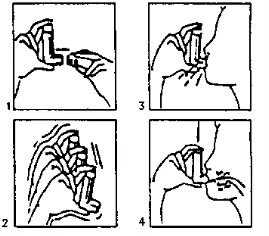 Shake the inhaler.
- Empty your lungs of as much air as possible.
-
Position the inhaler in your mouth as shown in the drawing (fig. 3).
-
Take as deep a breath as possible. Press down on the canister, as indicated by the arrows in the drawing (fig. 4), while inhaling.
-
Remove the inhaler from your mouth and try to hold your breath for a few seconds, then exhale slowly.
-
Clean the plastic mouthpiece regularly. To do so, remove it from the aerosol and rinse it thoroughly with plenty of water at least once a week. It must be completely dry before use. Do not wet the metallic cartridge.
-
Store with the protective cap in place to protect it from dust and dirt.
-
It is advisable to rinse your mouth with water after each inhalation.
If you think that the effect of Beclo-Asma 50 micrograms/dose is too strong or too weak, inform your doctor or pharmacist.
If you use more Beclo-Asma 50 micrograms/dose than you should
In case of overdose or accidental ingestion, contact your doctor or pharmacist immediately, or call the Toxicology Information Service at telephone number 915620420, stating the medicine and the amount ingested.
If you forget to take Beclo-Asma 50 micrograms/dose
Do not take a double dose to make up for missed doses. Simply wait until your next scheduled dose.
If you have any further questions about the use of this product, ask your doctor or pharmacist.
4. Possible adverse effects
Like all medicines, this medicine may cause adverse effects, although not everyone will experience them.
The following adverse effects have been reported:
-
Common (may affect up to 1 in 10 people): oral and/or throat candidiasis (thrush), hoarseness and/or throat irritation, taste disturbances.
-
Uncommon (may affect up to 1 in 100 people): headache, dizziness, tremor, cough, increased asthma symptoms, nausea, urticaria, itching, pruritus, erythema, purpura.
-
Rare (may affect up to 1 in 1,000 people): allergic reactions, angioedema of eyes, throat, lips and face, paradoxical bronchospasm.
-
Very rare (may affect up to 1 in 10,000 people): adrenal suppression, growth retardation in children and adolescents, cataracts, glaucoma, decreased bone mineral density.
-
Frequency not known (cannot be estimated from available data): Psychomotor hyperactivity, sleep disorders, anxiety, depression, aggression, changes in behavior (commonly in children), and blurred vision.
Reporting of adverse effects
If you experience any type of adverse effect, consult your doctor or pharmacist, even if they are possible adverse effects not listed in this leaflet. You may also report them directly through the Spanish Pharmacovigilance System for Human Medicines: https://www.notificaram.es. By reporting adverse effects, you can help provide more information on the safety of this medicine.
5. Storage of Beclo-Asma 50 micrograms/actuation
Keep this medicine out of the sight and reach of children.
Protect from direct sunlight. Do not freeze.
If the inhaler is very cold, remove the cartridge and warm it in the hand for a few minutes before use. Do not use any other method to warm it.
The container contains a pressurized liquid. Do not expose to temperatures above 50 °C. Do not pierce the container, even if it appears to be empty.
Do not use this medicine after the expiry date stated on the packaging after EXP:. The expiry date refers to the last day of the month indicated.
Medicines must not be disposed of via wastewater or household waste. Dispose of containers and unused medicines at the SIGRE collection point in your pharmacy. If in doubt, ask your pharmacist how to dispose of containers and medicines no longer required. This will help protect the environment.
6. Contents of the pack and other information
Composition of Beclo-Asma 50 micrograms/dose:
- The active substance is beclometasone dipropionate.
- The other components (excipients) are anhydrous ethanol and norflurane (HFA-134a).
Each puff contains 50 micrograms of beclometasone dipropionate.
This medicinal product contains fluorinated greenhouse gases.
Each inhaler contains 12.44 g of norflurane (HFA-134a), equivalent to 0.0178 tonnes of CO2 (global warming potential GWP = 1,430).
Nature of the product and pack contents:
Beclo-Asma 50 micrograms/dose is a clear, colourless solution contained in a 10 ml pressurized container (200 doses), equipped with a metering valve and an oral adapter.
Marketing Authorization Holder and Manufacturer:
Laboratorio Aldo-Unión, S.L.
Baronesa de Maldá, 73
08950 Esplugues de Llobregat (Barcelona)
Spain
Date of the most recent review of this leaflet: September 2025
Detailed and up-to-date information on this medicinal product is available on the website of the Spanish Agency for Medicines and Health Products (AEMPS) http://www.aemps.es/