Azithromycin Kern Pharma 200 mg/5 ml powder for oral suspension EFG
Spain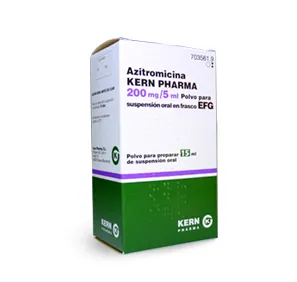
Table of Contents
- Package leaflet: Information for the user
- Introduction
- 1. What Azitromicina Kern Pharma is and what it is used for
- 2. What you need to know before taking Azithromycin Kern Pharma
- 3. How to take Azithromycin Kern Pharma
- do not exceed the daily dose of 500 mg in adults
- For adult patients, an initial intravenous treatment may be followed by oral therapy.
- 4. Possible adverse effects
- These adverse effects are more common during administration of azithromycin for prophylaxis or treatment of infection caused by *Mycobacterium avium* complex in people with HIV infection and insufficient immune system recovery.
- 5. Storage of Azithromycin Kern Pharma
- 6. Additional Information
Package leaflet: Information for the user
Introduction
Package leaflet: Information for the user
Azithromycin Kern Pharma 200 mg/5 ml powder for oral suspension EFG
Read the entire leaflet carefully before you start taking this medicine, because it contains important information for you.
- Keep this leaflet, as you may need to read it again.
- If you have any questions, ask your doctor or pharmacist.
- This medicine has been prescribed for you only, and you should not give it to other people, even if they have the same symptoms as you, because it may harm them.
- If you experience any adverse effects, consult your doctor or pharmacist, even if they are adverse effects not listed in this leaflet. See section 4.
Leaflet contents:
- What Azithromycin Kern Pharma is and what it is used for
- What you need to know before taking Azithromycin Kern Pharma
- How to take Azithromycin Kern Pharma
- Possible side effects
- How to store Azithromycin Kern Pharma
- Contents of the pack and other information
1. What Azitromicina Kern Pharma is and what it is used for
Azitromicina Kern Pharma contains the active substance azithromycin. Azithromycin is an antibiotic that belongs to a group of antibiotics known as macrolides, which block the growth of susceptible bacteria.
Azitromicina Kern Pharma is indicated for the treatment of the following infections:
Children aged 6 months or older weighing less than 45 kg
- Infection of the tonsils (tonsillitis) or throat (pharyngitis) caused by streptococcal bacteria
- Bacterial infection of the sinuses (sinusitis)
- Bacterial middle ear infection (otitis media)
- Pneumonia (community-acquired pneumonia, not contracted in a hospital)
- Bacterial skin and underlying tissue infections
Adults and adolescents weighing at least 45 kg who have difficulty swallowing
In addition to the infections listed above, Azitromicina Kern Pharma may also be administered for the treatment of the following infections:
- Infection of the urethra and cervix caused by bacteria of the species Chlamydia trachomatis
- Infection of the urethra and cervix caused by bacteria of the species Neisseria gonorrhoeae
Azitromicina Kern Pharma should be used in combination with another antibacterial agent selected by your doctor or pharmacist.
- Bacterial genital infection with painful ulcers (chancroid)
- Adults with prolonged lung inflammation (chronic bronchitis)
2. What you need to know before taking Azithromycin Kern Pharma
Do not take Azithromycin Kern Pharma
- if you are allergic to azithromycin, erythromycin, any other macrolide or ketolide antibiotic, or any of the other ingredients of this medicine (listed in section 6).
Warnings and precautions
Talk to your doctor or pharmacist before starting Azithromycin Kern Pharma if you have or have had any of the following conditions:
- heart disorders (e.g., heart rhythm problems or heart failure) or low levels of potassium or magnesium in the blood: these conditions may contribute to serious cardiac side effects of azithromycin;
- liver disorders: your doctor may need to monitor your liver function or discontinue treatment;
- severe diarrhea after taking any other antibacterial agent;
- localized muscle weakness (myasthenia gravis), as symptoms of this disease may worsen during treatment;
- or if you are taking any ergot derivative such as ergotamine (used to treat migraines), since these medicines should not be taken with Azithromycin Kern Pharma.
Stop taking this medicine and contact your doctor immediately (see also “Serious adverse reactions” in section 4):
- if you think you are having an allergic reaction (e.g., difficulty breathing, swelling of the face or throat, skin rash or blistering);
- if you notice any of the symptoms described in section 4 related to serious skin reactions such as Stevens-Johnson syndrome, toxic epidermal necrolysis, drug reaction with eosinophilia and systemic symptoms (DRESS), or acute generalized exanthematous pustulosis (AGEP);
- if you think your heartbeat is irregular or you experience palpitations, dizziness, or fainting during treatment with Azithromycin Kern Pharma;
- if you show signs of liver problems (e.g., dark urine, loss of appetite, or yellowing of the skin or whites of the eyes);
- if you develop severe diarrhea during or after treatment. Do not take any medication for diarrhea without first talking to your doctor. If your diarrhea continues or recurs within the first few weeks after treatment, inform your doctor as well.
Superinfection
Your doctor may monitor you for signs of additional bacterial or fungal infections that cannot be treated with Azithromycin Kern Pharma (superinfection).
Sexually transmitted infections
Your doctor may perform tests to rule out possible syphilis, a sexually transmitted disease that might otherwise progress undetected and be diagnosed late. Additionally, in cases of sexually transmitted bacterial infections, your doctor will initiate follow-up laboratory tests to monitor treatment success.
Children and adolescents
Ask your doctor or pharmacist if your child is under 6 months of age, as the efficacy and safety of this medicine have not been established in these children.
This medicine is not recommended if:
- you are under 18 years of age and have been diagnosed with pelvic inflammatory disease.
- you are under 12 years of age and have an infection or are at risk of infection with microorganisms belonging to the Mycobacterium avium complex, which typically affect people with HIV and weakened immune systems, as its efficacy and safety have not been studied in these cases.
Infantile hypertrophic pyloric stenosis (IHPS)
If your child is under 6 months of age and your doctor has prescribed azithromycin treatment, stop giving this medicine and contact your doctor immediately if your child experiences projectile vomiting or irritability during or shortly after feeding.
Other medicines and Azithromycin Kern Pharma
Tell your doctor or pharmacist if you are taking, have recently taken, or might need to take any other medicines.
Using Azithromycin Kern Pharma with other medicines may cause adverse effects. Therefore, it is especially important that you inform your doctor if you are taking any of the following medicines:
- Atorvastatin and other statins (to reduce cholesterol levels in the blood and prevent heart disease, including myocardial infarction and stroke)
- Cyclosporine (to prevent organ transplant rejection)
- Colchicine (for the treatment of gout and familial Mediterranean fever)
- Dabigatran (to prevent and treat blood clots [anticoagulant])
- Digoxin (for the treatment of heart conditions)
- Warfarin or similar medicines (to thin the blood [anticoagulants])
- Medicines that may cause the heart muscle to take longer than normal to contract and relax (QT interval prolongation), such as:
- Quinidine, procainamide, dofetilide, amiodarone, and sotalol (for treating heart rhythm disorders, such as abnormally fast or slow heartbeats: cardiac arrhythmia)
- Pimozide (for the treatment of mental illnesses)
- Citalopram (for the treatment of depression)
- Moxifloxacin and levofloxacin (antibacterial agents)
- Cisapride (for the treatment of gastrointestinal disorders)
- Hydroxychloroquine or chloroquine (for the treatment of certain autoimmune diseases such as rheumatoid arthritis, or for the treatment or prevention of malaria)
Taking Azithromycin Kern Pharma with food
The reconstituted suspension can be taken with or without food.
Pregnancy, breastfeeding, and fertility
If you are pregnant or breastfeeding, think you may be pregnant, or plan to become pregnant, consult your doctor or pharmacist before using this medicine.
Pregnancy
Your doctor will assess whether you should take this medicine during pregnancy only after ensuring that the benefits of treatment outweigh the possible risks.
Breastfeeding
Azithromycin is excreted in breast milk. Therefore, your doctor will decide together with you whether you should stop breastfeeding or avoid treatment with Azithromycin Kern Pharma, taking into account both the benefits of breastfeeding for your child and the benefits of treatment for you.
Driving and using machines
The effect of Azithromycin Kern Pharma on the ability to drive and use machines is moderate. Dizziness, drowsiness, and seizures, as well as vision and hearing problems, have been reported in some people. These possible adverse effects may affect your ability to drive and use machines.
Azithromycin Kern Pharma contains sucrose, sodium, and benzyl alcohol
This medicine contains sucrose. If your doctor has told you that you have an intolerance to certain sugars, consult with them before taking this medicine. Patients with diabetes mellitus should be aware that this medicine contains 3.624 g of sucrose per 5 ml of reconstituted suspension, which should be considered in patients with diabetes mellitus.
This medicine contains 18.17 mg of sodium (table/cooking salt component) per 5 ml of reconstituted suspension. This corresponds to 0.91% of the maximum daily sodium intake recommended for an adult.
This medicine contains 0.162 mg of benzyl alcohol per 5 ml of suspension.
Benzyl alcohol may cause allergic reactions.
Benzyl alcohol has been associated with the risk of serious adverse effects, including breathing problems ("gasping syndrome") in children. This product should not be used for more than one week in children under 3 years of age unless directed by your doctor or pharmacist.
Consult your doctor or pharmacist if you are pregnant or breastfeeding, or if you have liver or kidney disease. This is because large amounts of benzyl alcohol may accumulate in your body and cause adverse effects (metabolic acidosis).
3. How to take Azithromycin Kern Pharma
Follow exactly the administration instructions for this medicine as indicated by your doctor or pharmacist. If in doubt, consult your doctor or pharmacist again.
Recommended doses and duration of treatment are as follows:
Children from 6 months of age and older weighing less than 45 kg
Infection | Azithromycin treatment course |
Bacterial infection of the sinuses (sinusitis) Pneumonia (community-acquired pneumonia, not contracted in a hospital) Bacterial skin and underlying tissue infection | For these infections, a 3- or 5-day treatment course is administered 3-day treatment course 10 mg/kg/day for 3 days 5-day treatment course 10 mg/kg on the first day of treatment, followed by 5 mg/kg once daily for the next 4 days |
Acute bacterial middle ear infection (otitis media) | For this infection, a 1-, 3-, or 5-day treatment course is administered 1-day treatment course Single dose of 30 mg/kg 3-day treatment course 10 mg/kg/day for 3 days 5-day treatment course 10 mg/kg on the first day of treatment, followed by 5 mg/kg once daily for the next 4 days |
Streptococcal bacterial infection of the tonsils (tonsillitis) or throat (pharyngitis) | For these infections, a 3- or 5-day treatment course is administered 3-day treatment course 20 mg/kg once daily for 3 days 5-day treatment course 12 mg/kg once daily for 5 days |
It is important to ensure that you take the amount of Azithromycin Kern Pharma indicated in the table below, based on the patient's body weight, the infection being treated, and the specific treatment cycle (1 day, 3 days, 5 days, 10 days) prescribed by your doctor or pharmacist.
Body weight (kg) | Maximum daily dose of azithromycin 40 mg/ml oral suspension in bottle after reconstitution (15ml or 30ml)^ | ||||
5 mg/kg | 10 mg/kg | 12 mg/kg | 20 mg/kg | 30 mg/kg | |
7 | 1.00 ml (40 mg )+* | 1.75 ml (70 mg)* | 2.25 ml (90 mg)++ | 3.50 ml (140 mg ) | 5.25 ml (210 mg) |
8 | 1.00 ml (40 mg )* | 2.00 ml (80 mg) * | 2.50 ml (100 mg )++ | 4.00 ml (160 mg ) | 6.00 ml (240 mg) |
9 | 1.25 ml (50 mg )+* | 2.25 ml (90 mg) | 2.75 ml (110 mg )++ | 4.50 ml (180 mg ) | 6.75 ml (270 mg) |
10 | 1.25 ml (50 mg )* | 2.50 ml (100 mg) | 3.00 ml (120 mg ) | 5.00 ml (200 mg ) | 7.50 ml (300 mg) |
11 | 1.50 ml (60 mg )+* | 2.75 ml (110 mg) | 3.25 ml (130 mg )++ | 5.50 ml (220 mg ) | 8.25 ml (330 mg) |
12 | 1.50 ml (60 mg )* | 3.00 ml (120 mg) | 3.75 ml (150 mg )++ | 6.00 ml (240 mg ) | 9.00 ml (360 mg) |
13 | 1.75 ml (70 mg )+* | 3.25 ml (130 mg) | 4.00 ml (160 mg )++ | 6.50 ml (260 mg ) | 9.75 ml (390 mg) |
14 | 1.75 ml (70 mg )* | 3.50 ml (140 mg) | 4.25 ml (170 mg )++ | 7.00 ml (280 mg ) | 10.50 ml (420 mg ) |
15 | 2.00 ml (80 mg)+* | 3.75 ml (150 mg) | 4.50 ml (180 mg ) | 7.50 ml (300 mg ) | 11.25 ml (450 mg ) |
16 - 25 | 2.50 ml (100 mg) | 5.00 ml (200 mg) | 6.25 ml (250 mg ) | 10.00 ml (400 mg) | 15.00 ml (600 mg ) |
26 - 35 | 3.75 ml (150 mg) | 7.50 ml (300 mg) | 8.75 ml (350 mg ) | 12.50 ml (500 mg)# | 22.50 ml (900 mg ) |
36 - < 45 | 5.00 ml (200 mg) | 10.00 ml (400 mg) | 11.25 ml (450 mg) | 12.50 ml (500 mg)# | 30.00 ml (1200 mg) |
^ After reconstitution, the oral suspension concentration is 40 mg/mL and the total volume of suspension in the vial is 15 mL or 30 mL (600 mg or 1200 mg of azithromycin, respectively).
+Doses have been rounded to obtain the appropriate dose to be administered.
++ Doses have been rounded to obtain the appropriate dose to be administered.
*Azithromycin 20 mg/mL (100 mg/5 mL) powder for oral suspension is more suitable for treating these patients.
do not exceed the daily dose of 500 mg in adults
Adult and adolescent patients weighing at least 45 kg who have difficulty swallowing
Infection | Azithromycin treatment course |
Streptococcal bacterial infection of the tonsils (tonsillitis) or throat (pharyngitis) Bacterial infection of the sinuses (sinusitis) Bacterial infection of the middle ear (otitis media) Bacterial infection in patients with prolonged lung inflammation (chronic bronchitis)* Pneumonia (community-acquired pneumonia, not contracted in hospital)# Bacterial skin infection and underlying tissues | For these infections, a 3-day or 5-day treatment course is established, and the following describes the daily dosage of Azithromycin Kern Pharma to be taken for these treatment courses. 3-day treatment course 12.5 ml (500 mg) once daily for 3 days 5-day treatment course 12.5 ml (500 mg) on the first day of treatment, followed by 6.25 ml (250 mg) once daily for the next 4 days |
Infection of the urethra and cervix caused by Chlamydia trachomatis bacteria | 25 ml (1,000 mg) as a single dose |
Infection of the urethra and cervix caused by Neisseria gonorrhoeae bacteria. Azithromycin Kern Pharma should be used in combination with another antibacterial agent selected by your doctor or pharmacist. | 25 ml (1,000 mg) or 50 ml* (2,000 mg) as a single dose |
Bacterial genital infection with painful ulcers (chancroid) | 25 ml (1,000 mg) as a single dose |
- For adult patients only.
For adult patients, an initial intravenous treatment may be followed by oral therapy.
Use in children and adolescents
The safety and efficacy of azithromycin have not been established in children under 6 months of age for any of the indications listed in section 1.
Method of administration
For oral use after reconstitution.
Azithromycin Kern Pharma should be administered orally as a single daily dose. The oral suspension may be taken with or without food. Taking this medicine just before a meal may improve stomach tolerance.
Preparation of the suspension:
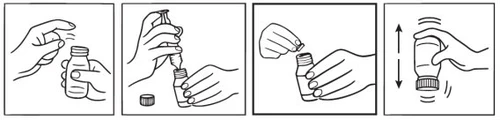
- Invert the bottle and gently shake until all the powder moves freely.
- Open the bottle and add the following amount of water according to the bottle size, using the dosing syringe provided:
15 ml bottle: add 10 ml of water
30 ml bottle: add 15 ml of water
- Place the perforated plastic cap and press it down until it is fully inserted into the mouth of the bottle.
- Close the bottle with the metal cap. Shake vigorously until a homogeneous suspension is obtained. The suspension has a milky appearance.
Each 5 ml of reconstituted suspension contains 200 mg of azithromycin.
If the Azitromycin Kern Pharma bottle you receive from your doctor or pharmacist contains only powder and no liquid, you must add a specific volume of water to the bottle before the medicine is ready for use. If your doctor or pharmacist has already dissolved the powder, proceed directly to the next section, “Instructions for administration of daily doses of Azitromycin Kern Pharma oral suspension”.
Instructions for administration of daily doses of Azitromycin Kern Pharma oral suspension:
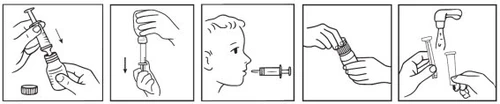
- Shake the suspension well before each dose. Remove the metal safety cap. Insert the syringe into the perforated plastic cap.
- Keeping the syringe inserted, turn the bottle upside down so that it remains in a vertical position. Fill the syringe to the mark corresponding to the dose prescribed by your doctor.
- Administer the dose directly using the dosing syringe.
- Close the bottle with the cap without removing the perforated plastic cap.
- Wash the syringe after each administration.
Once the syringe is prepared, administer immediately.
The dosing syringe is also graduated to allow dosing according to the child's weight.
Administer the medicine slowly to the child and ensure it is swallowed. This will help avoid the risk of choking.
If you take more Azitromycin Kern Pharma than you should
If you take more Azitromycin Kern Pharma than you should, you may feel unwell. Typical signs of overdose include vomiting, diarrhea, abdominal pain, and nausea. Inform your doctor or contact the nearest hospital Emergency Department immediately.
In case of overdose or accidental ingestion, contact your doctor or pharmacist immediately or call the Toxicology Information Service at: 91 562 04 20, indicating the medicine and the amount ingested.
If you forget to take Azitromycin Kern Pharma
If you forget to take Azitromycin Kern Pharma, take it as soon as possible, provided that at least 12 hours remain before the next dose. If less than 12 hours remain before the next dose, skip the missed dose and take the next dose at the usual time. Do not take a double dose to make up for missed doses.
If you stop taking Azitromycin Kern Pharma
If you stop treatment with Azitromycin Kern Pharma too early, the infection may recur. Take Azitromycin Kern Pharma for the full duration of treatment, even if you start to feel better.
If you have any further questions about the use of this medicine, ask your doctor, pharmacist, or nurse.
4. Possible adverse effects
Like all medicines, this medicine can cause adverse effects, although not everyone will experience them.
Serious adverse effects
Stop taking Azithromycin Kern Pharma and seek immediate medical attention if you notice any of the following symptoms:
- sudden chest tightness, difficulty breathing, swelling of the eyelids, face or lips, skin rash or itching affecting especially the whole body (anaphylactic reaction, frequency not known).
- fast or irregular heartbeat (cardiac arrhythmia or torsade de pointes, tachycardia, frequency not known).
- dark urine, loss of appetite, or yellowing of the skin or whites of the eyes, which are signs of liver disease (hepatic failure or hepatic necrosis [frequency not known], hepatitis* [uncommon: may affect up to 1 in 100 people]).
- severe diarrhoea with abdominal cramps, bloody stools or fever, which may indicate an infection in the large intestine (antibiotic-associated colitis, frequency not known). Do not take anti-diarrhoeal medicines that inhibit intestinal motility (antiperistaltic agents).
- flat red spots, target-shaped or circular skin lesions on the trunk, often with central blisters, skin peeling, or ulcers in the mouth, throat, nose, genitals and eyes. These serious skin rashes may be preceded by fever and flu-like symptoms (Stevens-Johnson syndrome# or toxic epidermal necrolysis, frequency not known).
- widespread rash, high body temperature and enlarged lymph nodes (DRESS syndrome or drug hypersensitivity syndrome, rare [may affect up to 1 in 1,000 people]).
- widespread red, scaly rash with swellings under the skin and blisters accompanied by fever. Symptoms usually occur at the beginning of treatment (acute generalized exanthematous pustulosis, rare [may affect up to 1 in 1,000 people]).
Other adverse effects
Very common (may affect more than 1 in 10 people):
- Diarrhoea
- Abdominal discomfort*
Common (may affect up to 1 in 10 people):
- headache
- vomiting, stomach pain#, nausea#
- changes in blood test results (decreased lymphocyte count, increased eosinophil count, increased basophil count, increased monocyte count, increased neutrophil count, decreased blood bicarbonate)
Uncommon (may affect up to 1 in 100 people):
- candidiasis: fungal infection of the mouth and vagina, other fungal infections
- pneumonia, bacterial throat infection, inflammation of the digestive tract, respiratory disorder, inflammation of the nasal mucosa, vaginal infection
- changes in white blood cell count (leucopenia, neutropenia, eosinophilia)
- increased platelet count
- reduced proportion of all blood cells in total blood volume (decreased haematocrit)
- allergic reactions, swelling of the hands, feet and face (angioedema)
- loss of appetite#
- nervousness, difficulty sleeping (insomnia)
- dizziness#, numbness sensation (somnolence), altered sense of taste (dysgeusia)#, tingling or numbness sensation (paraesthesia)
- loss of vision#
- ear disorder
- sensation of spinning (vertigo)
- sensation of rapid or forceful heartbeat (palpitations)
- hot flushes
- sudden chest tightness, nosebleeds
- constipation, flatulence#, indigestion (dyspepsia), inflammation of the stomach lining (gastritis), difficulty swallowing (dysphagia), swollen abdomen, dry mouth, burping, mouth ulceration, increased salivation
- skin rash#, itching#, hives (urticaria)#, dermatitis, dry skin, abnormal increase in sweating (hyperhidrosis)
- swelling and pain in the joints (osteoarthritis), muscle pain, back pain, neck pain
- pain when urinating (dysuria), kidney pain
- irregular menstrual bleeding (metrorrhagia), testicular disorder
- swelling due to fluid accumulation, especially in the face, ankles and feet (oedema, facial oedema, peripheral oedema)
- weakness, fatigue#, general malaise, fever
- chest pain, pain
- abnormal laboratory test results (e.g., blood tests or liver function tests)
- post-procedural complications
Rare (may affect up to 1 in 1,000 people):
- sensation of irritation
- liver problems, yellowing of the skin or eyes
- increased sensitivity to sunlight#
Frequency not known (cannot be estimated from available data):
-
reduction in red blood cell count due to increased destruction of red blood cells, which may cause fatigue and pale skin (haemolytic anaemia)
-
reduced number of platelets in the blood, which may cause bleeding and bruising (thrombocytopenia)
-
feeling irritable, aggression, feeling of fear or worry (anxiety), acute state of confusion (delirium)
-
hallucinations
-
fainting (syncope)
-
seizures (convulsions)
-
reduced sensitivity to touch, pain and temperature (hypoesthesia)#
-
feeling of hyperactivity
-
changes in sense of smell (anosmia, parosmia)
-
complete loss of taste sensation (ageusia)
-
muscle weakness (myasthenia gravis)
-
abnormal electrocardiogram (ECG) trace (prolongation of QT interval)
-
deafness#, reduced hearing# or ringing in the ears (tinnitus)#
-
low blood pressure
-
inflammation of the pancreas causing severe abdominal and back pain (pancreatitis)
-
change in tongue colour
-
joint pain (arthralgia)#
-
kidney inflammation (interstitial nephritis) and kidney failure
-
complete loss of taste sensation (ageusia)
-
These adverse effects have only been observed during administration of azithromycin for prophylaxis or treatment of infection caused by Mycobacterium avium complex in people with HIV infection and insufficient immune system recovery.
These adverse effects are more common during administration of azithromycin for prophylaxis or treatment of infection caused by Mycobacterium avium complex in people with HIV infection and insufficient immune system recovery.
Reporting of adverse effects
If you experience any type of adverse effect, consult your doctor or pharmacist, even if they are possible adverse effects not listed in this leaflet. You may also report them directly via the Spanish Pharmacovigilance System for Human Medicines: https://www.notificaRAM.es. By reporting adverse effects, you can help provide more information on the safety of this medicine.
5. Storage of Azithromycin Kern Pharma
Keep this medicine out of the sight and reach of children.
Closed bottles: Do not store above 25°C. Keep in the original packaging.
Reconstituted solution: Record the date and month of suspension reconstitution in the space provided for this purpose on both the carton and the bottle label. Do not use the medicine more than 10 days after reconstitution; after this period, dispose of any remaining product. Do not store above 25°C.
Do not use Azithromycin Kern Pharma after the expiry date stated on the packaging, following “EXP”. The expiry date refers to the last day of the month indicated.
Medicines must not be disposed of via wastewater or household waste. Dispose of unused medicines and their packaging at a SIGRE collection point at your pharmacy. If you are unsure, please consult your pharmacist on how to properly dispose of unused medicines and packaging. This will help protect the environment.
6. Additional Information
Composition of Azithromycin Kern Pharma
- The active substance is azithromycin (as dihydrate). Each 5 ml of reconstituted suspension contains 200 mg of azithromycin. Each ml of reconstituted suspension contains 40 mg of azithromycin.
- The other components (excipients) are: sucrose, hydroxypropylcellulose (E463), anhydrous trisodium phosphate, xanthan gum (E415), cherry flavour (contains benzyl alcohol), vanilla flavour, and banana flavour (see section 2).
Appearance of the product and contents of the container
Ivory-coloured dry powder for oral suspension with a fruity odour.
It is packaged in an amber glass bottle closed with an aluminium cap. The perforated cap and the syringe supplied with the bottle are made of plastic.
It is available in containers of one 15 ml or 30 ml bottle, and in packs of 20 bottles of 15 ml or 30 ml (hospital pack).
A dosing syringe is included, with three types of scales: in kg (from 0 to 40 kg) according to body weight; in ml (from 0 to 10 ml) according to the volume of suspension; and in mg (from 0 to 400 mg) according to the amount of active substance.
Only certain pack sizes may be marketed.
Marketing Authorization Holder and Manufacturer
Kern Pharma, S.L.
Venus, 72 - Pol. Ind. Colón II
08228 Terrassa - Barcelona
Spain
Date of the most recent review of this leaflet: October 2025
Detailed information on this medicine is available on the website of the Spanish Agency of Medicines and Medical Devices (AEMPS): https://www.aemps.gob.es