Azithromycin Altan 500 mg powder for solution for infusion EFG
Spain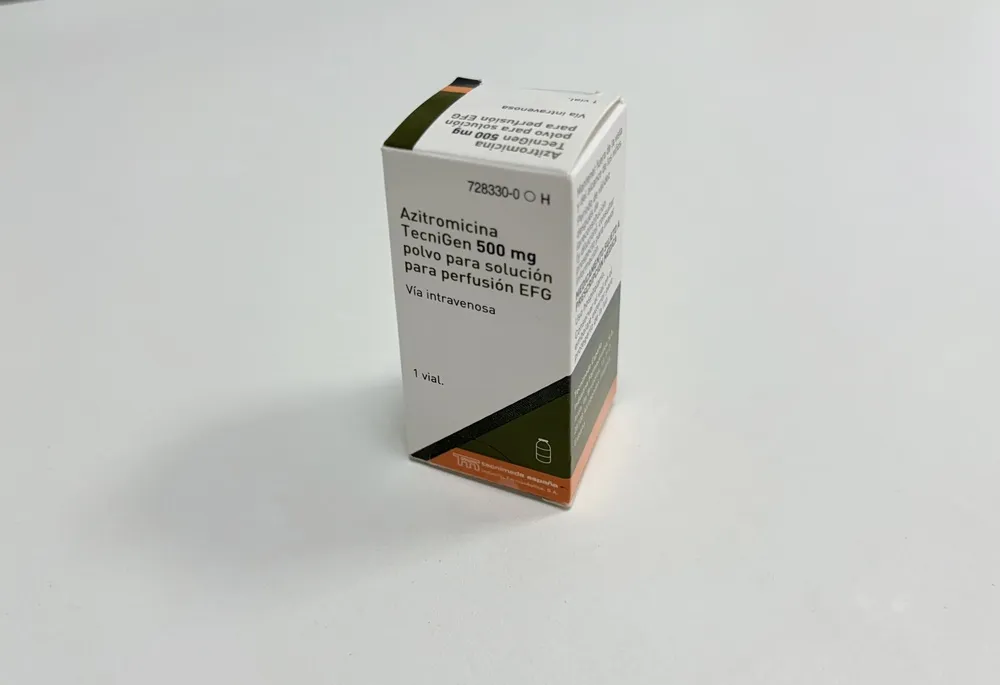
Table of Contents
- Package leaflet: Information for the user
- Introduction
- 1. What Azitromicina Altan is and what it is used for
- 2. What you need to know before using Azitromicina Altan
- **Stop taking this medicine and contact your doctor immediately (see also “Serious adverse reactions” in section 4):**
- **Children and adolescents**
- 3. How to use Azithromycin Altan
- 4. Possible adverse effects
- 5. Storage of Azithromycin Altan 500 mg
- 6. ADDITIONAL INFORMATION
Package leaflet: Information for the user
Introduction
Package leaflet: information for the user
Azitromycin Altan 500 mg powder for solution for infusion EFG
Azithromycin
Read all of this leaflet carefully before you start using this medicine, because it contains important information for you.
- Keep this leaflet, as you may need to read it again.
If you have any questions, ask your doctor or pharmacist.
- This medicine has been prescribed for you only, and you should not give it to other people, even if they have the same symptoms as you, because it may harm them.
- If you experience any adverse reactions, consult your doctor or pharmacist, even if they are adverse reactions not listed in this leaflet. See section 4.
Contents of this leaflet
- What Azitromycin Altan is and what it is used for
- What you need to know before using Azitromycin Altan
- How to use Azitromycin Altan
- Possible adverse effects
- How to store Azitromycin Altan
- Contents of the pack and other information
1. What Azitromicina Altan is and what it is used for
Azitromicina Altan contains the active substance azithromycin. Azithromycin is an antibiotic that belongs to a group of antibiotics known as macrolides, which block the growth of susceptible bacteria.
Azitromicina Altan is used to treat the following infections in adults:
- Pneumonia (community-acquired pneumonia, not contracted in a hospital)
- Bacterial infection of the uterus, fallopian tubes, and ovaries (pelvic inflammatory disease), always in combination with other antibacterial agents selected by your doctor or pharmacist
2. What you need to know before using Azitromicina Altan
Do not use Azitromicina Altan
If you are allergic to azithromycin, erythromycin, other macrolide or ketolide antibiotics, or to any of the other ingredients of this medicine (listed in section 6).
Warnings and precautions
Consult your doctor or pharmacist before starting to use Azitromicina Altan if you have or have had any of the following conditions:
- heart problems (e.g., heart rhythm disorders or heart failure) or low levels of potassium or magnesium in the blood: these conditions may contribute to serious cardiac adverse effects of azithromycin;
- liver problems: your doctor may need to monitor your liver function or discontinue treatment;
- severe diarrhea after taking any other antibacterial agent;
- localized muscle weakness (myasthenia gravis), as symptoms of this disease may worsen during treatment;
- or if you are being treated with any ergot derivative such as ergotamine (used to treat migraines), as these medicines should not be used together with Azitromicina Altan.
Stop taking this medicine and contact your doctor immediately (see also “Serious adverse reactions” in section 4):
- if you think you are having an allergic reaction (e.g., difficulty breathing, swelling of the face or throat, skin rash or blistering);
- if you notice any of the symptoms described in section 4 related to serious skin reactions, such as Stevens-Johnson syndrome, toxic epidermal necrolysis, drug reaction with eosinophilia and systemic symptoms (DRESS), or acute generalized exanthematous pustulosis (AGEP);
- if you think your heart rate is abnormal or you experience palpitations, dizziness, or fainting during treatment with Azithromycin Altan;
- if you show signs of liver problems (e.g., dark urine, loss of appetite, or yellowing of the skin or whites of the eyes);
- if you develop severe diarrhea during or after treatment. Do not take any medication for diarrhea without first speaking to your doctor. If your diarrhea persists or recurs within the first few weeks after treatment, inform your doctor as well.
Superinfection
Your doctor may monitor you for signs of additional bacterial or fungal infections that cannot be treated with Azithromycin Altan (superinfection).
Sexually transmitted infections
Your doctor may perform tests to rule out possible syphilis, a sexually transmitted infection that might otherwise progress undetected and be diagnosed late. Furthermore, in cases of bacterial sexually transmitted infections, your doctor will initiate follow-up laboratory tests to monitor treatment effectiveness.
Children and adolescents
If your child is under 12 years of age, or if you are an adolescent (12 to less than 18 years of age), do not use this medicine, as its efficacy and safety have not been studied.
Other medicines and Azithromycin Altan
Inform your doctor or pharmacist if you are taking, have recently taken, or might need to take any other medicines.
The use of Azithromycin Altan with other medicines may lead to adverse effects. Therefore, it is especially important that you inform your doctor if you are taking any of the following medicines:
- Atorvastatin and other medicines belonging to the statin group (to reduce blood cholesterol levels and prevent heart diseases, including heart attacks and strokes)
- Cyclosporine (to prevent organ transplant rejection by the body)
- Colchicine (for the treatment of gout and familial Mediterranean fever)
- Dabigatran (to prevent and treat blood clot formation (anticoagulant))
- Digoxin (for the treatment of heart diseases)
- Warfarin or similar medicines used to thin the blood (anticoagulants)
- Medicines that may cause the heart muscle to take longer than usual to contract and relax (prolongation of the QT interval), such as the following:
- Quinidine, procainamide, dofetilide, amiodarone, and sotalol (for the treatment of irregular heartbeat, such as beats that are too fast or too slow: cardiac arrhythmia)
- Pimozide (for the treatment of mental illnesses)
- Citalopram (for the treatment of depression)
- Moxifloxacin and levofloxacin (antibacterial agents)
- Cisapride (for the treatment of gastrointestinal disorders)
- Hydroxychloroquine or chloroquine (for the treatment or prevention of certain autoimmune diseases such as rheumatoid arthritis, or for the treatment or prevention of malaria)
Pregnancy, breastfeeding, and fertility
If you are pregnant or breastfeeding, think you may be pregnant, or are planning to become pregnant, consult your doctor or pharmacist before using this medicine.
Pregnancy
Your doctor will assess whether you should take this medicine during pregnancy, only after ensuring that the benefits of treatment outweigh the potential risks.
Breastfeeding
Azithromycin Altan is excreted in breast milk. Therefore, your doctor will decide whether you should discontinue breastfeeding or avoid treatment with Azithromycin Altan, taking into account both the benefit of breastfeeding for your child and the benefit of treatment for you.
Driving and use of machines
The effect of Azithromycin Altan on the ability to drive and operate machinery is moderate. Dizziness, somnolence, and seizures, as well as vision and hearing problems, have been reported with Azithromycin Altan in some individuals. These possible adverse effects may affect your ability to drive and operate machinery.
Important information about some of the components of Azithromycin Altan
This medicine contains 101.5 mg of sodium (main component of table/cooking salt) per vial. This corresponds to 5.1% of the maximum daily recommended sodium intake for an adult.
3. How to use Azithromycin Altan
This medicine is given once daily and will be administered by a healthcare professional as an intravenous infusion over 3 hours or 1 hour. If you have any further questions about the use of this medicine, ask your doctor, pharmacist, or nurse.
The recommended administration guidelines for adult patients are shown in the following table.
Infection | Treatment cycle |
Pneumonia (community-acquired pneumonia, not contracted in a hospital) | 500 mg once daily for at least 2 days, followed by a 500 mg oral dose once daily to complete a 7 to 10 day treatment course |
Bacterial infection of the uterus, fallopian tubes, and ovaries (pelvic inflammatory disease). Azithromycin Altan should be used in combination with another antibacterial agent selected by your doctor or pharmacist. | 500 mg once daily for 1 to 2 days, followed by a 250 mg oral dose once daily to complete a 7-day treatment course |
Administration method
For intravenous use after reconstitution and dilution.
The recommended route of administration is intravenous infusion only. It must not be administered as an intravenous bolus or as an intramuscular injection. The concentration of the solution and the infusion rate should be 1 mg/ml over 3 hours or 2 mg/ml over 1 hour.
A 500 mg dose of azithromycin must be infused over at least 1 hour.
For instructions on reconstitution and dilution of this medicinal product prior to administration, see section 6.6.
If you receive more Azitromycin Altan than you should
Your doctor will decide how to manage your treatment, including treatment interruption and monitoring for possible signs of adverse effects. The most frequent adverse effects following an overdose of Azitromycin Altan are vomiting, diarrhea, stomach pain, and nausea.
If you have any further questions about the use of this medicine, ask your doctor, pharmacist, or nurse.
4. Possible adverse effects
Like all medicines, this medicine can cause adverse effects, although not everyone experiences them.
Serious adverse effects
Stop taking Azithromycin Altan and seek immediate medical attention if you notice any of the following symptoms:
- sudden chest tightness, difficulty breathing, swelling of the eyelids, face or lips, skin rash or itching especially affecting the whole body (anaphylactic reaction, frequency not known).
- fast or irregular heartbeat (cardiac arrhythmia or torsade de pointes, tachycardia, frequency not known).
- dark urine, loss of appetite, or yellowing of the skin or whites of the eyes, which are signs of liver disease (hepatic failure or hepatic necrosis [frequency not known], hepatitis [uncommon: may affect up to 1 in 100 people]).
- severe diarrhoea with abdominal cramps, bloody stools or fever, which may indicate an infection in the large intestine (antibiotic-associated colitis, frequency not known). Do not take anti-diarrhoeal medicines that inhibit defecation (antiperistaltics).
- flat red spots, target-shaped or circular skin lesions on the trunk, often with central blisters, skin peeling, or sores in the mouth, throat, nose, genitals and eyes. These serious skin rashes may be preceded by fever and flu-like symptoms (Stevens-Johnson syndrome or toxic epidermal necrolysis, frequency not known).
- widespread rash, high body temperature and enlarged lymph nodes (DRESS syndrome or drug hypersensitivity syndrome, rare [may affect up to 1 in 1,000 people]).
- widespread red, scaly rash with lumps under the skin and blisters accompanied by fever. Symptoms usually appear at the beginning of treatment (acute generalized exanthematous pustulosis, rare [may affect up to 1 in 1,000 people]).
Other adverse effects
Very common (may affect more than 1 in 10 people)
- diarrhoea
- abdominal discomfort
Common (may affect up to 1 in 10 people)
- headache
- vomiting, stomach pain, nausea
- changes in blood test results (decreased lymphocyte count, increased eosinophil count, increased basophil count, increased monocyte count, increased neutrophil count, decreased blood bicarbonate)
- pain at the injection site
- swelling at the injection site
Uncommon (may affect up to 1 in 100 people)
- candidiasis: fungal infection of the mouth and vagina, other fungal infections
- pneumonia, bacterial throat infection, gastrointestinal inflammation, respiratory disorder, nasal mucosa inflammation, vaginal infection
- changes in white blood cell count (leukopenia, neutropenia, eosinophilia)
- increased platelet count
- reduced proportion of all blood cells in total blood volume
(decreased hematocrit)
- allergic reactions, swelling of the hands, feet and face (angioedema)
- loss of appetite
- nervousness, difficulty sleeping (insomnia)
- dizziness, numbness (somnolence), altered sense of taste (dysgeusia), tingling or numbness sensation (paraesthesia)
- vision disturbances
- ear disorder
- sensation of spinning (vertigo)
- awareness of heartbeats (palpitations)
- hot flushes
- sudden chest tightness, nosebleeds
- constipation, flatulence, indigestion (dyspepsia), inflammation of the stomach lining (gastritis), difficulty swallowing (dysphagia), bloated abdomen, dry mouth, burping, mouth ulcers, increased salivation
- skin rash, itching (urticaria), dermatitis, dry skin, abnormally increased sweating (hyperhidrosis)
- joint swelling and pain (osteoarthritis), muscle pain, back pain, neck pain
- pain when urinating (dysuria), kidney pain
- irregular menstrual bleeding (metrorrhagia), testicular disorder
- swelling due to fluid accumulation, especially in the face, ankles and feet (edema, facial edema, peripheral edema)
- weakness, fatigue, general malaise, fever
- chest pain, pain
- abnormal laboratory test results (e.g., blood tests or liver function tests)
- post-procedural complication
Rare (may affect up to 1 in 1,000 people)
- sensation of irritation
- liver problems, yellowing of the skin or eyes
- increased sensitivity to sunlight
Frequency not known (cannot be estimated from available data)
- Reduction in the number of red blood cells due to increased cell breakdown, which may cause fatigue and pale skin (haemolytic anaemia)
- reduction in the number of platelets in the blood, which may cause bleeding and bruising (thrombocytopenia)
- feeling of irritability, aggression, fear or worry (anxiety), acute state of confusion (delirium)
- hallucinations
- fainting (syncope)
- seizures (convulsions)
- decreased sensitivity to touch, pain and temperature (hypoesthesia)
- sensation of hyperactivity
- changes in sense of smell (anosmia, parosmia)
- complete loss of taste (ageusia)
- muscle weakness (myasthenia gravis)
- abnormal electrocardiogram (ECG) trace (prolongation of QT interval)
- deafness, hearing loss or ringing in the ears (tinnitus)
- low blood pressure
- inflammation of the pancreas causing severe abdominal and back pain (pancreatitis)
- change in tongue colour
- joint pain (arthralgia)
- kidney inflammation (interstitial nephritis) and kidney failure
Reporting of adverse effects
If you experience any adverse effect, talk to your doctor, pharmacist or nurse, even if it is a possible adverse effect not listed in this leaflet. You may also report them directly via the Spanish Pharmacovigilance System for Human Medicines: www.notificaram.es.
By reporting adverse effects, you can help provide more information on the safety of this medicine.
5. Storage of Azithromycin Altan 500 mg
It is recommended that the reconstituted concentrated solution of Azithromycin Altan 500 mg powder for solution for infusion be used immediately or stored between 2 and 8°C for no more than 24 hours.
After reconstitution with sterile water for injections (100 mg/mL), chemical and physical in-use stability has been demonstrated for 24 hours at 2–8°C.
After reconstitution with sterile water for injections and subsequent dilution (1 mg/mL; 2 mg/mL), chemical and physical in-use stability has been demonstrated for 3 hours at 20°C for the 1 mg/mL dilution and for 1 hour at 20°C for the 2 mg/mL dilution.
From a microbiological standpoint, unless the opening/reconstitution/dilution procedure excludes the risk of microbial contamination, the product should be used immediately. If not used immediately, storage times and conditions prior to use are the responsibility of the user and must not exceed the times indicated above for chemical and physical in-use stability, whichever is shorter.
Keep out of the sight and reach of children.
Do not use this medicine after the expiry date stated on the container, after EXP. The expiry date refers to the last day of the month indicated.
Medicines should not be disposed of via wastewater or household waste. Ask your pharmacist how to dispose of medicines and containers you no longer need. This will help protect the environment.
6. ADDITIONAL INFORMATION
Composition of Azithromycin Altan 500 mg
The active substance is azithromycin. Each vial contains 500 mg of azithromycin base (equivalent to 524 mg of azithromycin dihydrate). Once the powder has been reconstituted with its diluent, the resulting solution contains 100 mg/mL of azithromycin base.
The other components are citric acid monohydrate and sodium hydroxide.
Appearance of the medicinal product and contents of the container
Azithromycin Altan 500 mg powder for solution for infusion is presented as a lyophilized powder in a 10 mL vial. Each package contains 1 or 5 vials.
Only certain pack sizes may be marketed.
Marketing Authorization Holder and Manufacturer
Marketing Authorization Holder
Altan Pharmaceuticals, S.A.
C/ Cólquide 6, Portal 2, 1st floor. Prisma Building. Office F
28231 Las Rozas (Madrid)
Spain
Manufacturer
Altan Pharmaceuticals, S.A.
Pol. Industrial de Bernedo s/n
01118-Bernedo (Álava), Spain
or
Altan Pharmaceuticals, S.A.
Avda. Constitución n 198 - 199, Pol. Industrial Monte Boyal
45950 - Casarrubios del Monte (Toledo)
Spain
Date of most recent review of this summary: May 2022
Detailed and up-to-date information on this medicinal product is available on the website of the Spanish Agency of Medicines and Health Products (AEMPS): http://www.aemps.gob.es/.
INFORMATION FOR HEALTHCARE PROFESSIONALS:
Azithromycin Altan 500 mg powder for solution for infusion is supplied in single-use vials. It is administered by intravenous infusion over at least 60 minutes after reconstitution and dilution. The following instructions must be followed:
Reconstitution: Prepare the initial solution of Azithromycin Altan 500 mg powder for solution for infusion by adding 4.8 mL of sterile water for injections to the 500 mg vial and agitate the vial until all the powder is dissolved. Use of a standard 5 mL syringe (non-automatic) is recommended to ensure the exact volume of 4.8 mL of sterile water for injections is added. Each mL of reconstituted solution contains 100 mg of azithromycin.
Parenteral dosage forms should be inspected visually for particulate matter before administration; if foreign particles are evident in the reconstituted solution, the solution must be discarded.
Dilute the solution prior to administration as indicated below.
Dilution: To achieve a concentration of 1.0 or 2.0 mg/mL of azithromycin, transfer 5 mL of the 100 mg/mL azithromycin solution to the respective volumes of diluent as indicated below:
Final concentration of the infusion solution (mg/ml) | Diluent amount (ml) | Recommended infusion time |
1.0 mg/ml | 500 ml | 3 hours |
2.0 mg/ml | 250 ml | 1 hour |
Respect the recommended infusion time. The reconstituted solution may be diluted in:
Sodium chloride 0.9%
Sodium chloride 0.45%
Dextrose 5% in water
Lactated Ringer's solution
Dextrose 5% in Sodium chloride 0.45% with 20 mEq of KCl
Dextrose 5% in Lactated Ringer's solution
Dextrose 5% in Sodium chloride 0.3%
Dextrose 5% in Sodium chloride 0.45%.
After dilution, any unused solution must be discarded. For single use only.
Concentrations higher than 2 mg/ml must not be used.
Azithromycin Altan 500 mg powder for solution for infusion must not be administered as a bolus or by intramuscular injection.