Azactam 1 g powder for solution for injection
Spain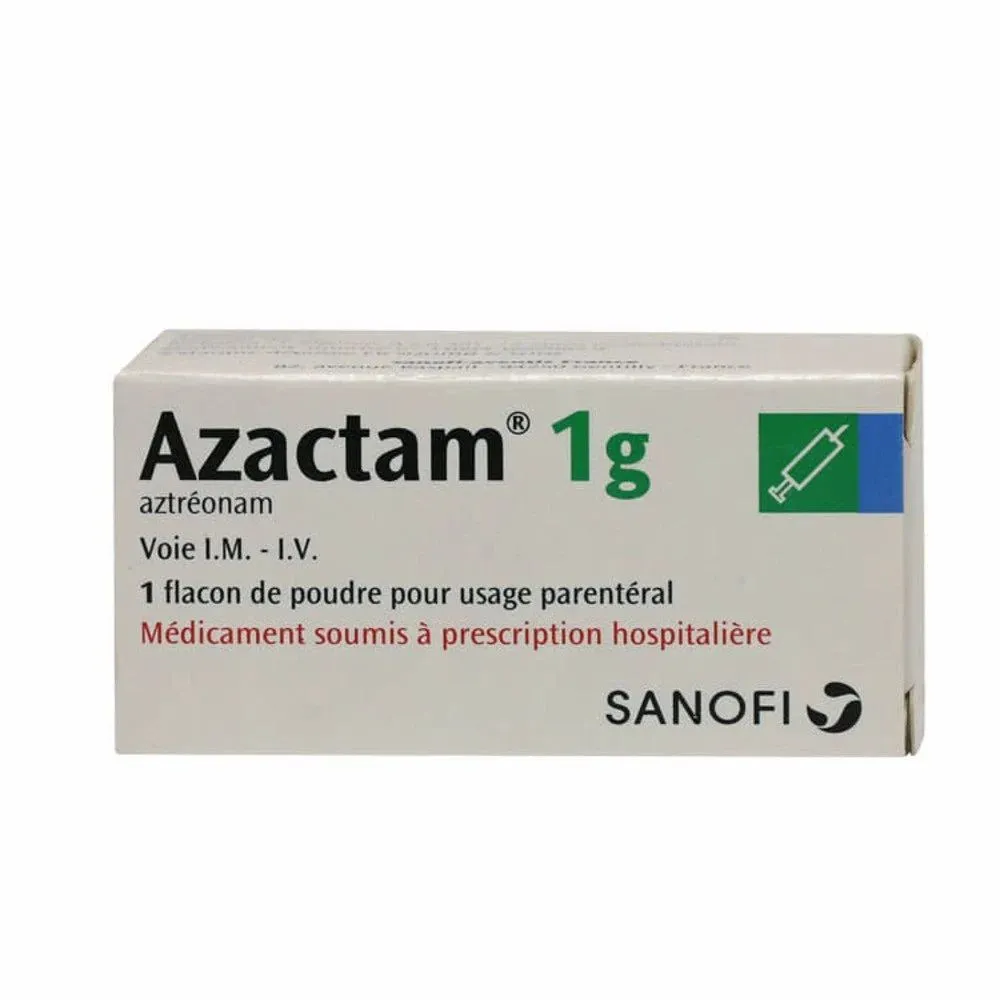
Table of Contents
- Package leaflet: Information for the user
- Introduction
- 1. What Azactam is and what it is used for
- 2. What you need to know before starting to use Azactam
- ***Do not use Azactam***
- ***Warnings and precautions***
- **Inform your doctor if you are taking probenecid (used in the treatment of gout) or furosemide (a diuretic used in the treatment of hypertension), as concomitant administration with these medications may result in increased serum levels of aztreonam.**
- **Pregnancy, lactation and fertility**
- 3. How to use Azactam
- ***If you use more Azactam than you should***
- ***If you forget to use Azactam***
- 4. Possible adverse effects
- 5. Storage of Azactam
- 6. Contents of the pack and other information
Package leaflet: Information for the user
Introduction
Package leaflet: information for the user
Azactam 1g powder for injectable solution
Aztreonam
Read this entire leaflet carefully before you start using this medicine, because it contains important information for you.
- Keep this leaflet, as you may need to read it again.
- If you have any questions, consult your doctor or pharmacist.
- This medicine has been prescribed for you and you should not give it to other people, even if they have the same symptoms, as it may harm them.
- If you experience any adverse reactions, consult your doctor or pharmacist, even if they are adverse reactions not listed in this leaflet. See section 4.
Contents of the leaflet:
-
What Azactam is and what it is used for
-
What you need to know before using Azactam
-
How to use Azactam
-
Possible adverse effects
-
How to store Azactam
-
Contents of the pack and other information
1. What Azactam is and what it is used for
Azactam is an antibiotic belonging to the monobactam group.
Antibiotics are used to treat bacterial infections and are not effective against viral infections such as flu or the common cold.
It is important that you follow the instructions regarding dose, dosing interval, and duration of treatment as directed by your doctor.
Do not store or reuse this medicine. If you have any antibiotic left over after finishing your treatment, return it to the pharmacy for proper disposal. Medicines should not be disposed of down the drain or in the household waste.
It is indicated for the treatment of urinary tract infections, lower respiratory tract infections, skin and soft tissue infections, bone and joint infections, abdominal infections, gynecological infections, certain sexually transmitted infections (gonorrhea), and sepsis.
2. What you need to know before starting to use Azactam
Do not use Azactam
If you are allergic (hypersensitive) to aztreonam or to any of the other components of this medicine (listed in section 6).
Warnings and precautions
If you are allergic to penicillins, cephalosporins, and/or carbapenems, you should use Azactam only with extreme caution, and only if the expected benefit outweighs the risk of a potentially severe allergic reaction. If you notice any signs of an allergic reaction, you must stop treatment with Azactam and consult your doctor, as certain measures may become necessary.
You should inform your doctor if you have impaired renal or hepatic function, as you may require appropriate monitoring during treatment. When Azactam is administered to elderly patients, who frequently have impaired renal function, your doctor will perform the necessary tests to determine the appropriate dose.
Inform your doctor if you develop significant blood or skin abnormalities during treatment with Azactam, as it may be necessary to discontinue the treatment.
In rare cases, seizures have been reported during treatment with aztreonam; these usually resolve during or after discontinuation of treatment. If you experience seizures while receiving aztreonam, consult your doctor.
If you develop diarrhoea during treatment or up to two months afterwards, you should also inform your doctor, who will take appropriate measures.
If you are taking oral anticoagulants, inform your doctor, as dose adjustments of these oral anticoagulants may be required. There have been reports of increased anticoagulant effect in patients treated with antibiotics. Factors that may increase this risk include the presence of severe inflammation or infection, advanced age, and the patient's overall condition.
If you are receiving an aminoglycoside antibiotic during treatment with this medicine, your doctor will monitor your kidney function due to the potential for kidney and ear toxicity associated with these antibiotics.
The use of beta-lactam antibiotics such as this medicinal product may lead to a risk of encephalopathy, which may result in confusion, loss of consciousness, epilepsy, and movement disorders, particularly in patients with renal impairment or in cases of overdose (see sections 3 and 4).
Treatment with Azactam may interfere with certain laboratory tests (e.g. increased blood transaminases and false-positive urine glucose tests), and may also yield positive results in a direct or indirect Coombs test (a blood test used to detect certain diseases by identifying the presence of specific antibodies).
Children and adolescents
The efficacy and safety of Azactam have not been established in newborns under 1 week of age.
Other medicines and Azactam
Use of Azactam with other medicines
Inform your doctor or pharmacist if you are currently using, have recently used, or might need to use any other medicines.
In particular, you should inform your doctor if you are being treated with other antibiotics (used to treat infections) or oral anticoagulants.
Your doctor should perform appropriate monitoring when anticoagulants are used concomitantly. Dose adjustments of oral anticoagulants may be necessary to maintain the appropriate level of blood coagulation.
If you are using an aminoglycoside antibiotic during treatment with Azactam, your doctor will monitor your kidney function due to the potential for kidney and ear toxicity associated with these antibiotics.
Some antibiotics (such as cefoxitin and imipenem) may antagonize the effect of many beta-lactam antibiotics, including aztreonam, in the treatment of certain bacterial infections.
Inform your doctor if you are taking probenecid (used in the treatment of gout) or furosemide (a diuretic used in the treatment of hypertension), as concomitant administration with these medications may result in increased serum levels of aztreonam.
Pregnancy, lactation and fertility
If you are pregnant or breastfeeding, think you may be pregnant or are planning to become pregnant, consult your doctor or pharmacist before using this medicine.
Azactam should not be administered during pregnancy unless the expected benefit justifies the potential risk.
Aztreonam is excreted in very small amounts in human milk; therefore, temporary interruption of breastfeeding should be considered during treatment with this medicine.
Driving and use of machines
Do not drive or operate tools or machinery, as this medicine may have a major influence on the ability to drive vehicles and use machinery, particularly due to the possible occurrence of encephalopathies (which may cause confusion, seizures, or abnormal movements) (see sections 3-If you use more Azactam than you should and 4).
Azactam contains arginine.
Studies conducted in infants born with low birth weight have shown that arginine administered with this medicine may lead to increases in insulin, indirect bilirubin, and serum arginine levels.
The consequences of this component in newborns treated with aztreonam have not been definitively established. Therefore, use in newborns should be carefully evaluated.
3. How to use Azactam
Follow exactly the instructions for administration of this medicine as given by your doctor. If in doubt, consult your doctor or pharmacist again.
Azactam is administered by intramuscular injection and by intravenous route. For instructions on preparation, see section 6 below.
The intravenous route is recommended for patients who require single doses greater than 1 g or for those suffering from bacterial sepsis, localized parenchymal abscesses (e.g. intra-abdominal abscesses), peritonitis, and other serious or life-threatening systemic infections. Due to the serious nature of infections caused by Pseudomonas aeruginosa, in systemic infections caused by this microorganism a dose of 2 g every 6 or 8 hours is recommended, at least at the beginning of treatment.
Your doctor will determine the duration of your treatment. Do not stop treatment without first consulting your doctor.
Your doctor will determine the appropriate dose and frequency of Azactam depending on the severity of your infection.
In adults, the usual dosage regimens are:
Type of infection | Dosage* | Frequency (hours) |
Urinary tract infections | 500 mg or 1 g | 8 or 12 |
Moderately severe systemic infections | 1 g or 2 g | 8 or 12 |
Severe or life-threatening systemic infections | 2 g | 6 or 8 |
- The maximum recommended dose in adults is 8 g per day.
A single dose of 1 g administered intramuscularly is effective in the treatment of uncomplicated acute gonorrhea and uncomplicated acute cystitis.
If you have renal impairment or are an elderly patient, your doctor will adjust the dose according to your creatinine clearance value.
In patients with transient or persistent renal impairment, after an initial normal dose, the maintenance dose of Azactam should be reduced by half in patients with an estimated creatinine clearance between 10 and 30 ml/min/1.73 m².
In patients with severe renal impairment, with creatinine clearance values less than 10 ml/min/1.73 m² (for example, patients undergoing hemodialysis), initial normal doses should be given. Maintenance doses should be one-quarter of the initial dose, administered at fixed intervals of 6, 8, or 12 hours. In severe or life-threatening infections, in addition to the aforementioned maintenance doses, one-eighth of the initial dose should be administered after each hemodialysis session.
If you have chronic liver disease with cirrhosis, your doctor may recommend a dose reduction of 20–25%, especially in cases of alcoholic cirrhosis and when renal function is also impaired.
Use in children
In children, the usual dosage for patients older than 1 week is 30 mg/kg every 6 to 8 hours. To treat severe infections in patients aged 2 years or older, a dose of 50 mg/kg every 6 to 8 hours is recommended. The recommended dose for all pediatric patients in the treatment of infections caused by P. aeruginosa is 50 mg/kg every 6 to 8 hours. The maximum daily dose should not exceed the maximum recommended dose for adults.
If you think that the effect of Azactam is too strong or too weak, inform your doctor or pharmacist.
If you use more Azactam than you should
If you receive a higher dose of Azactam than prescribed, even though it is unlikely to cause severe poisoning, go to the doctor as soon as possible or contact the nearest hospital emergency department. If necessary, aztreonam can be removed from the bloodstream by hemodialysis and/or peritoneal dialysis.
An overdose of this medicine may cause encephalopathy, which can lead to confusion, loss of consciousness, seizures, and movement disorders.
In case of overdose or accidental ingestion, consult your doctor or pharmacist immediately or call the Toxicology Information Service at telephone number: 91 562 04 20, stating the name of the medicine and the amount ingested.
If you forget to use Azactam
Do not administer a double dose to make up for missed doses.
Consult your doctor. Your doctor will determine the necessary next steps.
If you have any other questions about the use of this product, ask your doctor or pharmacist.
4. Possible adverse effects
Like all medicines, this medicine may cause adverse effects, although not everyone experiences them.
Adverse effects are classified according to their frequency of occurrence as follows: very common (affects more than 1 in 10 people), common (may affect up to 1 in 10 people), uncommon (may affect up to 1 in 100 people), rare (may affect up to 1 in 1,000 people), very rare (may affect up to 1 in 10,000 people), and frequency not known (cannot be estimated from available data).
Uncommon: increased blood creatinine.
Rare: vaginal infection, vaginal candidiasis (fungal infection), increase or decrease in platelet and white blood cell counts, decrease in red blood cell count, prolonged blood coagulation time, positive Coombs test, convulsions, paresthesia (tingling), dizziness, headache, confusion, insomnia, double vision, vertigo, tinnitus (ringing in the ears), decreased blood pressure, hemorrhage, dyspnea (difficulty breathing), sneezing, nasal congestion, wheezing, gastrointestinal bleeding, pseudomembranous colitis (inflammation of the colon with diarrhea), bad breath, hepatitis (inflammation of the liver), jaundice (yellowing of the skin and mucous membranes), muscle pain, breast tenderness, fever, malaise, fatigue, chest pain, changes in electrocardiogram.
Frequency not known: anaphylactic reactions (severe allergic reactions), dysgeusia (taste disturbance), encephalopathy (characterized by confusion, loss of consciousness, epilepsy, and movement disorders), phlebitis (vein inflammation), thrombophlebitis (blood clot formation), hot flushes, bronchospasm (sudden breathing difficulty), abdominal pain, mouth ulcers, nausea, vomiting, diarrhea, increased liver enzymes, increased alkaline phosphatase (laboratory abnormalities indicating liver involvement), toxic epidermal necrolysis (appearance of blisters and skin peeling), angioedema (allergic reaction), erythema multiforme (skin redness in spots or diffuse), skin infection and skin desquamation, hyperhidrosis (excessive sweating), petechiae (skin spots), purpura (brownish skin lesions), urticaria (itchy skin rash), rash, pruritus (itching), injection site discomfort.
Reporting of adverse effects
If you experience any type of adverse effect, consult your doctor, pharmacist, or nurse, even if it is a possible adverse effect not listed in this leaflet. You may also report them directly via the Spanish Pharmacovigilance System for Human Medicines: www.notificaram.es. By reporting adverse effects, you can help provide more information on the safety of this medicine.
5. Storage of Azactam
Keep this medicine out of the sight and reach of children.
Before opening the vial: Store in the original packaging. Do not store above 25 °C.
Do not use this medicine after the expiry date stated on the container.
After first opening/reconstitution with the appropriate diluent, the solution should be used immediately. If not used immediately, the storage times and conditions prior to use are the responsibility of the user.
Medicines should not be disposed of via wastewater or household waste. Dispose of containers and unused medicines at the SIGRE collection point at your pharmacy. If you have any doubts, ask your pharmacist how to dispose of containers and unused medicines. This will help protect the environment.
6. Contents of the pack and other information
Composition of Azactam
- The active substance is aztreonam. Each vial of powder contains 1 g of aztreonam.
- The other component (excipient) in the powder vial is arginine.
Appearance of the medicinal product and contents of the container
1 glass vial, Type III, with a capacity of 15 ml, containing the active substance and excipient, closed with a grey chlorobutyl rubber stopper of 20 mm and sealed with a cap.
Additional information: Aztreonam is not compatible with sodium nafcillin, cefradine, and metronidazole.
Marketing Authorization Holder and Manufacturer
MARKETING AUTHORIZATION HOLDER
Galenicum Derma, S.L.U.
Ctra. N-1, Km 36
285750 San Agustín del Guadalix (Madrid)
Spain
MANUFACTURER
CATALENT ANAGNI S.R.L.
Loc. Fontana del Ceraso snc
Strada Provinciale 12 Casilina N. 41
03012 ANAGNI (FR)
Italy
Swords Laboratories Unlimited Company T/A Bristol-Myers
Squibb Pharmaceutical Operations,
External Manufacturing Plaza 254
Blanchardstown Corporate Park 2,
Dublin 15, D15 T867,
Ireland
Date of the most recent review of the package leaflet: October 2021
Other sources of information
Detailed information on this medicinal product is available on the website of the Spanish Agency of Medicines and Health Products (AEMPS) http://www.aemps.gob.es/.
This information is intended for healthcare professionals only
Once the vial has been opened, the product must be used immediately. Vials should be inspected visually before administration to detect the presence of particles or discoloration.
Depending on the concentration of aztreonam and the solvent used, the resulting solution will be colorless or pale yellowish, and may develop a slightly pinkish tint upon standing (this does not affect potency).
Each gram of Azactam reconstituted with 3 ml of an appropriate diluent (see preparation of solutions and acceptable diluents for each route of administration, as indicated below) provides 1 gram of Azactam in a total volume of approximately 4 ml.
The pH of the solutions ranges between 4.5 and 7.5, depending on the type and amount of solvent used.
Intramuscular administration
The contents of one vial (1 g of aztreonam) of Azactam must be reconstituted with at least 3 ml of one of the following solvents:
Water for injections
Water for injections (bacteriostatic with benzyl alcohol or methyl-propylparabens)
0.9% Sodium chloride
0.9% Sodium chloride (bacteriostatic with benzyl alcohol)
Solvents containing benzyl alcohol are not suitable for use in neonates.
After adding the diluent aseptically to the vial, the contents must be shaken immediately and vigorously until a completely clear solution is obtained. The solution is for single use only. Discard any unused portion.
The dose should be administered by deep intramuscular injection into a large muscle mass (such as the upper outer quadrant of the gluteal region or the lateral part of the thigh). Aztreonam is well tolerated and should not be mixed with any local anesthetic.
Intravenous administration
Intravenous bolus injection:
The selected dose of Azactam should be prepared with 6 ml to 10 ml of water for injections as diluent. After adding the diluent aseptically to the vial, the contents must be shaken immediately and vigorously until a completely clear solution is obtained. The solution is for single use only. Discard any unused portion.
The solution should be injected slowly over a period of 3 to 5 minutes directly into the vein, or via an appropriate administration set.
Infusion:
Each gram of aztreonam should initially be dissolved in a minimum of 3 ml of water for injections as diluent. After adding the diluent aseptically to the vial, the contents must be shaken immediately and vigorously until a completely clear solution is obtained. Further dilution to a final concentration not exceeding 2% w/v (i.e., at least 50 ml of solution per gram of aztreonam) may be achieved using one of the following intravenous infusion solutions:
0.9% Sodium chloride for injections
Ringer's solution for injections
Ringer's lactate solution for injections
Glucose and sodium chloride solution for injections
Sodium lactate solution for injections (M/6 sodium lactate)
5% or 10% Mannitol for injections
Ringer's lactate and 5% glucose 5% or 10%
The solution is for single use only. Discard any unused portion.
Alternatively, the contents of a 100 ml bottle may be reconstituted to a final concentration not exceeding 2% w/v (at least 50 ml of solution per gram of aztreonam) with any of the above-mentioned infusion solutions as appropriate. These solutions may be frozen immediately.
The rate of administration of this medicinal product during infusion should be over a period of 20 to 60 minutes.
When using a Y-set, care must be taken to ensure the calculated volume of aztreonam solution is administered to deliver the full dose. A volumetric administration set may be used to add the initial aztreonam solution to a compatible infusion solution being administered; in this case, the final dilution of aztreonam must provide a concentration not exceeding 2% w/v.
If an intermittent common line is used for both aztreonam infusions and another drug with which aztreonam is not pharmaceutically compatible, the line must be flushed before and after administration of aztreonam solution with one of the appropriate compatible infusion solutions. Simultaneous administration must not be performed under any circumstances.
Frozen aztreonam solutions should be stored at -20°C and thawed at controlled room temperature or in a refrigerator overnight. Solutions thawed at controlled room temperature or under refrigeration should be used within 24 and 72 hours, respectively, after removal from the freezer. The solution must not be refrozen.
Azactam solutions should be used immediately after preparation.
Administration with other antibiotics
Intravenous solutions of AZACTAM diluted to no more than 2% w/v with 0.9% sodium chloride or 5% glucose for injections, to which clinically usual concentrations of clindamycin phosphate, gentamicin sulfate, tobramycin sulfate, sodium cefazolin, or sodium ampicillin have been added, should be used immediately after preparation.
Mixtures of aztreonam-cloxacillin sodium and aztreonam-vancomycin hydrochloride in Dianeal 137 (peritoneal dialysis solution) with 4.25% glucose should also be used immediately after preparation.
Mixtures with other medicinal products, or mixtures of the above-mentioned drugs at concentrations different from those specified above, are not recommended due to lack of compatibility data.