Atropine sulfate Serra Pamies 1 mg/ml solution for injection
Spain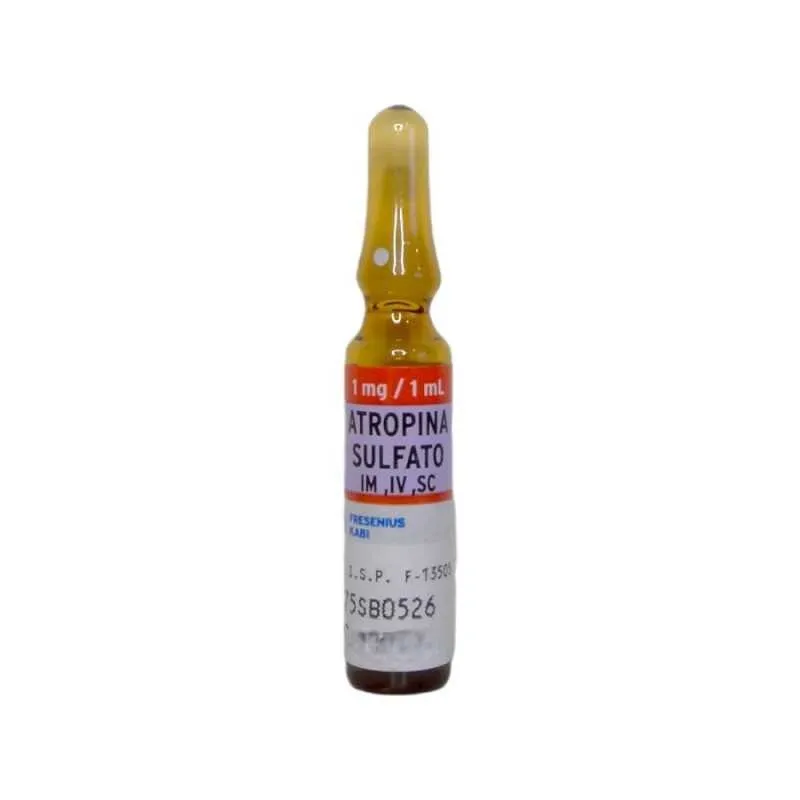
Table of Contents
- Package leaflet: Information for the user
- Introduction
- 1. What Atropine Sulfate Serra Pamies is and what it is used for
- 2. What you need to know before using Atropine Sulfate Serra Pamies
- 3. How to use Atropine Sulfate Serra Pamies
- 4. Possible adverse effects
- 5. Storage of Atropine Sulfate Serra Pamies
- 6. Contents of the package and other information
Package leaflet: Information for the user
Introduction
Package leaflet: information for the user
Atropine sulfate Serra Pamies 1 mg/ml solution for injection
Read all of this leaflet carefully before you start using this medicine, because it contains important information for you.
-
Keep this leaflet. You may need to read it again.
- If you have any questions, ask your doctor, pharmacist, or nurse.
-
This medicine has been prescribed for you only. Do not pass it on to others, even if they have the same symptoms as you, because it may harm them.
- If you experience any side effects, talk to your doctor, pharmacist, or nurse, even if the side effect is not listed in this leaflet. See section 4.
Contents of the leaflet
- What Atropine sulfate Serra Pamies is and what it is used for
- What you need to know before using Atropine sulfate Serra Pamies
- How to use Atropine sulfate Serra Pamies
- Possible side effects
- How to store Atropine sulfate Serra Pamies
- Contents of the pack and other information
1. What Atropine Sulfate Serra Pamies is and what it is used for
The active substance is atropine sulfate. It belongs to the group of medicines known as belladonna alkaloids, tertiary amines.
This medicine is used as:
- A pre-anesthetic: medication used before general anesthesia.
- A spasmolytic: in liver and kidney colic. It is used to help treat irritable bowel syndrome (irritable colon, mucous colitis, and spastic colon).
2. What you need to know before using Atropine Sulfate Serra Pamies
Do not use Atropine Sulfate Serra Pamies
- if you are allergic to atropine sulfate or to any of the other ingredients of this medicine (listed in section 6).
- in patients with narrow-angle glaucoma.
- in patients with prostatic hypertrophy, in whom it may cause urinary retention.
- in patients with pyloro-duodenal obstruction.
- in patients with heart function disorders.
Warnings and precautions
Consult your doctor, pharmacist, or nurse before starting to use atropine sulfate:
- if your kidneys do not function properly.
- if your heart beats faster than normal.
- if you have disorders in heart function.
- if you have ulcerative colitis.
- if you have reflux esophagitis.
- in elderly patients and children.
Children
- Infants and young children are especially sensitive to the toxic effects of this type of medicine.
- Strict supervision of medication is recommended in infants and children.
- When this type of medicine is administered to children in environments with high ambient temperature, there is a risk of rapid increase in body temperature.
- In children receiving high doses of this type of medicine, an unusual reaction characterized by hyperexcitability may occur.
Use in elderly patients
- They may respond to usual doses of this type of medicine with excitement, restlessness, agitation, drowsiness, or confusion.
- In addition, they are especially sensitive to the side effects of this type of medicine (constipation, dry mouth, and urinary retention).
- These drugs may also precipitate undiagnosed glaucoma and impair memory in geriatric patients.
Other medicines and Atropine Sulfate Serra Pamies
Inform your doctor or pharmacist if you are taking, have recently taken, or might need to take any other medicines.
The administration of atropine sulfate together with the following medicines may require dose adjustments or discontinuation of treatment.
- Ethyl alcohol: possible potentiation of alcohol toxicity.
- Anticholinergics: drugs with anticholinergic effects (amantadine, tricyclic antidepressants, disopyramide, etc.) may enhance the action and/or toxicity of this medicine.
- Phenylephrine: possible potentiation of phenylephrine toxicity, leading to hypertension.
- Metoclopramide: possible inhibition of the prokinetic effect of metoclopramide due to antagonism by atropine, which blocks the indirect cholinergic stimulation caused by metoclopramide.
- Verapamil: possible potentiation of atropine-induced tachycardia, as anticholinergics may enhance verapamil's effects on heart rhythm.
- Urinary acidifying agents: increase the urinary excretion of atropine and thus reduce its effect; therefore, they are incompatible.
- Urinary alkalinizing agents: decrease the urinary excretion of atropine and thus enhance its effect; therefore, they are incompatible.
- Antihistamines: enhance the action of atropine and its toxic effects.
- Phenothiazines: enhance the action of atropine and its toxic effects.
- Corticosteroids: enhance the action of atropine and its toxic effects.
- Monoamine oxidase inhibitors (MAOIs): enhance the action of atropine and its toxic effects.
- Ritodrine: additive effects between both drugs are believed to occur, causing increased heart rate.
Use of atropine sulfate with food, drinks, and alcohol
No interactions with food and drinks are known.
The use of atropine with alcohol may potentiate alcohol toxicity.
Pregnancy and breastfeeding
If you are pregnant or breastfeeding, think you may be pregnant, or are planning to become pregnant, consult your doctor or pharmacist before using this medicine.
Pregnancy:
Your doctor should evaluate the benefits versus risks of this type of medication.
Breastfeeding:
Your doctor should evaluate the benefits versus risks of this type of medication, as traces may appear in breast milk.
This type of medicine, in general, may inhibit lactation.
Driving and use of machines
The administration of atropine may cause adverse effects such as confusion, blurred vision, drowsiness, etc., which may affect the ability to drive or operate machinery. If you experience these effects, do not drive or operate machinery.
Atropine Sulfate Serra Pamies contains:
- Sodium metabisulfite (E-223): this medicine may cause severe allergic reactions and bronchospasm (sudden sensation of suffocation) because it contains sodium metabisulfite (E-223).
- Sodium: this medicine contains less than 23 mg (1 mmol) of sodium per ml; hence, it is essentially “sodium-free”.
3. How to use Atropine Sulfate Serra Pamies
Follow exactly the administration instructions for this medicine as given by your doctor or pharmacist. If in doubt, consult your doctor or pharmacist again.
This medicine is administered by subcutaneous, intramuscular, or intravenous route.
Intravenous administration must be performed by diluting with a minimum volume of 10 ml of physiological saline and administered slowly.
The recommended dose is:
- As pre-anesthetic medication: administered subcutaneously or intramuscularly approximately one hour before anesthesia, or intravenously immediately before anesthesia.
Adults: 0.3 to 0.6 mg of atropine sulfate may be administered. The maximum dose in adults is 3 mg within 24 hours.
Children: doses should be calculated at a rate of 0.02 mg per kg of body weight.
- As spasmolytic medication: 0.4 to 0.6 mg in adults at 4-6 hour intervals.
If you use more Atropine Sulfate Serra Pamies than you should
The following may occur:
- dry mouth with difficulty swallowing and speaking
- thirst
- mydriasis (pupil dilation)
- paralysis of visual accommodation (ability to focus vision) and photophobia (sensitivity to light)
- increased intraocular pressure
- dry skin
- decreased heart rate followed by increased heart rate with palpitations and cardiac rhythm disturbances
- constipation
- difficulty urinating
- occasionally vomiting.
In case of overdose, peripheral effects may become more pronounced and other symptoms may occur such as hyperthermia, hypertension, increased respiratory rate, nausea and vomiting. A rash may appear on the face or upper trunk. Toxic doses may also cause central nervous system (CNS) stimulation, characterized by restlessness, confusion, excitement, difficulty moving, incoordination, paranoia (imagining things that do not exist), psychotic-maniacal reactions, hallucinations and delirium, and occasionally rigidity. However, in severe poisoning, central stimulation may lead to CNS depression, coma, circulatory and respiratory failure, and death.
The central and peripheral toxic effects of atropine can be controlled with physostigmine salicylate 1–2 mg, injected subcutaneously, intramuscularly, or intravenously; due to its short duration of action, the injection may be repeated every 1–2 hours if necessary.
Subcutaneous or intramuscular injection of methylsulfate neostigmine controls only peripheral effects. Excitement may be controlled with small doses of short-acting barbiturates such as sodium thiopental (100 mg).
Treatment of atropine poisoning may require assisted ventilation and oxygen, ice packs for hyperpyrexia (especially in children), catheterization, and administration of fluids.
In case of overdose or accidental administration, contact your doctor or pharmacist immediately or call the toxicology information service at telephone number: 91 562 04 20, indicating the medicine and the amount used. It is recommended to bring the medicine's packaging and leaflet to the healthcare professional.
If you forget to use Atropine Sulfate Serra Pamies
Do not use a double dose to make up for a missed dose.
If you stop using Atropine Sulfate Serra Pamies
Your doctor will indicate the duration of your treatment. Do not stop treatment prematurely, as the expected therapeutic effect may not be achieved.
Withdrawal effects have not been reported.
4. Possible adverse effects
Like all medicines, this medicine can produce adverse effects, although not everyone will experience them.
The adverse effects of atropine are generally frequent but mild and transient. In most cases, adverse effects are an extension of the pharmacological action and mainly affect the digestive system.
The most characteristic adverse effects are:
Very common adverse effects (may affect more than 1 in 10 people):
- Blurred vision
- Dry mouth
Common adverse effects (may affect up to 1 in 10 people):
- Anaphylactic reaction (severe allergic reaction)
- Headache
- Mental confusion
- Excitement (especially in elderly patients)
- Drowsiness
- Accommodation disorders (difficulty focusing)
- Mydriasis (dilation of the pupil)
- Photophobia (sensitivity to light)
- Glaucoma (increased pressure in the eye)
- Palpitations
- Bradycardia (decreased heart rate) after low doses
- Tachycardia (increased heart rate) after high doses
- Taste disturbances
- Nausea
- Vomiting
- Dysphagia (difficulty swallowing)
- Paralytic ileus (acute intestinal obstruction due to paralysis of intestinal movements)
- Urinary retention
Uncommon adverse effects (may affect up to 1 in 100 people):
- Dizziness
- Insomnia
- Nasal congestion
- Impotence
Reporting of adverse effects
If you experience any type of adverse effect, consult your doctor or pharmacist, even if it is a possible adverse effect not listed in this leaflet. You may also report them directly via the Spanish System for Pharmacovigilance of Human Medicines: https://www.notificaram.es. By reporting adverse effects, you can help provide more information on the safety of this medicine.
5. Storage of Atropine Sulfate Serra Pamies
Keep this medicine out of the sight and reach of children.
This medicine does not require special storage conditions. Store in the original packaging to protect from light.
Use immediately after opening the container and discard any remaining solution.
Do not use this medicine after the expiry date stated on the label after EXP. The expiry date refers to the last day of the month indicated.
Medicines should not be disposed of via wastewater or household waste. Dispose of unused medicines and their containers at the SIGRE collection point at your pharmacy. If you are in doubt, ask your pharmacist how to dispose of medicines and containers you no longer need. This will help protect the environment.
6. Contents of the package and other information
Composition of Atropine Sulfate Serra Pamies
- The active substance is atropine sulfate. Each 1 ml ampoule contains 1 mg of atropine sulfate.
- The other components (excipients) are: sodium chloride, sodium metabisulfite (E-223) and water for injections.
Appearance of the product and contents of the container
Atropine Sulfate Serra Pamies is a clear, sterile solution.
It is supplied in amber glass ampoules containing 1 ml of injectable solution.
Each pack contains 1 or 100 ampoules (hospital pack) of 1 ml solution.
Marketing Authorization Holder and Manufacturer
Laboratorios Serra Pamies, S.A.
Ctra. Castellvell, 24
43206 REUS (Tarragona)
Date of the most recent revision of this leaflet: July 2019
Other sources of information
Detailed information on this medicinal product is available on the website of the Spanish Agency for Medicines and Health Products (AEMPS): http://www.aemps.gob.es/