Atropine Aguettant 0.2 mg/ml solution for injection in pre-filled syringe
SpainInstructions for Use
Table of Contents
- Introduction
- 1. What Atropina Aguettant is and what it is used for
- 2. What you need to know before using Atropina Aguettant
- 3. How to use Atropina Aguettant
- Your doctor will decide the correct dose for you and how and when the injection will be administered.
- 4. Possible adverse effects
- 5. Storage of Atropine Aguettant
- 6. Contents of the pack and other information
Package leaflet: Information for the user
Introduction
Package leaflet: information for the user
ATROPINE AGUETTANT 0.2 mg/ml, solution for injection in pre-filled syringe
Atropine, sulfate
Read the entire leaflet carefully before you start using this medicine, because it contains important information for you.
- Keep this leaflet, as you may need to read it again.
- If you have any questions, ask your doctor or pharmacist.
- This medicine has been prescribed for you only, and you should not give it to other people, even if they have the same symptoms as you, because it could harm them.
- If you experience any adverse effects, consult your doctor or pharmacist, even if they are adverse effects not listed in this leaflet. See section 4.
The name of this medicine is Atropine Aguettant 0.2 mg/ml solution for injection in pre-filled syringe; it will be referred to as Atropine Aguettant throughout this leaflet.
Leaflet contents
- What Atropine Aguettant is and what it is used for
- What you need to know before using Atropine Aguettant
- How to use Atropine Aguettant
- Possible side effects
- How to store Atropine Aguettant
- Contents of the pack and other information
1. What Atropina Aguettant is and what it is used for
Atropine belongs to a class of medicines called anticholinergics. An anticholinergic is a substance that blocks the neurotransmitter acetylcholine in the central and peripheral nervous systems. It is used in emergency situations when the heart beats too slowly, as an antidote in cases of poisoning by organophosphorus insecticides or neurotoxic gases, for example, and in cases of mushroom poisoning.
It may be used as part of premedication prior to general anesthesia. It may also be used to prevent the side effects of other drugs used to reverse the effects of muscle relaxants after surgery.
Atropina Aguettant 0.2 mg/ml solution for injection in a pre-filled syringe is used to treat adults only.
2. What you need to know before using Atropina Aguettant
Do not use Atropina Aguettant:
- if you are allergic (hypersensitive) to atropine or to any of the other components of this medicine (listed in section 6);
- if you have urinary problems;
- if you have increased pressure in the eye (glaucoma);
- if you suffer from esophageal disease (esophageal achalasia), intestinal blockage (paralytic ileus), or an acute form of colonic dilation (toxic megacolon).
These contraindications do not apply in cases of potentially life-threatening emergencies.
Warnings and precautions
Consult your doctor before using Atropina Aguettant if you have:
- hyperthyroidism;
- prostate disease;
- heart failure;
- liver or kidney disease;
- certain heart conditions;
- stomach disorders, such as pyloric stenosis;
- chronic bronchitis;
- fever;
- if you are elderly;
- myasthenia gravis (severe muscle weakness);
- heartburn (reflux).
Use of Atropina Aguettant with other medicines
Inform your doctor or pharmacist if you are taking, have recently taken, or might need to take any other medicines, including:
- tricyclic antidepressants;
- certain antihistamines;
- medicines for Parkinson's disease;
- phenothiazines, clozapine, or neuroleptic drugs (for mental illnesses);
- quinidine or disopyramide (for heart conditions);
- spasmolytics (for irritable bowel syndrome).
Pregnancy and breastfeeding
Pregnancy
Limited data on the use of atropine in pregnant women suggest that there are no adverse effects on pregnancy or fetal health. Atropine crosses the placenta. Intravenous administration of atropine during pregnancy or at term may cause increased heart rate in both the fetus and the mother. This medicine should only be administered during pregnancy after careful consideration of the benefits and risks of treatment.
Breastfeeding
Small amounts of atropine may pass into breast milk and affect the infant. Atropine may also inhibit breast milk production. Your doctor will assess the benefits of breastfeeding against the benefits of treatment. If treatment is continued, breastfeeding must be discontinued. However, if breastfeeding is maintained during treatment, your doctor will perform additional monitoring of the infant.
If you are pregnant or breastfeeding, think you may be pregnant, or plan to become pregnant, consult your doctor or pharmacist before using this medicine.
Driving and using machines
Atropine injection may cause confusion or blurred vision. You should not drive or operate machinery after receiving an injection.
Atropina Aguettant contains sodium
This medicine contains less than 23 mg (1 mmol) of sodium per dose and is therefore considered essentially "sodium-free".
3. How to use Atropina Aguettant
Your doctor will decide the correct dose for you and how and when the injection will be administered.
The recommended dose is:
As pre-anesthetic medication
Adults: 0.3–0.6 mg intravenously immediately before induction of anesthesia, or 0.3–0.6 mg intramuscularly, 30 to 60 minutes before anesthesia.
To reverse the effects of muscle relaxants:
Adults: 0.6–1.2 mg intravenously with neostigmine.
In case of low heart rate, heart block, or cardiac arrest:
Adults:
- Sinus bradycardia (low pulse rate): 0.5 mg intravenously, every 2–5 minutes until the desired heart rate is achieved.
- AV block (impaired conduction of the heartbeat from the atrium to the ventricle): 0.5 mg intravenously, every 3–5 minutes (maximum 3 mg).
As an antidote in organophosphate poisoning (insecticides or nerve gas), anticholinesterase agents, or muscarinic mushroom poisoning:
Adults: 0.5–2 mg depending on patient characteristics and response; may be repeated after 5 minutes and subsequently as needed.
If you have any further questions about the use of this medicine, ask your doctor or pharmacist.
This injection will be administered by a doctor or nurse, so it is unlikely that you will receive an excessive amount of atropine. If you think you have been given too much atropine and experience a very fast heartbeat, rapid breathing, high fever, restlessness, confusion, hallucinations, or loss of coordination, you should immediately inform the person who administered the injection.
4. Possible adverse effects
Like all medicines, this medicine can cause adverse effects, although not everyone experiences them.
Adverse effects depend on the dose you receive and usually disappear when treatment is stopped.
Allergic reactions may rarely occur. These may cause skin rashes, intense itching, skin peeling, facial swelling (especially around the lips and eyes), throat tightness, and difficulty breathing or swallowing, fever, dehydration, shock, and fainting. All of these are very serious adverse effects. Inform your doctor immediately if you experience any of these adverse effects. You may require urgent medical attention.
Very common adverse effects (may affect more than 1 in 10 people)
- visual disturbances (pupil dilation, difficulty focusing, blurred vision, light sensitivity);
- reduced bronchial secretion;
- dry mouth (difficulty swallowing and speaking, sensation of thirst);
- constipation and burning sensations (reflux);
- reduced gastric acid secretion;
- loss of taste;
- nausea;
- vomiting;
- sensation of bloating;
- absence of sweating;
- dry skin;
- hives;
- rash.
Common adverse effects (may affect up to 1 in 10 people)
- excitement (especially with higher doses);
- loss of coordination (especially with higher doses);
- confusion (especially with higher doses);
- hallucinations (especially with higher doses);
- increased body temperature;
- certain cardiac disorders (rapid heartbeat, irregular heartbeat, temporary slowing of heartbeat);
- flushing;
- difficulty urinating.
Uncommon adverse effects (may affect up to 1 in 100 people)
- psychotic reactions.
Rare adverse effects (may affect up to 1 in 1000 people)
- allergic reactions;
- epileptic seizures (convulsions);
- somnolence.
Very rare adverse effects (may affect up to 1 in 10,000 people)
- severe allergic reaction;
- irregular heartbeat, including ventricular fibrillation;
- chest pain;
- spike in blood pressure.
Frequency not known (cannot be estimated from available data)
- headache;
- restlessness;
- unsteady gait and balance problems;
- insomnia.
Reporting of adverse effects
If you experience any type of adverse effect, consult your doctor or pharmacist, even if it is a possible adverse effect not listed in this leaflet. You may also report side effects via the Spanish Pharmacovigilance System for Human Medicinal Products: www.notificaRAM.es. By reporting adverse effects, you can help provide more information on the safety of this medicine.
5. Storage of Atropine Aguettant
Keep this medicine out of the sight and reach of children.
Do not use this medicine after the expiry date stated on the carton, syringe, and blister pack. The expiry date is the last day of the month indicated.
This medicine does not require any special storage conditions.
Do not use this medicine if you notice any visible signs of deterioration.
Medicines must not be disposed of via wastewater or household waste. Ask your pharmacist how to dispose of unused medicines and their packaging. This will help protect the environment.
6. Contents of the pack and other information
Composition of Atropine Aguettant
- The active substance is Atropine sulfate:
Each ml of injectable solution contains 0.2 mg of atropine sulfate monohydrate, equivalent to 0.17 mg of atropine.
Each 5 ml syringe contains 1 mg of atropine sulfate monohydrate, equivalent to 0.83 mg of atropine.
- The other components are:
Sodium chloride, concentrated hydrochloric acid (for pH adjustment), water for injections.
Appearance of the Atropine Aguettant product and contents of the pack
This medicine is a clear, colourless injectable solution in a sterile 5 ml polypropylene pre-filled syringe.
Packs of 1, 5, 10, 12 and 20 syringes.
Only some pack sizes may be marketed.
Marketing Authorization Holder and Manufacturer
Marketing Authorization Holder:
Laboratoire AGUETTANT
1, rue Alexander Fleming
69007 Lyon
FRANCE
Manufacturer:
Laboratoire AGUETTANT
1, rue Alexander Fleming
69007 LYON
FRANCE
Laboratoire AGUETTANT
Lieu-dit “Chantecaille”
07340 CHAMPAGNE
FRANCE
Date of the most recent revision of this leaflet: December 2021
Detailed information on this medicine is available on the website of the Spanish Agency for Medicines and Health Products (AEMPS): http://www.aemps.gob.es
This information is intended for healthcare professionals only:
The pre-filled syringe is intended for single patient use only. Discard the syringe after use. Do not reuse.
The contents of an unopened and intact blister are sterile and should not be opened until the time of use.
The product should be visually inspected for particles and discoloration prior to administration. Only use the solution if it is clear, colourless, and free from particles or precipitates.
The product must not be used if the syringe’s security seal (plastic cover on the tip cap) is broken.
The outer surface of the syringe is sterile until the blister is opened.
| |
|
|
|
|
|
|
|
|
Push the plunger to inject the required volume. |
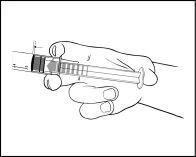
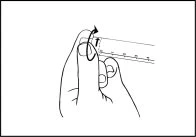
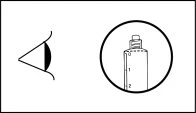
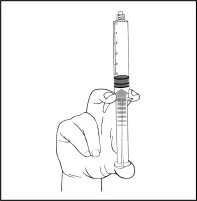
The needle size required to use with the syringe is gauge 23-20 for intravenous administration and gauge 23-21 for intramuscular administration.
Similar Medications
-
Atropine Accord 0.1 mg/ml solution for injection in pre-filled syringe
Form: solution for injection in a pre-filled syringe
Active substance Dosage ATROPINE SULFATE MONOHYDRATE 0,1 mg/ml Manufacturer: Accord Healthcare S.L.U.
-
Atropine Aguettant 0.1 mg/ml solution for injection in pre-filled syringe
Form: solution for injection in a pre-filled syringe
Active substance Dosage ATROPINE SULFATE 0,5 mg Manufacturer: Laboratoire Aguettant
This page has been machine-translated and may contain inaccuracies. The original data is available in the manufacturing country's language.
Last data check: May 18, 2026 · Data source: CIMA — AEMPS