Atamax 4 mg/ml oral solution EFG
SpainTable of Contents
Package leaflet: Information for the user
Introduction
Package leaflet: information for the user
Atamax 4 mg/ml oral solution EFG
atomoxetine
Read all of this leaflet carefully before you start taking this medicine because it contains important information for you.
-
Keep this leaflet, as you may need to read it again.
-
If you have any questions, ask your doctor or pharmacist.
-
This medicine has been prescribed for you only, and you must not give it to other people, even if they have the same symptoms as you, because it could harm them.
-
If you experience any adverse effects, consult your doctor or pharmacist, even if they are adverse effects not listed in this leaflet. See section 4.
Contents of this leaflet
- What Atamax is and what it is used for
- What you need to know before taking Atamax
- How to take Atamax
- Possible side effects
- How to store Atamax
- Contents of the pack and other information
1. What Atamax is and what it is used for
What it is used for
This medicine contains atomoxetine and is used in the treatment of attention deficit hyperactivity disorder (ADHD). It is used
- in children from the age of 6 years
- in adolescents
- in adults
It is used only as part of a comprehensive treatment program for the disorder, which also includes non-medication treatments such as counseling or behavioral therapy.
It is not used for the treatment of ADHD in children under 6 years of age, as it is not known whether the drug is effective or safe in this population.
In adults, Atamax is used for the treatment of ADHD when symptoms are highly problematic and affect work or social life, and when symptoms of the disorder were present during childhood.
How it works
Atamax increases the amount of noradrenaline in the brain. This is a naturally produced chemical that enhances attention and reduces impulsivity and hyperactivity in patients with ADHD. This medicine has been prescribed to help control the symptoms of ADHD. This medicine is not a stimulant and therefore does not cause addiction.
It may take several weeks from the start of treatment with this medicine before symptoms improve fully.
About ADHD
Children and adolescents with ADHD find it difficult to:
- sit still
- concentrate
It is not their fault that they cannot do these things. Many children and adolescents find these things difficult. However, in patients with ADHD, these difficulties can cause problems in daily life. Children and adolescents with ADHD may have difficulty learning and completing homework. They may struggle to behave appropriately at home, at school, or in other settings. ADHD does not affect a child's or adolescent's intelligence.
Adults with ADHD find it difficult to manage all the things that children also struggle with, but this may lead to problems with:
- work
- relationships
- low self-esteem
- education
2. What you need to know before taking Atamax
Do not take Atamax if you:
- are allergic to atomoxetine or to any of the other ingredients of this medicine (listed in section 6).
- have taken, within the last two weeks, a type of medicine called monoamine oxidase inhibitors (MAOIs), such as phenelzine. MAOIs are sometimes used to treat depression and other mental disorders; taking atomoxetine together with an MAOI could cause serious or life-threatening side effects. You must also wait at least 14 days after stopping treatment with atomoxetine before starting an MAOI.
- have a type of eye condition called narrow-angle glaucoma (increased pressure in the eyes).
- have serious heart problems that could worsen due to an increase in heart rate and/or blood pressure, which may occur with atomoxetine.
- have serious blood vessel problems in your brain, such as stroke, an inflamed and weakened blood vessel (aneurysm), or narrowed or blocked blood vessels.
- have a tumor of your adrenal gland (pheochromocytoma).
Do not take atomoxetine if any of the above apply to you. If you are unsure, consult your doctor or pharmacist before taking this medicine, as atomoxetine may worsen these conditions.
Warnings and precautions
Both adults and children should consider the following warnings and precautions. Consult your doctor or pharmacist before starting atomoxetine if you have:
- suicidal thoughts or have attempted suicide.
- heart problems (including heart defects) or an increased heart rate. Atomoxetine may increase your heart rate (pulse). Cases of sudden death have been reported in patients with heart defects.
- high blood pressure. Atomoxetine may increase your blood pressure.
- low blood pressure. Atomoxetine may cause dizziness or fainting in people with low blood pressure.
- problems with sudden changes in your blood pressure or heart rate.
- cardiovascular disease or a history of stroke.
- liver problems. You may require a lower dose.
- psychotic reactions including hallucinations (hearing voices or seeing unreal things), believing things that are not true, or being suspicious.
- mania (feeling overly elated or overexcited, leading to unusual behavior) and agitation.
- aggressive feelings.
- feelings of hostility and anger.
- a history of epilepsy or seizures for any other reason. Atomoxetine may increase the frequency of seizures.
- unusual changes in mood (mood swings) or feelings of unhappiness.
- uncontrollable, repeated spasms in any part of the body or repeated sounds and words.
Consult your doctor or pharmacist if you have any of the symptoms listed above before starting treatment, as atomoxetine may worsen these conditions. Your doctor will want to monitor how the medicine affects you.
Aggressive behavior, hostility, or emotional lability
Treatment with Atamax may make you feel aggressive, hostile, or violent; or may worsen these symptoms if they were already present. It may also cause unusual changes in your behavior or mood (including physical aggression, threatening behavior, or thoughts of harming others). If you or your family and/or friends notice any of these reactions, speak to your doctor or pharmacist immediately.
Serotonin syndrome
Serotonin syndrome is a potentially life-threatening condition that may occur when Atamax is taken together with other medicines (see section 2 “Other medicines and Atamax”). Signs and symptoms of serotonin syndrome may include a combination of the following: confusion, restlessness, lack of coordination, muscle rigidity, hallucinations, coma, rapid heartbeat, increased body temperature, rapid changes in blood pressure, sweating, flushing, tremors, hyperactive reflexes, nausea, vomiting, and diarrhea. Contact a doctor or go immediately to the nearest hospital emergency department if you suspect you are experiencing serotonin syndrome.
Tests your doctor will perform before you start taking Atomoxetine
These tests are to determine whether atomoxetine is the right medicine for you.
Your doctor will measure your:
- blood pressure and heart rate (pulse) before and during treatment with atomoxetine
- weight and height, if you are a child or adolescent during treatment with atomoxetine
Your doctor will ask you about:
- other medicines you are taking
- any family history of sudden death
- any other medical conditions (such as heart problems) that you or your family may have.
It is important to provide all the information you can. This will help your doctor decide whether atomoxetine is the right medicine for you. Your doctor may decide to perform additional medical tests before starting treatment with this medicine.
Other medicines and Atamax
Inform your doctor or pharmacist if you are taking, have recently taken, or might need to take any other medicines. This includes medicines obtained without a prescription. Your doctor will decide whether you can take atomoxetine with other medicines, and in some cases, may need to adjust the dose or increase it more slowly.
Do not take atomoxetine with medicines called MAOIs (monoamine oxidase inhibitors) used to treat depression. See section 2 “Do not take atomoxetine.”
If you are taking other medicines, atomoxetine may affect how they work or cause side effects. If you are taking any of the following medicines, check with your doctor or pharmacist before taking atomoxetine:
- medicines that increase blood pressure or are used to control it.
- medicines such as antidepressants, for example imipramine, venlafaxine, mirtazapine, fluoxetine, and paroxetine.
- some cough and cold remedies containing ingredients that may affect blood pressure. When purchasing such products, it is important to check with your pharmacist.
- some medicines used to treat mental disorders.
- medicines known to increase the risk of seizures.
- some medicines that cause atomoxetine to remain in the body longer than usual (such as quinidine and terbinafine).
- oral or injected salbutamol (a medicine used to treat asthma) may make you feel that your heart is racing, but this will not worsen your asthma.
The following medicines may increase the risk of abnormal heart rhythm when taken with atomoxetine:
- medicines used to control heart rhythm,
- medicines that alter blood electrolyte levels,
- medicines used for prevention and treatment of malaria,
- antibiotics (such as erythromycin and moxifloxacin).
Atamax may affect or be affected by other medicines. These include:
- certain antidepressants, opioids such as tramadol, and migraine medicines called triptans. These medicines may interact with Atamax and cause serotonin syndrome, a potentially life-threatening condition. (See section 2, Warnings and precautions, Serotonin syndrome.)
If you are unsure whether the medicines you are taking are on the list above, consult your doctor or pharmacist before taking atomoxetine.
Pregnancy and breastfeeding
It is not known whether this medicine can harm the unborn baby or pass into breast milk.
This medicine should not be taken during pregnancy unless your doctor specifically advises otherwise.
You should avoid taking this medicine if you are breastfeeding, or stop breastfeeding.
If you are pregnant or breastfeeding, think you may be pregnant, or plan to become pregnant, consult your doctor or pharmacist before using this medicine.
Driving and using machines
Atomoxetine may cause tiredness or drowsiness. Be cautious when driving or operating heavy machinery until you know how atomoxetine affects you. If you feel tired or drowsy, you should not drive or operate heavy machinery.
Important information about the oral solution
This oral solution may irritate the eyes. If the oral solution comes into contact with the eyes, rinse them immediately with plenty of water and consult your doctor. If the solution comes into contact with the hands or any other part of the body, wash the area with water as quickly as possible.
Atamax contains sorbitol
This medicine contains 47.10 mg of sorbitol per ml.
Sorbitol is a source of fructose. If your doctor has told you that you (or your child) have an intolerance to certain sugars, or have been diagnosed with hereditary fructose intolerance (HFI), a rare genetic condition in which the body cannot break down fructose, you (or your child) should consult your doctor before taking this medicine.
Atamax contains sodium benzoate
This medicine contains 0.80 mg of sodium benzoate per ml.
Atamax contains sodium
This medicine contains less than 23 mg of sodium (1 mmol) per ml; this is essentially “sodium-free.”
Atamax contains propylene glycol
This medicine contains 9.44 mg of propylene glycol per ml.
Atamax contains ethanol
This medicine contains 0.0025% ethanol (alcohol), which corresponds to a small amount of 0.02 mg/ml.
3. How to take Atamax
Follow exactly the instructions for administering this medicine as given by your doctor or pharmacist. If in doubt, consult your doctor or pharmacist again. Generally, it is taken once or twice a day (in the morning and late afternoon or early evening).
- Children must not take this medicine without the help of an adult.
- If you experience drowsiness or nausea when taking atomoxetine once daily, your doctor may change your dosing schedule to twice daily.
- This medicine can be taken with or without food.
- The oral solution must not be mixed with food or water, as this may reduce the amount ingested or make the taste less pleasant.
- Taking the medicine at the same time each day may help you remember to take it.
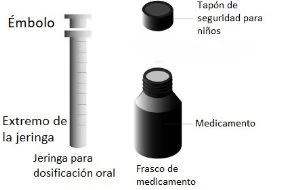
Atomoxetine oral solution is supplied in a bottle. This is part of a package that also includes a dosing device consisting of a 10 ml oral dosing syringe graduated in 1 ml increments. For instructions on how to use the dosing syringe, please read the user manual included in the package.
How much to take
If you are a child (from 6 years of age) or adolescent:
Your doctor will determine the dose of atomoxetine you should take based on your body weight. Normally, treatment should start with a low dose before increasing it, depending on your weight.
- Weighing up to 70 kg: start with a total daily dose of 0.5 mg per kg of body weight for at least 7 days. Your doctor will then decide whether to increase the dose to the usual maintenance dose of 1.2 mg per kg of body weight per day.
- Weighing more than 70 kg: start with a total daily dose of atomoxetine 40 mg for at least 7 days. Your doctor will then decide whether to increase the dose to the usual maintenance dose of 80 mg per day. The maximum daily dose is 100 mg.
Adults
Treatment with atomoxetine should start with a total daily dose of 40 mg for at least 7 days. Your doctor will then decide whether to increase the dose to the usual maintenance dose of 80 mg to 100 mg per day. The maximum daily dose is 100 mg.
If you have liver problems, your doctor may recommend a lower dose.
If you take more Atamax than you should
In case of overdose or accidental ingestion, contact your doctor or pharmacist immediately or call the Toxicology Information Service at telephone number: 91 562 04 20, indicating the medicine and the amount ingested. The most commonly reported symptoms following overdose are gastrointestinal symptoms, drowsiness, dizziness, tremor, and abnormal behaviour. Very rarely, serotonin syndrome, a potentially life-threatening condition, has also been reported. (See section 2, Warnings and precautions, Serotonin syndrome).
If you forget to take Atamax
If you miss a dose, take it as soon as possible, but do not exceed the total daily dose within a 24-hour period. Do not take a double dose to make up for a missed dose.
If you stop taking Atamax
If you stop taking atomoxetine, adverse effects usually do not occur, but symptoms of ADHD may return. You should speak with your doctor before stopping treatment.
What your doctor will do during your treatment
Your doctor will perform certain tests:
- before starting treatment – to ensure that atomoxetine is safe and will benefit you.
- after starting treatment – tests will be performed at least every 6 months, although they may be more frequent.
Tests will also be carried out when the dose is changed. These tests will include:
- measurement of height and weight in children and adolescents
- measurement of blood pressure and heart rate
- checking whether you have any problems or whether adverse effects have worsened while taking atomoxetine
Long-term treatment
Atomoxetine does not need to be taken indefinitely. If you take atomoxetine for more than one year, your doctor should review your treatment to determine whether the medicine is still necessary.
If you have any further questions about the use of this medicine, ask your doctor or pharmacist.
4. Possible adverse effects
Like all medicines, this medicine may cause adverse effects, although not everyone experiences them. Although some people experience adverse effects, most find that atomoxetine helps them. Your doctor will discuss these adverse effects with you.
Some adverse effects could be serious. If you experience any of the following, contact your doctor immediately.
Uncommon (may affect up to 1 in 100 people)
- feeling or having a very fast heartbeat, abnormal heart rhythm
- suicidal thoughts or feelings
- aggressive feelings
- feelings of dislike and anger (hostility)
- mood changes
- severe allergic reaction with symptoms of
- swelling of the face and throat
- difficulty breathing
- hives (small red, itchy skin rashes)
- seizures
- psychotic symptoms including hallucinations (such as hearing voices or seeing things that are not there), believing things that are not true, or feeling suspicious.
Children and adolescents under 18 years of age have a higher risk of experiencing adverse effects such as:
- suicidal thoughts or feelings (may affect up to 1 in 100 people)
- mood changes (may affect up to 1 in 10 people)
Adults have a lower risk (may affect up to 1 in 1,000 people) of experiencing adverse effects such as:
- seizures
- psychotic symptoms including hallucinations (such as hearing voices or seeing things that are not there), believing things that are not true, or feeling suspicious
Rare (may affect up to 1 in 1,000 people)
- liver problems
Stop treatment with atomoxetine and contact your doctor immediately if any of the following adverse effects occur:
- dark urine
- yellowing of the skin or eyes
- pain when pressing the upper right side of the abdomen, just below the ribs
- unexplained nausea or feeling unwell
- tiredness
- itching
- feeling as if starting with a cold
Other reported adverse effects have been the following. If any of them worsen, consult your doctor or pharmacist.
Adverse reactions very common (may affect more than 1 in 10 people) | |
CHILDREN over 6 years and ADOLESCENTS | ADULTS |
(pulse) These effects may disappear over time in most patients |
|
Adverse reactions common (may affect up to 1 in 10 people) | |
CHILDREN over 6 years and ADOLESCENTS | ADULTS |
|
|
Adverse reactions uncommon (may affect up to 1 in 100 people) | |
CHILDREN over 6 years and ADOLESCENTS | ADULTS |
burning, prickling, itching, or tingling
|
interval)
|
Adverse reactions rare (may affect up to 1 in 1,000 people) | |
CHILDREN over 6 years and ADOLESCENTS | ADULTS |
|
|
Adverse reactions frequency not known | |
CHILDREN over 6 years and ADOLESCENTS | ADULTS |
|
Effects on growth
When some children start taking atomoxetine, their growth (weight and height) may be reduced. However, with long-term treatment, children regain appropriate weight and height for their age range.
Your doctor will monitor your child's height and weight. If your child does not grow or gain weight as expected, the doctor may adjust the dose or temporarily discontinue treatment with atomoxetine.
Reporting of adverse reactions
If you experience any type of adverse reaction, consult your doctor or pharmacist, even if it is a possible adverse reaction not listed in this leaflet. You can also report them directly through the Spanish Pharmacovigilance System for Human Medicines: https://www.notificaram.es. By reporting adverse reactions, you can help provide more information on the safety of this medicine.
5. Storage of Atamax
Keep this medicine out of sight and reach of children.
Do not use this medicine after the expiry date stated on the packaging and on the bottle after EXP. The expiry date refers to the last day of the month indicated.
Do not use the oral solution more than 45 days after first opening the bottle.
This medicine does not require any special storage conditions.
Medicines must not be disposed of via wastewater or household waste. Instead, dispose of unused medicines and their packaging at the SIGRE point located at your pharmacy. If in doubt, ask your pharmacist how to dispose of medicines and packaging you no longer need. This will help protect the environment.
6. Contents of the pack and other information
Composition of Atamax
- The active substance is atomoxetine hydrochloride. Each ml of oral solution contains 4 mg of atomoxetine (as hydrochloride).
- The other components are: Liquid sorbitol (E420), xylitol (E697), sucralose, sodium benzoate (E211), sodium dihydrogen phosphate dihydrate, strawberry flavour (containing propylene glycol and ethanol), phosphoric acid, sodium hydroxide and purified water.
Nature of the product and contents of the container
Oral solution, 4 mg/ml (clear, colourless)
Atamax is available in an amber glass bottle (125 ml) with a child-resistant polypropylene cap and a low-density polyethylene adapter. The pack also includes a 10 ml oral dosing syringe made of polyethylene, graduated in 1 ml increments.
Atamax is available in a pack containing a single bottle and in a multipack containing three bottles.
Only certain pack sizes may be marketed.
Marketing Authorisation Holder and Manufacturer
Marketing Authorisation Holder
Laboratorios Rubió, S.A.
Industria, 29. Pol. Ind. Comte de Sert 08755 Castellbisbal (Barcelona)
Spain
Manufacturer
Laboratórios Basi - Indústria Farmacêutica, S.A.
Parque Industrial Manuel Lourenço Ferreira, Lotes 8, 15 e 16
3450-232 Mortágua
Portugal
This medicinal product is authorised in the European Economic Area member states under the following names:
Spain – Atamax 4 mg/ml oral solution EFG
Date of the most recent review of this leaflet: October 2024
Detailed and up-to-date information on this medicinal product is available on the website of the Spanish Agency of Medicines and Health Products (AEMPS) http://www.aemps.gob.es/
Instructions for use
Your step-by-step guide to using Atamax
WHEN USING Atamax, read and carefully follow the step-by-step instructions.
IMPORTANT
DO NOT allow your child to take the medicine without your help.
DO NOT use the medicine after the expiry date (check the expiry date on the label).
DO NOT use the medicine more than 45 days after first opening the bottle. See the Disposal section for further information on how to handle unused medication.
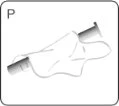
DO NOT wash the oral dosing syringe with soap or detergent. DO NOT place the syringe in the dishwasher. Doing so may impair its proper function. Please refer to cleaning instructions from step N to P.
It is not recommended to mix Atamax oral solution with food or water, as this may affect the taste or prevent the full dose from being taken.
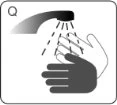
Atamax may cause eye irritation. Avoid contact with the eyes. If the medicine comes into contact with the eyes, rinse immediately with water and consult your doctor. Wash your hands and any surfaces that may have come into contact with the medicine as soon as possible.
STEP 1 GET READY
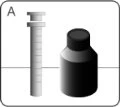
| Gather all the items you will need:
|
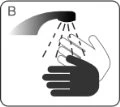
| Wash your hands with soap and water |
Write your child's dose here:
________ ml
Make sure it is the exact dose prescribed by the doctor.
If your child's dose is 10 ml OR LESS, you will use the syringe 1 time.
If your child's dose is MORE THAN 10 ml but NO more than 20 ml, you will use the same syringe 2 times.
If your child's dose is MORE THAN 20 ml, you will use the same syringe 3 times.
STEP 2: OBTAINING THE DOSE
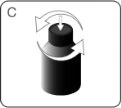
| Press the screw cap downward while turning it counterclockwise. Remove the screw cap from the vial. |
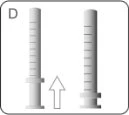
| Push the plunger fully to the end of the syringe. |
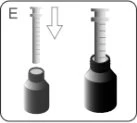
| Insert the syringe tip into the adapter. Make sure the syringe tip is fully seated in the adapter. |
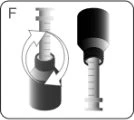
| Turn the vial and syringe upside down. |
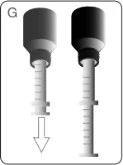
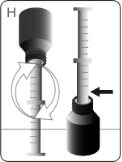
| Hold the vial and syringe with one hand. With the other hand, pull the plunger down to draw the appropriate amount of medication into the syringe. Check that the dose in the syringe is correct. Turn the vial upright and place it on a flat surface. Check that there are no air bubbles in the syringe. If there is an air bubble, return the medication to the vial and repeat steps D through H. An air bubble may result in an incorrect dose. |
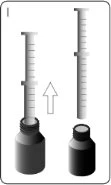
| Remove the syringe from the vial. DO NOT touch the plunger. |
STEP 3 ADMINISTRATION OF THE MEDICINE
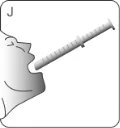
| Place the tip of the syringe along one side of your child's mouth. Tell your child not to bite the syringe. |
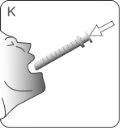
| Push the plunger down until ALL the medication is in your child's mouth. DO NOT direct the medication toward your child's throat. Make sure your child swallows all the medication. |
| IF YOUR CHILD'S DOSE IS GREATER THAN 10 ml, repeat steps D through K to give the remaining dose. Use the same syringe. See the dosing table in this document. Make sure you administer the exact dose prescribed by your child's doctor. |
STEP 4 CLEANING
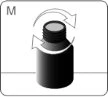
| Screw the cap of the bottle back on tightly. |
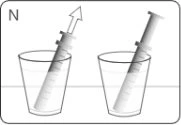
| Fill a glass with clean water. DO NOT wash the dosing syringe with soap or detergent. DO NOT remove the plunger from the oral dosing syringe. Place the end of the syringe into the water. Pull the plunger up to fill the syringe with water. |
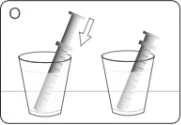
| Push the plunger down and empty the water into the glass or sink. |
| Remove any excess water from the syringe. Dry the syringe with a paper towel. |
| Wash your hands and your child's hands with soap and water. DO NOT touch your eyes after coming into contact with Atamax. Atamax may irritate your eyes. |
Consult the rest of the document for answers to frequently asked questions, check the dosage table, and other important information.
DOSAGE TABLE FOR DOSES OF MORE THAN 10 ML
Use this table to calculate the dose to administer to your child. Find the correct dose in the first column. Consult your doctor or pharmacist on how to administer the correct dose to your child.
If this is your child's dose | Put this amount of Atamax in the syringe, first time | Put this amount of Atamax in the syringe, a second time | Put this amount of Atamax in the syringe, a third time |
11 ml | 10 ml | 1 ml | 0 |
12 ml | 10 ml | 2 ml | 0 |
13 ml | 10 ml | 3 ml | 0 |
14 ml | 10 ml | 4 ml | 0 |
15 ml | 10 ml | 5 ml | 0 |
16 ml | 10 ml | 6 ml | 0 |
17 ml | 10 ml | 7 ml | 0 |
18 ml | 10 ml | 8 ml | 0 |
19 ml | 10 ml | 9 ml | 0 |
20 ml | 10 ml | 10 ml | 0 |
21 ml | 10 ml | 10 ml | 1 ml |
22 ml | 10 ml | 10 ml | 2 ml |
23 ml | 10 ml | 10 ml | 3 ml |
24 ml | 10 ml | 10 ml | 4 ml |
25 ml | 10 ml | 10 ml | 5 ml |
Frequently asked questions
-
What if there is an air bubble in the oral dosing syringe?
-
DO NOT administer the medicine to your child. Air bubbles may result in an incorrect dose. Empty the medicine back into the bottle and repeat steps D to H.
-
What if there is too much medicine in the syringe?
-
Keep the tip of the syringe in the bottle. Hold the bottle upright. Push the plunger down until the correct dose is in the syringe.
-
What if there is not enough medicine in the syringe?
-
Keep the tip of the syringe in the bottle. Hold the bottle downward. Pull the plunger down until the correct dose is in the syringe.
-
What should I do if the medicine gets into my eyes or my child's eyes?
-
Rinse the eyes immediately with water and consult your doctor. As soon as possible, wash your hands and any surface that may have come into contact with the medicine.
-
How do I travel with this medicine?
-
Make sure you have enough Atamax for the entire trip. Store the medicine in a safe place, upright, at room temperature.
-
Can I mix Atamax with food or water before giving it to my child?
-
It is not recommended to mix Atamax oral solution with food or water. This may affect the taste of the oral solution or prevent the full dose from being administered. Your child may drink a glass of water after taking the full dose of medication.
Storage
This medicine does not require special storage conditions.
Keep the bottle and syringe out of sight and reach of children.
Disposal
Do not dispose of medicines via the sink or in household waste. Ask your pharmacist how to dispose of medicines you no longer need. These measures will help protect the environment.