Astarte 0.25 mg/0.5 ml solution for injection in pre-filled syringe EFG
SpainTable of Contents
Patient Information Leaflet
Introduction
Patient Information Leaflet
Astarté 0.25 mg/0.5 ml solution for injection in pre-filled syringe EFG
ganirelix
Read the entire leaflet carefully before you start using this medicine, as it contains important information for you.
- Keep this leaflet, as you may need to read it again.
- If you have any questions, ask your doctor, pharmacist, or nurse.
- This medicine has been prescribed for you only, and you should not give it to others, even if they have the same symptoms as you, because it could harm them.
- If you experience any adverse effects, consult your doctor, pharmacist, or nurse, even if the effects are not listed in this leaflet. See section 4.
Leaflet Contents
- What Astarté is and what it is used for
- What you need to know before using Astarté
- How to use Astarté
- Possible side effects
- How to store Astarté
- Contents of the pack and other information
1. What Astarté is and what it is used for
Astarté contains the active substance ganirelix and belongs to a group of medicines called "gonadotropin-releasing hormone antagonists" that act against the effects of endogenous gonadotropin-releasing hormone (GnRH). GnRH regulates the release of gonadotropins (luteinizing hormone (LH) and follicle-stimulating hormone (FSH)). Gonadotropins play an important role in human fertility and reproduction. FSH is required in women for the growth and development of follicles in the ovaries. Follicles are small, rounded sacs that contain the eggs. LH is necessary for mature eggs to be released from the ovarian follicles (i.e., ovulation). This medicine inhibits the action of GnRH, thereby suppressing the release of LH in particular.
What ganirelix is used for
In women undergoing assisted reproductive technologies such as in vitro fertilization (IVF) and other methods, premature ovulation may occasionally occur, significantly reducing the chances of becoming pregnant. This medicine is used to prevent the premature release of LH, which could otherwise cause premature ovulation.
In clinical studies, ganirelix was used in combination with recombinant follicle-stimulating hormone (FSH) or with corifollitropin alfa, a long-acting follicle-stimulating agent.
2. What you need to know before using Astarté
Do not use Astarté
- if you are allergic to ganirelix or to any of the other ingredients of this medicine (listed in section 6);
- if you are hypersensitive to gonadotropin-releasing hormone (GnRH) or its analogues;
- if you have moderate or severe kidney or liver disease;
- if you are pregnant or breastfeeding.
Warnings and precautions
Talk to your doctor, pharmacist, or nurse before using this medicine
- if you have an active allergy, inform your doctor. Your doctor will decide, depending on the severity, whether additional monitoring is needed during treatment. Cases of allergic reactions have been observed, even after the first dose.
- allergic reactions, both generalized and local, have been reported, including hives (urticaria), swelling of the face, lips, tongue, and/or throat, which may cause difficulty breathing and/or swallowing (angioedema and/or anaphylaxis) (see also section 4). If you experience an allergic reaction, stop using this medicine immediately and seek medical help without delay.
- ovarian hyperstimulation syndrome (OHSS) may develop during or after ovarian hormonal stimulation. This syndrome is associated with gonadotropin stimulation procedures. We recommend that you read the package leaflet of the gonadotropin medicine prescribed to you.
- the incidence of congenital malformations (birth defects) following assisted reproductive techniques may be slightly higher than with spontaneous conceptions. This slightly increased incidence is considered to be related to patient characteristics associated with fertility treatments (e.g., maternal age, semen characteristics) and the higher rate of multiple pregnancies (pregnancy with more than one baby at a time) observed after assisted reproductive techniques. The incidence of birth defects following assisted reproductive techniques using this medicine is not different from that observed with other GnRH analogues used in assisted reproductive techniques.
- there is a slightly increased risk of ectopic pregnancy (pregnancy outside the uterus) in women with damaged fallopian tubes.
- the efficacy and safety of this medicine have not been established in women weighing less than 50 kg or more than 90 kg. Consult your doctor for further information.
Children and adolescents
This medicine is not intended for use in children or adolescents.
Other medicines and Astarté
Tell your doctor or pharmacist if you are taking, have recently taken, or might need to take any other medicines.
Pregnancy, breastfeeding, and fertility
If you are pregnant or breastfeeding, think you might be pregnant, or are planning to become pregnant, consult your doctor or pharmacist before using this medicine.
This medicine is intended for use during controlled ovarian stimulation as part of assisted reproductive techniques (ART).
Do not use this medicine during pregnancy or breastfeeding.
Driving and using machines
The effects on the ability to drive and use machines have not been studied.
This medicine contains sodium
This medicine contains less than 1 mmol of sodium (23 mg) per injection; essentially "sodium-free".
3. How to use Astarté
This medicinal product is used as part of treatment in assisted reproductive techniques (ART), including in vitro fertilization (IVF).
You will administer the injections yourself; therefore, your doctor must explain how to do so. Always follow exactly the instructions given by your doctor or pharmacist. If in doubt, consult your doctor or pharmacist again.
Phase 1
Ovarian stimulation with follicle-stimulating hormone (FSH) or corifollitropin may begin on the second or third day of your menstruation.
Phase 2
Inject the contents of the pre-filled pen (0.25 mg) once daily just under the skin, starting on the fifth or sixth day of stimulation. Depending on your ovarian response, your doctor may decide to start on a different day.
This medicinal product and FSH should be administered at approximately the same time each day. However, these medicines must not be mixed and must be injected at different sites.
Daily treatment with this medicinal product should continue until there are enough follicles of adequate size.
Phase 3
Final maturation of the oocytes within the follicles can be induced by administering human chorionic gonadotropin (hCG). The interval between two injections of this medicinal product and between the last injection of this medicinal product and the hCG injection must not exceed 30 hours; otherwise, premature ovulation (i.e., release of oocytes) may occur. Therefore, if your injection of this medicinal product is in the morning, treatment with this medicinal product must continue throughout the gonadotropin treatment period, including on the day ovulation is induced. If your injection of this medicinal product is in the afternoon, the last injection of this medicinal product should be given the afternoon before the day on which ovulation is induced.
Instructions for use
- Injection site
This medicinal product comes in pre-filled syringes containing one dose. The syringe contents should be injected slowly just under the skin, preferably in the thigh. Check the solution before use. Do not use the solution if it contains particles or is not clear. You may notice air bubble(s) in the pre-filled syringe. This is normal and there is no need to remove the air bubble(s). If you or your partner administer the injections, carefully follow the instructions below. Do not mix this medicinal product with other medicines.
- Preparing the injection site
Wash your hands thoroughly with soap and water. The injection site should be cleaned with a disinfectant (e.g., alcohol) to remove bacteria from the surface. Clean an area of about 5 cm around the injection point and allow the disinfectant to dry for at least one minute before injecting.
- Inserting the needle
- Take 1 syringe from the package by holding it by the barrel. Do not hold the syringe by the plunger.
- Hold the syringe vertically and remove the needle cap without pushing or twisting.
- Pinch a large area of skin between your index finger and thumb.
- Insert the needle at the base of the pinched skin at a 45º angle to the skin surface.
1 | 2 | 3 |
|
|
|
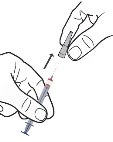
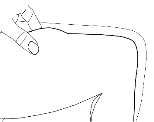
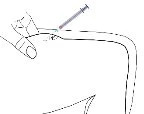
For each injection, the injection site should be varied.
- Checking correct needle placement
Gently pull back the plunger to check whether the needle is correctly positioned.
If blood enters the syringe, this means the tip of the needle has entered a blood vessel. If this occurs, do not inject this medicine. Remove the syringe, cover the injection site with a disinfectant swab, and press firmly; bleeding should stop within one or two minutes. Do not use this syringe and dispose of it properly. Start again with a new syringe.
- Injecting the solution
Once the needle is correctly placed, press the plunger slowly and steadily to properly inject the solution and avoid damaging the skin tissue.
- Removing the syringe
Remove the syringe quickly.
Press the injection site with a disinfectant swab. Use the pre-filled syringe only once.
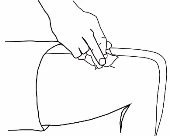
If you use more Astarté than you should
Consult your doctor.
If you forget to use Astarté
If you realize you have forgotten to inject a dose, administer it as soon as possible.
Do not take a double dose to make up for missed doses.
If the delay is more than 6 hours (therefore, the interval between two injections exceeds 30 hours), administer the dose as soon as possible and contact your doctor for advice.
If you stop using Astarté
Do not stop using this medicine unless instructed by your doctor, as this may affect the outcome of your treatment.
If you have any further questions about the use of this medicine, ask your doctor, pharmacist, or nurse.
4. Possible adverse effects
Like all medicines, this medicine can cause adverse effects, although not everyone will experience them.
Very common (may affect more than 1 in 10 women)
- Local skin reactions at the injection site (mainly redness, with or without swelling). Local reactions usually disappear within 4 hours after administration.
Uncommon (may affect up to 1 in 100 women)
- headache
- nausea (feeling sick)
- malaise (general feeling of being unwell)
Very rare (may affect up to 1 in 10,000 women)
- allergic reactions, even after the first dose
- rash
- facial swelling
- difficulty breathing (dyspnea)
- swelling of the face, lips, tongue, and/or throat, which may cause difficulty breathing and/or swallowing (angioedema and/or anaphylaxis)
- hives (urticaria)
Additionally, adverse effects related to controlled ovarian hyperstimulation treatment have been observed, for example:
- abdominal pain,
- ovarian hyperstimulation syndrome (OHSS) (OHSS occurs when the ovaries overreact to the fertility medications being taken)
- ectopic pregnancy (when the embryo develops outside the uterus)
- miscarriage (see the package leaflet of the FSH medication you are using).
Worsening of pre-existing eczema has been reported after the first dose of ganirelix.
Reporting of adverse effects
If you experience any adverse effects, consult your doctor, pharmacist, or nurse, even if they are possible adverse effects not listed in this leaflet. You may also report them directly via the Spanish Pharmacovigilance System for Human Medicines: www.notificaram.es. By reporting adverse effects, you can help provide more information on the safety of this medicine.
5. Storage of Astarté
Keep this medicine out of the sight and reach of children.
Do not use this medicine after the expiry date stated on the label and the carton after EXP. The expiry date refers to the last day of the month indicated.
This medicine does not require any special storage conditions.
Inspect the syringe before use. The syringe should only be used if the solution is clear and free from particles, and the container is undamaged.
Medicines must not be disposed of via wastewater or household waste. Unused medicines and their containers should be returned to the SIGRE Point at your pharmacy. If you are in doubt, please ask your pharmacist how to dispose of medicines and containers you no longer need. This will help protect the environment.
6. Contents of the pack and other information
Composition of Astarté
- The active substance is ganirelix. Each pre-filled syringe contains 0.25 mg of ganirelix (as acetate) in 0.5 ml of aqueous solution.
- The other components are glacial acetic acid, mannitol, and water for injections. The pH (measure of acidity) may have been adjusted with sodium hydroxide and glacial acetic acid.
Nature of the medicinal product and contents of the pack
This medicine is a clear, colourless, aqueous injectable solution. The solution is ready to use and is administered by subcutaneous injection.
This medicine is available in packs of 1 or 5 pre-filled syringes with injection needles (27 G), as specified below:
- 1 pre-filled syringe
- 5 pre-filled syringes
Only certain pack sizes may be commercially available.
Marketing Authorisation Holder and Manufacturer
GP-Pharm, S.A.
Pol. Ind. Els Vinyets – Els Fogars Sector 2
Carretera comarcal 244, km22
08777 Sant Quintí de Mediona, Barcelona
Spain
This medicinal product is authorised in the Member States of the European Economic Area under the following names:
Portugal: Astarté
Spain: Astarté 0.25 mg/0.5 ml solution for injection in pre-filled syringe EFG
Date of the most recent revision of this product information: 08/2023
Detailed information on this medicine is available on the website of the Spanish Agency for Medicines and Health Products (AEMPS) http://www.aemps.gob.es/.