Asacol 400 mg gastro-resistant tablets
Spain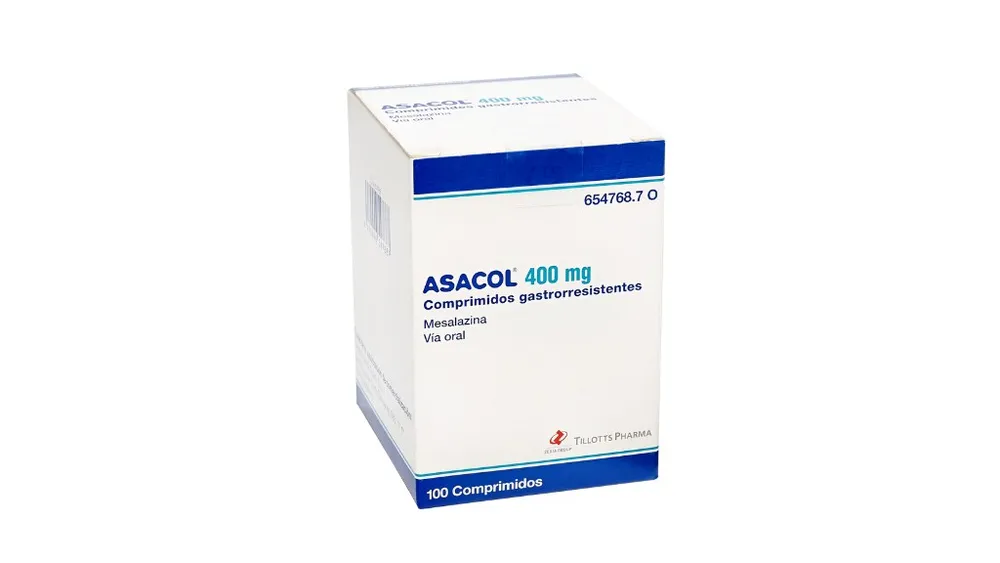
Table of Contents
Patient Information Leaflet
Introduction
Patient Information Leaflet
Asacol 400 mg enteric-coated tablets
Mesalazine
Read the entire leaflet carefully before you start taking this medicine.
- Keep this leaflet as you may need to read it again.
- If you have any questions, ask your doctor or pharmacist.
- This medicine has been prescribed for you and should not be given to other people, even if they have the same symptoms as you, as it may harm them.
- If you consider any of the side effects you experience to be severe, or if you notice any side effects not listed in this leaflet, inform your doctor or pharmacist.
Leaflet contents:
- What ASACOL is and what it is used for
- Before you take ASACOL
- How to take ASACOL
- Possible side effects
- How to store ASACOL
- Further information
1. What ASACOL is and what it is used for
ASACOL is indicated for:
- Treatment of the acute phase of mild to moderate ulcerative colitis.
- Maintenance treatment of remission in ulcerative colitis (including patients who do not tolerate sulfasalazine).
- Treatment of the acute phase of Crohn's disease and maintenance of remission in Crohn's disease.
2. Before taking ASACOL
Do not take ASACOL if:
-
You are allergic (hypersensitive) to salicylic acid, salicylates, or to any of the other components of Asacol
-
you have duodenal or gastric ulcer
-
you have haemorrhagic diathesis
-
you have coagulation disorders
-
you have severe hepatic or renal impairment
Take special care with ASACOL:
-
If you have ever had renal insufficiency. When you start taking ASACOL, your doctor should monitor your blood regularly to check that your kidneys are functioning properly.
-
There have been reports of increased liver enzyme levels. Caution is recommended when administering ASACOL to patients with hepatic insufficiency.
-
If you experience any unexplained bleeding, bruising, purpura, sore throat, fever, or general malaise during treatment, inform your doctor, as treatment may need to be discontinued.
-
If you have any lung disease, for example asthma, your doctor should monitor your breathing regularly.
-
If you have ever experienced adverse reactions to sulfasalazine, a medicine used to treat ulcerative colitis and Crohn's disease.
-
If you have ever developed a severe skin rash, skin peeling, blisters, or mouth sores after using mesalazine.
If you experience severe or recurrent headache, vision disturbances, or tinnitus (ringing or buzzing in the ears), contact your doctor immediately.
Kidney stones may occur with the use of mesalazine. Symptoms include pain in the sides of the abdomen and blood in the urine. Make sure to drink an adequate amount of fluid during treatment with mesalazine.
Mesalazine may cause discoloration of the urine to red-brown after contact with sodium hypochlorite bleach in the toilet water. This is a chemical reaction between mesalazine and bleach and is harmless.
ASACOL tablets should not be administered with lactulose or similar preparations that reduce the pH of feces and may prevent the release of mesalazine.
Severe skin reactions have been observed with mesalazine treatment, such as drug reaction with eosinophilia and systemic symptoms (DRESS), Stevens-Johnson syndrome (SJS), and toxic epidermal necrolysis (TEN). Stop taking mesalazine and seek immediate medical attention if you notice any of the symptoms related to these severe skin reactions described in section 4.
Use of other medicines
Inform your doctor or pharmacist if you are taking or have recently taken any other medicines, including those obtained without a prescription.
- Medicines used to prevent blood clotting (anticoagulants, e.g. warfarin).
- Medicines used to reduce the activity of the immune system (e.g. azathioprine, 6-mercaptopurine, or thioguanine).
Pregnancy and breast-feeding
Consult your doctor or pharmacist before taking any medicine.
There are insufficient adequate data on the use of ASACOL during pregnancy or breast-feeding. Its use during pregnancy or breast-feeding is not recommended unless the benefit of treatment outweighs the potential risks.
Driving and using machines
No effects on the ability to drive or operate machinery have been observed.
Important information about some of the components of ASACOL
This medicine contains lactose. If your doctor has informed you that you have an intolerance to certain sugars, consult with him before taking this medicine.
3. How to take ASACOL
Follow exactly the administration instructions for ASACOL given by your doctor. Consult your doctor or pharmacist if you have any doubts.
ASACOL should be administered orally.
The tablets should be swallowed whole and taken before meals.
The normal dose is:
Adults
Ulcerative colitis, acute treatment of mild to moderate episodes: 2 tablets three times a day.
Maintenance treatment of ulcerative colitis: 2 to 4 tablets.
Crohn's disease, maintenance treatment: 3 to 6 tablets, divided into three daily doses.
Elderly
Administration of ASACOL in elderly patients should be carried out with caution and is only recommended for patients with normal renal function.
Use in children
The efficacy and safety of ASACOL in children under 5 years of age has not been established.
Information on its effect in children (between 6 and 18 years of age) is limited.
Children from 6 years of age
The general recommendation is that half the adult dose may be administered to children up to 40 kg body weight; and the normal adult dose to children above 40 kg. However, your doctor will indicate the appropriate dose for treating the condition.
If you take more ASACOL than you should:
In case of overdose or accidental ingestion, consult your doctor or pharmacist or go to the nearest hospital, or call the Toxicology Information Service. Telephone number: 91 562 04 20 (indicating the medication and amount ingested).
In case of massive ingestion of the tablets, treatment consists of gastric lavage, induction of vomiting, together with symptomatic and supportive measures. There is no specific antidote.
If you forget to take ASACOL
If you forget to take a dose, take it as soon as you remember, and then take the next dose at your usual time.
Do not take a double dose to make up for missed doses.
If you have any further questions about the use of this product, ask your doctor or pharmacist.
4. Possible adverse effects
Like all medicines, ASACOL may produce adverse effects, although not everyone experiences them.
Stop taking mesalazine and seek immediate medical help if you experience any of the following symptoms:
- flat red patches, or circular or coin-shaped patches on the chest, often with central blisters, skin peeling, mouth, throat, nose, genital or eye ulcers, widespread rash, fever, and swollen lymph nodes. These severe skin rashes are often preceded by fever or flu-like symptoms.
Contact your doctor immediately if you experience severe or recurring headache, vision disturbances, or ringing or buzzing in the ears. These could be symptoms of increased pressure inside the skull (idiopathic intracranial hypertension) (frequency not known [cannot be estimated from available data]).
The following adverse effects have been rarely reported:
Rare adverse effects
- headache
- dizziness
- abdominal pain
- diarrhoea
- abdominal gas (flatulence)
- inflammation of the pancreas (pancreatitis)
- general discomfort (nausea)
- vomiting
- inflammation of the heart muscle (myocarditis) and of the membrane surrounding the heart (pericarditis)
- neuropathy
- increased sensitivity of the skin to sunlight and ultraviolet light (photosensitivity)
Very rare adverse effects
-
blood disorders, including:
-
low white blood cell count (leucopenia, neutropenia), which may sometimes be severe (agranulocytosis)
-
low count of all blood cells (pancytopenia)
-
low platelet count (thrombocytopenia)
-
low levels of blood cells including red and white blood cells and platelets (aplastic anaemia)
-
abnormal liver function test results (blood tests to check liver function)
-
inflammation of the liver (hepatitis)
-
acute inflammation of the pancreas (acute pancreatitis)
-
allergic reactions such as:
-
fever that appears while taking the medicine and disappears when treatment is stopped (drug fever)
-
skin rash or eruption (allergic exanthema), including itching (pruritus) and hives (urticaria)
-
autoimmune disease that may affect organs and joints (lupus erythematosus syndrome)
-
ulcerative colitis affecting the entire colon (pancolitis)
-
tingling, numbness, unusual sensations, weakness, burning (peripheral neuropathy)
-
muscle pain (myalgia)
-
joint pain (arthralgia)
-
impaired kidney function, including:
-
inflammation of the kidneys (interstitial nephritis)
-
renal failure
-
kidney failure
-
reduced sperm count (reversible oligospermia) occurring during treatment and resolving after stopping the medicine
-
fibrotic and allergic (hypersensitivity) pulmonary reactions (the alveoli, small air sacs in the lungs that transfer oxygen to the blood, become damaged and inflamed), including:
-
difficulty breathing (cough, dyspnoea, bronchospasm)
-
inflammation of the small air sacs (alveoli) in the lungs (alveolitis)
-
lung inflammation with an increase in eosinophils, a type of white blood cell (pulmonary eosinophilia)
-
inflammation of lung tissue (pneumonitis)
-
pulmonary oedema (fluid accumulates and fills the lungs)
-
hair loss (alopecia)
Adverse effects with frequency not known:
- Kidney stones and associated kidney pain (see also section 2)
The assessment of adverse effects is based on the following frequency categories:
Rare: may affect up to 1 in 1,000 people.
Very rare: may affect up to 1 in 10,000 people.
Frequency not known: cannot be estimated from available data.
If you consider any of the adverse effects you experience to be severe, or if you notice any adverse effects not listed in this leaflet, inform your doctor or pharmacist.
5. Storage of ASACOL
Store below 25°C. Keep in the original packaging.
Keep this medicine out of the sight and reach of children.
Do not use ASACOL after the expiry date which is stated on the packaging after EXP. The expiry date is the last day of the month indicated.
Medicines should not be disposed of via wastewater or household waste. Unwanted medicines and their containers should be returned to the SIGRE point at your pharmacy. If you have any doubts, ask your pharmacist how to dispose of medicines and containers you no longer need. This will help protect the environment.
6. Additional Information
Composition of ASACOL 400 mg gastro-resistant tablets
- The active substance is mesalazine. Each tablet contains 400 mg of mesalazine.
- The other components are lactose, potato starch carboxymethyl starch, magnesium stearate, talc, polyvinylpyrrolidone, methacrylic acid copolymer type B, triethyl citrate, yellow iron oxide (E172), red iron oxide (E172) and polyethylene glycol 6000.
Appearance of the medicinal product and contents of the pack
ASACOL are red, oblong gastro-resistant tablets coated with an acrylic-based resin (Eudragit-S) to ensure release of the active substance in the terminal ileum and colon.
ASACOL is available in packs containing 100 gastro-resistant tablets.
Marketing Authorization Holder:
Tillotts Pharma Spain, S.L.U.
Travessera de Gràcia 58, 5th floor, office 3
08006 Barcelona
Manufacturer:
HAUPT PHARMA WULFING GMBH
Bethelner Landstrasse, 18
Gronau D-31028
GERMANY
This leaflet was approved in May 2025
Detailed and up-to-date information on this medicinal product is available on the website of the Spanish Agency of Medicines and Health Products (AEMPS) http://www.aemps.gob.es/