Arzolan 20 mg/ml eye drops in solution
SpainTable of Contents
Patient Information Leaflet
Introduction
Patient Information Leaflet
Arzolan 20 mg/ml eye drops solution
Dorzolamide
Read all of this leaflet carefully before you start using this medicine, as it contains important information for you.
- Keep this leaflet, as you may need to read it again.
- If you have any questions, ask your doctor or pharmacist.
- This medicine has been prescribed for you only, and you must not give it to other people, even if they have the same symptoms as you, because it may harm them.
- If you experience any adverse effects, consult your doctor or pharmacist, even if they are adverse effects not listed in this leaflet.
Contents of the leaflet
- What Arzolan is and what it is used for
- What you need to know before using Arzolan
- How to use Arzolan
- Possible side effects
- How to store Arzolan
- Contents of the pack and other information
1. What Arzolan is and what it is used for
Arzolan is a sterile ophthalmic solution. Arzolan contains the active substance dorzolamide, a compound related to sulfonamides.
Dorzolamide is a carbonic anhydrase inhibitor for ophthalmic use and reduces elevated pressure inside the eye.
It is indicated for the treatment of elevated intraocular pressure in patients with ocular hypertension and glaucoma (open-angle glaucoma, pseudoexfoliative glaucoma). Arzolan may be used alone or in combination with other medications that reduce pressure inside the eye (known as beta-blockers).
2. Arzolan
Do not use Arzolan
- If you are allergic (hypersensitive) to dorzolamide or to any of the other components of this solution.
- If you have severe kidney problems.
- If you have a blood pH (acid/base balance) disorder.
Warnings and precautions
Before starting treatment with Arzolan, consult your doctor:
- If you have or have previously had liver problems.
- If you have been diagnosed with a corneal defect.
- If you have ever had an allergic reaction to any medication.
- If you have undergone or are scheduled to undergo eye surgery.
- If you have suffered an eye injury or have an eye infection.
- If you have a history of kidney stones.
- If you are taking another carbonic anhydrase inhibitor.
- If you wear contact lenses (see the section “Important information about the components of Arzolan”).
- If you experience any eye irritation or new eye disorders, such as eye redness or eyelid swelling, consult your doctor immediately.
- If you suspect that Arzolan is causing you an allergic reaction (e.g., skin rash or itching, eye swelling), stop using it immediately and consult your doctor as soon as possible.
Children and adolescents
Arzolan should only be used in children if the benefits outweigh the risks. Your doctor will advise you accordingly.
Using Arzolan with other medicines
Inform your doctor or pharmacist if you are currently using or have recently used any other medicines, including those obtained without a prescription.
In particular, consult your doctor if you are taking another carbonic anhydrase inhibitor such as acetazolamide. You may be taking this type of medicine orally, as eye drops, or by any other route.
Pregnancy and breastfeeding
Consult your doctor or pharmacist before using any medicine. Inform your doctor if you are pregnant or intend to become pregnant. You should not use Arzolan during pregnancy unless your doctor specifically recommends it.
You should not use Arzolan while breastfeeding.
Driving and using machines
Arzolan may cause dizziness and visual disturbances in some patients. Do not drive or operate machinery until these symptoms have resolved.
Arzolan contains benzalkonium chloride
This medicine may cause eye irritation because it contains benzalkonium chloride.
Avoid contact with soft contact lenses.
Remove contact lenses before applying the drops and wait at least 15 minutes before reinserting them.
May alter the color of soft contact lenses.
3. How to use Arzolan
Follow exactly the administration instructions for Arzolan provided by your doctor. Consult your doctor or pharmacist if you have any doubts.
The appropriate dosage and duration of treatment will be determined by your doctor.
When Arzolan is used alone, the usual dose is one drop in the affected eye(s) three times a day, namely in the morning, in the afternoon, and at night.
If your doctor has recommended using Arzolan together with a beta-blocker eye drop (medicines that reduce the pressure inside the eye), the usual dose is one drop in the affected eye(s) twice a day, for example in the morning and in the afternoon.
If you are using Arzolan with another eye drop, the applications of the different medicines should be spaced at least 10 minutes apart. Likewise, when replacing another eye drop medication with Arzolan used to reduce eye pressure, you should discontinue the other medication after taking the appropriate dose for one day and start administering Arzolan the following day.
Do not change the dose of the medication without consulting your doctor. If you need to stop treatment, consult your doctor immediately.
Do not let the tip of the container touch the eyes or surrounding areas. It may become contaminated with bacteria capable of causing eye infections that could lead to serious eye damage or even loss of vision. To avoid possible contamination of the container, avoid contact between the tip of the container and any surface.
Instructions for use:
It is recommended to wash your hands before applying the eye drops.
Position yourself, if possible, in front of a mirror to facilitate administration.
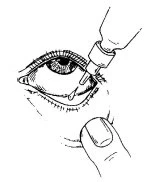
- Before using the medication for the first time, ensure that the security strip on the neck of the bottle is intact. When the bottle has not yet been opened, it is normal for there to be a gap between the bottle and the cap.
- Remove the cap from the bottle.
- Tilt your head backward and gently pull down the lower eyelid to create a small pocket between the eyelid and the eye.
- Invert the bottle and squeeze to dispense a single drop into the eye as instructed by your doctor. DO NOT TOUCH THE EYE OR EYELID WITH THE TIP OF THE DROPPER.
- Close the eye and press with your finger on the inner corner of the eye for approximately two minutes. This helps prevent the medication from draining into the rest of the body.
- Repeat steps 3 and 4 in the other eye if instructed by your doctor.
- Replace the cap and close the bottle immediately after use.
If you use more Arzolan than you should
If too many drops are applied to the eye or if some of the contents of the bottle are swallowed, consult your doctor immediately.
In case of overdose or accidental ingestion, contact your doctor or pharmacist immediately or call the Toxicology Information Service at telephone number: 91 562 04 20.
If you forget to use Arzolan
It is important to administer Arzolan as directed by your doctor.
If you forget to apply a dose, administer it as soon as possible. However, if it is almost time for the next dose, do not take the missed dose and continue with your regular dosing schedule.
Do not use a double dose to make up for missed doses.
If you stop using Arzolan
Arzolan should be used daily to achieve the desired effect. If you need to stop treatment, consult your doctor immediately.
If you have any further questions about the use of this product, ask your doctor or pharmacist.
4. Possible adverse effects
Like all medicines, Arzolan may cause adverse effects, although not everyone experiences them.
The following terms are used to describe how frequently adverse effects have been reported:
Very common | May affect more than 1 in 10 patients |
Common | May affect up to 1 in 100 patients |
Uncommon | May affect up to 1 in 1,000 patients |
Rare | May affect up to 1 in 10,000 patients |
Frequency not known | Cannot be estimated from the available data |
You may experience one or all of the following adverse effects with Arzolan:
Eye disorders:
Very common: burning and stinging
Common: inflammation or swelling of the surface of the eye or eyes, and possible inflammation of the eyelid or eyelids and/or around the eye or eyes, tearing or eye itching, blurred vision, effects on the surface of the eye
Uncommon: inflammation of the middle layer of the eyeball
Rare: swelling of the surface of the eye or eyes, choroidal detachment with symptoms of visual disturbances (after filtration surgery), ocular hypotony, redness of the eye or eyes, eye pain, eyelid crusting, transient myopia (which resolves upon discontinuation of therapy)
Gastrointestinal disorders:
Common: nausea, bitter taste
Rare: throat irritation, dry mouth
General disorders and administration site conditions:
Common: asthenia/fatigue
Rare: Hypersensitivity: signs and symptoms of local reactions (palpebral reactions) and systemic allergic reactions including swelling of the face, lips, tongue, and/or throat that may cause difficulty breathing or swallowing, urticaria and itching, skin rash, shortness of breath, and rarely bronchospasm (contraction of bronchial smooth muscle)
Nervous system disorders:
Common: headache
Rare: dizziness, numbness/tingling
Renal and urinary disorders:
Rare: urinary stone formation
Respiratory, thoracic and mediastinal disorders:
Rare: nosebleed
Skin and subcutaneous tissue disorders:
Rare: skin inflammation
Cardiac disorders:
Frequency not known: strong heartbeats that may be rapid or irregular (palpitations), increased heart rate
Vascular disorders:
Frequency not known: increased blood pressure
Reporting of adverse effects
If you experience any type of adverse effect, consult your doctor or pharmacist, even if they are adverse effects not listed in this leaflet. You may also report them directly via the Spanish Pharmacovigilance System for Human Medicinal Products: www.notificaRAM.es. By reporting adverse effects, you can help provide more information on the safety of this medicine.
If you consider any of the adverse effects you experience to be severe, or if you notice any adverse effects not mentioned in this leaflet, inform your doctor or pharmacist.
5. Storage of Arzolan
Keep out of the sight and reach of children.
Do not use Arzolan after the expiry date stated on the packaging after EXP. The expiry date refers to the last day of the month indicated.
Store the bottle in the outer packaging to protect it from light.
Store below 30°C.
Arzolan should be used within 28 days of the initial opening of the bottle. Therefore, the bottle must be discarded 4 weeks after first opening, even if solution remains. As a reminder, write down the date of opening for each bottle in the space provided on the carton.
Medicines should not be disposed of via wastewater or household waste. Dispose of empty containers and unused medicines at the SIGRE collection point at your pharmacy. If in doubt, please consult your pharmacist on how to properly dispose of unused medicines and their containers. This will help protect the environment.
6. Arzolan
Composition of Arzolan
- The active substance is dorzolamide. Each ml contains 20 mg of dorzolamide (equivalent to dorzolamide hydrochloride).
- The other components are mannitol, hydroxyethyl cellulose, benzalkonium chloride (as preservative), sodium citrate, sodium hydroxide to adjust pH, and water for injections.
Appearance of the product and contents of the container
Arzolan is a sterile, isotonic, buffered, colourless, slightly viscous solution in an opaque white low-density polyethylene bottle with a sealed dropper and a two-part cap. Each bottle contains 5 ml of ophthalmic solution.
Arzolan is available in packs containing 1 bottle with 5 ml of ophthalmic solution.
Marketing Authorisation Holder and Manufacturer
Marketing Authorisation Holder:
Tiedra Farmacéutica, S.L.
C/ Colón, 7
30510 Yecla (Murcia)
Spain
Manufacturer:
Pharmathen S.A.
6, Dervenakion str.
153 51 Pallini Attiki,
Greece
Date of the most recent revision of this summary: January 2023
Detailed and up-to-date information on this medicinal product is available on the website of the Spanish Agency of Medicines and Health Products (AEMPS) http://www.aemps.gob.es/