Apo-Go Pod 5 mg/ml solution for infusion in cartridge
Spain
Table of Contents
- Package leaflet: Information for the user
- Introduction
- 1. What APO-go POD is and what it is used for
- 2. What you need to know before starting to use APO-go POD
- **Consult your doctor, pharmacist, or nurse before starting to use your medicine if:**
- 3. How to use APO-go POD
- 4. Possible adverse effects
- 5. Storage of APO-go POD
- 6. Contents of the pack and other information
Package leaflet: Information for the user
Introduction
Package leaflet: information for the user
APO-go POD 5 mg/ml solution for infusion in cartridge
Apomorphine hydrochloride hemihydrate
Read all of this leaflet carefully before you start using this medicine because it contains important information for you.
- Keep this leaflet, as you may need to read it again.
- If you have any questions, ask your doctor, pharmacist or nurse.
- This medicine has been prescribed for you only, and you should not give it to other people, even if they have the same symptoms as you, because it may harm them.
- If you experience any adverse reactions, consult your doctor, pharmacist or nurse, even if they are adverse reactions not listed in this leaflet. See section 4.
Contents of the leaflet
- What APO-go POD is and what it is used for
- What you need to know before using APO-go POD
- How to use APO-go POD
- Possible side effects
- How to store APO-go POD
- Contents of the pack and other information
1. What APO-go POD is and what it is used for
APO-go POD contains apomorphine hydrochloride hemihydrate (referred to in this leaflet as apomorphine).
Each millilitre of solution contains 5 mg of apomorphine.
Apomorphine belongs to a group of medicines called dopamine agonists, which are used to treat Parkinson's disease. Apomorphine helps reduce the amount of time spent in the "off" (immobile) state in patients who have previously been treated for Parkinson's disease with levodopa and/or other dopamine agonists. Your doctor, pharmacist, or nurse will help you recognize the signs indicating when you should use this medicine. This medicine is for use in adults only.
Despite the name of the medicine, apomorphine does not contain morphine.
2. What you need to know before starting to use APO-go POD
Before using APO-go POD, your doctor will perform an ECG (electrocardiogram) and ask you to list all other medications you are taking. This ECG will be repeated during the first days of treatment and at any time your doctor considers it necessary. Your doctor will also ask about any other medical conditions you may have, especially those related to the heart. Some of these questions and additional examinations may be repeated at each medical visit. If you experience any symptoms that may be related to the heart, such as palpitations, fainting, or dizziness, you must inform your doctor immediately. Additionally, if you develop diarrhea or start taking a new medication, you should also inform your doctor.
Do not use APO-go POD if:
- you are under 18 years of age.
- you have difficulty breathing.
- you have dementia or Alzheimer's disease.
- you suffer from a mental illness with symptoms such as hallucinations, delusions, thought disorders, or loss of contact with reality.
- you have liver problems.
- you have severe dyskinesia (involuntary movements) or severe dystonia (sustained or repetitive movements that may cause fixed postures) during "on" periods due to levodopa treatment.
- you are allergic to apomorphine or any of the other components of this medicine (listed in section 6).
- you are taking medications for nausea and vomiting of a certain class (5HT3 antagonists), such as ondansetron, granisetron, dolasetron, or palonosetron.
- you are taking medications for diarrhea, e.g. alosetron.
Warnings and precautions
Consult your doctor, pharmacist, or nurse before starting to use APO-go POD if:
- you have kidney problems.
- you have lung problems.
- you have heart problems.
- you have low blood pressure or feel faint or dizzy when standing up.
- you are taking any medication for high blood pressure.
- you have nausea or vomiting.
- you develop any mental disorder when starting APO-go POD.
- you are elderly or feel weak.
- you or your family members have known abnormalities in the electrocardiogram (ECG) called QT interval prolongation syndrome.
Inform your doctor if you or your family members or caregivers notice that you are developing impulses or urges to behave in an unusual way and are unable to resist the impulse, need, or temptation to carry out certain activities that could be harmful to you or others. These behaviors are called impulse control disorders and may include compulsive gambling, excessive eating or spending, abnormally increased sex drive, or an increase in sexual thoughts or feelings. Your doctor may need to adjust or stop your dose.
Some patients develop addiction-related symptoms leading to a compulsive desire to take high doses of APO-go POD and other medications used in the treatment of Parkinson's disease.
If any of the situations described occur, please inform your doctor, pharmacist, or nurse.
Children and adolescents
APO-go POD must not be used in children and adolescents under 18 years of age.
Use of APO-go POD with other medicines
Inform your doctor, pharmacist, or nurse if you are taking, have recently taken, or might need to take any other medicines.
Consult your doctor, pharmacist, or nurse before starting to use your medicine if:
- you are taking medicines that affect heart rate. This includes medicines used to treat heart rhythm problems (such as quinidine and amiodarone), depression (including tricyclic antidepressants such as amitriptyline and imipramine), bacterial infections (macrolide antibiotics such as erythromycin, azithromycin, and clarithromycin), and domperidone.
- you are taking ondansetron (a medicine used to treat nausea and vomiting), as this may cause you severe drop in blood pressure and loss of consciousness.
If you use this medicine at the same time as others, the effect of your medicines may be altered. This is particularly the case with:
- medicines such as clozapine used to treat mental disorders.
- medicines used to lower blood pressure.
- other medicines used to treat Parkinson's disease.
- medicines to prevent nausea and vomiting such as ondansetron, granisetron, dolasetron, palonosetron, and medicines used to treat diarrhea such as alosetron (if you are taking these medicines, you must not use APO-go POD; see section 2).
- antidopaminergic medicines such as haloperidol, chlorpromazine, promethazine, prochlorperazine, metoclopramide, levopromazine, and droperidol.
Your doctor will inform you if you need to adjust the dose of APO-go POD or of any other medicine you are taking.
If you are taking levodopa (another medicine for Parkinson's disease) in addition to apomorphine, your doctor should carry out regular blood tests.
Use of APO-go POD with food and drinks
Food and drinks do not affect how this medicine works.
Pregnancy and breastfeeding
APO-go POD must not be used during pregnancy unless strictly necessary.
It is not known whether apomorphine is excreted in breast milk. Inform your doctor if you are breastfeeding or intend to breastfeed. Your doctor will advise you whether to continue or stop breastfeeding, or to continue or stop taking the medicine.
If you are pregnant or breastfeeding, think you may be pregnant, or are planning to become pregnant, consult your doctor or pharmacist before using this medicine.
Driving and use of machines
APO-go POD may cause drowsiness and a sudden urge to sleep. You should not drive or operate machinery if this medicine causes such effects.
APO-go POD contains sodium metabisulfite.
This medicine may cause severe allergic reactions and bronchospasm (sudden feeling of suffocation) because it contains sodium metabisulfite.
This medicine contains less than 23 mg of sodium (1 mmol) per 20 ml cartridge; i.e., essentially "sodium-free".
3. How to use APO-go POD
Before using APO-go POD, your doctor will check that you tolerate this medicine and an antiemetic medicine (domperidone) which you must take at the same time.
Always follow exactly the instructions for administration of this medicine provided by your doctor, pharmacist, or nurse. If in doubt, consult your doctor, pharmacist, or nurse again.
Do not use APO-go POD if:
- The solution turns green.
- The solution is cloudy or contains suspended particles.
Where to inject APO-go POD
- Inject APO-go POD under the skin (subcutaneously) as instructed by your doctor, pharmacist, or nurse.
- Do not inject APO-go POD into a vein.
APO-go POD is designed to be administered by continuous infusion using an infusion pump (also called an infusor) and a CronoBell Sleeve cartridge adapter. The infusor you will receive will be either the Crono APO-go III or the Crono PAR4 20 model.
What dose to use
The amount of APO-go POD you should use and the total time you should receive your medicine each day will depend on your individual needs. Your doctor will discuss this with you and tell you how much medicine you should administer. The most suitable dose for you will be determined during your specialist visit. The average hourly infusion dose ranges between 2 mg and 8 mg of apomorphine. Continuous infusion is usually given while you are awake and is generally stopped before going to sleep at night. The daily dose of apomorphine should not exceed 100 mg. Your doctor, pharmacist, or nurse will decide the most appropriate dose for you.
You may use a cartridge for up to 48 hours, provided that a new infusion line is used every 24 hours and the infusion site is changed to a different body area.
It is not necessary to dilute APO-go POD before use. In addition, it must not be mixed with other medicines.
Your doctor or nurse will teach you how to prepare and use APO-go POD. Also refer to the instructions on how to prepare the infusion with APO-go POD at the end of this leaflet: "Preparation of the infusion with APO-go POD".
If you use more APO-go POD than you should
In case of overdose or accidental ingestion, contact your doctor or pharmacist immediately or call the Toxicology Information Service at telephone 915 620 420, stating the medicine and the amount ingested.
-
Inform your doctor or contact the nearest hospital emergency department immediately.
-
It is important that the correct dose of APO-go POD is administered and that you do not use more than the amount recommended by your doctor. Higher doses may cause slower heart rate, excessive vomiting, excessive drowsiness, and/or difficulty breathing. You may also feel dizzy or faint, especially when standing up, due to low blood pressure. Lying down with your feet elevated will help treat low blood pressure.
If you forget to use APO-go POD
- Wait for your next scheduled dose. Do not use a double dose to make up for forgotten doses.
If you stop using APO-go POD
- Consult your doctor before stopping the use of APO-go POD to decide whether or not it is appropriate.
If you have any further questions about the use of this medicine, ask your doctor, pharmacist, or nurse.
4. Possible adverse effects
Like all medicines, this medicine can cause adverse effects, although not everyone experiences them.
If you experience an allergic reaction, stop treatment with APO-go POD immediately and contact your doctor or go to the nearest hospital emergency department immediately. Symptoms of an allergic reaction may include:
- Rash.
- Difficulty breathing.
- Swelling of the face, lips, throat, or tongue.
Inform your doctor if you think the medicine is making you feel unwell or if you experience any of the following adverse effects:
Very common: may affect more than 1 in 10 people
- Development of lumps under the skin at the injection site that are painful, uncomfortable, and may become red and itchy. To prevent these lumps, it is recommended to change the injection site each time the needle is inserted.
- Hallucinations (seeing, hearing, or sensing things that are not real).
Common: may affect up to 1 in 10 people
- Nausea or vomiting, especially when starting treatment with APO-go POD. Treatment with domperidone should be started at least two days before starting APO-go POD to prevent nausea and vomiting. If you are taking domperidone and still experience nausea or vomiting, or if you are not taking domperidone and have nausea or vomiting, inform your doctor, pharmacist, or nurse as soon as possible.
- Excessive drowsiness.
- Confusion or hallucinations.
- Yawning.
- Dizziness or lightheadedness.
- Feeling sleepy for brief periods, especially when starting treatment. This usually resolves within a few weeks.
Uncommon: may affect up to 1 in 100 people
- Increased involuntary movements or increased tremors during "on" periods.
- Haemolytic anaemia (abnormal destruction of red blood cells in blood vessels or other parts of the body). This is an uncommon adverse effect that may occur in patients also taking levodopa.
- Sudden sleep.
- Rash.
- Difficulty breathing.
- Ulceration at the injection site and tissue damage.
- Reduced platelet count, increasing the risk of bleeding or bruising.
- Dizziness or lightheadedness upon standing from a sitting or lying position due to a drop in blood pressure.
Rare: may affect up to 1 in 1,000 people
- Eosinophilia, an abnormally high number of white blood cells in the blood or tissues.
Frequency not known: frequency cannot be estimated from the available data
-
Swelling of arms, legs, feet, or hands.
-
Inability to resist the impulse, need, or temptation to carry out actions that could be harmful to yourself or others, such as:
- Intense desire to gamble or gamble excessively, despite serious personal or family consequences.
- Disturbance or increase in sexual interest and behaviour, affecting the patient or others, for example, increased libido.
- Compulsive buying or spending uncontrollably.
- Binge eating (eating large amounts of food in short periods of time) or compulsive eating (eating more food than normal and more than needed to satisfy hunger).
-
Fainting.
-
Aggression, agitation.
-
Headache.
Inform your doctor if you experience any of these behaviours; your doctor will discuss with you how to manage or reduce the symptoms.
Reporting of adverse effects
If you experience any type of adverse effect, consult your doctor, pharmacist, or nurse, even if they are possible adverse effects not listed in this leaflet. You may also report them directly via the Spanish Pharmacovigilance System for Human Medicines: www.notificaRAM.es. By reporting adverse effects, you can help provide more information on the safety of this medicine.
5. Storage of APO-go POD
Keep this medicine out of the sight and reach of children.
Do not use this medicine after the expiry date stated on the label and carton after EXP. The expiry date refers to the last day of the month indicated.
Do not store above 30°C.
After opening, APO-go POD must be used immediately. Any unused solution must be discarded after 48 hours, and a new cartridge must be used.
Do not use this medicine if you notice that the solution has turned green. It should only be used if the solution is clear, colourless, and free from visible particles.
Take care not to splash the solution onto yourself or spill it on the floor, as it may cause green staining.
After use, the infusion line, cartridge adapter (CronoBell Sleeve), and cartridge must be discarded and placed in a sharps container.
Medicines must not be disposed of via wastewater or household waste. If in doubt, ask your pharmacist how to dispose of unused medicines and their packaging. This will help protect the environment.
6. Contents of the pack and other information
Composition of APO-go POD
- The active substance is apomorphine hydrochloride hemihydrate. One millilitre of APO-go POD solution contains 5 mg of apomorphine hydrochloride hemihydrate. Each 20 ml cartridge contains 100 mg of apomorphine hydrochloride hemihydrate.
- The other components are:
- sodium metabisulfite (E-223)
- hydrochloric acid, concentrated (for pH adjustment)
- water for injections
See section 2: APO-go POD contains sodium metabisulfite.
Appearance of APO-go POD and contents of the pack
APO-go POD is an infusion solution in a cartridge. The solution is clear and colourless.
Contents of the pack
APO-go POD is supplied in a siliconised transparent glass cartridge, with a chlorobutyl rubber stopper (with an aluminium seal and a flip-off cap coloured purple) and a siliconised chlorobutyl rubber plunger.
Each pack contains 5 cartridges with 20 ml of solution, arranged in a cardboard tray inside an outer cardboard box.
The CronoBell Sleeve cartridge adapter is supplied separately in blister packs containing 5 units.
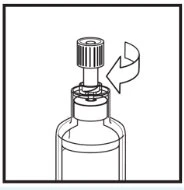
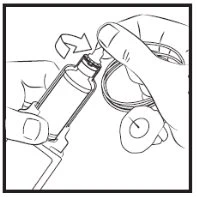
Single-use Luer lock caps will be supplied as needed.
Where pack sizes are available:
Packs of 25 cartridges contain 5 packs of 5 cartridges.
Packs of 50 cartridges contain 10 packs of 5 cartridges.
Only certain pack sizes may be marketed.
Marketing Authorisation Holder and Manufacturer
STADA Arzneimittel AG
Stadastraße 2-18
61118 Bad Vilbel
Germany
For further information about this medicinal product, please contact the local representative of the Marketing Authorisation Holder:
ITALFARMACO S.A.
San Rafael, 3
28108 Alcobendas (Madrid)
This medicinal product is authorised in the Member States of the European Economic Area and in the United Kingdom (Northern Ireland) under the following names:
Germany: APO-go 5 mg/ml Infusionslösung in einer Patrone
Austria: APO-go 5 mg/ml Infusionslösung in einer Patrone
Denmark: APO-go Pod
Slovenia: APO-go 5 mg/ml raztopina za infundiranje v vložku
Spain: APO-go POD 5 mg/ml solución para perfusión en cartucho
Greece: APO-go POD 5 mg/ml Διάλυμα για έγχυση σε φυσίγγιο
Ireland: APO-go POD 5 mg/ml solution for infusion in cartridge
Luxembourg: APO-go POD 5 mg/ml solution pour perfusion en cartouche
Norway: Britaject
Netherlands: APO-go Pod 5 mg/ml oplossing voor infusie in een patroon
Portugal: Apo-go POD 5 mg/ml solução para perfusão em cartucho
United Kingdom (Northern Ireland): APO-go POD 5 mg/ml solution for infusion in cartridge
Romania: APO-go 5 mg/ml solutie perfuzabila în cartuș
Sweden: APO-go för POD 5 mg/ml infusionsvätska, lösning i cylinderampull
Date of the most recent review of this leaflet: September 2024
Detailed information about this medicinal product is available on the website of the Spanish Agency of Medicines and Health Products (AEMPS) (http://www.aemps.gob.es/)
Preparation of the infusion with APO-go POD
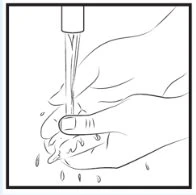
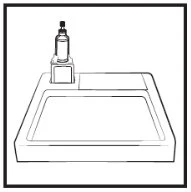
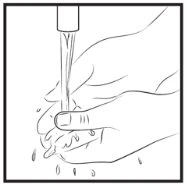
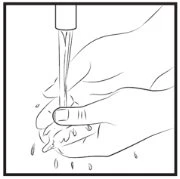
Wash and dry your hands before handling any infusion equipment.
Before starting, ensure you have a sharps container and the following items:
- 1 infusion line* (for each 24 hours)
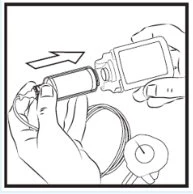
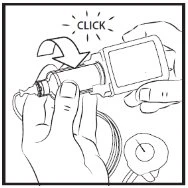
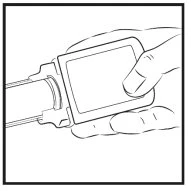
- 1 CronoBell Sleeve cartridge adapter*
- 1 cartridge (containing the medicine)
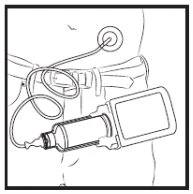
- 1 infusion pump (Crono APO-go III infusion pump or Crono PAR4 20 infusion pump) with connector piece*
- 1 tray*
You may also be provided with:
- 1 box of sterile single-use Luer caps*
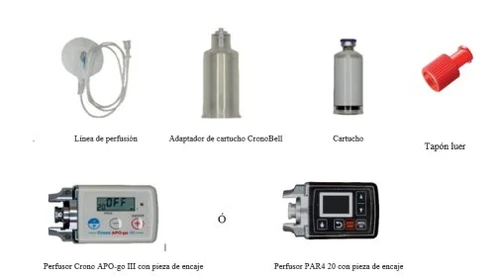
(*) The pack does not contain the infusion line, the CronoBell Sleeve cartridge adapter, the infusion pump with connector piece to activate the infusion, the tray, or the Luer caps. These items are supplied separately.
Please note that there are three different scenarios regarding how to use and change the cartridge, shown below. Please follow the instructions below as directed by your healthcare professional.
Instructions for using the cartridge during one day
Please follow the steps below if you are using the cartridge for one day without changing the cartridge during the day:
|
|
|
|
|
|
|
|
|
|
|
|
|
|
|
|
|
|
|
|
|
At the end of the infusion, stop the pump and disconnect the infusion set from the body. Typically, infusion is stopped before going to sleep. |
|
|
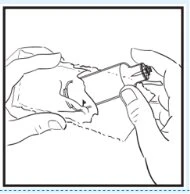
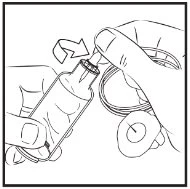
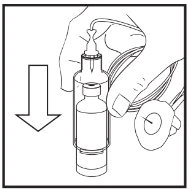
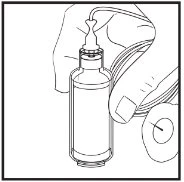
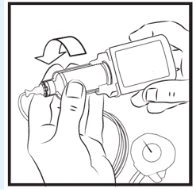

Instructions for using the same cartridge for 2 days
Please follow these steps if you are using the cartridge for up to 48 hours:
|
|
|
|
|
|
|
|
|
|
|
|
|
|
|
|
|
|
| How to store the pump with the cartridge and CronoBell Sleeve adapter overnight (steps 11–13) |
|
At the end of the infusion, stop the pump. Typically, infusion is stopped before going to sleep. |
Place the pump upright on the tray with the cartridge/adapter still attached. Disconnect the infusion line from the pump and dispose of it in a sharps container. Clean up any spills with an alcohol wipe. | |
|
| How to start infusion the next morning (steps 14–17) |
|
| |
|
|
|
|
|
|
|
|
|
At the end of the infusion, stop the pump and disconnect the infusion line from the body. |
|
|
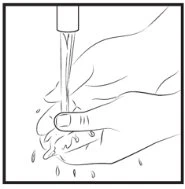
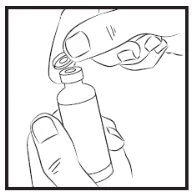
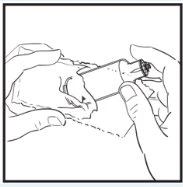
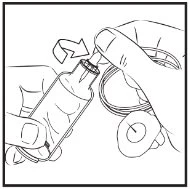
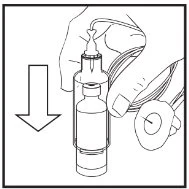
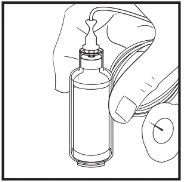
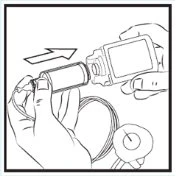
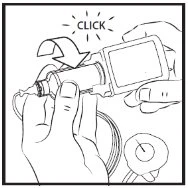
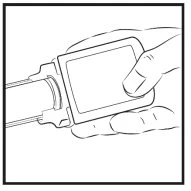
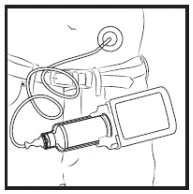
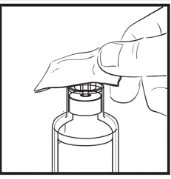
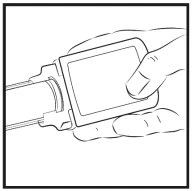
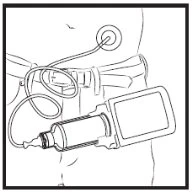
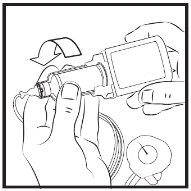
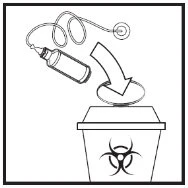
Instructions for changing the cartridge during the day
If you use the cartridge for more than one day, you may need to replace it with a new cartridge when the old one runs out. Please follow these steps to change the cartridge during the day:
|
|
|
|
|
|
|
|
|
|
|
|
|
|
|
|
To avoid contamination, do not touch the end of the infusion line except when cleaning it. |
|
|
|
|
|
|
|
|
| |
|
|
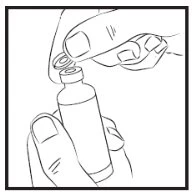
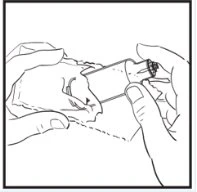
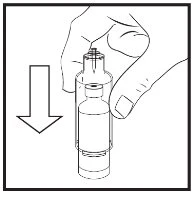
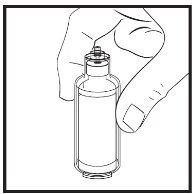
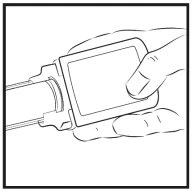
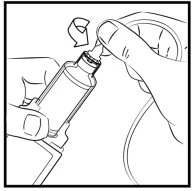
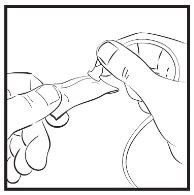
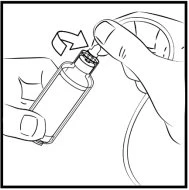
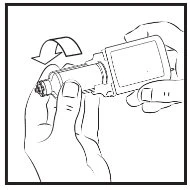

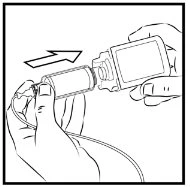
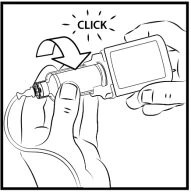
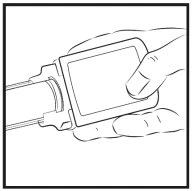
Note: Each infusion line requires a different insertion technique. The choice of needle will be determined by the physician.
The user guides for the pump and for the CronoBell Sleeve cartridge adapter are intended for healthcare professionals. For detailed information on how to prepare APO-go POD for continuous infusion and additional administrations (known as a boost or bolus dose), please consult healthcare professionals.
The delivery device for this product is different from that of other apomorphine medicines available on the market. Therefore, if you have switched from one medicine to another, you must re-learn how to use it under the supervision of a healthcare professional.
Detailed and up-to-date information about this medicine is available on the website of the Spanish Agency of Medicines and Health Products (AEMPS): http://www.aemps.gob.es/