Antihaemorrhoidal Cinfa ointment for rectal use
Spain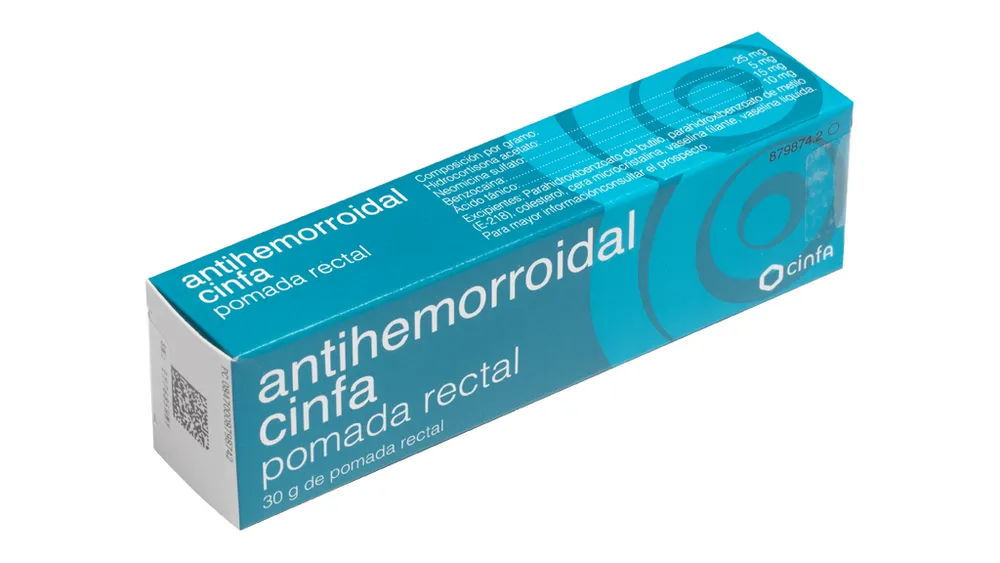
Table of Contents
- Package leaflet: Information for the user
- Introduction
- 1. What Antihemorroidal Cinfa is and what it is used for
- 2. What you need to know before using Antihemorroidal Cinfa
- 3. How to use Antihemorroidal Cinfa
- 4. Possible adverse effects
- 5. Storage of Antihemorroidal Cinfa
- 6. Contents of the container and other information
Package leaflet: Information for the user
Introduction
Package leaflet: information for the user
Antihemorroidal Cinfa rectal ointment
Read this entire leaflet carefully before you start using this medicine, because it contains important information for you.
-
Keep this leaflet, as you may need to read it again.
-
If you have any questions, consult your doctor or pharmacist.
-
This medicine has been prescribed for you only, and you must not give it to other people, even if they have the same symptoms as you, because it could harm them.
-
If you experience any adverse effects, consult your doctor or pharmacist, even if they are adverse effects not listed in this leaflet. See section 4.
Contents of the leaflet
- What Antihemorroidal Cinfa is and what it is used for
- What you need to know before using Antihemorroidal Cinfa
- How to use Antihemorroidal Cinfa
- Possible side effects
- How to store Antihemorroidal Cinfa
- Contents of the pack and other information
1. What Antihemorroidal Cinfa is and what it is used for
It is a rectal ointment (for anorectal use) containing as active ingredients neomycin sulfate (an aminoglycoside antibiotic), hydrocortisone acetate (a corticosteroid anti-inflammatory), benzocaine (a topical anesthetic), and tannic acid (an astringent). This combination relieves pain, inflammation, itching or burning, and discharge associated with certain anorectal conditions.
Antibiotics are used to treat bacterial infections and are not effective against viral infections.
It is important that you follow your doctor's instructions regarding dose, dosing interval, and duration of treatment.
Do not store or reuse this medicine. If you have any antibiotic left over after completing treatment, return it to the pharmacy for proper disposal. Do not dispose of medicines via wastewater or household waste.
Antihemorroidal Cinfa is indicated for the local symptomatic treatment of anorectal inflammation and anal pruritus associated with conditions such as hemorrhoids, anal fissure, anal eczema, or proctitis (inflammation of the rectal lining).
2. What you need to know before using Antihemorroidal Cinfa
Do not use Antihemorroidal Cinfa
- If you are allergic to hydrocortisone, neomycin, benzocaine, tannic acid, or any of the other components of this medicine (listed in section 6).
- If you have primary viral, tuberculous, bacterial, or fungal (fungal) infections, or if bleeding is present.
- If you have pre-existing neurological hearing loss.
- In large amounts, under occlusive dressings, or over extensive areas for prolonged periods, due to the risk of ototoxicity (ear toxicity), nephrotoxicity, methemoglobinemia (a blood disorder), or other adverse reactions.
- In children under 2 years of age.
Warnings and precautions
Consult your doctor or pharmacist before starting to use Antihemorroidal Cinfa.
- If irritation occurs at the site of application, discontinue the medicine and initiate appropriate treatment.
- Caution is required in cases of asthma.
- If an associated infection is present, specific complementary treatment should be added.
- Athletes should be aware that this medicine contains a component (hydrocortisone) that may lead to a positive result in doping control tests.
- Avoid contact of Antihemorroidal Cinfa with the eyes.
- Do not use on severe burns or deep wounds, or for prolonged periods, especially under occlusive dressings or over large skin areas.
- Prolonged use of topical antibiotics/corticosteroids may occasionally lead to overgrowth of non-susceptible organisms, including fungi. In such cases, treatment should be discontinued and medical advice sought.
- Concurrent use with other antibiotics of the same group as neomycin, either in the same area or via another route of administration, is not recommended.
- Cross-allergic reactions have been reported between neomycin and other aminoglycoside antibiotics, and between benzocaine and other ester-type local anesthetics, as well as with sulfonamides (antibiotics), thiazides (for hypertension), among others.
- Do not use concomitantly with cholinesterase inhibitors (for Alzheimer's disease, such as donepezil, galantamine, rivastigmine), as they inhibit the metabolism of benzocaine.
- Contact your doctor if you experience blurred vision or other visual disturbances.
Children
Do not administer to children under 2 years of age.
If used, the lowest possible dose for the shortest possible duration is recommended, under medical supervision.
Use in children is not recommended due to the increased risk of methemoglobinemia associated with benzocaine and because children may absorb proportionally larger amounts of topical corticosteroids and be more susceptible to systemic toxicity.
Use in elderly patients
Elderly individuals are more likely to experience adverse effects; therefore, dose adjustment may be necessary.
Maintain normal bowel function through an appropriate diet (fruits, vegetables, adequate fluid intake, and regular exercise). It may be helpful to take a laxative, a stool bulking agent, or a stool softener concurrently.
Other medicines and Antihemorroidal Cinfa
Inform your doctor or pharmacist if you are taking, have recently taken, or might need to take any other medicines.
If you are taking any of the following medicines, a dose adjustment or interruption of treatment may be necessary, as they may increase the risk of adverse effects:
- cholinesterase inhibitors such as donepezil, galantamine, and rivastigmine, used for Alzheimer's disease (see section Warnings and precautions).
- other aminoglycoside antibiotics such as streptomycin and gentamicin.
- sulfonamides, as their action may be inhibited.
- avoid applying other local anesthetics to the same area due to additive effects.
Pregnancy and breastfeeding
If you are pregnant, breastfeeding, think you may be pregnant, or plan to become pregnant, consult your doctor or pharmacist before using this medicine.
Use of Antihemorroidal Cinfa is not recommended during pregnancy or breastfeeding.
Driving and using machines
The influence of Antihemorroidal Cinfa on the ability to drive or operate machinery is none or negligible.
Antihemorroidal Cinfa contains methyl parahydroxybenzoate (E218) and butyl parahydroxybenzoate
May cause allergic reactions (possibly delayed) as it contains methyl parahydroxybenzoate (E218) and butyl parahydroxybenzoate.
3. How to use Antihemorroidal Cinfa
Follow exactly the instructions for use of this medicine as given by your doctor. If in doubt, consult your doctor or pharmacist again.
Rectal route (ano-rectal use).
Recommended dose: 1 to 3 applications per day.
Apply a thin layer of ointment (approx. 1 cm) to the affected anal area, which should be clean and dry.
To apply inside the rectum (anal canal), screw the cannula onto the tube and carefully insert the tip into the rectum. Then, apply a small amount of ointment by gently squeezing the tube.
After application, unscrew the cannula from the tube and wash it before storing.
Personal hygiene is very important for controlling the symptoms of ano-rectal diseases, as well as a fiber-rich diet that helps prevent constipation. Keep the area clean; it is recommended to wash it after each bowel movement with a mild soap, and dry gently without rubbing using a clean towel.
If symptoms do not improve after 7 days of treatment, or if bleeding occurs, the clinical situation should be re-evaluated.
Wash your hands before and after each application. For hygiene reasons and to prevent infections, the cannula must be used by only one patient.
Use in children
Do not administer to children under 2 years of age.
When used in pediatric patients (children over 2 years and under 12 years), the lowest possible dose for the shortest possible duration is recommended, under medical supervision.
If you use more Antihemorroidal Cinfa than you should
Due to the route of administration of this medicine, intoxication is unlikely when instructions are followed correctly.
Using higher than recommended amounts of corticosteroids increases the risk of adverse effects.
In cases of chronic overdose or inappropriate use, topically applied corticosteroids may be absorbed in sufficient quantities to produce systemic effects. These may suppress hypothalamic-pituitary-adrenal function, leading to secondary adrenal insufficiency, and manifestations of hypercorticism, including Cushing's syndrome.
The severity of intoxication with tannic acid should be based on clinical and laboratory findings. Hepatic necrosis is the most severe manifestation of tannic acid intoxication.
In case of overdose or accidental ingestion, contact your doctor or pharmacist immediately, or call the Toxicology Information Service at 91 562 04 20, indicating the medicine and the amount ingested.
If you forget to use Antihemorroidal Cinfa
Do not use a double dose to make up for missed doses.
Use the missed dose as soon as possible, or if it is nearly time for the next dose, take it at your usual time, continuing the treatment as normal.
If you have any further questions about the use of this medicine, ask your doctor or pharmacist.
4. Possible adverse effects
Like all medicines, this medicine can cause adverse effects, although not everyone will experience them.
With unknown frequency from available data, local adverse reactions may occur such as allergic contact dermatitis, mainly due to hypersensitivity to the preparation. Dryness, burning, or itching of the skin, and blurred vision may also occur.
If hypersensitivity or irritation develops at the treated site, treatment should be discontinued.
A rare but serious drug-related adverse reaction has been reported: blue discoloration of the skin and mucous membranes (methemoglobinemia).
Systemic absorption of corticosteroids, especially when large doses are applied over extensive areas, under occlusive dressing, or with prolonged use, could also lead to skin atrophy, acneiform eruptions, maceration of the skin, and striae.
Systemic absorption of corticosteroids may result in suppression of the hypothalamic-pituitary-adrenal axis, including manifestations of Cushing's syndrome (rounded face, fat accumulation in the abdomen, etc.), as well as glucosuria and hyperglycemia.
Prolonged use of benzocaine on mucous membranes may cause epithelial dehydration or caustic effects.
Prolonged use of antibiotics/corticosteroids on the skin may occasionally lead to overgrowth of non-susceptible organisms, including fungi.
Reporting of adverse effects
If you experience any type of adverse effect, consult your doctor or pharmacist, even if they are possible adverse effects not listed in this leaflet. You may also report them directly via the Spanish Pharmacovigilance System for Human Medicines: https://www.notificaram.es. By reporting adverse effects, you can help provide more information on the safety of this medicine.
5. Storage of Antihemorroidal Cinfa
Keep this medicine out of the sight and reach of children.
This medicine does not require any special storage conditions.
Do not use this medicine after the expiry date stated on the container and the box after EXP. The expiry date refers to the last day of the month indicated.
Medicines must not be disposed of via wastewater drains or in household waste. Dispose of empty containers and unused medicines at the SIGRE collection point at your pharmacy. If in doubt, ask your pharmacist how to properly dispose of containers and unused medicines. This will help protect the environment.
6. Contents of the container and other information
Composition of Antihemorroidal Cinfa
The active substances are: hydrocortisone acetate, neomycin sulfate, benzocaine and tannic acid.
Each gram of rectal ointment contains: 25 mg of hydrocortisone acetate (2.5%); 5 mg of neomycin sulfate (0.5%); 15 mg of benzocaine (1.5%) and 10 mg of tannic acid (1%).
The other components are: soft white paraffin, liquid paraffin, microcrystalline wax, cholesterol, methyl parahydroxybenzoate (E-218), butyl parahydroxybenzoate.
Appearance of the product and contents of the container
Antihemorroidal Cinfa is a rectal ointment with a greasy, homogeneous consistency, yellowish in colour and odourless or with a faint greasy odour.
Antihemorroidal Cinfa is supplied in aluminium tubes with a white polyethylene cap and provided with an applicator cannula.
Cardboard cartons containing:
10 g tube of ointment
30 g tube of ointment
Only some pack sizes may be marketed.
Marketing Authorization Holder and Manufacturer
Laboratorios Cinfa, S.A.
Carretera Olaz-Chipi, 10. Polígono Industrial Areta
31620 Huarte (Navarra) – Spain
Date of latest revision of this leaflet: April 2022.
Detailed information on this medicine is available on the website of the Spanish Agency of Medicines and Health Products (AEMPS) www.aemps.gob.es/