Androcur 50 mg tablets
Spain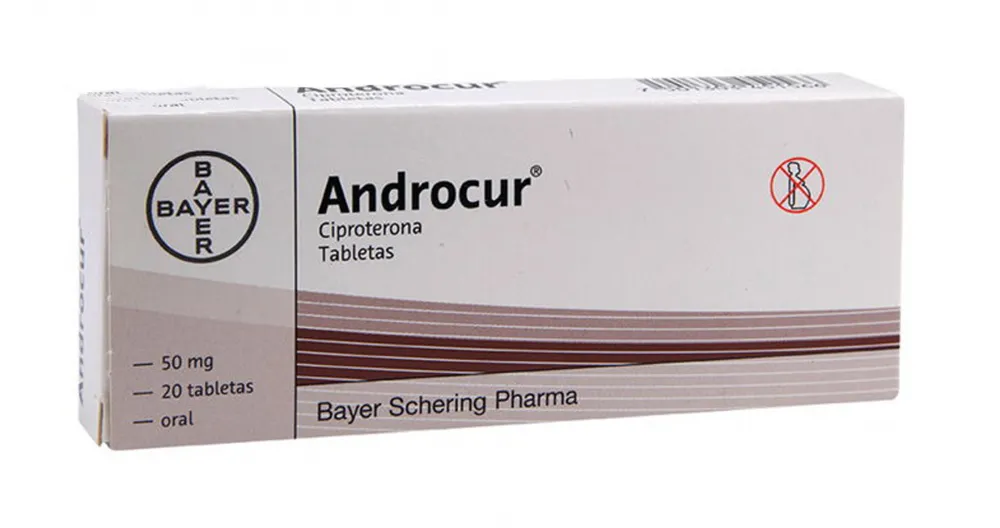
Table of Contents
Package leaflet: Information for the user
Introduction
Package leaflet: information for the user
Androcur 50 mg tablets
cyproterone acetate
Read all of this leaflet carefully before you start taking this medicine, because it contains important information for you.
- Keep this leaflet, as you may need to read it again.
- If you have any questions, ask your doctor or pharmacist.
- This medicine has been prescribed for you only and must not be given to other people, even if they have the same symptoms as you, since it could harm them.
- If you experience any side effects, talk to your doctor or pharmacist, even if they are side effects not listed in this leaflet. See section 4.
Contents of this leaflet
- What Androcur is and what it is used for
- What you need to know before taking Androcur
- How to take Androcur
- Possible side effects
- How to store Androcur
- Contents of the pack and other information
1. What Androcur is and what it is used for
Androcur is a medicine that belongs to the group of antiandrogens (medicines that block the action of male hormones).
Men
Androcur is used in men for:
- Reducing increased sexual drive.
To reduce increased sexual drive in adult men, you should only take cyproterone acetate 50 mg if your doctor considers other interventions inappropriate.
- Treating inoperable prostate cancer.
- Lowering levels of male hormones at the beginning of treatment with GnRH (gonadotropin-releasing hormone) agonist medicines.
- Treating hot flushes caused by reduced levels of male hormones.
Women
Androcur is used in women to treat:
- Severe manifestations of androgenization (increased effect of male hormones), for example, excessive body hair, marked hair loss, frequently accompanied by severe acne and/or seborrhoea (excessive oily secretion from the skin glands).
For the increased effect of male hormones in women described above, you should only take cyproterone acetate 50 mg when satisfactory results have not been achieved with products containing cyproterone acetate at lower doses or with other treatment options.
2. What you need to know before starting Androcur
Do not take Androcur
-
For the treatment of reduced heightened sexual drive (indication in men), do not take Androcur under the following circumstances:
-
if you are allergic (hypersensitive) to cyproterone acetate or any of the other components of this medicine (listed in section 6).
-
if you have any liver disease.
-
if you have Dubin-Johnson syndrome or Rotor syndrome (a disorder in bilirubin metabolism, a substance produced by the liver).
-
if you have or have had liver tumors.
-
if you have a disease causing severe physical deterioration.
-
if you suffer from chronic severe depression.
-
if you have or have had thromboembolic disorders (formation of blood clots in the circulatory system).
-
if you have severe diabetes with vascular complications.
-
if you have sickle cell anemia (a type of anemia in which red blood cells are abnormally shaped).
-
if you have ever been diagnosed with a meningioma (a usually benign tumor of the membranes between the brain and the skull). You should consult your doctor if you have any doubts.
-
For the treatment of inoperable prostate cancer (indication in men), do not take Androcur under the following circumstances:
-
if you are allergic (hypersensitive) to cyproterone acetate or any of the other components of this medicine (listed in section 6).
-
if you have any liver disease.
-
if you have Dubin-Johnson syndrome or Rotor syndrome (a disorder in bilirubin metabolism, a substance produced by the liver).
-
if you have or have had liver tumors not due to metastasis from prostate cancer.
-
if you have a disease causing severe physical deterioration, except for inoperable prostate cancer.
-
if you suffer from chronic severe depression.
-
if you have thromboembolic disorders (formation of blood clots in the circulatory system).
-
if you have ever been diagnosed with a meningioma (a usually benign tumor of the membranes between the brain and the skull). You should consult your doctor if you have any doubts.
-
For the treatment of severe androgenization symptoms (indication in women), do not take Androcur under the following circumstances:
-
if you are allergic (hypersensitive) to cyproterone acetate or any of the other components of this medicine (listed in section 6).
-
if you are pregnant.
-
if you are breastfeeding.
-
if you have any liver disease.
-
if you have Dubin-Johnson syndrome or Rotor syndrome (a disorder in bilirubin metabolism, a substance produced by the liver).
-
if you have previously experienced yellowing of the skin or mucous membranes (jaundice) or persistent itching during pregnancy.
-
if you have previously had herpes gestationis (pregnancy-related herpes).
-
if you have or have had liver tumors.
-
if you have a disease causing severe physical deterioration.
-
if you suffer from chronic severe depression.
-
if you have or have had thromboembolic disorders (formation of blood clots in the circulatory system).
-
if you have severe diabetes with vascular complications.
-
if you have sickle cell anemia (a type of anemia in which red blood cells are abnormally shaped).
-
if you have ever been diagnosed with a meningioma (a usually benign tumor of the membranes between the brain and the skull). You should consult your doctor if you have any doubts.
When you are taking Androcur for the treatment of severe androgenization symptoms (indication in women) and are also taking a combined oral contraceptive (a medication to prevent pregnancy containing two types of hormones, estrogens and progestogens), you must also consider and pay attention to the contraindications of the contraceptive.
Warnings and precautions
Consult your doctor or pharmacist before starting to take Androcur.
- The use of Androcur is not recommended in boys and male adolescents under 18 years of age, as safety and efficacy have not been established in this patient group.
Androcur should not be administered before the end of puberty (usually around age 18), as a negative effect on growth and hormone production cannot be ruled out.
-
Your doctor should monitor liver function before and during treatment with Androcur, especially if any symptoms or signs suggesting liver impairment occur. Additionally, adrenal gland function (glands located above the kidneys) and blood cell counts should be monitored.
-
Inform your doctor if you have diabetes, as Androcur may interact with oral antidiabetics or insulin (medications for the treatment of diabetes). This condition requires strict medical supervision (see section “Do not take Androcur”).
-
The use of cyproterone acetate has been associated with the development of a generally benign brain tumor (meningioma). The risk increases particularly with long-term use (several years) or with shorter-term use at high doses (25 mg daily or higher). If you are diagnosed with a meningioma, your doctor will discontinue treatment with cyproterone acetate (see section “Do not take Androcur”). If you experience symptoms such as changes in vision (e.g., double or blurred vision), hearing loss or ringing in the ears, loss of smell, worsening headaches, memory loss, seizures, or weakness in arms or legs, inform your doctor immediately.
Your doctor will re-evaluate the benefit-risk balance of your treatment when you reach menopause.
-
In the treatment of severe androgenization symptoms (indication in women):
-
Before starting treatment, your doctor should perform a thorough gynecological examination (including breasts and cervical cytology). In women of childbearing age, pregnancy must be ruled out.
-
If vaginal bleeding or spotting occurs during treatment with combined oral contraceptives (medications to prevent pregnancy), consult your doctor. Read the leaflet of the contraceptive before starting the medication.
-
During high-dose Androcur treatment, difficulty breathing (dyspnea) may occur. This condition may not require treatment, but if it occurs, consult your doctor.
-
Thromboembolic events (formation of blood clots in the circulatory system) have been reported in patients treated with Androcur, although a causal relationship has not been established. If you have previously had a stroke (cerebral hemorrhage) or advanced malignant neoplasm (cancer), your risk of thromboembolic events is higher.
-
In the treatment of reduced heightened sexual drive (indication in men):
-
If you consume alcohol, the effect of Androcur may be reduced.
-
In the treatment of inoperable prostate cancer (indication in men):
-
If you have previously had thrombosis or embolism, sickle cell anemia (a type of anemia in which red blood cells are abnormally shaped), or severe diabetes with vascular complications, your doctor should carefully evaluate the benefit-risk ratio before initiating Androcur treatment.
-
Animal data suggest that high doses of Androcur may reduce the function of hormone-producing glands adjacent to the kidneys (adrenal glands). Therefore, your doctor may perform tests to monitor this effect during treatment.
-
In male patients, cases of anemia have been reported during treatment with Androcur. Therefore, your doctor will monitor your red blood cell count during treatment.
Other medicines and Androcur
Inform your doctor or pharmacist if you are currently using, have recently used, or might need to use any other medicines.
Some medicines may interact with each other, and in such cases, it may be necessary to adjust the dose or discontinue one of the treatments.
It is especially important to inform your doctor if you are taking any of the following medicines, as they may alter the effectiveness of Androcur:
- ketoconazole, itraconazole, clotrimazole (used to treat fungal infections).
- ritonavir (used to treat HIV infection).
- rifampicin (an antibiotic).
- phenytoin (used to treat epilepsy).
- products containing St. John’s wort (Hypericum perforatum) (used to treat depression).
Consult your doctor if you are taking statins (medicines used to reduce blood cholesterol levels), as the risk of myopathy or rhabdomyolysis (conditions involving muscle disorders) associated with statin therapy may increase when taken simultaneously with Androcur.
Pregnancy, breastfeeding, and fertility
Consult your doctor or pharmacist before using any medicine.
Do not take Androcur if you are pregnant or breastfeeding.
Driving and using machines
Androcur may cause fatigue and reduced vitality, and therefore may impair your ability to drive or operate machinery.
Androcur contains lactose:
If your doctor has diagnosed you with an intolerance to certain sugars, consult with him before taking this medicine.
3. How to take Androcur
Follow exactly the administration instructions for Androcur given by your doctor. Consult your doctor or pharmacist if you have any doubts.
Remember to take your medication.
Your doctor will tell you how long to take Androcur. Do not stop treatment early, as Androcur may not achieve the desired effect.
RECOMMENDED DOSAGE IN MEN
- Reduction of increased sexual drive:
The tablets are taken with some liquid after meals. Treatment is usually started at 100 mg/day (1 tablet twice daily). The dose may need to be increased to 200 mg/day (2 tablets twice daily), or even 300 mg/day (2 tablets three times daily) for a short period of time. After achieving a satisfactory response, the therapeutic effect should be maintained with the lowest possible dose. Generally, a dose of 50 mg/day (half a tablet twice daily) is sufficient. Your doctor will decide on any possible dose reduction or discontinuation of the medication, neither of which should be done abruptly but gradually, reducing the daily dose by one tablet or preferably half a tablet in stages over several weeks.
To stabilize the therapeutic effect, long-term treatment with Androcur is necessary, preferably combined with psychotherapeutic measures.
- Antiandrogenic treatment in inoperable prostate carcinoma:
200–300 mg/day (2 Androcur tablets two or three times daily).
The tablets are taken with some liquid after meals.
Treatment must not be interrupted or the dose reduced after improvement or resolution has been achieved.
- To reduce the rise in male hormones that occurs when starting treatment with GnRH agonists (gonadotropin-releasing hormone):
Initially, 200 mg/day (2 tablets twice daily) for only 5–7 days. Then, 200 mg/day (2 tablets twice daily) for 3–4 weeks, administered concurrently with the GnRH agonist at the recommended dose.
- To treat hot flushes in patients receiving treatment with GnRH analogues or who have undergone orchiectomy (surgery to remove one or both testicles):
50–150 mg/day (1–3 tablets daily), increasing the dose up to 300 mg/day (2 tablets three times daily) if necessary.
RECOMMENDED DOSAGE IN WOMEN
- Women of childbearing age
Androcur must not be taken during pregnancy. Therefore, your doctor must exclude pregnancy before starting treatment.
In women of childbearing age, treatment is started on the first day of the cycle (= first day of withdrawal bleeding, also called menstruation). Only in cases of amenorrhea (absence of menstruation) may treatment be started immediately. In this case, the first day of treatment is considered as the first day of the cycle, and the following recommendations apply as in the normal case.
On days 1 to 10 of the cycle (for 10 days), 2 Androcur tablets (100 mg/day) are taken once daily, swallowed with some liquid after a meal. Additionally, fertile women will receive a combined oral contraceptive (preferably cyproterone-etinylestradiol) from day 1 to day 21 of the cycle, in order to ensure adequate contraceptive protection and cycle stabilization.
Women receiving the combined oral contraceptive must take it at the same time every day.
After the 21 days of daily intake of the combined oral contraceptive, a 7-day break without medication is taken, during which withdrawal bleeding (menstruation) will occur. Exactly four weeks after starting treatment (day 1), that is, on the same day of the week, the new treatment cycle is started (Androcur for the first 10 days of the cycle, and the combined oral contraceptive for the first 21 days of the cycle), regardless of whether bleeding has stopped or not.
After clinical improvement has been achieved, your doctor may reduce the daily dose of Androcur to 1 or half a tablet (50 or 25 mg/day) during the 10 days of continued treatment with the combined oral contraceptive (i.e., the first 10 days of the cycle). It may later be sufficient to continue treatment with the combined oral contraceptive (cyproterone-etinylestradiol) alone.
Your doctor will reassess the benefit-risk ratio of your treatment when menopause is reached.
Long-term use (years) of Androcur should be avoided (see section "Warnings and precautions").
Absence of withdrawal bleeding
If withdrawal bleeding (menstruation) does not occur during the medication-free interval, treatment must be interrupted until pregnancy has been ruled out.
- Postmenopausal women or hysterectomized women (those who have had their uterus removed)
In postmenopausal women or hysterectomized women (those who have had their uterus removed), Androcur may be administered alone, without associated contraceptive treatment. Depending on the severity of symptoms, the average dose would be 1 or half a tablet of Androcur once daily (50 or 25 mg/day) for 21 days, followed by a 7-day medication-free interval.
- Elderly patients
There are no data suggesting the need for dose adjustment in elderly patients.
- Patients with hepatic impairment
Do not take Androcur if you have hepatic impairment.
- Patients with renal impairment
There are no data suggesting the need for dose adjustment in patients with renal impairment.
If you take more Androcur than you should
There is no specific treatment for overdose. If an overdose occurs, symptomatic and supportive measures should be instituted as necessary.
In case of overdose or accidental ingestion, consult your doctor or pharmacist or call the Toxicology Information Service at telephone number 915 620 420, indicating the medication and the amount used.
If you forget to take Androcur
Do not take a double dose to make up for forgotten doses.
Consult your doctor, who will advise you on how to proceed.
Missed tablets in women of childbearing age
Women receiving the combined oral contraceptive must take it at the same time every day. If more than 12 hours have passed since the usual time of taking the combined oral contraceptive (preferably cyproterone-etinylestradiol), contraceptive protection may be reduced in that cycle.
Refer to the package leaflet of the combined oral contraceptive (preferably cyproterone-etinylestradiol), especially the sections on contraceptive efficacy and recommendations for missed tablets. If no bleeding occurs after that cycle, pregnancy must be ruled out before restarting tablet intake.
If you forget to take one or more Androcur tablets, therapeutic efficacy may decrease and intermenstrual bleeding may occur. However, administration of Androcur and the combined oral contraceptive (preferably cyproterone-etinylestradiol) should continue as instructed, omitting the missed Androcur tablet(s) (do not take two Androcur tablets to make up for a missed dose).
However, during that cycle, an additional non-hormonal contraceptive method should be used (methods based on rhythm and temperature must be excluded).
If you stop taking Androcur
Consult your doctor before stopping treatment with Androcur.
If you have any further questions about the use of this medicine, ask your doctor or pharmacist.
4. Possible adverse effects
Like all medicines, this medicine can cause adverse effects, although not everyone will experience them.
If you notice any of the following symptoms, inform your doctor immediately:
-
General feeling of being unwell, fever, nausea, vomiting, loss of appetite, itching all over the body, yellowing of the skin and eyes, pale stools and dark urine. These symptoms may be signs of liver toxicity, including inflammation of the liver (hepatitis) or liver failure.
-
Liver function abnormalities, some of them severe (hepatitis and liver failure), have been reported, in some cases with fatal outcome. Liver function abnormalities are dose-related and usually occur months after starting treatment. Therefore, your doctor will monitor your liver function before starting treatment and during treatment, especially if there are any symptoms or signs suggesting liver toxicity. If liver toxicity is confirmed, your doctor will usually discontinue treatment with Androcur, unless the liver toxicity can be explained by another cause (e.g., secondary tumours). In this case, your doctor may continue your treatment with Androcur if the observed benefit outweighs the risk.
-
Upper abdominal pain that does not resolve spontaneously within a short period of time. These symptoms may be signs of benign or malignant liver tumours, which may lead to internal bleeding.
-
Swelling or inflammation of the calf or leg, chest pain, shortness of breath, or sudden weakness. These symptoms may be signs of blood clot formation (thromboembolic events).
Cases of meningioma have been reported in association with long-term use (years) of cyproterone acetate at doses of 25 mg/day and higher.
Adverse effects in women:
The most frequently reported adverse reactions in women treated with Androcur are bleeding or spotting, weight gain, and depressive mood.
The adverse effects associated with the use of Androcur in women, which may occur with unknown frequency (frequency cannot be estimated from the available data), are listed below:
- benign and malignant liver tumours
- allergic reactions (hypersensitivity)
- weight gain, weight loss
- depressive mood, temporary restlessness, increased sexual desire (increased libido), decreased sexual desire (decreased libido)
- blood clot formation (thromboembolic events – see section Special warnings and precautions for use)
- difficulty breathing
- internal bleeding (intra-abdominal haemorrhage)
- liver toxicity, including jaundice, inflammation of the liver (hepatitis), liver failure
- skin rash
- inhibition of ovulation, painful sensation in the breasts, bleeding, fatigue.
Rare frequency (may affect up to 1 in 1,000 patients): meningioma.
Ovulation is inhibited in women during combined treatment, resulting in a state of infertility.
Regarding the additional need for a combined oral contraceptive, attention should be paid to the information in the package leaflet regarding adverse effects.
Adverse effects in men:
The adverse effects associated with the use of Androcur in men are listed below:
-
Very common adverse effects (may affect more than 1 in 10 patients):
- reversible inhibition of spermatogenesis (sperm production)
- decreased sexual desire (decreased libido)
- inability to achieve or maintain an erection (erectile dysfunction)
-
Common adverse effects (may affect up to 1 in 10 patients):
- weight gain, weight loss
- depressive mood, restlessness (temporary)
- difficulty breathing
- liver toxicity, including jaundice (yellowing of the skin), inflammation of the liver (hepatitis), liver failure
- abnormal enlargement of the breasts
- fatigue, hot flushes, sweating
-
Uncommon adverse effects (may affect up to 1 in 100 patients):
- skin rash
-
Rare adverse effects (may affect up to 1 in 1,000 patients):
- hypersensitivity reaction (allergic reaction)
- meningioma
-
Very rare adverse effects (may affect up to 1 in 10,000 patients):
- benign and malignant liver tumours
-
Adverse effects of unknown frequency (frequency cannot be estimated from the available data):
- low blood cell count
- thromboembolic events (blood clot formation in the bloodstream)
- intra-abdominal haemorrhage (bleeding inside the abdomen)
- osteoporosis (a bone disease characterised by decreased bone density)
During treatment with Androcur, there is a reduction in sexual desire and sexual potency, as well as inhibition of sexual organ function. These changes are reversible after discontinuation of treatment.
Within several weeks, Androcur inhibits the ability to produce sperm, which gradually recovers a few months after stopping treatment.
In men, Androcur may cause gynaecomastia (abnormal enlargement of the breasts), sometimes with increased sensitivity to touch, which usually resolves upon discontinuation of the medication.
As with other antiandrogenic treatments, osteoporosis may occur.
Treatment with high doses may reduce corticosuprarenal function (hormone secretion from the adrenal cortex and adrenal glands).
Reporting of adverse effects
If you experience any type of adverse effect, consult your doctor, pharmacist, or nurse, even if it is a possible adverse effect not listed in this leaflet. You may also report them directly via the Spanish Pharmacovigilance System for Human Medicines: https://www.notificaram.es. By reporting adverse effects, you can help provide more information on the safety of this medicine.
5. Storage of Androcur
Keep this medicine out of the sight and reach of children.
No special storage conditions are required.
Store in the original packaging.
Do not use this medicine after the expiry date stated on the packaging after EXP. The expiry date is the last day of the month indicated.
Medicines must not be disposed of via wastewater or household waste. Dispose of unused medicines and their containers at the SIGRE Point at your pharmacy. If you are in doubt, ask your pharmacist how to dispose of medicines and containers you no longer need. This will help protect the environment.
6. Contents of the pack and other information
Composition of Androcur
- The active substance is cyproterone acetate. Each tablet contains 50 mg of cyproterone acetate.
- The other components are: monohydrate lactose, corn starch, povidone 25,000, colloidal anhydrous silica, magnesium stearate.
Appearance of the product and contents of the pack
Androcur is presented as white to pale yellow, round, scored tablets, with a hexagon and the letters “BV” engraved on the front face.
Packs containing 50 tablets.
Marketing Authorization Holder and Manufacturer
Marketing Authorization Holder
Advanz Pharma Limited
Unit 17, Northwood House,
Northwood Crescent,
Dublin 9,
D09 V504,
Ireland
Manufacturer
DELPHARM LILLE SAS
Parc d'Activités Roubaix-Est
22 Rue de Toufflers
CS 50070
59452 Lys-Lez-Lannoy
France
Or
BAYER WEIMAR GmbH & Co KG
Döbereiner Strasse 20
Weimar – Germany.
Local representative
Advanz Pharma Spain S.L.U.
Paseo de la Castellana 135, 7th floor
28046 Madrid
Spain
Tel: +34 900 834 889
Date of the most recent review of this leaflet: June 2020
Other sources of information
Detailed information on this medicinal product is available on the website of the Spanish Agency for Medicines and Health Products (AEMPS) http://www.aemps.gob.es/