Amoxicillin Alter 500 mg hard capsules EFG
Spain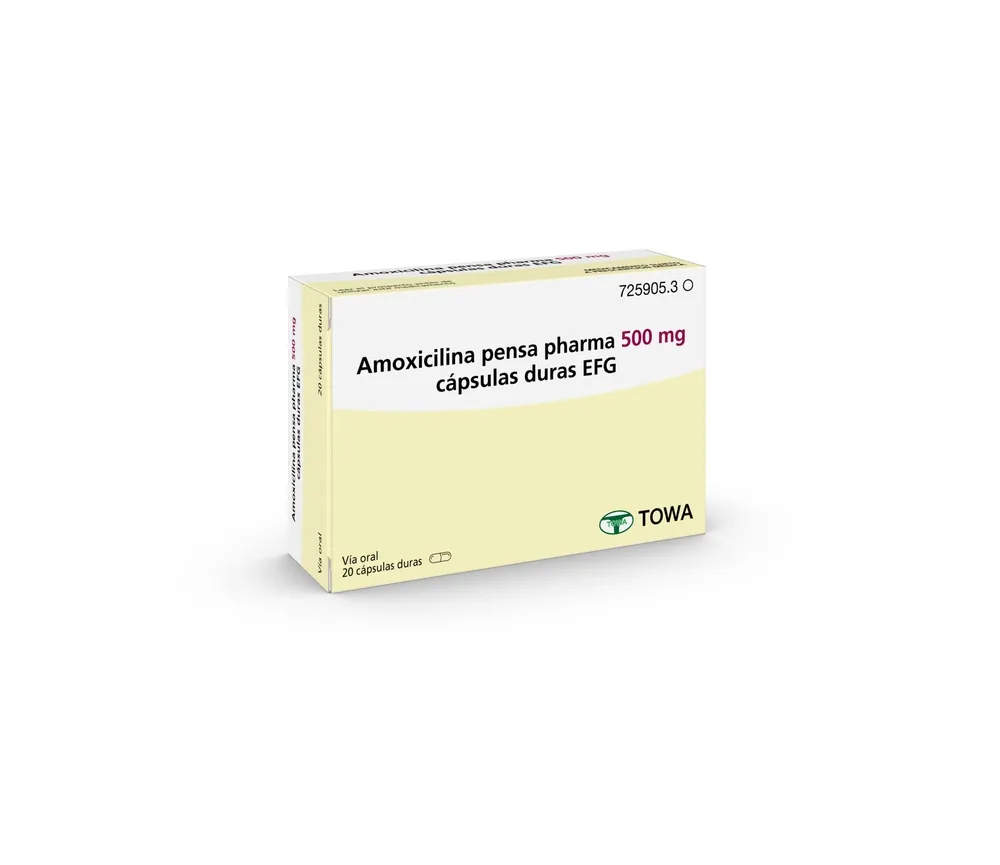
Table of Contents
- Package leaflet: Information for the user
- Introduction
- 1. What Amoxicilina Alter is and what it is used for
- 2. What you need to know before starting to take Amoxicillin Alter
- 3. How to take Amoxicilina Alter
- 4. Possible adverse effects
- 5. Storage of Amoxicillin Alter
- 6. Contents of the pack and other information
Package leaflet: Information for the user
Introduction
Package leaflet: information for the patient
Amoxicillin Alter 500 mg hard capsules EFG
Read the entire leaflet carefully before you start taking this medicine, because it contains important information for you.
- Keep this leaflet, as you may need to read it again.
- If you have any questions, consult your doctor or pharmacist.
- This medicine has been prescribed for you only, and you should not give it to other people, even if they have the same symptoms as you, because it may harm them.
- If you experience any adverse effects, consult your doctor or pharmacist, even if they are adverse effects not listed in this leaflet. See section 4.
Leaflet contents
- What Amoxicillin Alter is and what it is used for
- What you need to know before taking Amoxicillin Alter
- How to take Amoxicillin Alter
- Possible side effects
- How to store Amoxicillin Alter
- Contents of the pack and other information
1. What Amoxicilina Alter is and what it is used for
What is Amoxicilina Alter
Amoxicilina Alter is an antibiotic. The active substance is amoxicillin. It belongs to a group of medicines known as "penicillins".
Antibiotics are used to treat bacterial infections and are not effective against viral infections such as influenza or the common cold. It is important to follow your doctor's instructions regarding dosage, dosing interval, and duration of treatment. Do not store or reuse this medicine. If you have any antibiotic left after completing the treatment, return it to the pharmacy for proper disposal. Medicines must not be disposed of via wastewater or household waste. |
What Amoxicilina Alter is used for
Amoxicilina Alter is used to treat bacterial infections in different parts of the body. Amoxicilina Alter may also be used in combination with other medicines to treat stomach ulcers.
2. What you need to know before starting to take Amoxicillin Alter
Do not take Amoxicillin Alter
- if you are allergic to amoxicillin, penicillins, or any of the other components of this medicine (listed in section 6).
- if you have ever had an allergic reaction to any other antibiotic. This could include a skin rash or swelling of the face or throat.
Do not take this medicine if any of the above apply to you. If you are unsure, consult your doctor or pharmacist before taking this medicine.
Warnings and precautions
Talk to your doctor or pharmacist before starting to take Amoxicillin Alter:
- if you have infectious mononucleosis (fever, sore throat, swollen glands, and extreme tiredness)
- if you have kidney problems
- if you do not urinate regularly.
If you are unsure whether any of the above symptoms apply to you, inform your doctor or pharmacist before taking this medicine.
Blood and urine tests
If you are undergoing:
- urine tests (urine glucose) or blood tests for liver function
- estriol tests (used during pregnancy to check whether the baby is developing normally)
Inform your doctor or pharmacist that you are taking amoxicillin. This is because amoxicillin may alter the results of these types of tests.
Taking Amoxicillin Alter with other medicines
Inform your doctor or pharmacist if you are taking, have recently taken, or might need to take any other medicines.
- If you are taking allopurinol (used for gout) with amoxicillin, you may be more likely to experience a skin allergic reaction.
- If you are taking probenecid (used to treat gout), concomitant use with probenecid may reduce amoxicillin excretion and is not recommended.
- If you are taking anticoagulants (such as warfarin) with amoxicillin, more blood tests may be needed.
- If you are taking other antibiotics (such as tetracycline), amoxicillin may be less effective.
- If you are taking methotrexate (used to treat cancer and severe psoriasis), penicillins may reduce methotrexate excretion and potentially increase adverse effects.
Pregnancy and breastfeeding
If you are pregnant or breastfeeding, think you may be pregnant, or plan to become pregnant, consult your doctor or pharmacist before using this medicine.
Driving and using machines
This medicine may cause adverse effects and symptoms (such as allergic reactions, dizziness, and seizures) that may mean you should not drive.
Do not drive or operate machinery unless you feel well.
Amoxicillin Alter contains Allura Red (E129)
This medicine may cause allergic reactions as it contains Allura Red (E129).
It may cause asthma, especially in patients allergic to acetylsalicylic acid.
3. How to take Amoxicilina Alter
Follow exactly the instructions for administration of this medicine as given by your doctor or pharmacist. If in doubt, consult your doctor or pharmacist again.
- Swallow the capsules with water, without opening them.
- Space the doses throughout the day, at least 4 hours apart.
The usual dose is:
Children weighing less than 40 kg
All doses are based on the child's body weight in kilograms.
- Your doctor will tell you how much amoxicillin to give your baby or child.
- The usual dose is 40 mg to 90 mg per kilogram of body weight per day, given in two or three divided doses.
- The maximum recommended dose is 100 mg per kilogram of body weight per day.
Adults, elderly patients, and children weighing 40 kg or more
The usual dose of amoxicillin is 250 mg to 500 mg three times a day or 750 mg to 1 g every 12 hours, depending on the severity and type of infection.
- Severe infections: 750 mg to 1 g three times a day.
- Urinary tract infection: 3 g twice a day for one day.
- Lyme disease (an infection caused by parasites called ticks): isolated erythema migrans (early stages – single circular pink or red rash): 4 g per day; systemic manifestations (late stages – more serious symptoms or when the disease spreads throughout the body): up to 6 g per day.
- Stomach ulcers: a dose of 750 mg or 1 g twice a day for 7 days, together with other antibiotics and medications for treating stomach ulcers.
- To prevent heart infection during surgery: the dose will vary depending on the type of surgery. Other medications may be given at the same time. Your doctor, pharmacist, or nurse can provide further details.
- The maximum recommended daily dose is 6 g per day.
Renal problems
If you have kidney problems, the dose may be lower than the usual dose.
If you take more Amoxicilina Alter than you should
If you have taken more amoxicillin than you should, symptoms may include stomach upset (nausea, vomiting, or diarrhea) or crystals in the urine, which may appear as cloudy urine or difficulty urinating. Contact your doctor as soon as possible. Bring the medicine with you to show it.
In case of overdose or accidental ingestion, contact your doctor or pharmacist immediately or call the Toxicology Information Service at 91 562 04 20, indicating the medicine and the amount ingested.
If you forget to take Amoxicilina Alter
- If you forget to take a dose, take it as soon as you remember.
- Do not take the next dose too soon; wait at least 4 hours before taking the next dose.
- Do not take a double dose to make up for a missed dose.
How long to take Amoxicilina Alter
- Continue taking this medicine for the length of time prescribed by your doctor, even if you feel better. You need to take all the doses to eliminate the infection. If some bacteria survive, they may cause the infection to return.
- After completing the treatment, if you still feel unwell, you should see your doctor again.
You may develop candidiasis (a fungal infection in moist areas of the body that can cause pain, itching, and white discharge) if you take amoxicillin for a prolonged period. If this occurs, consult your doctor.
If you take amoxicillin for a prolonged period, your doctor may perform additional blood tests to check that your kidneys, liver, and blood are functioning normally.
If you have any further questions about the use of this medicine, ask your doctor or pharmacist.
4. Possible adverse effects
Like all medicines, this medicine can cause adverse effects, although not everyone will experience them.
Stop taking this medicine and see a doctor immediately if you experience any of the following serious adverse effects – you may need urgent medical treatment:
The following adverse effects are very rare (may affect up to 1 in 10,000 people):
-
allergic reactions, signs may include: skin itching or rash, swelling of the face, lips, tongue, body, or difficulty breathing. These may be severe and, in some cases, have led to death
-
skin rash or flat, round red spots like pinpricks under the skin surface, or bruising on the skin. This is due to inflammation of the walls of blood vessels caused by an allergic reaction. It may be associated with joint pain (arthritis) and kidney problems
-
a delayed allergic reaction may occur 7 to 12 days after taking amoxicillin, some signs include: rashes, fever, joint pain, and swollen lymph nodes, especially under the arms
-
a skin reaction called “erythema multiforme” in which you may develop: itchy purple or reddish rashes on the skin, especially on the palms of the hands or soles of the feet, raised swollen areas on the skin, soft tissue lesions on the mouth, eyes, and genitals. You may have fever and feel very tired
-
other serious skin reactions may include: change in skin color, lumps under the skin, blisters, pus-filled pimples, peeling, redness, pain, itching. These may be associated with fever, headache, and body aches
-
fever, chills, sore throat, or other signs of infection, or easy bruising. These may be signs of a problem with your blood cells
-
Jarisch-Herxheimer reaction, which occurs during treatment with amoxicillin for Lyme disease and causes fever, chills, headache, muscle pain, and skin rash
-
inflammation of the large intestine (colon) with diarrhea (sometimes bloody), abdominal pain, and fever
-
serious adverse effects in the liver may occur. These are mainly associated with prolonged treatment, male gender, and advanced age. You should inform your doctor immediately if you have:
-
severe diarrhea with bleeding
-
blisters, redness, or bruising on the skin
-
dark urine or pale stools
-
yellowing of the skin and whites of the eyes (jaundice). See also anemia below, which may lead to jaundice.
These may occur during treatment or up to several weeks afterwards.
If any of the above symptoms occur, stop taking the medicine and see your doctor immediately.
Sometimes you may experience less severe skin reactions such as:
- a moderate rash with itching (round, pink-red spots), swollen areas resembling blisters on forearms, legs, palms, hands, or feet. This is uncommon (may affect up to 1 in 100 people).
If you have any of these, speak with your doctor as you may need to stop treatment with this medicine.
Other possible adverse effects are:
Common (may affect up to 1 in 10 people)
- skin rash
- nausea
- diarrhea.
Uncommon (may affect up to 1 in 100 people)
- vomiting.
Very rare (may affect up to 1 in 10,000 people)
- candidiasis (fungal infection in the vagina, mouth, or skin folds); treatment is available from your doctor or pharmacist for candidiasis
- kidney problems
- seizures (convulsions), observed in patients treated with high doses or with kidney problems
- dizziness
- hyperactivity
- crystals in the urine, which may appear as cloudy urine or difficulty or discomfort when urinating. Make sure to drink plenty of fluids to reduce the likelihood of these symptoms
- the tongue may change color to yellow, brown, or black and may appear hairy
- excessive breakdown of red blood cells leading to a type of anemia. Signs include: fatigue, headache, difficulty breathing, dizziness, paleness, and yellowing of the skin and whites of the eyes
- low number of white blood cells
- low number of cells involved in blood clotting
- blood may take longer than normal to clot. You may notice this if you have nosebleeds or cuts that bleed excessively.
Not known (cannot be estimated from available data)
- Chest pain in the context of allergic reactions, which may be a symptom of allergy-triggered heart attack (Kounis syndrome).
- Drug-induced enterocolitis syndrome (DIES):
DIES has been reported mainly in children receiving amoxicillin. It is a certain type of allergic reaction with the main symptom being repeated vomiting (occurring 1–4 hours after taking the medicine). Other symptoms may include abdominal pain, lethargy, diarrhea, and low blood pressure.
- Crystals in the urine causing acute kidney injury. These may appear as cloudy urine or difficulty or discomfort when urinating. Make sure to drink plenty of fluids to reduce the likelihood of these symptoms.
- Blistering rash arranged in circles with central crusts or resembling a "pearl necklace" (linear IgA disease).
- Inflammation of the membranes surrounding the brain and spinal cord (aseptic meningitis).
Reporting of adverse effects
If you experience any type of adverse effect, consult your doctor or pharmacist, even if it is a possible adverse effect not listed in this leaflet. You can also report them directly via the Spanish Pharmacovigilance System for Human Medicines: https://www.notificaram.es. By reporting adverse effects, you can help provide more information on the safety of this medicine.
5. Storage of Amoxicillin Alter
Keep this medicine out of the sight and reach of children.
Do not use this medicine after the expiry date stated on the packaging after EXP. The expiry date is the last day of the month indicated.
Store below 25°C.
Medicines must not be disposed of via wastewater or household waste. Dispose of unused containers and medicines at the SIGRE Point at your pharmacy. If you are in doubt, ask your pharmacist how to dispose of unused containers and medicines. This will help protect the environment.
6. Contents of the pack and other information
Composition of Amoxicillin Alter
- The active substance is amoxicillin. Each capsule contains 500 mg of amoxicillin (as amoxicillin trihydrate).
- The other components are: talc, magnesium stearate, gelatin, titanium dioxide (E171). The capsule cap also contains Allura red (E129) and quinoline yellow (E104).
Appearance of the product and contents of the pack
Amoxicillin Alter 500 mg is presented as hard gelatin capsules with a white body and red cap, containing white or almost white granular powder.
Amoxicillin Alter 500 mg is available in blisters in packs of 20 and 30 hard capsules.
Only some pack sizes may be marketed.
Marketing Authorization Holder and Manufacturer
Marketing Authorization Holder
Laboratorios Alter, S.A.
C/ Mateo Inurria, 30
28036 Madrid
Spain
Manufacturer
Haupt Pharma Latina S.r.l
S.S. 156 Km 47,600 – 04100
Borgo San Michele
(Latina) Italy
Date of the most recent revision of this leaflet: February 2023
Detailed and up-to-date information on this medicine is available on the website of the Spanish Agency of Medicines and Health Products (AEMPS) http://www.aemps.gob.es.