Amlodipine/valsartan Normon 5 mg/160 mg film-coated tablets EFG
Spain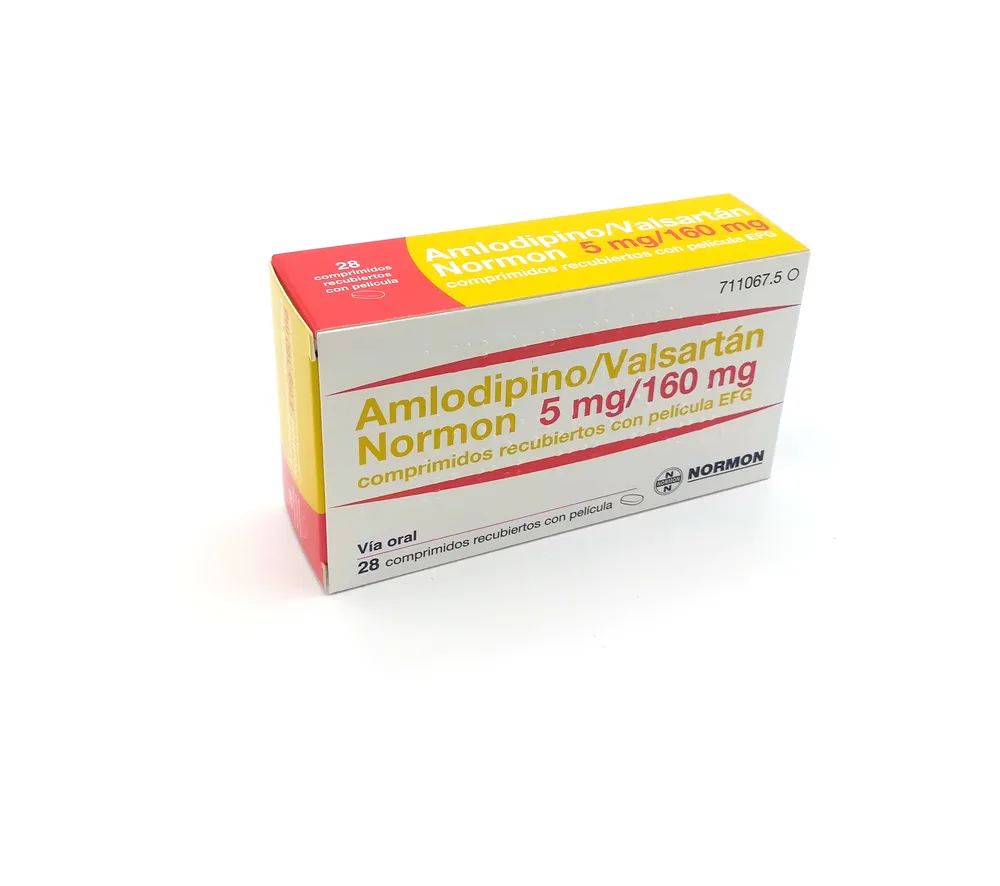
Table of Contents
- Patient Information Leaflet
- Introduction
- 1. What Amlodipine/Valsartan NORMON is and what it is used for
- 2. What you need to know before taking Amlodipine/Valsartan NORMON
- 3. How to take Amlodipine/Valsartan NORMON
- 4. Possible adverse effects
- 5. Storage of Amlodipine/Valsartan NORMON
- 6. Contents of the pack and other information
Patient Information Leaflet
Introduction
Patient Information Leaflet
Amlodipine/Valsartan NORMON 5 mg/160 mg film-coated tablets EFG
amlodipine / valsartan
Read the entire leaflet carefully before you start taking this medicine, as it contains important information for you.
- Keep this leaflet, as you may need to read it again.
- If you have any questions, ask your doctor or pharmacist.
- This medicine has been prescribed for you only, and you should not give it to other people, even if they have the same symptoms as you, because it could harm them.
- If you experience any adverse effects, consult your doctor or pharmacist, even if they are adverse effects not listed in this leaflet. See section 4.
Leaflet Contents
- What Amlodipine/Valsartan NORMON is and what it is used for
- What you need to know before taking Amlodipine/Valsartan NORMON
- How to take Amlodipine/Valsartan NORMON
- Possible side effects
- How to store Amlodipine/Valsartan NORMON
- Contents of the pack and other information
1. What Amlodipine/Valsartan NORMON is and what it is used for
Amlodipine/Valsartan NORMON tablets contain two substances called amlodipine and valsartan. Both substances help control high blood pressure.
- Amlodipine belongs to a group of substances known as «calcium channel blockers». Amlodipine prevents calcium from entering the blood vessel wall, thereby preventing blood vessels from narrowing.
- Valsartan belongs to a group of substances known as «angiotensin II receptor antagonists». Angiotensin II is produced by the body and causes blood vessels to narrow, thereby increasing blood pressure. Valsartan works by blocking the effect of angiotensin II.
This means that both substances help prevent the narrowing of blood vessels. As a result, blood vessels relax and blood pressure is reduced.
Amlodipine/Valsartan NORMON is used to treat high blood pressure in adults whose blood pressure is not adequately controlled by amlodipine or valsartan alone.
2. What you need to know before taking Amlodipine/Valsartan NORMON
Do not take Amlodipine/Valsartan NORMON
- if you are allergic to amlodipine or to any other calcium channel blocker. This may include itching, skin redness, or difficulty breathing.
- if you are allergic to valsartan or to any of the other ingredients of this medicine (listed in section 6). If you think you may be allergic, inform your doctor before taking Amlodipine/Valsartan NORMON.
- if you have severe liver problems or biliary disorders such as biliary cirrhosis or cholestasis.
- if you are more than 3 months pregnant (in any case, it is better to avoid taking this medicine also during early pregnancy; see Pregnancy section).
- if you have severe low blood pressure (hypotension).
- if you have narrowing of the aortic valve (aortic stenosis) or cardiogenic shock (a condition in which your heart cannot supply enough blood to the body).
- if you have heart failure following a heart attack.
- if you have diabetes or kidney failure and are being treated with a blood pressure-lowering medicine containing aliskiren.
Do not take Amlodipine/Valsartan and inform your doctor if any of the above conditions apply to you.
Warnings and precautions
Consult your doctor if you experience abdominal pain, nausea, vomiting, or diarrhea after taking Amlodipine/Valsartan Normon. Your doctor will decide whether to continue treatment. Do not stop taking Amlodipine/Valsartan Normon when used as monotherapy.
Consult your doctor or pharmacist before starting to take Amlodipine/Valsartan NORMON:
- if you have been unwell (with vomiting or diarrhea).
- if you have liver or kidney problems.
- if you have had a kidney transplant or if you have been told you have narrowing of the arteries to your kidneys.
- if you have a disease affecting the adrenal glands called "primary hyperaldosteronism".
- if you have experienced heart failure or had a heart attack. Follow your doctor's instructions for carefully initiating dosing. Your doctor may also check your kidney function.
- if your doctor has informed you that you have narrowing of the heart valves (called "aortic or mitral stenosis") or abnormal thickening of your heart muscle (called "obstructive hypertrophic cardiomyopathy").
- if you have experienced swelling, particularly in the face and throat, while taking other medicines (including angiotensin-converting enzyme inhibitors). If you have these symptoms, stop taking Amlodipine/Valsartan and contact your doctor immediately. You must never take Amlodipine/Valsartan again.
- if you are taking any of the following medicines used to treat high blood pressure:
- an angiotensin-converting enzyme inhibitor (ACE inhibitor) (e.g., enalapril, lisinopril, ramipril), especially if you have kidney problems related to diabetes.
- aliskiren
Your doctor may monitor your kidney function, blood pressure, and levels of electrolytes (e.g., potassium) in your blood at regular intervals.
See also the information under the heading “Do not take Amlodipine/Valsartan NORMON”.
Inform your doctor before taking Amlodipine/Valsartan if any of the mentioned conditions apply to you.
Children and adolescents
The use of Amlodipine/Valsartan is not recommended in children and adolescents (under 18 years of age).
Taking Amlodipine/Valsartan NORMON with other medicines
Tell your doctor or pharmacist if you are using, have recently used, or might need to use any other medicines. Your doctor may need to adjust the dose and/or take other precautions. In some cases, you may need to stop taking one of the medicines. This is especially important for the following medicines:
- an angiotensin-converting enzyme inhibitor (ACE inhibitor) or aliskiren (see also the information under the headings “Do not take Amlodipine/Valsartan” and “Warnings and precautions”).
- diuretics (a type of medicine that increases urine production);
- lithium (a medicine used to treat certain types of depression);
- potassium-sparing diuretics, potassium supplements, salt substitutes containing potassium, and other substances that may increase potassium levels;
- certain types of pain medicines called non-steroidal anti-inflammatory drugs (NSAIDs) or selective cyclooxygenase-2 inhibitors (COX-2 inhibitors). Your doctor may also monitor your kidney function;
- anticonvulsants (e.g., carbamazepine, phenobarbital, phenytoin, fosphenytoin, primidone);
- St. John’s wort;
- nitroglycerin and other nitrates, or other substances called "vasodilators";
- medicines used for HIV/AIDS (e.g., ritonavir, indinavir, nelfinavir);
- medicines used to treat fungal infections (e.g., ketoconazole, itraconazole);
- medicines used to treat bacterial infections (such as rifampicin, erythromycin, clarithromycin, telithromycin);
- verapamil, diltiazem (heart medicines);
- simvastatin (a medicine used to control high cholesterol levels);
- dantrolene (by infusion for serious disturbances in body temperature);
- medicines used to prevent transplant rejection (cyclosporine).
Taking Amlodipine/Valsartan NORMON with food and drinks
People taking Amlodipine/Valsartan must not consume grapefruit or grapefruit juice. This is because grapefruit and grapefruit juice may increase blood levels of the active substance amlodipine, which could cause an unpredictable increase in the blood pressure-lowering effect of amlodipine/valsartan.
Pregnancy, breastfeeding, and fertility
Pregnancy
You must inform your doctor if you are pregnant, if you suspect you might be pregnant, or if you are planning to become pregnant. Generally, your doctor will advise you to stop taking Amlodipine/Valsartan before becoming pregnant or as soon as you become pregnant, and will recommend an alternative antihypertensive medicine. Amlodipine/Valsartan is not recommended during early pregnancy (first 3 months), and must not be used from the third month of pregnancy onwards, as it may cause serious harm to your unborn baby when used from that stage.
Breastfeeding
It has been shown that amlodipine passes into breast milk in small amounts. Inform your doctor if you are planning to breastfeed or are currently breastfeeding, as Amlodipine/Valsartan is not recommended for women during this period. Your doctor may decide to prescribe a treatment more suitable for breastfeeding, especially if the infant is a newborn or premature.
Consult your doctor or pharmacist before using any medicine.
Driving and use of machines
This medicine may make you feel dizzy, which could affect your ability to concentrate. Therefore, if you are unsure how this medicine affects you, do not drive, operate machinery, or perform any activities requiring concentration.
3. How to take Amlodipine/Valsartan NORMON
Follow exactly the instructions given by your doctor for taking this medicine. If you are unsure, consult your doctor or pharmacist again. This will help you achieve the best results and reduce the risk of adverse effects.
The usual dose of Amlodipine/Valsartan NORMON is one tablet daily.
- It is preferable to take the medicine at the same time each day.
- Swallow the tablets with a glass of water.
- You may take Amlodipine/Valsartan NORMON with or without food. Do not take Amlodipine/Valsartan NORMON with grapefruit or grapefruit juice.
Depending on your response to treatment, your doctor may recommend a higher or lower dose.
Do not exceed the prescribed dose.
Amlodipine/Valsartan NORMON and elderly patients (65 years of age or older)
Your doctor should exercise caution when increasing your dose.
If you have any further questions about the use of this medicine, ask your doctor or pharmacist.
If you take more Amlodipine/Valsartan NORMON than you should
If you have taken too many Amlodipine/Valsartan tablets, or if someone else has taken your tablets, contact a doctor immediately.
Excess fluid may accumulate in the lungs (pulmonary edema), causing difficulty in breathing, which may develop 24–48 hours after ingestion.
In case of overdose or accidental ingestion, contact your doctor or pharmacist immediately or call the Toxicology Information Service at telephone number 91 562 04 20, indicating the medicine and the amount ingested.
If you forget to take Amlodipine/Valsartan NORMON
If you forget to take your medicine, take it as soon as you remember. Then take your next dose at the usual time. However, if it is almost time for your next dose, do not take the missed dose. Do not take a double dose to make up for a missed dose.
If you stop taking Amlodipine/Valsartan NORMON
Stopping your treatment with Amlodipine/Valsartan NORMON may cause your condition to worsen. Do not stop taking your medicine unless your doctor tells you to.
4. Possible adverse effects
Like all medicines, this medicine can cause adverse effects, although not everyone experiences them.
Some adverse effects may be serious and require immediate medical attention:
A small number of patients have experienced these serious adverse effects (may affect up to 1 in 1,000 patients). If you experience any of the following, tell your doctor immediately:
Allergic reaction with symptoms such as rash, itching, swelling of the face, lips or tongue, difficulty breathing, low blood pressure (feeling faint, dizziness).
Other possible adverse effects of Amlodipine/Valsartan:
Common (may affect up to 1 in 10 patients): Flu-like illness; nasal congestion, sore throat and discomfort when swallowing; headache; swelling in the arms, hands, legs, ankles or feet; fatigue; asthenia (weakness); flushing and warmth of the face and/or neck.
Uncommon (may affect up to 1 in 100 patients): Dizziness; nausea and abdominal pain; dry mouth; drowsiness, tingling or numbness in the hands or feet; vertigo, rapid heartbeat including palpitations; dizziness upon standing; cough; diarrhoea; constipation; skin rash, redness of the skin; joint swelling, back pain; joint pain.
Rare (may affect up to 1 in 1,000 patients): Feeling of anxiety; ringing in the ears (tinnitus); fainting; increased amount of urine or urgent need to urinate; inability to achieve or maintain an erection; sensation of heaviness; low blood pressure with symptoms such as dizziness, lightheadedness; excessive sweating; rash all over the body, itching, muscle spasms.
Tell your doctor if any of the mentioned effects affect you severely.
Adverse effects reported with amlodipine or valsartan alone, not observed with Amlodipine/Valsartan or observed with higher frequency than with Amlodipine/Valsartan:
Amlodipine
Contact your doctor immediately if you experience any of the following serious adverse effects, which are very rare after taking this medicine:
-
Sudden wheezing, chest pain, shortness of breath or difficulty breathing.
-
Swelling of the eyelids, face or lips.
-
Swelling of the tongue and throat causing severe difficulty breathing.
-
Severe skin reactions including severe rash, hives, widespread redness of the skin, intense itching, blistering, peeling and skin inflammation, swelling of mucous membranes (Stevens-Johnson syndrome, toxic epidermal necrolysis) or other allergic reactions.
-
Heart attack, irregular heartbeat.
-
Inflammation of the pancreas which may cause severe abdominal pain and back pain accompanied by a general feeling of illness.
The following adverse effects have been reported. If any of these cause problems or last longer than one week, consult your doctor.
Common (may affect up to 1 in 10 patients): Dizziness, drowsiness; palpitations (awareness of heartbeat); hot flushes, swelling of the ankles (oedema); abdominal pain, feeling unwell (nausea).
Uncommon (may affect up to 1 in 100 patients): Mood changes, anxiety, depression, drowsiness, tremor, taste disturbances, fainting, loss of pain sensation; visual disturbances, blurred vision, ringing in the ears; low blood pressure; sneezing/nasal discharge due to inflammation of the nasal mucosa (rhinitis); indigestion, vomiting (feeling unwell); hair loss, increased sweating, itching of the skin, skin colour changes; urinary disorders, increased need to urinate at night, increased frequency of urination; inability to achieve an erection, discomfort or enlargement of the breasts in men, pain, feeling unwell, muscle pain, muscle cramps; weight gain or weight loss.
Rare (may affect up to 1 in 1,000 patients): Confusion.
Very rare (may affect up to 1 in 10,000 patients): Decrease in white blood cells, decrease in blood platelets which may cause easy bleeding or unusual bruising (damage to red blood cells); high blood sugar (hyperglycaemia); gum inflammation, abdominal swelling (gastritis); abnormal liver function, inflammation of the liver (hepatitis), yellowing of the skin (jaundice), increased liver enzymes which may affect certain medical tests; increased muscle tension; inflammation of blood vessels often with skin rashes, sensitivity to light; disorders combining stiffness, tremor and/or movement disorders.
Valsartan
Very rare:
Intestinal angioedema: swelling in the intestine presenting with symptoms such as abdominal pain, nausea, vomiting and diarrhoea.
Frequency not known (frequency cannot be estimated from available data): Decrease in red blood cells, fever, sore throat or mouth ulcers due to infection; spontaneous skin bleeding or bruising; increased potassium in blood; abnormal liver function tests; reduced kidney function and severely reduced kidney function; swelling, mainly of the face and throat; muscle pain; skin rash, purplish red spots; fever; itching; allergic reaction, blistering skin disease (sign of a condition called bullous dermatitis).
Reporting of adverse effects
If you experience any adverse effect, consult your doctor or pharmacist, even if it is a possible adverse effect not listed in this leaflet. You may also report them directly via the Spanish Pharmacovigilance System for Human Medicines: www.notificaRAM.es. By reporting adverse effects, you can help provide more information on the safety of this medicine.
5. Storage of Amlodipine/Valsartan NORMON
Keep this medicine out of the sight and reach of children.
Do not use this medicine after the expiry date stated on the container, following “EXP”. The expiry date refers to the last day of the month indicated.
No special storage conditions are required.
Do not use Amlodipine/Valsartan NORMON if you notice that the packaging is damaged or shows signs of tampering.
Medicines should not be disposed of via wastewater or household waste. Dispose of unused medicines and their containers at the SIGRE collection point at your pharmacy. If you are in doubt, ask your pharmacist how to properly dispose of unused medicines and their packaging. This will help protect the environment.
6. Contents of the pack and other information
Composition of Amlodipine/Valsartan NORMON
- The active substances are: amlodipine (as amlodipine besilate) and valsartan. Each tablet contains 5 mg of amlodipine and 160 mg of valsartan.
- The other components are: microcrystalline cellulose, crospovidone, anhydrous colloidal silica, magnesium stearate, Opadry II White 85F18422 (containing: poly(vinyl alcohol), titanium dioxide (E-171), macrogol 4000 and talc), yellow iron oxide (E-172) and red iron oxide (E-172).
Appearance of the product and contents of the pack
Amlodipine/Valsartan NORMON 5 mg/160 mg are elongated, biconvex, dark yellow film-coated tablets, marked with "AV5" on one side and unmarked on the other.
Amlodipine/Valsartan NORMON is available in packs containing 28 tablets.
Marketing Authorization Holder and Manufacturer
LABORATORIOS NORMON, S.A.
Ronda de Valdecarrizo, 6 – 28760 Tres Cantos – Madrid (SPAIN)
Other presentations
Amlodipine/Valsartan NORMON 10 mg/160 mg film-coated tablets EFG.
Date of the most recent review of this leaflet: February 2025
Detailed and up-to-date information on this medicinal product is available on the website of the Spanish Agency of Medicines and Medical Devices: http://www.aemps.gob.es