Amikacin B Braun 5 mg/ml solution for intravenous infusion
Spain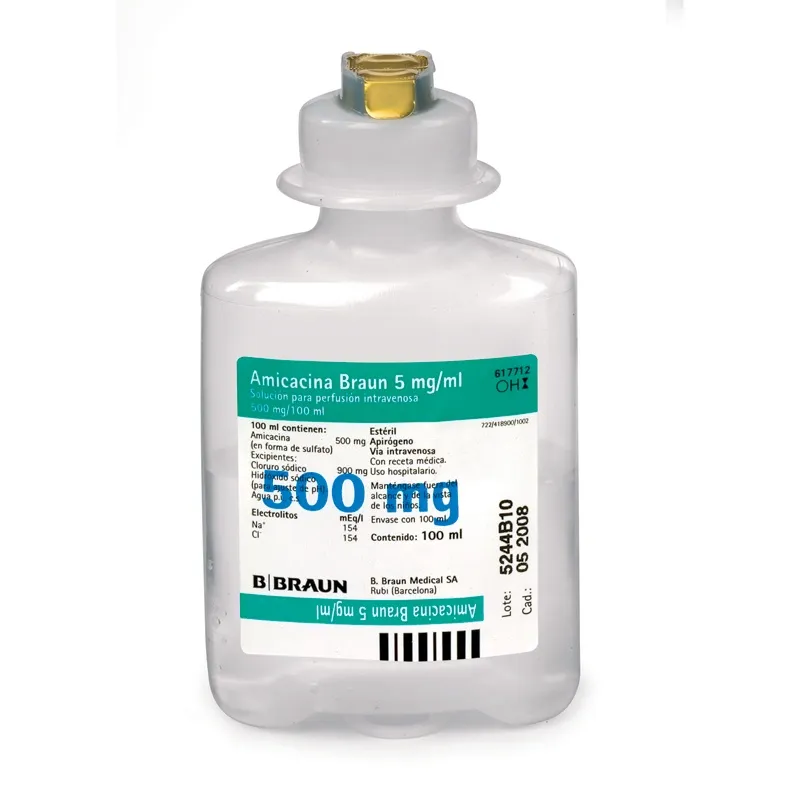
Table of Contents
- Package leaflet: Information for the user
- Introduction
- 1. What Amikacin B. Braun 5 mg/ml is and what it is used for
- 2. What you need to know before starting to use Amikacin B. Braun 5 mg/ml.
- **Driving and use of machines**
- 3. How to use Amikacin B. Braun 5 mg/ml
- **If you use more Amikacin B. Braun 5 mg/ml than you should**
- 4. Possible adverse effects
- 5. Storage of Amikacin B. Braun 5 mg/ml.
- 6. Package contents and additional information
Package leaflet: Information for the user
Introduction
Package leaflet: information for the user
Amikacin B. Braun 5 mg/ml solution for infusion
Read all of this leaflet carefully before you start using this medicine, because it contains important information for you.
- Keep this leaflet. You may need to read it again.
- If you have any questions, ask your doctor or pharmacist.
- This medicine has been prescribed for you only, and you should not give it to other people, even if they have the same symptoms as you. It could harm them.
- If you experience any adverse effects, consult your doctor or pharmacist, even if they are effects not listed in this leaflet. See section 4.
Contents of the leaflet
- What Amikacin B. Braun 5 mg/ml is and what it is used for
- What you need to know before using Amikacin B. Braun 5 mg/ml
- How to use Amikacin B. Braun 5 mg/ml
- Possible adverse effects
- How to store Amikacin B. Braun 5 mg/ml
- Contents of the pack and other information
1. What Amikacin B. Braun 5 mg/ml is and what it is used for
This medicine contains an antibiotic belonging to the aminoglycoside group, amikacin
Antibiotics are used to treat bacterial infections and are not effective against viral infections such as influenza or the common cold. It is important that you follow the instructions regarding dosage, administration, and duration of treatment as indicated by your doctor. Do not store or reuse this medicine. If you have any antibiotic left after completing the treatment, return it to the pharmacy for proper disposal. Medicines must not be disposed of via wastewater or household waste. |
It is used for the short-term treatment of serious infections caused by susceptible microorganisms. It is mainly used in the following cases:
- blood infection, known as sepsis,
- serious respiratory tract infections, including patients with cystic fibrosis,
- infections of the central nervous system (including meningitis and ventriculitis),
- gastrointestinal tract infections, including peritonitis,
- complicated and recurrent urinary tract infections,
- skin and soft tissue infections (including burns),
- bone infections, including joints,
- infections following surgical procedures.
2. What you need to know before starting to use Amikacin B. Braun 5 mg/ml.
Do not use Amikacin B. Braun 5 mg/ml:
- If you are allergic (hypersensitive) to amikacin or to any of the other ingredients of this medicine (listed in section 6).
- If you are allergic to other similar substances (other aminoglycosides).
It must not be administered together with other medicines that are toxic to the ear or kidney, or with potent diuretics (medicines used to increase urine elimination).
Warnings and precautions
Talk to your doctor or pharmacist before starting to use Amikacin B. Braun 5 mg/ml.
Inform your doctor if you:
- are allergic to amikacin or to other aminoglycoside antibiotics,
- have poor kidney function, as this may increase the risk of toxicity,
- have hearing problems,
- have muscle disorders such as myasthenia gravis or Parkinson’s disease, as muscle weakness may worsen,
- are taking diuretics that may be ototoxic (toxic to the ear),
- you or members of your family have a mitochondrial mutation disease (a genetic disorder) or hearing loss caused by antibiotics; you are advised to inform your doctor or pharmacist before taking an aminoglycoside; certain mitochondrial mutations may increase your risk of hearing loss with this medicine. Your doctor may recommend genetic testing before administering Amikacin B. Braun 5 mg/ml infusion solution,
- amikacin may alter laboratory test values for certain substances such as: blood urea nitrogen, transaminases, alkaline phosphatase, bilirubin, creatinine, lactate dehydrogenase, sodium, potassium, magnesium, and calcium.
- have previously been treated with another antibiotic similar to amikacin.
Your doctor will take necessary precautions if you are in any of the above situations.
If you have any of the following conditions, you may be at higher risk of developing harmful effects on the ear or nerves:
- impaired kidney function
- advanced age (≥60 years)
- dehydration
- receiving high doses of this medicine
- prolonged treatment for 5–7 days, even in healthy patients.
Early signs of harmful effects on the ear or nerves after receiving this medicine may include:
- difficulty hearing high-pitched sounds (high-frequency hearing loss),
- dizziness,
- numbness, tingling of the skin, muscle spasms, seizures.
After receiving this medicine, your breathing (respiratory paralysis) and functions related to muscles and nerves may be blocked (neuromuscular blockade). In such a case, your doctor will take appropriate measures.
Use in children
This medicine should be administered with caution and only if no alternative exists in premature infants and newborns, due to their incomplete kidney development.
Use in elderly patients
This medicine should be administered with caution in these patients, as they are likely to have reduced kidney function, increasing the likelihood of systemic toxicity.
During treatment with this medicine, your doctor will keep you under close surveillance, paying special attention to your hearing ability and kidney function.
Monitoring will include:
- kidney function, especially if you have renal impairment or signs of it develop during treatment,
- hearing,
- blood levels of amikacin, if necessary.
Daily doses will be reduced and/or the interval between doses extended if signs of kidney problems appear or if kidney problems worsen. If kidney problems worsen, treatment with Amikacin will be discontinued.
Amikacin therapy should also be stopped if ringing in the ears (tinnitus) or hearing loss occurs.
If you undergo any surgical procedures involving irrigation with solutions containing amikacin or a similar antibiotic in wounds, this will be taken into account when determining your amikacin dose.
Use of Amikacin B. Braun 5 mg/ml with other medicines
Inform your doctor or pharmacist if you are taking, have recently taken, or might need to take any other medicines.
The harmful effects of amikacin on the kidneys and auditory nerve may be increased when used with the following medicines:
- Other antibiotics of the same type as amikacin, aminoglycosides (gentamicin, tobramycin…) or capreomycin.
- Amphotericin (a medicine used to treat fungal infections), vancomycin (an antibiotic), immunosuppressive agents, cytotoxic agents (toxic to cells such as cyclosporine or cisplatin), cephalosporins (cephalothin), or potent diuretics (to increase urine elimination).
- Inhaled halogenated hydrocarbon anesthetics, massive transfusions of citrated blood, and neuromuscular blockers.
- Antihistamines (medicines for allergies).
- Buclizine, cyclizine, meclizine, or trimethobenzamide (medicines to control nausea and vomiting).
- Loxapine (for schizophrenia).
- Phenothiazines, thioxanthenes (drugs used in psychiatry).
- Antimyasthenics (medicines used to treat myasthenia gravis – muscle weakness).
- Indomethacin (an anti-inflammatory medicine).
- Malathion (a pesticide).
- Polypeptide-type antibiotics (colistin, polymyxin).
- Opioid analgesics (opium-derived medicines used for pain relief).
- β-lactam antibiotics (penicillin).
When amikacin must be administered concomitantly with these substances, auditory and renal function should be carefully and continuously monitored. In cases where amikacin is administered together with fast-acting diuretics that increase urine flow, fluid balance should be monitored.
Concomitant treatment with amikacin and muscle-relaxant drugs, or other substances with neuromuscular effects.
Your doctor will pay special attention if you receive amikacin together with muscle relaxants (such as succinylcholine, decamethonium, atracurium, rocuronium, vecuronium), large amounts of anticoagulated blood (citrated blood), or anesthetics: your breathing may become blocked (respiratory paralysis).
During surgery, the anesthetist must be informed that you are being treated with amikacin, as there is a risk that neuromuscular blockade may be significantly enhanced. If the aminoglycoside causes neuromuscular blockade, it can be reversed with calcium salts.
Pregnancy and breastfeeding
If you are pregnant or breastfeeding, think you may be pregnant, or plan to become pregnant, consult your doctor or pharmacist before using this medicine.
Pregnancy
Treatment during pregnancy is not recommended, although your doctor will assess whether its use is justified. If the medicine is used during pregnancy, or if the patient becomes pregnant while being treated, she should be informed of the potential risks.
Breastfeeding
Although it is highly unlikely that amikacin will be absorbed through the intestines of breastfed infants, your doctor will decide whether to discontinue breastfeeding or the amikacin treatment.
Driving and use of machines
There is no evidence of effects on the ability to drive vehicles or operate machinery. However, this ability may be impaired if adverse reactions such as dizziness, vertigo, etc., occur.
Amikacin B. Braun 5 mg/ml contains sodium
This medicinal product contains 354 mg of sodium (the main component of table/cooking salt) in each 100 ml vial. This corresponds to 17.7% of the maximum daily sodium intake recommended for an adult.
3. How to use Amikacin B. Braun 5 mg/ml
Amikacin B. Braun 5 mg/ml is administered by direct infusion into a vein (intravenous infusion). The infusion duration may last between 30 and 60 minutes.
Treatment duration
Typically, treatment with amikacin lasts from 7 to 10 days, and only in cases of severe and complicated infections may the duration be extended. Usually, the treatment will take effect within 24 to 48 hours; otherwise, it may be necessary to change the medication. In such a case, your doctor will evaluate your condition and reconsider your treatment.
Your doctor will determine the most appropriate dose for you, which will depend on your age, weight, general condition, severity of infection, and kidney function.
Patients with normal renal function
As a general rule, the usual dose in adults with normal renal function is 15 mg/kg/day, which may be administered as a single daily dose or divided into two equal doses, i.e., 7.5 mg/kg body weight every 12 hours.
Patients with renal impairment
If you have renal impairment, your blood levels of amikacin and kidney function will be closely and frequently monitored in order to appropriately adjust your amikacin dose. Your doctor knows how to calculate the doses you will receive.
Patients undergoing hemodialysis or peritoneal dialysis
Patients will receive half the normal dose at the end of the dialysis procedure.
Elderly patients
If you are an elderly patient, you may require lower doses of amikacin than younger patients to achieve therapeutic plasma concentrations. Whenever possible, your kidney function will be assessed and the dose adjusted as necessary.
Patients with severe obesity
In these patients, the dose is calculated according to ideal body weight plus 40 percent of excess weight. Subsequently, your dose may be adjusted based on your blood levels of amikacin. The maximum dose is 1.5 g per day.
Patients with ascites
Higher doses should be administered to achieve adequate blood levels.
Burn patients and patients with severe infections
These patients may require higher doses or dosing intervals of four to six hours, because in these cases the drug's half-life is shorter.
If you use more Amikacin B. Braun 5 mg/ml than you should
In case of overdose or accidental ingestion, consult your doctor or pharmacist immediately or call the Toxicology Information Service at telephone number: 91 562 04 20, indicating the medication and the amount ingested.
If a toxic reaction occurs due to administration of a higher dose than recommended or due to accumulation, peritoneal dialysis or hemodialysis may enhance the elimination of the antibiotic. This should be especially considered in patients with severe renal impairment.
If a hypersensitivity reaction occurs, administration must be discontinued and the patient should be treated with appropriate specific therapy depending on the nature and severity of the reaction (antihistamines, corticosteroids, adrenaline...).
If you have any further questions about the use of this product, consult your doctor or pharmacist.
4. Possible adverse effects
Like all medicines, this medicine can cause adverse effects, although not everyone experiences them.
Amikacin and all other similar substances may show toxic effects on the auditory nerve, kidneys, muscles, and nerve conduction. These effects are more frequently observed in patients
- who have kidney problems,
- who are treated with other medicines that also have harmful effects on the auditory nerve and kidneys,
- who receive an excessively high dose or prolonged treatment.
The following adverse reactions can be serious and require immediate treatment:
Very rare (may affect up to 1 in 10,000 people):
- Respiratory paralysis
Frequency not known (cannot be estimated from available data)
- Allergic reactions up to shock
- Deafness (irreversible)
- Acute renal failure, kidney damage
Other adverse effects:
Uncommon (may affect up to 1 in 100 people)
- Secondary infection or condition with resistant microorganisms
- Dizziness, vertigo
- Feeling of malaise
- Damage to certain parts of the kidney (renal tubules)
- Skin rash
Rare (may affect up to 1 in 1,000 people)
- Anaemia, increased count of a certain type of white blood cells (eosinophils)
- Itching, urticaria
- Low blood magnesium levels
- Headache, numbness, tremors, loss of balance
- Low blood pressure
- Joint pain, uncontrolled muscle movements
- Reduced urine output, presence of albumin, white and/or red blood cells in urine
- Increased levels of creatinine and/or nitrogenous compounds in blood (oliguria, azotemia)
- Drug-related fever
- Ringing in the ears (tinnitus), mild hearing loss (hypacusis)
Frequency not known (cannot be estimated from available data)
- Cells in urine
- Respiratory arrest, respiratory cramps (bronchospasm)
Reporting of adverse effects
If you experience any adverse effect, consult your doctor or pharmacist, even if it is a possible adverse effect not listed in this leaflet. You may also report them directly via the Spanish Pharmacovigilance System for Human Medicines: www.notificaRAM.es.
By reporting adverse effects, you can help provide more information on the safety of this medicine.
5. Storage of Amikacin B. Braun 5 mg/ml.
Keep this medicine out of the sight and reach of children.
No special storage conditions are required. Store in the original packaging.
Do not use this medicine after the expiry date stated on the container after EXP. The expiry date refers to the last day of the month indicated.
The contents should be used immediately after opening. After opening the container, discard any unused portion of the solution.
Medicines must not be disposed of via wastewater or household waste. Ask your pharmacist how to dispose of medicines and containers you no longer need. This will help protect the environment.
6. Package contents and additional information
Composition of Amikacin B. Braun 5 mg/ml
- The active substance is amikacin (as sulfate). Each 5 ml of solution contains 25 mg of amikacin (as sulfate). Each ml of solution contains 5 mg of amikacin (as sulfate). Each 100 ml vial contains 500 mg of amikacin (as sulfate).
- The other components (excipients) are sodium chloride, sodium hydroxide (for pH adjustment), and water for injections.
Appearance of the product and package contents
It is supplied in packages containing 1 and 20 plastic bottles of 100 ml, packed in a cardboard box.
Marketing Authorization Holder and Manufacturer
- Braun Medical, S.A.
Ctra. de Terrassa, 121
08191 Rubí (Barcelona)
Spain
Date of the most recent review of this leaflet: August 2025
Detailed information on this medicine is available on the website of the Spanish Agency of Medicines and Health Products (AEMPS) (http://www.aemps.gob.es/).
This information is intended for healthcare professionals only:
Renal function and auditory nerve function must be carefully monitored in patients with renal impairment, especially when the drug is used for prolonged periods or administered at doses exceeding those recommended, as disorders of the eighth cranial nerve and renal function have been reported. The appearance of signs of nephrotoxicity or ototoxicity requires dosage adjustment or discontinuation of treatment, depending on the case.
As a general rule, the usual dose in adults with normal renal function is 15 mg/kg/day, administered either as a single daily dose or divided into two or three equal doses given at regular intervals, i.e., 7.5 mg/kg every 12 hours or 5 mg/kg every 8 hours.
Plasma levels of amikacin should be monitored, with dosage adjusted to avoid prolonged levels exceeding 35 micrograms/ml. Urine should be examined for increased protein excretion, presence of cells or casts, and decreased specific gravity.
Ototoxicity in children has not been well established.
If superinfections caused by resistant microorganisms occur, treatment should be discontinued and appropriate therapy initiated.
Patients should remain well hydrated during treatment.
Amikacin B. Braun 5 mg/ml is a ready-to-use solution and therefore must not be diluted prior to administration. However, it may be administered simultaneously through the same intravenous line with 0.9% sodium chloride or 5% glucose solutions.
Dosage and method of administration
Before initiating amikacin therapy, performing an antibiogram is advisable. If the severity of the condition warrants it and the clinical picture suggests an infection caused by amikacin-sensitive microorganisms, amikacin therapy may be started before antibiogram results are available (see section 4.4 of the Summary of Product Characteristics).
The dosage and administration schedule should be based on the severity of the infection, susceptibility of the causative microorganism, age, weight, and the patient's general condition. Plasma level monitoring of amikacin is recommended in patients with severe infections and in cases of renal impairment.
Renal function status should be assessed by measuring serum creatinine concentration or endogenous creatinine clearance rate. Blood urea nitrogen determination is less reliable in this context. Renal function should be monitored throughout treatment.
Whenever possible, serum amikacin concentrations should be measured to ensure adequate but not excessive levels. It is recommended to intermittently monitor both peak and trough serum concentrations during treatment. Peak concentrations (measured 30–90 minutes after injection) should not exceed 35 mg/ml, and trough concentrations (measured just before the next dose) should not exceed 10 mg/ml. Dosage adjustments should be made accordingly.
Dosage
Patients with normal renal function (creatinine clearance ≥ 60 ml/min)
Patients with normal renal function may receive a single daily dose, provided peak concentrations do not exceed 35 mg/ml.
Adults and adolescents over 12 years of age
The recommended intravenous dose for adults and adolescents is 15 mg/kg/day, which may be administered either as a single daily dose or divided into two equal doses, i.e., 7.5 mg/kg body weight every 12 hours.
Treatment in patients with high body mass should not exceed 1.5 g/day.
In endocarditis, dosing at least twice daily is recommended, as there are insufficient data to support once-daily dosing.
Paediatric population
Infants and children (4 weeks to 11 years of age)
The recommended intravenous dose is 15 to 20 mg/kg body weight/day, which may be administered either as 15 to 20 mg/kg body weight once daily, or as 7.5 mg/kg body weight every 12 hours. In patients with endocarditis, the dose should be given twice daily, as there are insufficient data to support once-daily dosing.
Neonates (0 to 27 days)
Loading dose is 10 mg/kg, followed by maintenance doses of 7.5 mg/kg every 12 hours.
Preterm infants
The recommended intravenous dose is 7.5 mg/kg every 12 hours.
Infusion volumes in patients with normal renal function:
Dosage mg per kg of body weight | |||||||||||
Body weight | |||||||||||
Amikacin 5 mg / ml (100 ml = 500 mg) | |||||||||||
2.5kg | 5kg | 10kg | 12.5kg | 20kg | 30kg | 40kg | 50kg | 60kg | 70kg | ||
Amikacin in mg/kg Body weight | |||||||||||
7.5 | 3.75 | 7.50 | 15.00 | 18.75 | 30.00 | 45.00 | 60.00 | 75.00 | 90.00 | 105.00 | ml |
15 | 7.50 | 15.00 | 30.00 | 37.50 | 60.00 | 90.00 | 120.00 | 150.00 | 180.00 | 210.00 | |
20 | 10.00 | 20.00 | 40.00 | 50.00 | 80.00 | 120.00 | 160.00 | 200.00 | 240.00 | 280.00 | |
Body weight | |||||||||||
Amikacin 10 mg / ml (100 ml = 1000 mg) | |||||||||||
2.5kg | 5kg | 10kg | 12.5kg | 20kg | 30kg | 40kg | 50kg | 60kg | 70kg | ||
Amikacin in mg/kg Body weight | |||||||||||
7.5 | 1.88 | 3.75 | 7.50 | 9.38 | 15.00 | 22.50 | 30.00 | 37.50 | 45.00 | 52.50 | ml |
15 | 3.75 | 7.50 | 15.00 | 18.75 | 30.00 | 45.00 | 60.00 | 75.00 | 90.00 | 105.00 | |
20 | 5.00 | 10.00 | 20.00 | 25.00 | 40.00 | 60.00 | 80.00 | 100.00 | 120.00 | 140.00 |
Single Daily Dose
Administration as a single daily dose (15 mg/kg/day) by intravenous infusion over 60 minutes is an alternative dosing regimen in non-neutropenic adult patients and immunocompetent patients with normal renal function.
In patients with normal renal function, as reflected by a creatinine clearance ≥ 60 mL/min, a single daily intravenous dose of 15 mg/kg/day may be administered to adults, or 20 mg/kg/day to children (aged 4 weeks or older) for the treatment of bacteremia, sepsis, respiratory tract infections, complicated urinary tract infections, intra-abdominal infections, and febrile neutropenia. There is insufficient information available regarding the use of a single daily dose in patients with involvement of other organs or systems.
When amikacin is indicated for uncomplicated urinary tract infections, a total daily dose of 500 mg may be given as a single dose or divided into two doses (250 mg BID).
The duration of treatment is 7–10 days. The total daily dose must not exceed 15 mg/kg/day. For difficult and complicated infections requiring treatment longer than 10 days, the use of this medication should be reconsidered. If continued, monitoring of renal, auditory, and vestibular function, as well as serum amikacin levels, is recommended.
Uncomplicated infections caused by microorganisms sensitive to amikacin should show a clinical response within 24–48 hours. If a definitive clinical response is not observed within 3–5 days, therapy should be discontinued and microbial susceptibility to the antibiotic re-evaluated. Treatment failure may be due to microbial resistance or the presence of a septic focus requiring surgical drainage.
Patients with Impaired Renal Function (Creatinine Clearance < 60 mL/min)
In patients with renal impairment, as reflected by a creatinine clearance < 60 mL/min, administration of amikacin as a single daily dose is not recommended, as these patients will have prolonged exposure to elevated trough concentrations. (See dosage adjustment in renal impairment.)
In patients with renal impairment receiving the usual daily doses divided into two or three doses, serum concentrations of amikacin should be monitored whenever possible using appropriate analytical methods. Doses may be adjusted in patients with renal impairment either by administering normal doses at prolonged intervals or by administering reduced doses at fixed intervals.
Both approaches are based on the patient's creatinine clearance or serum creatinine values, as a correlation has been observed between these values and the half-life of aminoglycosides in patients with reduced renal function. These dosing regimens may be used in conjunction with careful clinical and laboratory monitoring of the patient and should be modified as necessary, including when dialysis is planned.
Normal Dose at Prolonged Dosing Intervals
If creatinine clearance is not available and the patient is stable, the dosing interval in hours for a single dose (i.e., given to patients with normal renal function under a BID regimen of 7.5 mg/kg) can be calculated by multiplying the serum creatinine value by 9. For example, if the serum creatinine level is 2 mg/100 mL, a single dose of 7.5 mg/kg should be administered every 18 hours.
Reduced Dose at Fixed Dosing Intervals
When renal function is impaired and it is advisable to administer this medication at fixed intervals, the dose should be reduced. In these patients, serum concentrations of amikacin should be determined to ensure accurate administration and to avoid excessive concentrations. If serum level monitoring is not feasible and the patient is stable, serum creatinine values and creatinine clearance are the most readily available indicators of the degree of renal impairment and may be used as a guide for dosing.
For patients with chronic renal failure and known creatinine clearance values, the amikacin dose is 7.5 mg/kg of body weight.
To determine the maintenance dose every 12 hours, the standard dose should be reduced in proportion to the reduction in creatinine clearance:
Maintenance dose (every 12 hours):
- Observed CrCl in mL/min
- ----------------------------- × loading dose (mg)
- Normal CrCl in mL/min
CrCl = creatinine clearance
An alternative approximate guide for determining the reduced dose at 12-hour intervals (for patients with known steady-state serum creatinine values) is to divide the usual recommended dose by the patient's serum creatinine value.
These dosing regimens are not intended as strict recommendations, but rather as a dosing guide when serum amikacin levels cannot be determined.
When the patient's serum creatinine value is known, the method for determining the dose is to divide the normal dose (7.5 mg/kg) by the serum creatinine value. These dosing recommendations are not considered mandatory but are advised when serum amikacin levels cannot be measured.
Other Risk Populations
Elderly Patients
May require lower maintenance doses than younger patients to achieve therapeutic plasma concentrations.
Obese Patients
The initial dose should be calculated based on ideal body weight plus 40% of excess body weight.
Burn Patients and Patients with Severe Infections
May require higher doses or dosing intervals of four to six hours, as the drug's half-life is shorter in these cases.
Method of Administration
Intravenous route. Administer by intravenous infusion over a period of 30–60 minutes. Infants should receive the infusion over 1 to 2 hours.