Ameride 5 mg/50 mg tablets
Spain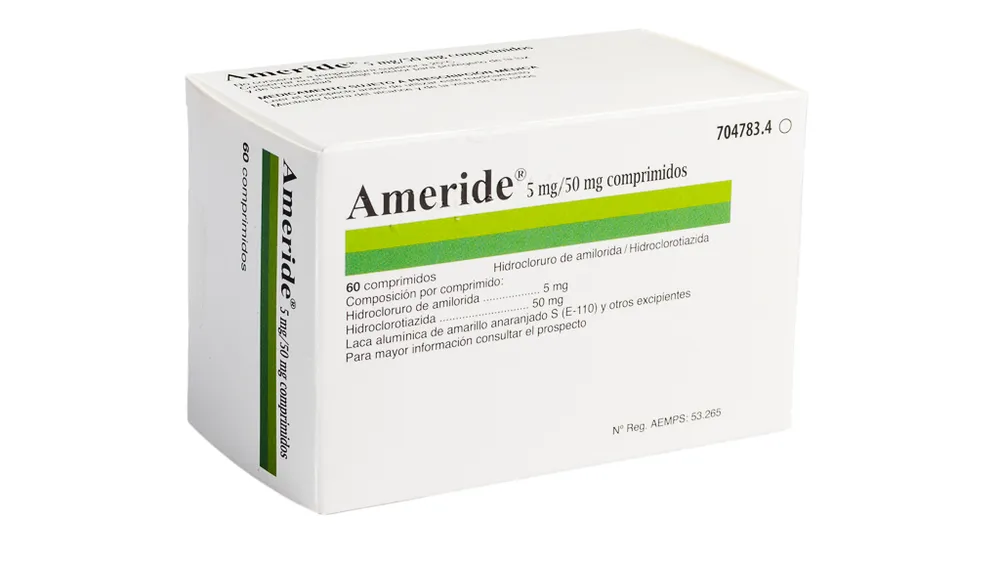
Table of Contents
Package leaflet: Information for the user
Introduction
Package leaflet: information for the user
Ameride 5 mg/50 mg tablets
amiloride hydrochloride/hydrochlorothiazide
Read the entire leaflet carefully before you start taking this medicine because it contains important information for you.
- Keep this leaflet. You may need to read it again.
- If you have any questions, ask your doctor, pharmacist or nurse.
- This medicine has been prescribed for you only, and you should not give it to others, even if they have the same symptoms as you, because it may harm them.
- If you experience any adverse effects, consult your doctor, pharmacist or nurse, even if such effects are not listed in this leaflet. See section 4.
Leaflet contents:
- What Ameride is and what it is used for
- What you need to know before taking Ameride
- How to take Ameride
- Possible side effects
- How to store Ameride
- Contents of the pack and other information
1. What Ameride is and what it is used for
The amiloride component of Ameride belongs to a group of medicines called antikaliuretic (potassium-sparing) agents: amiloride is also a weak diuretic. The hydrochlorothiazide component of Ameride belongs to a group of medicines called diuretics (thiazides).
Ameride works by making the kidneys eliminate more water and salts while retaining more potassium.
This helps reduce hypertension and certain types of edema, while at the same time helping to maintain normal blood potassium levels.
Ameride is indicated for the treatment of hypertension (high blood pressure), particularly in patients with low potassium levels; edema of cardiac origin (swelling of the ankles, feet, or legs due to fluid retention); or ascites (accumulation of fluid in the abdomen) due to cirrhosis (liver disease).
2. What you need to know before taking Ameride
Do not take Ameride
- if you are allergic to amiloride hydrochloride, hydrochlorothiazide, or any of the other components of this medicine (listed in section 6).
- if you are allergic to any medicine derived from sulfonamides (consult your doctor if you are unsure which medicines are sulfonamide-derived).
- if you naturally have high levels of potassium in your blood.
- if you are taking other medicines or supplements that increase potassium levels in the blood.
- if you have kidney disease.
Consult your doctor if you are unsure whether you should start taking this medicine.
Warnings and precautions
Consult your doctor, pharmacist, or nurse before starting to take Ameride:
- if you have or have had any medical condition or allergies, inform your doctor.
- inform your doctor if you have elevated potassium levels in plasma. Inform your doctor if you have any heart or lung disease, liver or kidney problems, gout, or lupus erythematosus (an autoimmune disease), or if you are being treated with other diuretics. In such cases, your doctor may need to adjust the dose of your medications.
- if you have diabetes (high blood sugar levels), consult your doctor, as treatment with thiazides may require adjustment of antidiabetic medication doses, including insulin.
- before undergoing surgical procedures or anesthesia (including at the dentist), inform the doctor or dentist that you are taking Ameride, as it may cause a sudden drop in blood pressure associated with anesthesia.
- if you have had skin cancer or develop an unexpected skin lesion during treatment, consult your doctor. Treatment with hydrochlorothiazide, particularly long-term use at high doses, may increase the risk of certain types of non-melanoma skin cancer and lip cancer. Protect your skin from exposure to sunlight and UV rays while taking Ameride.
- if you experience vision loss or eye pain, these could be symptoms of fluid accumulation in the vascular layer of the eye (choroidal effusion) or increased intraocular pressure, which may occur within hours to a week after taking Ameride. If left untreated, this may lead to permanent vision loss. If you have previously had an allergic reaction to penicillin or a sulfonamide, you may be at higher risk of developing this condition.
- if you have had respiratory or lung problems (such as inflammation or fluid in the lungs) after taking hydrochlorothiazide in the past. If you develop shortness of breath or severe difficulty breathing after taking Ameride, seek medical attention immediately.
Children and adolescents
Safety and efficacy have not been established in children; therefore, administration in minors is not recommended.
Consult your doctor, even if any of the above-mentioned conditions have occurred to you in the past.
Other medicines and Ameride
Inform your doctor or pharmacist if you are currently taking, have recently taken, or might need to take any other medicines, including those obtained without a prescription.
Ameride can generally be taken with other medicines. However, it is important to inform your doctor about any other medicines you are taking, including over-the-counter products, as some medicines may interfere with each other's effects.
It is especially important that your doctor knows if you are taking any ACE inhibitors (used to treat high blood pressure), other potassium-sparing medicines, or potassium supplements. Also inform your doctor if you are taking other antihypertensive medicines, other diuretics, cholesterol-lowering resins, antidiabetic medicines including insulin, muscle relaxants, pressor amines such as adrenaline (medicines used in cardiac arrest or severe allergic reactions), steroids, certain analgesics and anti-inflammatory drugs, medicines that suppress the immune system (cyclosporine, tacrolimus), or lithium (a medicine used in certain types of depression). The use of sedatives, narcotics, tranquilizers, alcohol, and analgesics may enhance the antihypertensive effect of Ameride, so you must inform your doctor if you are taking any of these.
Taking Ameride with food and drink
Inform your doctor if you take potassium supplements or follow a potassium-rich diet.
Pregnancy and breastfeeding
If you are pregnant or breastfeeding, think you may be pregnant, or plan to become pregnant, consult your doctor or pharmacist before using this medicine.
The use of Ameride is not recommended during pregnancy.
The hydrochlorothiazide component of Ameride passes into breast milk. If treatment with this medicine is essential, breastfeeding should be discontinued.
Driving and using machines
There are no data available on the effects on the ability to drive and use machines.
Use in athletes
Athletes are advised that this medicine contains a component that may result in a positive doping test.
Ameride contains Orange Yellow and lactose
This medicine may cause allergic reactions because it contains Orange Yellow S (E-110). It may cause asthma, especially in patients allergic to acetylsalicylic acid.
This medicine contains lactose. If your doctor has informed you that you have an intolerance to certain sugars, consult him before taking this medicine.
3. How to take Ameride
Follow exactly the administration instructions for this medicine as given by your doctor or pharmacist. If in doubt, please consult your doctor or pharmacist again.
Your doctor will determine the appropriate dose according to the patient's condition and whether or not they are taking other medications.
Most people take the tablets with a little water.
Take Ameride daily. Do not take more tablets than the prescribed dose.
Follow these instructions unless your doctor has given you different ones.
Remember to take your medicine.
- Cardiac origin edema
The usual initial dose is one Ameride tablet per day.
- Hypertension
The usual initial dose is one Ameride tablet taken once daily or divided into two doses.
- Cirrhosis with ascites
The usual dose is one Ameride tablet taken once daily.
This dose may be increased by your doctor if necessary, without exceeding two tablets per day. In some patients, maintenance treatment may be managed with intermittent dosing schedules, if so directed by your doctor.
The tablets may be divided to facilitate dose adjustment, if so directed by your doctor.
If you feel that the effect of Ameride is too strong or too weak, inform your doctor or pharmacist.
Your doctor will advise you on how long your treatment with Ameride should last. Do not stop treatment earlier, as only your doctor knows what is best for you.
Use in children
Safety and efficacy have not been established in children; therefore, administration in pediatric patients is not recommended.
If you take more Ameride than you should
In case of overdose, contact your doctor immediately. The most likely symptoms are dizziness or lightheadedness due to lowered blood pressure and/or excessive thirst, confusion, reduced urine volume, or rapid palpitations (strong and fast heartbeats).
In case of overdose or accidental ingestion, contact the Toxicology Information Service. Telephone: 91 562 04 20.
If you forget to take Ameride
Do not take a double dose to make up for forgotten doses.
If you stop taking Ameride
Do not stop taking this medicine without consulting your doctor.
If you have any further questions about the use of this medicine, ask your doctor, pharmacist, or nurse.
4. Possible adverse effects
Like all medicines, this medicine can cause adverse effects, although not everyone experiences them.
Immune system disorders: anaphylactic reaction.
Blood and lymphatic system disorders: changes in blood cell counts, red spots on the skin.
Metabolism and nutrition disorders: most frequently: anorexia (loss of appetite); may cause changes in blood test results regarding sodium, potassium, glucose, and uric acid levels. It may also increase glucose levels in urine. Gout, dehydration.
Psychiatric disorders: insomnia, nervousness, mental confusion, depression, drowsiness, agitation, reduced sexual desire.
Nervous system disorders: headache*, dizziness*; fainting, vertigo, tingling sensation, stupor, tremors, brain disease, bad taste in the mouth.
Eye disorders: decreased vision or eye pain due to increased pressure [possible signs of fluid accumulation in the vascular layer of the eye (choroidal effusion) or acute angle-closure glaucoma], vision disturbances, ocular hypertension (increased pressure inside the eye).
Ear and labyrinth disorders: tinnitus (ringing in the ears).
Cardiac disorders: arrhythmia (irregular heart rate), tachycardia (increased heart rate), chest pain, and palpitations (strong and rapid heartbeat).
Vascular disorders: orthostatic hypotension (dizziness or lightheadedness due to drop in blood pressure upon standing suddenly), and other heart abnormalities.
Respiratory, thoracic and mediastinal disorders: cough, breathing difficulties, chest pain, shortness of breath, nasal congestion.
Gastrointestinal disorders: most frequently: nausea; vomiting, diarrhea, constipation, abdominal pain, gastrointestinal bleeding, appetite disturbances, abdominal fullness, flatulence (gas), thirst, hiccups, bad taste in the mouth, dry mouth, cramps, indigestion, pancreatitis (inflammation of the pancreas), stomach pain and/or ulcer.
Hepatobiliary disorders: may cause changes in blood tests related to liver enzymes and bilirubin.
Skin and subcutaneous tissue disorders: most frequently: skin rash; itching, redness, sweating, hair loss, photosensitivity, salivary gland swelling, blistering, toxic epidermal necrolysis (a severe skin reaction characterized by blister formation).
Frequency not known: Skin and lip cancer (non-melanoma skin cancer).
Musculoskeletal and connective tissue disorders: limb pain, muscle cramps, joint pain, back pain, neck and shoulder pain.
Renal and urinary disorders: urinary disturbances, renal dysfunction including kidney failure, kidney inflammation.
Reproductive system and breast disorders: impotence.
General disorders and administration site conditions: fatigue, malaise, weakness, allergic reaction, fever.
Very rare: Acute breathing difficulty (symptoms include severe shortness of breath, fever, weakness, and confusion).
If adverse effects occur, your doctor may reduce your dose of Ameride or discontinue treatment.
Reporting of adverse effects
If you experience any type of adverse effect, consult your doctor, pharmacist, or nurse, even if it is an effect not listed in this leaflet. You may also report them directly via the Spanish Pharmacovigilance System for Human Medicines: www.notificaRAM.es. By reporting adverse effects, you can help provide more information on the safety of this medicine.
5. Storage of Ameride
Keep this medicine out of the sight and reach of children.
Do not store above 25 ºC.
Keep in the outer packaging to protect from light and moisture.
Do not use this medicine after the expiry date stated on the container after EXP. The expiry date is the last day of the month indicated.
Medicines must not be disposed of via wastewater or household waste. Ask your pharmacist how to dispose of medicines and packaging that you no longer need. Deposit unused medicines and their packaging at the SIGRE collection point at the pharmacy. This will help protect the environment.
6. Contents of the pack and other information
Composition of Ameride
-
The active substances are amiloride hydrochloride and hydrochlorothiazide. Each scored tablet contains 5 mg of amiloride hydrochloride and 50 mg of hydrochlorothiazide.
-
The other components are: monohydrate lactose, calcium hydrogen phosphate dihydrate, corn starch, pregelatinized starch, guar gum, magnesium stearate, orange-yellow S aluminium lake (E-110).
Appearance of the product and contents of the container
Ameride is presented as scored tablets, in blisters, in pack sizes of 20 and 60 tablets. The tablets are peach-coloured, marked with “AMERIDE” on one side and scored on the other.
Marketing Authorization Holder and Manufacturer
Marketing Authorization Holder
PAN QUÍMICA-FARMACÉUTICA, S.A.
Rufino González, 50
28037 Madrid
Spain
Manufacturer
ROVI Pharma Industrial Services, S.A.
Vía Complutense, 140
Alcalá de Henares 28805 – Madrid
(Spain)
Local Representative
Laboratorios Farmacéuticos ROVI, S.A.
Julián Camarillo, 35
28037 Madrid
Spain
Date of the most recent revision of this leaflet: February 2022
Other sources of information
Detailed information on this medicinal product is available on the website of the Spanish Agency for Medicines and Health Products (AEMPS) http://www.aemps.gob.es/