Ameluz 78 mg/g gel
Spain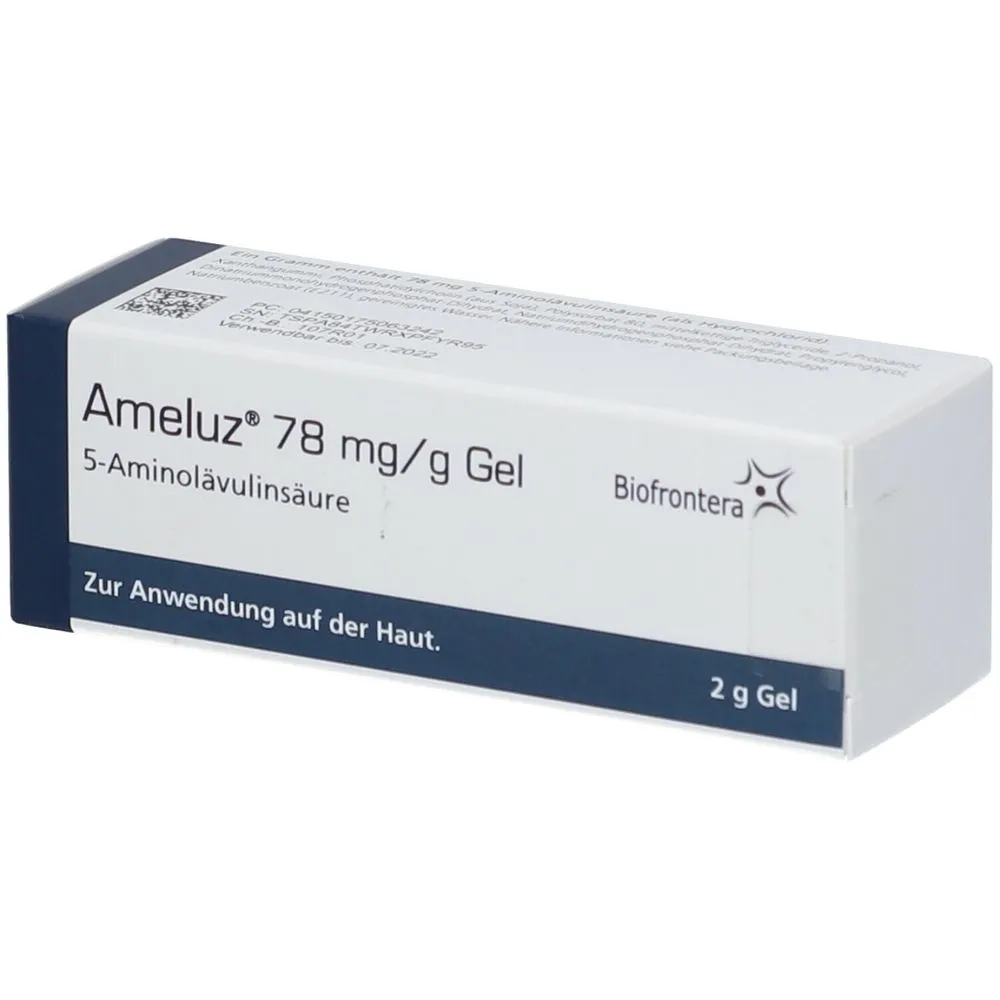
Table of Contents
Package leaflet: Information for the user
Introduction
Package leaflet: information for the user
Ameluz 78 mg/g gel
5-aminolevulinic acid
Read the entire leaflet carefully before you start using this medicine, because it contains important information for you.
- Keep this leaflet, as you may need to read it again.
- If you have any questions, consult your doctor.
- This medicine has been prescribed for you only and must not be given to other people, even if they have the same symptoms as you, since it could harm them.
- If you experience any adverse effects, consult your doctor, even if they are adverse effects not listed in this leaflet. See section 4.
Leaflet contents
-
What Ameluz is and what it is used for
-
What you need to know before using Ameluz
-
How to use Ameluz
-
Possible side effects
-
How to store Ameluz
-
Contents of the pack and other information
1. What Ameluz is and what it is used for
Ameluz contains the active substance acidum 5-aminolevulinicum (5-aminolevulinic acid). It is used for the treatment:
- of actinic keratosis that is slightly palpable or moderately thick, or of entire fields affected by actinic keratoses in adults. Actinic keratoses arise from a series of changes in the outer layer of the skin that may lead to skin cancer.
- of superficial and/or nodular basal cell carcinoma not amenable to surgical treatment due to potential treatment-related morbidity and/or poor cosmetic outcome in adults. Basal cell carcinoma is a type of skin cancer that may cause the appearance of scaly, reddish patches or one or more small nodules that bleed easily and do not heal.
After application, the active substance in Ameluz is converted into a photosensitising substance that accumulates in affected cells. Illumination with appropriate light produces reactive oxygen molecules that attack the target cells. This treatment is known as photodynamic therapy (PDT).
2. What you need to know before using Ameluz
Do not use Ameluz
-
if you are allergic to
-
5-aminolevulinic acid or to any of the other components of this medicine (listed in section 6)
-
photosensitizing substances known as porphyrins
-
soy or peanuts
-
if you have a disorder affecting the formation of red blood pigments called porphyria
-
if you have other skin conditions that are caused or worsened by exposure to light
Warnings and precautions
Talk to your doctor before starting to use Ameluz.
-
In very rare cases, photodynamic therapy may increase the risk of developing temporary memory loss.
-
Use of Ameluz is not recommended if you are taking immunosuppressants.
-
Do not apply Ameluz:
- to bleeding lesions.
- to the eyes or mucous membranes.
- to areas of skin affected by other skin diseases or with tattoos, as this could impair treatment success and evaluation.
-
Intensive preparation of lesions (e.g., chemical peeling followed by ablative laser) may increase pain during photodynamic therapy.
-
Discontinue any UV therapy prior to treatment.
-
Avoid sun exposure to treated lesions and surrounding skin for up to approximately 48 hours after treatment.
Children and adolescents
Actinic keratosis and basal cell carcinoma do not affect children or adolescents, except in extremely rare cases.
Use of Ameluz with other medicines
Inform your doctor or pharmacist if you are using, have recently used, or might need to use any other medicines.
Tell your doctor if you are taking medicines that increase allergic reactions or other adverse reactions following exposure to light, such as
-
St. John’s wort or its preparations: medicines used to treat depression
-
griseofulvin: a medicine used to treat fungal infections
-
medicines to increase water excretion through the kidneys, whose active ingredients’ names almost always end in «thiazide» or «thizide» (or «tiacida», «ticida»), such as hydrochlorothiazide
-
certain medicines for the treatment of diabetes, such as glibenclamide or glimepiride
-
medicines for the treatment of mental disorders, nausea or vomiting whose active ingredients’ names almost always end in «azine» (or «acina»), such as phenothiazine
-
medicines for the treatment of bacterial infections whose active ingredients’ names start with «sulfa» or end in «oxacin» or «cycline», such as tetracycline
Pregnancy and breastfeeding
Use of Ameluz during pregnancy is not recommended, as sufficient information is not available.
Breastfeeding should be interrupted for 12 hours after application of Ameluz.
Driving and using machines
The effect of Ameluz on the ability to drive and operate machinery is negligible or none.
Ameluz contains
- 2.4 mg of sodium benzoate (E211) per gram of gel. Sodium benzoate may cause local irritation.
- soybean phosphatidylcholine: if you are allergic to peanuts or soy, do not use this medicine.
3. How to use Ameluz
Ameluz is applied to the skin only. The treatment consists of applying Ameluz followed by exposure to light. One treatment session may be administered to treat single or multiple lesions, or entire treatment fields. The light source for treating actinic keratosis lesions or fields may be daylight (natural or artificial) or a special red light lamp. Your doctor will decide which therapeutic option to use, depending on your lesions.
A red light lamp must always be used as the light source for photodynamic therapy in the treatment of actinic keratosis on the trunk, neck, extremities, and for basal cell carcinoma.
Treatment of actinic keratosis lesions or fields and basal cell carcinoma with a red light lamp
The use of Ameluz with a red light lamp requires specific equipment and expertise in photodynamic therapy. Therefore, this treatment is performed in the doctor's office.
Lesion preparation
The application area is cleaned with a cotton swab soaked in alcohol to degrease the skin. Scales and crusts are carefully removed and the surface of all lesions gently scraped. Bleeding of lesions should be avoided.
Gel application
Apply Ameluz as a layer approximately 1 mm thick, covering all lesions or fields and about 5 mm of surrounding skin, using fingertips protected with a glove or a spatula.
Maintain a minimum distance of 1 cm from eyes and mucous membranes. In case of accidental contact, rinse thoroughly with water.
Allow the gel to dry for about 10 minutes before applying an opaque dressing over the treated area. Remove the dressing after 3 hours. Wash off any remaining gel.
Illumination with a red light lamp
After removing any residual gel, the entire treated area is exposed to a red light source. The efficacy and adverse effects, such as temporary pain, depend on the light source used.
Both patients and healthcare professionals must follow the safety instructions provided with the light source used during treatment. Appropriate protective eyewear must be worn during illumination. Protection of untreated healthy skin is not required.
Treatment of actinic keratosis lesions and fields on the face and scalp using natural daylight
Considerations before treatment
Use natural daylight treatment only if weather conditions allow comfortable outdoor exposure for 2 hours (with temperatures > 10 °C). If it is raining or likely to rain, natural daylight treatment should not be used.
Lesion preparation
Apply sunscreen to sun-exposed skin 15 minutes before treatment. Use only sunscreens containing chemical filters and a sun protection factor (SPF) of 30 or higher. Do not use sunscreens containing physical filters such as titanium dioxide or zinc oxide, as these may inhibit light absorption and thereby potentially reduce treatment efficacy. Then, clean the application area with a cotton swab soaked in alcohol to degrease the skin. Carefully remove scales and crusts and gently scrape the surface of all lesions. Avoid causing bleeding.
Gel application
Apply a thin layer of Ameluz to the entire lesion or field and approximately 5 mm of surrounding skin, using fingertips protected with a glove or a spatula.
Avoid direct contact with eyes and mucous membranes, maintaining a distance of at least 1 cm. In case of contact, wash the affected area with water.
An opaque dressing is not required. Do not wash off the gel during the entire natural daylight treatment session.
Illumination with natural daylight for actinic keratosis treatment
If conditions are suitable (see above, "Considerations before treatment"), go outdoors within 30 minutes after applying the gel and remain in full daylight for 2 consecutive hours. It is acceptable to seek shade if it is hot. If outdoor exposure is interrupted, the missed time must be compensated by extending the illumination period. Remove any remaining gel after 2 hours of light exposure.
Treatment of actinic keratosis lesions and fields on the face and scalp using artificial daylight
The use of Ameluz with an artificial daylight lamp requires specific equipment and expertise in photodynamic therapy. Therefore, this treatment is performed in the doctor's office.
Lesion preparation
The application area is cleaned with a cotton swab soaked in alcohol to degrease the skin. Scales and crusts are carefully removed and the surface of all lesions gently scraped. Bleeding of lesions should be avoided.
Gel application
Apply a thin layer of Ameluz covering all lesions or fields and approximately 5 mm of surrounding skin, using fingertips protected with a glove or a spatula. Maintain a minimum distance of 1 cm from eyes and mucous membranes. In case of contact, rinse thoroughly with water.
Incubation and illumination with an artificial daylight lamp
After application, the total treatment time (including incubation and illumination) must be 2 hours and must not exceed 2.5 hours. However, illumination should begin between 0.5 and 1 hour after gel application. An occlusive dressing is not required during incubation; it may optionally be used but must be removed no later than immediately before illumination. Both patients and healthcare professionals must follow the safety instructions provided with the light source used during treatment. Protection of untreated healthy skin is not required. Remove any remaining gel after light exposure.
Number of treatments
- Actinic keratosis lesions and fields are treated with one session.
- Basal cell carcinoma is treated with two sessions, one week apart.
Treated lesions are evaluated 3 months after treatment. Your doctor will assess the response of each skin lesion and may determine that treatment should be repeated at that time.
If you have any further questions about the use of this medicine, ask your doctor or nurse.
4. Possible adverse effects
Like all medicines, this medicine can cause adverse effects, although not everyone experiences them. Approximately 9 out of 10 patients experience adverse effects at the application site, indicating that the affected cells are responding to treatment.
Generally, adverse effects are mild or moderate in intensity and typically occur during or up to 4 days after light exposure. However, in some cases they may persist for 1 or 2 weeks, or even longer. In rare cases, due to adverse reactions such as pain, it may be necessary to interrupt or discontinue illumination. After longer periods of time, treatment with Ameluz often leads to continuous improvement in skin quality-related parameters.
The adverse effects listed below have been reported with the use of Ameluz and a red light lamp. Studies of Ameluz under natural or artificial daylight showed similar types of adverse effects, although particularly for pain, of lower intensity. Some reactions at the application site have been observed before light exposure.
Very common: may affect more than 1 in 10 people
- reactions at the application site
- skin redness
- pain (including burning sensation)
- irritation
- itching
- tissue inflammation due to excess fluid (edema)
- crusts
- skin peeling
- hardening
- abnormal sensations such as prickling, tingling, or numbness
Common: may affect up to 1 in 10 people
- reactions at the application site
- blisters
- secretion
- abrasion
- other reaction
- malaise
- increased sensitivity to pain
- bleeding
- warmth
- headache
Uncommon: may affect up to 1 in 100 people
- reactions at the application site
- change in skin color
- pustules
- ulcer
- swelling
- inflammation
- pustular eczema
- allergic reaction¹
- blisters
- dry skin
- eyelid swelling due to fluid accumulation, blurred vision, visual disturbances
- unpleasant and abnormal sense of touch
- chills
- sensation of warmth, fever, hot flushes
- temporary memory loss¹
- pain
- nervousness
- wound discharge
- fatigue
- rash, red or purple spots on the body
- ulcer
- skin tightness
¹Data from the post-marketing period
Reporting of adverse effects
If you experience any adverse effects, consult your doctor, even if they are not listed in this leaflet. You may also report them directly via the Spanish Pharmacovigilance System for Human Medicinal Products: www.notificaRAM.es. By reporting adverse effects, you can help provide more information on the safety of this medicine.
5. Storage of Ameluz
Keep this medicine out of the sight and reach of children.
Do not use this medicine after the expiry date which is stated on the packaging after "EXP". The expiry date refers to the last day of the month indicated.
Store in a refrigerator (between 2 °C and 8 °C).
Keep the tube tightly closed after first opening. Discard opened tubes 4 months after opening.
Medicines must not be disposed of via wastewater or household waste. Ask your pharmacist how to dispose of medicines and packaging that you no longer need. This will help protect the environment.
6. Package Contents and Additional Information
Composition of Ameluz
- The active substance is 5-aminolevulinic acid.
Each g of Ameluz contains 78 mg of 5-aminolevulinic acid (as hydrochloride).
- The other components are:
disodium phosphate dihydrate, isopropyl alcohol, polysorbate 80, purified water, sodium benzoate (E211), sodium dihydrogen phosphate dihydrate, soybean phosphatidylcholine, medium-chain triglycerides, xanthan gum. See section 2.
Appearance of the medicinal product and contents of the container
Ameluz is a white or yellowish gel.
Each carton contains one aluminium tube with 2 g of gel, closed with a polyethylene screw cap.
Marketing Authorisation Holder
Biofrontera Bioscience GmbH
Hemmelrather Weg 201
51377 Leverkusen, Germany
Tel.: +49 214 87632 66, Fax: +49 214 87632 90
Email: [email protected]
Manufacturer
Biofrontera Pharma GmbH
Hemmelrather Weg 201
51377 Leverkusen, Germany
Tel.: +49 214 87632 66, Fax: +49 214 87632 90
Email: [email protected]
For further information about this medicinal product, please contact the local representative of the Marketing Authorisation Holder:
Belgium/Belgique/Belgien
Czech Republic
Biofrontera Pharma GmbH
Biofrontera Pharma GmbH
Germany
Czech Republic
Tel: +49 214 87632 66
Tel: +49 214 87632 66
[email protected]
[email protected]
Denmark
Biofrontera Pharma GmbH
Galenica AB
Sweden
Tel: +49 214 87632 66
Tlf: +46 40 32 10 95
[email protected]
[email protected]
Germany Estonia
Biofrontera Pharma GmbH
Biofrontera Pharma GmbH
Tel: +49 214 87632 66
Tel: +49 214 87632 66
[email protected]
[email protected]
Greece Croatia
Biofrontera Pharma GmbH
Biofrontera Pharma GmbH
Germany
Germany
Tel: +49 214 87632 66
Tel: +49 214 87632 66
[email protected]
[email protected]
Spain Ireland
Biofrontera Pharma GmbH, Spanish Branch
Biofrontera Pharma GmbH
Tel: 900 974943
Germany
[email protected]
Tel: +49 214 87632 66
[email protected]
France Iceland
Biofrontera Pharma GmbH
Galenica AB
Germany
Iceland
Tel: 0800 904642
Sími: +46 40 32 10 95
[email protected]
[email protected]
Italy Cyprus
Biofrontera Pharma GmbH
Biofrontera Pharma GmbH
Germany
Germany
Tel: +49 214 87632 66
Tel: +49 214 87632 66
[email protected]
[email protected]
Latvia Lithuania
Biofrontera Pharma GmbH
Biofrontera Pharma GmbH
Latvia
Lithuania
Tel: +49 214 87632 66
Tel: +49 214 87632 66
[email protected]
[email protected]
Luxembourg Hungary
Biofrontera Pharma GmbH
Biofrontera Pharma GmbH
Germany
Hungary
Tél/Tel: +49 214 87632 66
Tel.: +49 214 87632 66
[email protected]
[email protected]
Malta Norway
Biofrontera Pharma GmbH
Galenica AB
Germany
Sweden
Tel: +49 214 87632 66
Tlf: +46 40 32 10 95
[email protected]
[email protected]
Netherlands Austria
Biofrontera Pharma GmbH
Pelpharma Handels GmbH
Germany
Tel: +43 2273 70 080
Tel: +49 214 87632 66
[email protected]
[email protected]
Poland Romania
medac GmbH Sp. z o.o.
Biofrontera Pharma GmbH
Poland Branch
Germany
Tel.: +48 (0)22 430 00 30
Tel: +49 214 87632 66
[email protected]
[email protected]
Portugal Slovenia
Biofrontera Pharma GmbH
Biofrontera Pharma GmbH
Germany
Germany
Tel: +49 214 87632 66
Tel: +49 214 87632 66
[email protected]
[email protected]
Slovakia Finland
Biofrontera Pharma GmbH
Galenica AB
Slovak Republic
Finland/Sweden
Tel: +49 214 87632 66
Puh/Tel: +46 40 32 10 95
[email protected]
[email protected]
Sweden United Kingdom (Northern Ireland)
Galenica AB
Biofrontera Pharma GmbH
Tfn: +46 40 32 10 95
Germany
[email protected]
Tel: +49 214 87632 66
[email protected]
Date of the latest revision of this leaflet: 07/2024
Detailed information about this medicinal product is available on the European Medicines Agency website: http://www.ema.europa.eu.