Amchafibrin 500 mg solution for injection
Spain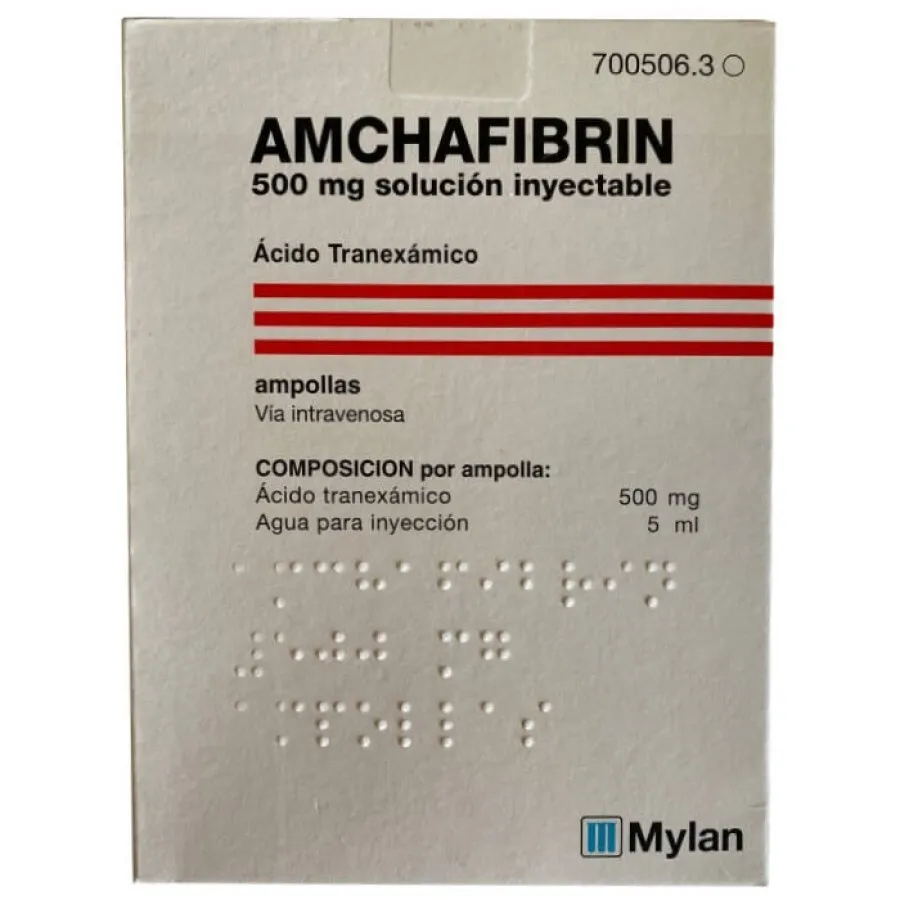
Table of Contents
- Package leaflet: Information for the user
- Introduction
- 1. What Amchafibrin 500 mg injectable solution is and what it is used for
- 2. What you need to know before using Amchafibrin 500 mg injection solution
- 3. How to use Amchafibrin 500mg
- 4. Possible adverse effects
- 5. Storage of Amchafibrin 500 mg
- 6. Package contents and other information
Package leaflet: Information for the user
Introduction
Package leaflet: information for the patient
Amchafibrin 500 mg injection solution
tranexamic acid
Read the entire leaflet carefully before you start using this medicine, because it contains important information for you.
- Keep this leaflet, as you may need to read it again.
- If you have any questions, consult your doctor or nurse.
- If you experience any adverse effects, consult your doctor or nurse, even if they are effects not listed in this leaflet. See section 4.
Leaflet contents
- What Amchafibrin 500 mg injection solution is and what it is used for
- What you need to know before using Amchafibrin 500 mg injection solution
- How to use Amchafibrin 500 mg injection solution
- Possible adverse effects
- How to store Amchafibrin 500 mg injection solution
- Contents of the pack and other information
1. What Amchafibrin 500 mg injectable solution is and what it is used for
Amchafibrin contains tranexamic acid, which belongs to a group of medicines known as haemostatics, antifibrinolytics, and amino acids.
Amchafibrin is used in adults and children over one year of age for the prevention and treatment of blood loss caused by a process that inhibits blood clotting called fibrinolysis.
Specific indications include:
-
Heavy menstrual bleeding in women
-
Gastrointestinal bleeding
-
Haemorrhagic urinary disorders, following prostate surgery or surgical procedures affecting the urinary tract
-
Ear, nose, and throat surgery
-
Heart, abdominal, or gynaecological surgery
-
Bleeding after treatment with another medicine used to dissolve blood clots
2. What you need to know before using Amchafibrin 500 mg injection solution
Do not use Amchafibrin 500 mg if:
- You are allergic to tranexamic acid or to any of the other ingredients of this medicine (listed in section 6).
- You currently have a condition that causes blood clots to form.
- You have a disorder called 'consumption coagulopathy' in which blood throughout the body begins to clot.
- You have kidney problems.
- You have a history of seizures.
Due to the risk of seizures and cerebral inflammation, Amchafibrin injectable must not be administered into the spinal column, via epidural route (around the spinal cord) or into the brain.
If you think any of the above conditions apply to you, or if you have any doubts, inform your doctor before taking Amchafibrin 500 mg.
Warnings and precautions
This medicine MUST ONLY be administered by intravenous route, either as an intravenous infusion (i.v.) or as a rapid intravenous injection (i.v.). This medicine must not be administered into the spinal column, via epidural route (around the spinal cord) or into the brain. Serious adverse effects have been reported when this medicine was administered into the spinal column (intrathecal use). If you experience back pain or leg pain during or shortly after administration of this medicine, inform your doctor or nurse immediately.
Consult your doctor if any of the following apply to you before starting treatment with Amchafibrin 500 mg:
- If you have blood in your urine, Amchafibrin 500 mg may cause obstruction of the urinary tract.
- If you are at risk of developing blood clots.
- If you have excessive clot formation or bleeding in the body (disseminated intravascular coagulation), Amchafibrin 500 mg may not be suitable for you, unless you are experiencing acute severe bleeding and blood tests show activation of the process that inhibits blood clotting known as fibrinolysis.
- If you have a history of seizures, Amchafibrin 500 mg should not be administered. Your doctor must use the lowest possible dose to minimize the risk of seizures following treatment with Amchafibrin 500 mg.
- If you are undergoing long-term treatment with Amchafibrin 500 mg, attention should be paid to possible disturbances in color vision. If necessary, treatment should be discontinued. With prolonged continuous use of Amchafibrin 500 mg injection solution, periodic ophthalmological examinations (eye exams such as visual acuity, color vision, fundus examination, visual field testing, etc.) are recommended. In the event of pathological ophthalmic changes, especially retinal disorders, your doctor should decide, after consultation with a specialist, whether long-term use of Amchafibrin 500 mg injection solution is necessary in your case.
Other medicines and Amchafibrin 500 mg
Inform your doctor or pharmacist if you are taking, have recently taken, or might take any other medicines, including those obtained without a prescription, vitamins, minerals, herbal products, or dietary supplements.
Specifically, you must inform your doctor if you are taking:
- Other medicines that help the blood to clot, known as antifibrinolytic agents.
- Medicines that prevent blood from clotting, known as thrombolytic agents.
- Oral contraceptives. These may increase the risk of blood clots forming.
Pregnancy and breastfeeding
If you are pregnant or breastfeeding, consult your doctor before using Amchafibrin 500 mg.
Tranexamic acid is excreted in human milk. Therefore, the use of Amchafibrin 500 mg is not recommended during breastfeeding.
Driving and using machines
No studies on the ability to drive and use machines have been conducted.
3. How to use Amchafibrin 500mg
Use in adults
Amchafibrin will be administered to you as a slow injection into a vein.
Your doctor will decide the correct dose for you and how long you should receive it.
Use in children
If Amchafibrin is administered to a child over one year of age, the dose should be based on the child's body weight. Your doctor will determine the appropriate dose and duration of treatment for the child.
Use in elderly patients
No dose reduction is necessary unless there is evidence of renal impairment.
Use in patients with kidney problems
If you have kidney problems, the dose of tranexamic acid should be reduced according to the results of a blood test (serum creatinine level).
Use in patients with hepatic impairment
If you have liver problems, no dose reduction is necessary.
Method of administration
Amchafibrin must only be given as a slow intravenous injection.
Amchafibrin must not be injected into a muscle, into the spine, via
epidural (around the spinal cord) or into the brain.
If you receive more Amchafibrin 500 mg than you should
If you have received a higher dose of Amchafibrin than recommended, you may experience a temporary drop in blood pressure. Contact a doctor or pharmacist immediately.
You may also contact the Toxicology Information Service. Telephone 91 562 04 20, stating the medication and the amount administered.
4. Possible adverse effects
Like all medicines, this medicine can cause adverse effects, although not everyone will experience them.
The following adverse effects have been observed with Amchafibrin 500 mg:
Frequent (may affect up to 1 in 10 patients)
- Effects on stomach and intestine: nausea, vomiting, diarrhoea
Uncommon (may affect up to 1 in 100 patients)
- Effects on the skin: rash
Frequency not known (frequency cannot be estimated from the available data)
- Malaise with hypotension (low blood pressure), especially after too rapid intravenous injection
- Blood clots
- Effects on the nervous system: seizures
- Effects on the eyes: visual disturbances including impaired colour vision
- Effects on the immune system: allergic reactions
- Sudden onset of kidney problems due to death of tissue in the outer part of the kidney (acute renal cortical necrosis)
- An allergic reaction that tends to recur in the same location or locations upon re-exposure to the medicine and which may include round or oval-shaped areas of redness and swelling of the skin, blisters, and itching (fixed drug eruption). Skin darkening in the affected areas may also occur, which can persist after healing.
Reporting of adverse effects
If you experience any type of adverse effect, consult your doctor or nurse, even if it is a possible adverse effect not listed in this leaflet. You may also report them directly via the Spanish Pharmacovigilance System for Human Medicinal Products: https://www.notificaram.es. By reporting adverse effects, you can help provide more information on the safety of this medicine.
5. Storage of Amchafibrin 500 mg
Keep this medicine out of the sight and reach of children.
Do not store above 25°C. Store in the original packaging.
Do not use injectable Amchafibrin 500 mg after the expiry date stated on the carton after “CAD” or “EXP”. The expiry date refers to the last day of the month indicated.
Medicines must not be disposed of via wastewater or household waste. Dispose of empty containers and unused medicines at the SIGRE collection point at your pharmacy. If in doubt, ask your pharmacist how to dispose of unused medicines and their containers. This will help protect the environment.
6. Package contents and other information
Composition of Amchafibrin 500 mg injection solution
- The active substance is tranexamic acid. Each ampoule contains 500 mg of tranexamic acid.
- The other component is: water for injections.
Appearance of Amchafibrin 500 mg injection solution and contents of the pack
Injection solution. Packaging containing 6 and 100 glass ampoules of 5 ml.
Marketing Authorisation Holder and Manufacturer
Marketing Authorisation Holder
Viatris Healthcare Limited
Damastown Industrial Park
Mulhuddart, Dublin 15
Dublin
Ireland
Manufacturer
Biologici Italia Laboratories S.R.L
Via Filippo Serpero,
20060 Masate (MI)
Italy
Further information on this medicinal product is available by contacting the local representative of the Marketing Authorisation Holder:
Viatris Pharmaceuticals, S.L.
C/ General Aranaz, 86
28027 - Madrid
Spain
Date of latest review of this leaflet: February 2026
Detailed information on this medicinal product is available on the website of the Spanish Agency for Medicines and Health Products (AEMPS) (https://www.aemps.gob.es/)
The following information is intended for healthcare professionals only:
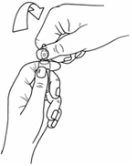
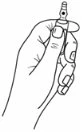
The ampoules are equipped with an OPC (One Point Cut) opening system and must be broken according to the following instructions:
- Hold the lower part of the ampoule in one hand, with the thumb pointing towards the coloured mark, as shown below:
- Grasp the upper part of the ampoule with the other hand, placing the thumb on the coloured mark and applying pressure in the direction away from the coloured mark, as shown below: