Ambisentan Accord 5 mg film-coated tablets EFG
Spain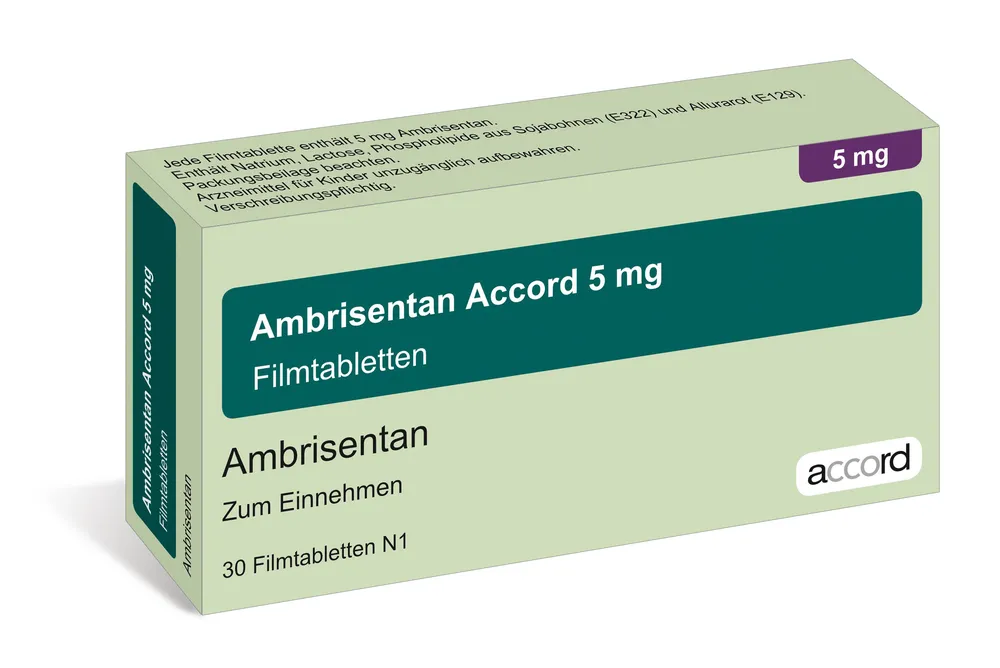
Table of Contents
- Package leaflet: Information for the user
- Introduction
- 1. What Ambrisentan Accord is and what it is used for
- 2. What you need to know before taking Ambrisentan Accord
- 3. How to take Ambrisentan Accord
- 4. Possible adverse effects
- 5. Storage of Ambrisentan Accord
- 6. Contents of the pack and other information
Package leaflet: Information for the user
Introduction
Package leaflet: information for the patient
Ambrisentan Accord 5 mg film-coated tablets EFG
Ambrisentan Accord 10 mg film-coated tablets EFG
Read the entire leaflet carefully before you start taking this medicine, because it contains important information for you.
- Keep this leaflet, as you may need to read it again.
- If you have any questions, ask your doctor, pharmacist or nurse.
- This medicine has been prescribed for you only and must not be given to other people, even if they have the same symptoms as you, because it may harm them.
- If you experience any side effects, talk to your doctor, pharmacist or nurse, even if they are side effects not listed in this leaflet. See section 4.
Leaflet contents
- What Ambrisentan Accord is and what it is used for
- What you need to know before taking Ambrisentan Accord
- How to take Ambrisentan Accord
- Possible side effects
- How to store Ambrisentan Accord
- Contents of the pack and other information
1. What Ambrisentan Accord is and what it is used for
Ambrisentan Accord contains the active substance ambrisentan. It belongs to a group of medicines called other antihypertensives (used to treat high blood pressure).
It is indicated for the treatment of pulmonary arterial hypertension (PAH) in adults, adolescents, and children aged 8 years and older. PAH is characterized by high blood pressure in the blood vessels (the pulmonary arteries) that carry blood from the heart to the lungs. In people with PAH, these arteries become narrower, causing the heart to work harder to pump blood through to the lungs. This leads to fatigue, dizziness, and difficulty breathing.
Ambrisentan widens the pulmonary arteries, making it easier for the heart to pump blood through them. This reduces blood pressure and relieves symptoms.
Ambrisentan may also be used in combination with other medicines used to treat PAH.
2. What you need to know before taking Ambrisentan Accord
Do not take Ambrisentan Accord
- if you are allergic to ambrisentan, to soy, or to any of the other ingredients of this medicine (listed in section 6).
- if you are pregnant, if you are planning to become pregnant, or if you could become pregnant because you are not using a reliable method of birth control (contraception). Please read the information in the section "Pregnancy".
- if you are breastfeeding, read the information under the heading “Breast-feeding”.
- if you have liver disease. Consult your doctor, who will decide whether this medicine is suitable for you or not.
- if you have lung fibrosis of unknown cause (idiopathic pulmonary fibrosis).
Warnings and precautions
Talk to your doctor before starting to take this medicine:
- if you have liver problems
- if you have anaemia (reduction in the number of red blood cells)
- if you have swelling of the hands, ankles or feet caused by fluid retention (peripheral oedema)
- if you have a lung disease where the veins in the lungs are blocked (pulmonary veno-occlusive disease).
→ Your doctor will decide whether Ambrisentan Accord is suitable for you or not.
You will need regular blood tests
Before starting Ambrisentan Accord, and periodically while taking it, your doctor will perform blood tests to check:
- whether you have anaemia
- whether your liver is functioning properly.
→ It is important that you have these blood tests regularly while taking Ambrisentan Accord.
Signs that your liver may not be working properly include:
- loss of appetite
- feeling unwell (nausea)
- vomiting
- high temperature (fever)
- stomach (abdominal) pain
- yellowing of the skin or eyes (jaundice)
- darkening of the urine
- itching of the skin.
If you notice any of these symptoms:
→ Inform your doctor immediately.
Children
Do not give this medicine to children under 8 years of age, as the safety and efficacy in this age group are unknown.
Taking Ambrisentan Accord with other medicines
Tell your doctor or pharmacist if you are taking, have recently taken, or might need to take any other medicines.
If you start taking cyclosporine A (a medicine used after transplantation or to treat psoriasis), your doctor may need to adjust your dose of Ambrisentan Accord.
If you are taking rifampicin (an antibiotic used to treat serious infections), your doctor will monitor you when you start taking Ambrisentan Accord.
If you are taking other medicines used to treat PAH (iloprost, epoprostenol, sildenafil), your doctor may need to monitor you.
→ Tell your doctor or pharmacist if you are taking this medicine.
Pregnancy
Ambrisentan Accord may harm an unborn baby conceived before, during, or shortly after treatment.
→ If there is any possibility that you could become pregnant, use a reliable method of contraception while taking Ambrisentan Accord. Discuss this with your doctor.
→ Do not take Ambrisentan Accord if you are pregnant or planning to become pregnant.
→ If you become pregnant or think you may be pregnant while taking Ambrisentan Accord, contact your doctor immediately.
If you are a woman of childbearing age, your doctor will require you to take a pregnancy test before starting Ambrisentan Accord and periodically while taking this medicine.
Breast-feeding
It is unknown whether ambrisentan passes into human breast milk.
→ Do not breast-feed while taking Ambrisentan Accord. Discuss this with your doctor.
Fertility
If you are a man taking Ambrisentan Accord, this medicine may reduce your sperm count. Talk to your doctor if you have any questions or concerns about this.
Driving and using machines
Ambrisentan Accord may cause side effects such as low blood pressure, dizziness, and fatigue (see section 4), which may affect your ability to drive or operate machinery. Symptoms of your underlying illness may also impair your ability to drive or use machines.
→ Do not drive or operate machinery if you do not feel well.
Ambrisentan Accord contains lactose, lecithin (soy), Allura Red AC aluminium lake (E129), and sodium
Ambrisentan Accord tablets contain small amounts of a sugar called lactose. If your doctor has informed you that you have an intolerance to certain sugars:
→ Consult your doctor before taking this medicine.
Ambrisentan Accord tablets contain lecithin derived from soy. If you are allergic to soy, do not use this medicine (see section 2 “Do not take Ambrisentan Accord”).
Ambrisentan Accord tablets contain a colouring agent called Allura Red AC aluminium lake (E129), which may cause allergic reactions (see section 4).
This medicine contains less than 1 mmol of sodium (23 mg) per tablet; essentially “sodium-free”.
3. How to take Ambrisentan Accord
Follow exactly the instructions for use of this medicine provided by your doctor or pharmacist. If in doubt, consult your doctor or pharmacist again.
How much Ambrisentan Accord to take
Adults
The usual dose is one 5 mg tablet once daily. Your doctor may decide to increase your dose to 10 mg once daily.
Adolescents and children from 8 years to under 18 years of age
Usual starting dose of ambrisentan | |
Weight of 35 kg or more | One tablet of 5 mg, once daily |
Weight of at least 20 kg and less than 35 kg | One tablet of 2.5 mg, once daily |
Your doctor may decide to increase your dose. It is important that children attend their regular medical appointments, as their dose needs to be adjusted as they grow or gain weight.
If taken in combination with cyclosporine A, the dose of ambrisentan should be limited to 2.5 mg once daily in adolescents and children weighing less than 50 kg, or 5 mg once daily if they weigh 50 kg or more.
- Use of other 2.5 mg ambrisentan tablets available on the market is recommended for the 2.5 mg dose, as this dose cannot be achieved with Ambrisentan Accord.
How to take Ambrisentan Accord
It is best to take the tablet at the same time each day. Swallow the tablet whole with a glass of water; do not divide, crush, or chew the tablet. You may take ambrisentan with or without food.
How to remove the tablet from the blister pack
These tablets come in special packaging designed to prevent children from removing them.
- Separate one tablet: Tear along the perforated lines to separate one "pocket" from the strip.
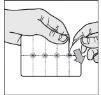
- Open the outer foil: Starting at the colored corner, open and separate the foil along the pocket.

- Remove the tablet: Gently push the tablet through the foil from one side.

If you take more Ambrisentan Accord than you should
If you take too many tablets, you may be more likely to experience adverse effects such as headache, flushing, dizziness, nausea (feeling unwell), or low blood pressure, which may cause a slight sensation of dizziness:
→ Seek advice from your doctor or pharmacist if you take more tablets than prescribed.
In case of overdose or accidental ingestion, contact your doctor or pharmacist immediately or call the Toxicology Information Service at: 91 562 04 20.
If you forget to take Ambrisentan Accord
If you forget to take a dose of ambrisentan, take it as soon as you remember, and then continue as before.
→ Do not take a double dose to make up for missed doses.
→ Do not stop taking ambrisentan without consulting your doctor.
Ambrisentan is a treatment you will need to continue taking to control your PAH.
→ Do not stop taking ambrisentan unless instructed by your doctor.
If you have any further questions about the use of this medicine, ask your doctor or pharmacist.
4. Possible adverse effects
Like all medicines, this medicine can cause adverse effects, although not everyone experiences them.
Serious adverse effects
Tell your doctor if you experience any of the following:
Allergic reactions
This is a common adverse effect that may affect up to 1 in 10 people treated. You may notice a rash or itching and swelling (usually of the face, lips, tongue or throat), which may cause difficulty breathing or swallowing.
Swelling (edema), especially in the ankles and feet
This is a very common adverse effect that may affect more than 1 in 10 people treated.
Heart failure
This occurs because the heart does not pump enough blood. This is a common adverse effect that may affect up to 1 in 10 people. Symptoms include:
- shortness of breath
- extreme fatigue
- swelling in the ankles and legs.
Reduced number of red blood cells (anaemia)
This is a very common adverse effect that may affect more than 1 in 10 people. Sometimes this requires a blood transfusion. Symptoms include:
- tiredness and weakness
- shortness of breath
- general malaise.
Low blood pressure (hypotension)
This is a common adverse effect that may affect up to 1 in 10 people treated. Symptoms include:
- dizziness
→Contact your doctor immediately if you (or your child) experience these effects or if they occur suddenly after taking Ambrisentan Accord.
It is important to have periodic blood tests to monitor whether you have anaemia and to ensure your liver is functioning properly.
Make sure you have also read the information in section 2 about "the need for regular blood tests" and "the signs that your liver may not be working properly".
Other adverse effects
Very common (may affect more than 1 in 10 people):
- headache
- dizziness
- palpitations (fast or irregular heartbeat)
- difficulty breathing that worsens shortly after starting Ambrisentan Accord
- runny or stuffy nose, nasal congestion or sinus pain
- nausea
- diarrhoea
- feeling tired.
In combination with tadalafil (another medicine for PAH)
In addition to the above:
- flushing (redness of the skin)
- vomiting
- chest pain/discomfort.
Frequent ( may affect up to 1 in 10 people):
- blurred vision or other changes in vision
- fainting
- abnormal blood test results for liver function
- increased nasal secretion
- constipation
- stomach (abdominal) pain
- chest pain or discomfort
- flushing (redness of the skin)
- vomiting
- feeling of weakness
- nosebleeds
- skin rash.
In combination with tadalafil
In addition to the above, except for abnormalities in blood test results for liver function:
- ringing in the ears (tinnitus)
Uncommon ( may affect up to 1 in 100 people):
- liver damage
- inflammation of the liver caused by the body's own immune defenses (autoimmune hepatitis).
In combination with tadalafil
- sudden hearing loss.
Adverse effects in children and adolescents
These are expected to be similar to those listed above for adults.
Reporting of adverse effects
If you experience any kind of adverse effect, consult your doctor, pharmacist, or nurse, even if it is a possible adverse effect not listed in this leaflet. You may also report them directly via the Spanish Pharmacovigilance System for Human Medicinal Products: https://www.notificaram.es. By reporting adverse effects, you can help provide more information on the safety of this medicine.
5. Storage of Ambrisentan Accord
Keep this medicine out of the sight and reach of children.
Do not use this medicine after the expiry date which is stated on the carton and blister after CAD or EXP.
The expiry date refers to the last day of the month indicated.
This medicine does not require any special storage conditions.
Medicines must not be disposed of via wastewater or household waste. Dispose of empty containers and unused medicines at a SIGRE collection point at your pharmacy. If you are unsure, ask your pharmacist how to dispose of containers and medicines you no longer need. This will help protect the environment.
6. Contents of the pack and other information
Composition of Ambrisentan Accord
Ambrisentan Accord 5 mg film-coated tablets:
The active substance is ambrisentan.
Each film-coated tablet contains 5 mg.
The other components are:
Tablet core: microcrystalline cellulose, sodium croscarmellose, lactose monohydrate and magnesium stearate.
Tablet coating: partially hydrolysed polyvinyl alcohol, talc, titanium dioxide (E171), macrogol, lecithin (soy) (E322) and Allura Red AC aluminium lake (E129).
Ambrisentan Accord 10 mg film-coated tablets:
- The active substance is ambrisentan.
Each film-coated tablet contains 10 mg.
- The other components are: Tablet core: microcrystalline cellulose, sodium croscarmellose, lactose monohydrate and magnesium stearate. Tablet coating: partially hydrolysed polyvinyl alcohol, talc, titanium dioxide (E171), macrogol, lecithin (soy) (E322) and Allura Red AC aluminium lake (E129).
Appearance of the product and contents of the pack
Ambrisentan Accord 5 mg film-coated tablets:
Light pink, oval, biconvex film-coated tablets, engraved with "5" on one side and approximately 7.0 mm in size.
Ambrisentan Accord 10 mg film-coated tablets:
Dark pink, oval, biconvex film-coated tablets, engraved with "10" on one side and approximately 9.9 mm x 5.0 mm in size.
Ambrisentan Accord is supplied in single-dose blisters as 5 mg and 10 mg film-coated tablets, in pack sizes of 10x1 or 30x1 tablets.
Not all pack sizes may be marketed.
Marketing Authorization Holder
Accord Healthcare S.L.U.
World Trade Center
Moll de Barcelona, s/n
Edifici Est, 6th floor
08039 Barcelona
Spain
Manufacturer
Delorbis Pharmaceuticals Ltd
17 Athinon Street, Ergates Industrial Area 2643 Ergates,
Cyprus
or
Laboratori Fundació DAU (BS 1)
C/ C, 12-14 Pol. Ind. Zona Franca, 08040 Barcelona
Spain
This medicinal product is authorised in the Member States of the European Economic Area under the following names:
Member State | Medicinal product name |
Germany | Ambrisentan Accord 5 mg, 10 mg Film-coated tablets |
Austria | Ambrisentan Accord 5 mg, 10 mg Film-coated tablet |
Belgium | Ambrisentan Accord 5 mg, 10 mg Film-coated tablet |
Bulgaria | Ambrisentan Accord 5 mg, 10 mg Film-coated tablet |
Cyprus | Ambrisentan Accord 5 mg, 10 mg, Film-coated tablet |
Czech Republic | Ambrisentan Accord |
Denmark | Ambrisentan Accord |
Greece | Ambrisentan Accord |
Finland | Ambrisentan Accord 5 mg, 10 mg Film-coated tablet |
France | AMBRISENTAN ACCORD 5 mg, 10 mg film-coated tablet |
Hungary | Ambrisentan Accord 5 mg, 10 mg film-coated tablet |
Ireland | Ambrisentan Accord 5 mg, 10 mg Film-coated tablets |
Italy | Ambrisentan Accord |
Netherlands | Ambrisentan Accord 5 mg, 10 mg Film-coated tablet |
Norway | Ambrisentan Accord |
Poland | Ambrisentan Accord |
Portugal | Ambrisentan Accord |
Sweden | Ambrisentan Accord 5 mg, 10 mg Film-coated tablet |
Slovenia | Ambrisentan Accord 5 mg, 10 mg film-coated tablet |
United Kingdom | Ambrisentan Accord 5 mg, 10 mg Film-coated tablet |
Date of the most recent review of this leaflet: May 2023
Other sources of information
Detailed information about this medicinal product is available on the website of the Spanish Agency for Medicaments and Medical Devices (AEMPS) (http://www.aemps.gob.es/).