Alzerta Two Times Weekly 4.6 mg/24 h transdermal patches
Spain
Table of Contents
- Package leaflet: Information for the user
- Introduction
- 1. What Alzerta twice a week is and what it is used for
- 2. What you need to know before using Alzerta twice weekly
- 3. How to use Alzerta twice weekly
- 4. Possible adverse effects
- 5. Storage of Alzerta twice weekly
- 6. Package contents and other information
Package leaflet: Information for the user
Introduction
Package leaflet: Information for the patient
Alzerta twice weekly 4.6 mg/24 h transdermal patches
Alzerta twice weekly 9.5 mg/24 h transdermal patches
Rivastigmine
Read the entire leaflet carefully before you start using this medicine, because it contains important information for you.
- Keep this leaflet; you may need to read it again.
- If you have any questions, ask your doctor or pharmacist.
- This medicine has been prescribed for you only, and you should not give it to other people, even if they have the same symptoms as you, because it could harm them.
- If you experience any adverse effects, consult your doctor or pharmacist, even if they are adverse effects not listed in this leaflet. See section 4.
Contents of the leaflet
- What Alzerta twice weekly is and what it is used for
- What you need to know before using Alzerta twice weekly
- How to use Alzerta twice weekly
- Possible side effects
- How to store Alzerta twice weekly
- Contents of the pack and other information
1. What Alzerta twice a week is and what it is used for
The active substance in Alzerta twice a week is rivastigmine.
Rivastigmine belongs to the group of cholinesterase inhibitors. In patients with Alzheimer's dementia, certain nerve cells in the brain die, resulting in low levels of the neurotransmitter acetylcholine (a substance that enables nerve cells to communicate with each other). Rivastigmine works by inhibiting the enzymes that break down acetylcholine: acetylcholinesterase and butyrylcholinesterase. By inhibiting these enzymes, rivastigmine increases acetylcholine levels in the brain, helping to reduce the symptoms of Alzheimer's disease.
Alzerta twice a week is used for the treatment of adult patients with mild to moderately severe Alzheimer's dementia, a progressive brain disorder that gradually affects memory, intellectual capacity, and behaviour.
2. What you need to know before using Alzerta twice weekly
Do not use Alzerta twice weekly
- if you are allergic to rivastigmine (the active substance in Alzerta twice weekly) or to any of the other ingredients of this medicine (listed in section 6).
- if you have ever had an allergic reaction to a similar medicine (carbamate derivatives).
- if you develop a skin reaction that spreads beyond the size of the patch, if you experience a more intense local reaction (such as blisters, skin inflammation, swelling), or if there is no improvement within 48 hours after removing the transdermal patch.
If you are in any of these situations, inform your doctor and do not use Alzerta twice weekly transdermal patches.
Warnings and precautions
Talk to your doctor before starting to use Alzerta twice weekly:
-
if you have or have ever had heart problems such as irregular or slow heartbeat (pulse), QTc prolongation, family history of QTc prolongation, torsade de pointes, or if you have low blood levels of potassium or magnesium.
-
if you have or have ever had active stomach ulcer.
-
if you have or have ever had difficulty urinating.
-
if you have or have ever had seizures.
-
if you have or have ever had asthma or a serious respiratory disease.
-
if you suffer from tremors.
-
if you have low body weight.
-
if you experience gastrointestinal reactions such as nausea, vomiting, or diarrhoea. You may become dehydrated (loss of large amounts of fluid) if vomiting or diarrhoea is prolonged.
-
if you have liver problems (hepatic insufficiency).
If you are in any of these situations, your doctor may consider closer monitoring while you are on treatment.
If you have not used the patches for more than three days, do not apply a new one without first consulting your doctor.
Carefully remove any existing patch before applying a new one. Do not apply more than one patch at a time. Wearing multiple (or more than one) transdermal patches on your body could expose you to a higher amount of this medicine than intended.
Children and adolescents
There is no experience with the use of this medicine in the paediatric population for the treatment of Alzheimer's disease.
Other medicines and Alzerta twice weekly
Tell your doctor or pharmacist if you are taking, have recently taken, or might need to take any other medicines.
This medicine may interfere with anticholinergic medicines, some of which are used to relieve stomach cramps or spasms (e.g. dicyclomine), to treat Parkinson's disease (e.g. amantadine), or to prevent motion sickness (e.g. diphenhydramine, scopolamine, or meclizine).
This medicine must not be used at the same time as metoclopramide (a medicine used to relieve or prevent nausea and vomiting). Taking both medicines together may cause problems such as stiffness in the limbs and hand tremors.
If you need to undergo surgery while using this medicine, inform your doctor that you are using it, as it may excessively enhance the effects of certain muscle relaxants used during anaesthesia.
Caution is required when using this medicine together with beta-blockers (medicines such as atenolol used to treat hypertension, angina, and other heart conditions). Taking both medicines together may cause complications such as a decrease in heart rate (bradycardia), which may lead to fainting or loss of consciousness.
Caution is also required when using Alzerta twice weekly together with other medicines that may affect heart rhythm or the heart's electrical system (QT prolongation).
Pregnancy, breastfeeding, and fertility
If you are pregnant or breastfeeding, think you may be pregnant, or are planning to become pregnant, consult your doctor or pharmacist before using this medicine.
If you are pregnant, the benefits of using this medicine must be weighed against the potential risks to the foetus. This medicine should not be used during pregnancy unless clearly necessary.
You must not breast-feed while receiving this medicine.
Driving and using machines
Your doctor will advise you whether your condition allows you to drive or operate machinery safely. This medicine may cause dizziness and severe confusion. If you feel dizzy or confused, do not drive, operate machinery, or perform any other tasks requiring your attention.
3. How to use Alzerta twice weekly
Follow exactly the instructions for using this medicine as given by your doctor. If in doubt, consult your doctor or pharmacist again.
Starting treatment
Your doctor will determine the most appropriate dose of this medicine for your individual case.
- Treatment is usually started with Alzerta twice weekly 4.6 mg/24 h.
- The usual recommended daily dose is 9.5 mg/24 h. If this dose is well tolerated, your treating doctor may consider increasing the dose to 13.3 mg/24 h. The 13.3 mg/24 h dose cannot be achieved with Alzerta twice weekly. For situations requiring this dosage, other rivastigmine patches containing 13.3 mg/24 h are available.
- Wear only one rectangular transdermal patch and one oval adhesive cover at the same time (as described below), and replace them twice weekly, no later than every 4 days.
You should change the patches on two fixed days:
Each pair on
Monday and Friday OR
Tuesday and Saturday OR
Wednesday and Sunday OR
Thursday and Monday OR
Friday and Tuesday OR
Saturday and Wednesday OR
Sunday and Thursday.
Always change the patches at the same time of day. As a reminder, you should write down these days and the time of day.
During treatment, your doctor may adjust the dose according to your individual needs.
If you have not used the patches for more than three days, do not apply a new one without first consulting your doctor. Treatment with the transdermal patch may be restarted at the same dose if the treatment interruption is no longer than three days. Otherwise, your doctor will instruct you to restart treatment with Alzerta twice weekly 4.6 mg/24 h.
This medicine may be used with food, drink, and alcohol.
Where to apply your Alzerta twice weekly transdermal patch
-
Before applying a patch, make sure the skin is clean, dry, and hair-free, without powders, oils, moisturizers, or lotions that could prevent the patch from adhering properly to the skin, and without cuts, redness, or irritation.
-
Carefully remove any existing patch before applying a new one. Wearing multiple patches on your body could expose you to an excessive amount of this medicine, which could be potentially dangerous.
-
Apply ONE rectangular transdermal patch together with an adhesive cover to ONE of the following areas only, as shown in the diagrams below:
-
upper left or right arm
-
upper left or upper right side of the chest (avoiding the breasts)
-
upper left or upper right side of the back
-
lower left or lower right side of the back
After a maximum of 4 days, remove the previous patch before applying ONE new patch to ONLY ONE of the following possible sites. |
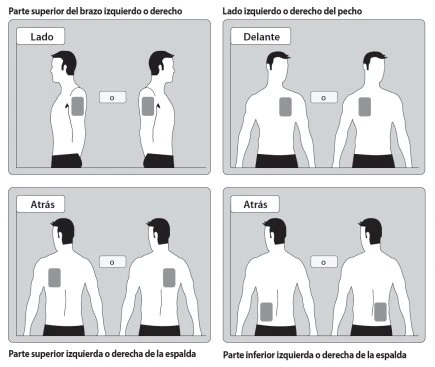
Each time you change the patch, remove the previous patch before applying the new patch to a different skin site (for example, on the right side of the body for four days, then on the left side for three days, or for four days on the upper part of the body and subsequently on the lower part of the body for three days). Wait at least 14 days before applying a new patch to exactly the same skin area.
How to apply your Alzerta two times a week transdermal patch
Alzerta two times a week is for transdermal use.
Alzerta two times a week patches consist of two parts:
- a rectangular, translucent patch containing the active substance (transdermal patch), sealed in a pouch, and
- an oval, beige patch without active substance (adhesive cover), also sealed in a pouch. This pouch is larger than the pouch containing the transdermal patch.
| |
Transdermal patch containing the active substance | Fabric patch without active substance (for fixation) |

Do not open the sachet or remove the patch until it is time to apply it.
Application always begins with the rectangular transdermal patch.
| Carefully remove the existing patch before applying a new one. Patients starting treatment for the first time, and patients restarting rivastigmine treatment after an interruption, should begin with the second step. |
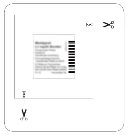
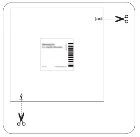
| Each transdermal patch is sealed in an individual protective pouch. Open the pouch only when ready to apply the patch. Cut along both scissor marks on the pouch, but no further than the indicated line. Open the pouch. Do not cut along the entire length of the pouch to avoid damaging the patch. Remove the rectangular, translucent transdermal patch from the pouch. |
| A protective liner covers the adhesive side of the patch. Remove the first part of the protective liner without touching the adhesive side of the patch with fingers. |
| Apply the adhesive side of the patch to the upper or lower back, upper arm, or chest, then remove the second part of the protective liner. |
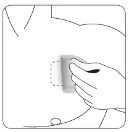
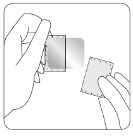
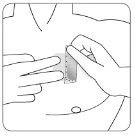
| Press the patch firmly onto the skin with the palm of your hand for about 15 seconds and make sure the edges are properly adhered. |
Proceed with the application of the adhesive oval cover. | |
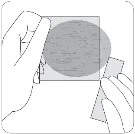
| Cut the second, larger pouch along both scissors marks, but not beyond the indicated line. Open the pouch. Do not cut along the entire length of the pouch to avoid damaging the patch. Remove the oval, beige adhesive cover from the pouch. |
| A protective liner covers the adhesive side of the cover. Remove the first part of the liner from the smaller side of the protective liner, without touching the adhesive surface with your fingers. |
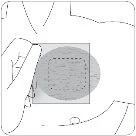
| Place the adhesive cover with the adhesive side over the transdermal patch so that the patch is completely covered, then remove the second part of the protective liner. |
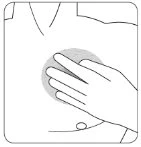
| Press the patch firmly onto the skin with the palm of your hand for at least 30 seconds and ensure that the edges are properly adhered. |
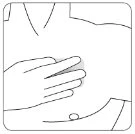
If this helps, you may write on the adhesive cover, for example, the day of the week, using a pen with a rounded fine tip.
You must wear the patch continuously until it is time to replace it with a new one. When applying a new patch, you may try different areas to find those that are most comfortable for you and where clothing does not rub against the patch.
How to remove your Alzerta twice-weekly transdermal patch
Gently pull one edge of the adhesive cover of the patch to slowly peel it off the skin along with the patch.
If the transdermal patch remains on the skin, gently pull one edge until it is completely detached from the skin.
If adhesive residue remains on the skin, soak the area with warm water and mild soap or use baby oil to remove it. Do not use alcohol or other solvent liquids (such as nail polish remover or other solvents).
After removing the patch, wash your hands thoroughly with soap and water. If contact with the eyes occurs or if the eyes become red after handling the patch, rinse immediately with plenty of water and seek medical advice if symptoms persist.
Can you wear your Alzerta twice-weekly transdermal patch while bathing, swimming, or being exposed to sunlight?
-
Bathing, swimming, or showering should not affect the patch. Make sure it does not come loose during these activities.
-
Do not expose the patch to external heat sources (e.g., excessive sunlight, sauna, sunbed) for prolonged periods.
What to do if your patch falls off
If your patch falls off, apply a new one and change it again at your usual day/time.
When and for how long should you apply your Alzerta twice-weekly transdermal patch?
-
To benefit from your treatment, you must apply a new patch twice a week, no later than every four days, preferably at the same time of day.
-
Wear only one rectangular transdermal patch and one oval adhesive cover at the same time, and replace the patch with a new one twice weekly on two fixed days.
If you use more Alzerta than you should
If you accidentally applied more than one rectangular transdermal patch, remove all patches from the skin and inform your doctor or contact the Toxicology Information Service at telephone number: 91 562 04 20 (indicating the medication and amount administered). You may require medical attention. Some people who have accidentally taken excessive amounts of rivastigmine have experienced nausea, vomiting, diarrhoea, high blood pressure, and hallucinations. Slowing of heart rate and fainting may also occur.
If you forget to use Alzerta twice-weekly
If you realize you have forgotten to apply a patch, apply it immediately, provided that treatment has not been interrupted for more than three days.
Replace this patch at your usual time on your usual day to resume your regular dosing schedule.
Do not apply two transdermal patches to make up for the missed one. If you have not applied a patch for more than three days, do not apply the next one without first speaking to your doctor.
If you stop using Alzerta twice-weekly
Inform your doctor or pharmacist if you stop using the patches.
If you have any further questions about using this medicine, ask your doctor or pharmacist.
4. Possible adverse effects
Like all medicines, this medicine can cause adverse effects, although not everyone experiences them.
You may experience adverse effects more frequently when you first start treatment or when your dose is increased. Generally, adverse effects will gradually disappear as your body gets used to the medicine.
If you notice any of the following adverse effects, which may be serious, remove the patch and contact your doctor immediately.
Common (may affect up to 1 in 10 people)
- Loss of appetite
- Dizziness
- Feeling of restlessness
- Urinary incontinence (inability to properly control urination)
- Urinary tract infection
- Anxiety
- Depression
- Confusion
- Headache
- Fainting
- Stomach problems such as nausea, vomiting, diarrhea
- Stomach burning
- Stomach pain
- Rash
- Allergic reaction at the application site, such as blisters or skin swelling
- Feeling of tiredness or weakness
- Weight loss
- Fever
Uncommon (may affect up to 1 in 100 people)
- Heart rhythm problems such as slow heartbeat
- Stomach ulcer
- Dehydration (loss of large amounts of fluid)
- Hyperactivity (high level of activity, restlessness)
- Aggressiveness
Rare (may affect up to 1 in 1,000 people)
- Falls
Very rare (may affect up to 1 in 10,000 people)
- Stiffness of arms or legs and
tremor in the hands
Not known (cannot be estimated from available data)
- Worsening of signs of Parkinson's disease – such as tremor, stiffness, and difficulty moving
- Inflammation of the pancreas – signs include pain in the upper abdomen, frequently accompanied by nausea or vomiting
- Fast or irregular heartbeat
- High blood pressure
- Epileptic seizures (convulsions)
- Liver disorders (yellowing of the skin, yellowing of the whites of the eyes, abnormally dark urine, or unexplained nausea, vomiting, tiredness, and loss of appetite)
- Changes in blood tests indicating liver function abnormalities
- Feeling of restlessness
- Nightmares
- Pisa syndrome (a condition involving involuntary muscle contractions and abnormal tilting of the body and head to one side)
- Seeing things that are not there (hallucinations)
- Tremor
- Drowsiness
- Skin rash, itching
- Skin redness
- Blisters
If you notice any of the adverse effects listed above, remove the patch and contact your doctor immediately.
Other adverse effects reported with rivastigmine capsules or oral solution, which may also occur with patches:
Common (may affect up to 1 in 10 people)
- Excessive saliva
- Feeling of restlessness
- General feeling of discomfort
- Tremor
- Increased sweating
Uncommon (may affect up to 1 in 100 people)
- Irregular heartbeat (e.g., fast heartbeat)
- Difficulty sleeping
- Accidental falls
Rare (may affect up to 1 in 1,000 people)
- Epileptic seizures (convulsions)
- Intestinal ulcer
- Chest pain – probably caused by spasm in the heart
Very rare (may affect up to 1 in 10,000 people)
- High blood pressure
- Inflammation of the pancreas – signs include severe upper abdominal pain, frequently with nausea or vomiting
- Gastrointestinal bleeding – manifested as blood in stools or vomit
- Seeing things that are not there (hallucinations)
- Some people who have experienced severe vomiting have developed a tear in part of the digestive tract connecting the mouth to the stomach (esophagus)
Reporting of adverse effects
If you experience any adverse effect, consult your doctor or pharmacist, even if it is a possible adverse effect not listed in this leaflet. You may also report them directly via the Spanish Pharmacovigilance System for Human Medicines: Website: www.notificaRAM.es. By reporting adverse effects, you can help provide more information on the safety of this medicine.
5. Storage of Alzerta twice weekly
-
Keep this medicine out of the sight and reach of children.
-
Do not use this medicine after the expiry date stated on the carton and on the sachet after EXP. The expiry date refers to the last day of the month indicated.
-
Do not use any patch if it appears damaged or shows signs of tampering.
After removing a patch, fold it in half with the adhesive side inwards and press firmly. After placing it back into its sachet, dispose of the patch in such a way that children cannot access it.
Medicines must not be disposed of via wastewater or household waste. Return any unused medicines and their packaging to the SIGRE point at your pharmacy. If in doubt, ask your pharmacist how to properly dispose of medicines and their packaging that you no longer need. This will help protect the environment.
6. Package contents and other information
Composition of Alzerta twice weekly
The active substance is rivastigmine.
Alzerta twice weekly 4.6 mg/24 h transdermal patches:
Each transdermal patch releases 4.6 mg of rivastigmine over 24 hours. Each 10.8 cm² transdermal patch contains 25.92 mg of rivastigmine.
Alzerta twice weekly 9.5 mg/24 h transdermal patches:
Each transdermal patch releases 9.5 mg of rivastigmine over 24 hours. Each 21.6 cm² transdermal patch contains 51.84 mg of rivastigmine.
The other components of the transdermal patch are:
Backing layer: polyethylene terephthalate film.
Active layer: tocopherol, poly[(2-ethylhexyl)acrylate, vinyl acetate (1:1)], butyl acrylate and butyl methacrylate copolymer.
Drug-permeable membrane: polyethylene film.
Adhesive layer: medium molecular weight polyisobutylene, high molecular weight polyisobutylene, polybutene.
Release liner: silicone-coated polyester film.
Blue printing ink.
Appearance of the product and contents of the pack
Each transdermal patch is a thin, rectangular patch with rounded edges. The patch is translucent and labeled with:
- Alzerta twice weekly 4.6 mg/24 h transdermal patches: RID-TDS 4.6 mg/24h
- Alzerta twice weekly 9.5 mg/24 h transdermal patches: RID-TDS 9.5 mg/24h
The transdermal patches are individually sealed and separated in pouches. The pouches are labeled with:
- Alzerta twice weekly 4.6 mg/24 h transdermal patches
- Alzerta twice weekly 9.5 mg/24 h transdermal patches
In addition to each transdermal patch, the package includes adhesive covers for fixation.
Each adhesive cover is thin, beige, and oval-shaped.
The adhesive covers are individually sealed and separated in pouches. The pouches are labeled with: Adhesive cover without active substance.
Alzerta twice weekly 4.6 mg/24 h transdermal patches and Alzerta twice weekly 9.5 mg/24 h transdermal patches are available in packs containing 2, 8, 16, or 24 transdermal patches and 2, 8, 16, or 24 adhesive covers.
Only certain pack sizes may be commercially available.
Marketing Authorization Holder and Manufacturer
Marketing Authorization Holder
Esteve Pharmaceuticals, S.A.
Passeig de la Zona Franca, 109
08038 Barcelona
Spain
Manufacturer
Luye Pharma AG
Am Windfeld 35
83714 Miesbach
Germany
Date of the most recent revision of this leaflet: May 2025
Detailed and up-to-date information on this medicine is available on the website of the Spanish Agency for Medicines and Health Products (AEMPS) http://www.aemps.gob.es/