Alvesco 160 micrograms/inhalation solution for inhalation in pressurised container
Spain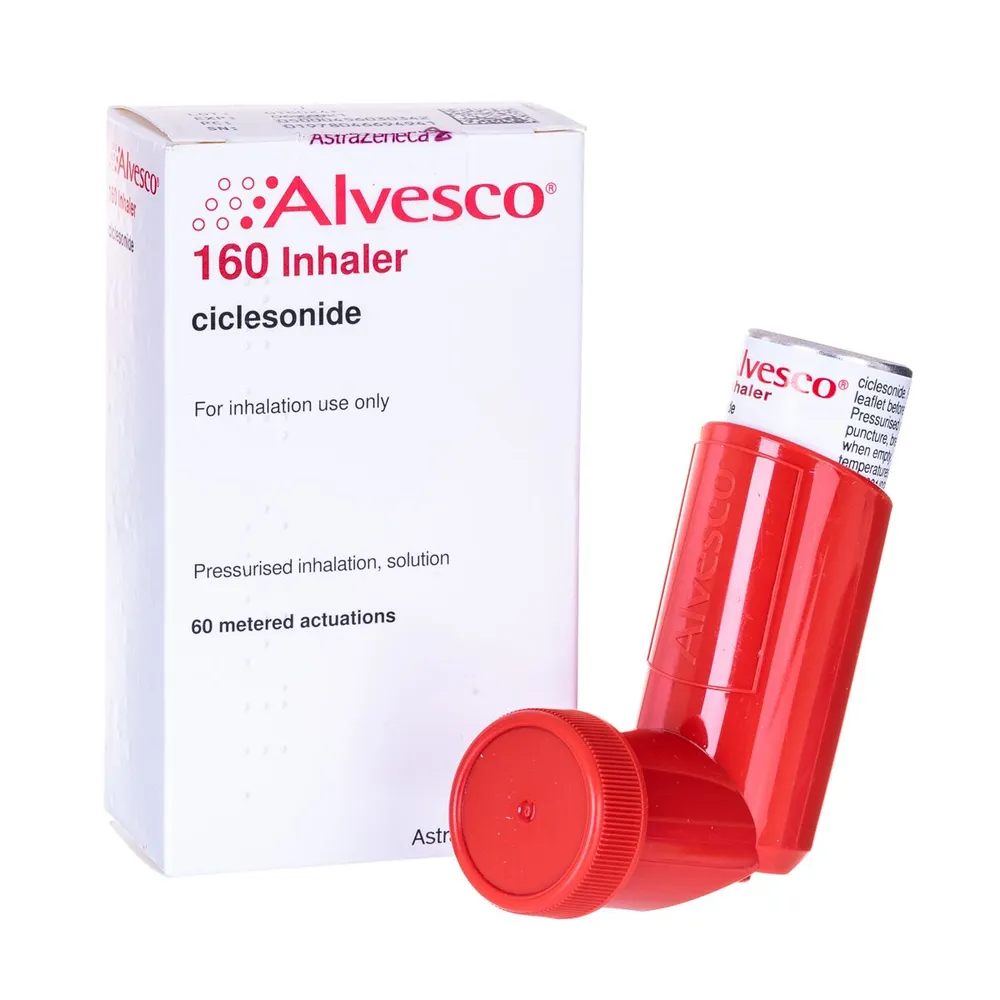
Table of Contents
Package leaflet: Information for the user
Introduction
Package leaflet: information for the user
Alvesco 160 micrograms/inhalation, inhalation solution in pressurised container
Ciclesonide
Read the entire leaflet carefully before you start using the medicine, because it contains important information for you.
- Keep this leaflet, as you may need to read it again.
- If you have any questions, consult your doctor or pharmacist.
- This medicine has been prescribed for you only and must not be given to other people, even if they have the same symptoms, as it may harm them.
- If you experience any adverse effects, consult your doctor, pharmacist, or nurse, even if they are effects not listed in this leaflet. See section 4.
Leaflet contents
- What Alvesco is and what it is used for
- What you need to know before using Alvesco
- How to use Alvesco
- Possible side effects
- How to store Alvesco
- Contents of the pack and other information
1. What Alvesco is and what it is used for
What is Alvesco?
Alvesco is a clear, colorless aerosol to be inhaled through the mouth into the lungs. It is a preventive medicine (corticosteroid) that must be taken daily and is only active when inhaled into the lungs.
The active substance in this medicine is Ciclesonide. (For information on other components, see section 6.)
What is Alvesco used for?
Alvesco is used to treat persistent asthma in adults and adolescents aged 12 years and older.
How does Alvesco work?
Alvesco helps you breathe better by reducing asthma symptoms and the likelihood of having an asthma attack. The effect of the medicine increases over time, which is why it must be taken daily, even when you feel well.
This medicine is not suitable for asthma attacks. Use your rescue inhaler to quickly relieve such attacks.
2. What you need to know before using Alvesco
Do not use Alvesco
if you are allergic to ciclesonide or to any of the other components of this medicine (listed in section 6).
Warnings and precautions
Consult your doctor or pharmacist before starting to use Alvesco.
Take special care with Alvesco
- Before starting treatment with this medicine, inform your doctor if:
You have received or are currently receiving treatment for pulmonary tuberculosis or fungal, viral, or bacterial infections.
Consult your doctor if you have any doubts. It is important to ensure that Alvesco is the appropriate medicine for you.
During treatment with Alvesco, go immediately to your doctor if:
- you start experiencing difficulty breathing and some of your symptoms worsen: coughing, choking, wheezing, chest tightness, noisy breathing (rhonchi), or other symptoms of airway constriction. (You should use your rescue inhaler, which usually provides rapid relief.)
- you wake up at night due to symptoms.
- your symptoms do not improve despite using the rescue inhaler.
Your doctor will decide whether treatment should continue.
If you experience blurred vision or other visual problems, contact your doctor.
Special patient groups
Patients with severe asthma are at risk of asthma attacks. For these patients, the doctor will monitor asthma regularly and may even perform lung function tests.
Patients taking oral corticosteroids:
Alvesco may be used to replace oral corticosteroids or to reduce the number of doses taken. Follow your doctor's instructions carefully.
- This transition may begin approximately 1 week after starting Alvesco inhalations.
- The number of tablets will be gradually reduced over a period of time.
- During this period, you may occasionally feel generally unwell.
- Nevertheless, it is important that you continue inhaling Alvesco and progressively reduce the number of tablets.
- If you experience severe symptoms such as nausea, vomiting, diarrhea, or fever, consult your doctor.
- This process may cause minor allergic reactions such as rhinitis (inflammation of the nose) or eczema (itching and redness of the skin).
- If you have switched from tablet treatment, you will remain at risk for adrenal insufficiency for some time. This risk is related to prior oral corticosteroid intake. Symptoms of adrenal insufficiency (dizziness, fainting, nausea, loss of appetite, mood changes, loss of body hair, inability to cope with stress, weakness, headaches, memory problems, allergies, anxiety about eating, and blood glucose disturbances) may persist for a while.
- You may need to see a specialist to assess the degree of adrenal function impairment.
- Your doctor will also perform periodic checks of adrenal function.
- During periods of stress, such as surgery or worsening asthma attacks, you may need to take additional oral corticosteroids. If so, you must carry an identification card indicating this requirement.
Patients with hepatic or renal disorders
If you have hepatic or renal disorders, dose adjustment of ciclesonide is not necessary.
If you have severe liver disease, your doctor will examine you more thoroughly to check for side effects due to impaired normal steroid production.
Children under 12 years:
This medicine is not recommended for children under 12 years of age due to lack of information on potential side effects.
Other medicines and Alvesco
Inform your doctor before using Alvesco if you are being treated for a fungal or viral infection with medicines containing:
- ketoconazole
- itraconazole
- ritonavir
- cobicistat
- nelfinavir
These compounds may increase the effect of Alvesco, making it impossible to completely avoid the occurrence of side effects. Therefore, your doctor will monitor you closely if you are taking these medicines (including some used for HIV: ritonavir, cobicistat).
Inform your doctor or pharmacist if you are currently using, have recently used, or might need to use any other medicines, even those obtained without a prescription.
Use of Alvesco with food and drink
Alvesco can be taken with or without food and drink.
Pregnancy, breastfeeding, and fertility
If you are pregnant or breastfeeding, think you may be pregnant, or are planning to become pregnant, consult your doctor or pharmacist before using this medicine.
- Your doctor will inform you about the risks and benefits of using Alvesco, as there is insufficient data on the effects of Alvesco during pregnancy.
- Alvesco may be used during pregnancy only when the potential benefits to the mother outweigh the possible risks to the fetus. If your doctor decides you can continue using Alvesco, you should use the lowest effective dose of ciclesonide that maintains asthma control.
- In children born to mothers treated with corticosteroids during pregnancy, adrenal function will be carefully monitored.
- Consult your doctor if you wish to use Alvesco while breastfeeding.
- It is unknown whether inhaled ciclesonide passes into breast milk.
- The use of Alvesco in breastfeeding women will only be considered if the expected benefits to the mother outweigh the potential risks to the infant.
Consult your doctor or pharmacist before using any medicine.
Driving and using machines
No effects of Alvesco on the ability to drive or operate machinery are known.
Alvesco contains ethanol
This medicine contains 4.7 mg of alcohol (ethanol) per dose. The amount in one dose is equivalent to less than 1 ml of beer or wine. The small amount of alcohol contained in this medicine does not produce any noticeable effect.
3. How to use Alvesco
Follow exactly the instructions for using this medicine as given by your doctor or pharmacist. If in doubt, consult your doctor or pharmacist again.
- If you have just started using this medicine instead of or in addition to oral corticosteroids, see section 2, Patients taking oral corticosteroids.
How much Alvesco should I use daily?
Your doctor will have informed you of the amount of medicine you need to use daily. This amount will be determined according to your individual needs.
-
The recommended dose of Alvesco is 160 micrograms daily as a single dose. This dose relieves asthma in most patients.
-
In some patients, a reduction of the dose to 80 micrograms daily as a single dose may be suitable to maintain effective asthma control.
-
In some patients with a severe worsening of asthma symptoms, it may be necessary to increase the Alvesco dose for a short period of time. This dose may reach up to 640 micrograms daily, divided into two doses of 320 micrograms each, although there are no data confirming additional therapeutic benefit after three months of treatment at this dose.
If necessary, your doctor may prescribe oral corticosteroids or, if an infection is present, an antibiotic.
- Your doctor will adjust your dose to the lowest necessary to control your asthma.
- You should begin to notice an improvement in symptoms (wheezing, chest tightness, and cough) within 24 hours.
When should I use my Alvesco inhaler?
In most cases, in the morning or afternoon, one or two inhalations once daily. Follow your doctor's instructions carefully. It is important to use Alvesco regularly every day, even when you feel better.
If you notice that you need to use your rescue inhaler more than two or three times a week, you should see your doctor to have your treatment reviewed.
How do I use the Alvesco inhaler?
It is important that a doctor, nurse, or pharmacist first shows you how to correctly use the inhaler. Good technique will ensure that the correct amount of Alvesco reaches your lungs. Follow the instructions in this leaflet to remind yourself how to use it.
It is advisable to practice in front of a mirror the first few times until you are confident that you are using the Alvesco inhaler correctly. You must ensure that no medication is lost through the top or sides of your mouth.
If you have a new inhaler, or if you have not used your inhaler for one week or more, you must test it before use. Remove the mouthpiece cap and, with the inhaler pointed away, press three times on the cartridge inside the inhaler to release three sprays into the air.
Do not shake the Alvesco inhaler before use. The medicine is in a suitable solution that ensures delivery of the correct dose with each inhalation.
During inhalation, you may remain seated or standing.
Follow these instructions carefully and use the images as a guide.
- Remove the mouthpiece cap and check the mouthpiece, inside and outside, to ensure it is clean and dry.
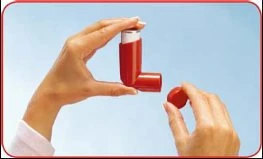
- Hold the inhaler upside down (with the cartridge base upwards), with your index finger on the base of the cartridge and your thumb under the mouthpiece.
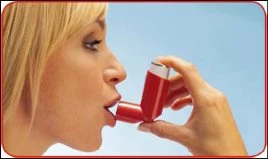
-
Exhale as much air as possible from your lungs. Do not exhale into the inhaler.
-
Place the mouthpiece in your mouth and close your lips firmly around it.
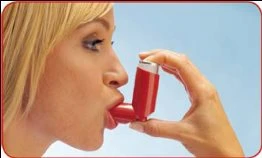
-
Immediately after starting to inhale through your mouth, press with your index finger on the top of the inhaler to release a spray while continuing to inhale slowly and deeply. Be careful that no medication escapes through the top or sides of your mouth during the spray.
-
Hold your breath, remove the inhaler from your mouth, and remove your index finger from the top of the inhaler. Continue holding your breath for about 10 seconds or until you feel uncomfortable. Then breathe out slowly through your mouth, but do not exhale into the inhaler.
It is advisable not to rush steps 3 to 6.
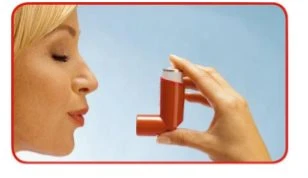
-
If you have been instructed to take another spray, wait approximately half a minute and repeat steps 3 to 6.
-
After use, always replace the mouthpiece cap to prevent dust from entering. When properly closed, you will hear a click, indicating that it is securely closed.
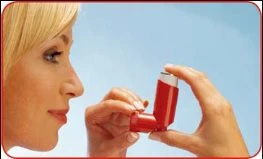
- For hygiene reasons:
- Clean the mouthpiece weekly with a dry tissue, inside and outside.
- Use a folded dry tissue to clean the front of the small opening through which the medicine is released.
- Do not use water or other liquids.
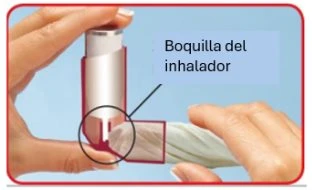
Good technique will ensure that the correct amount of medicine reaches your lungs each time you use the inhaler. Your doctor will check that you are using the correct inhalation technique to ensure that the treatment achieves its maximum effect.
When the cartridge is completely empty, you will no longer hear or feel the propellant gas spray.
If you start having difficulty breathing or feel chest tightness after using the Alvesco inhaler:
- Do not administer any further sprays.
- Use your rescue inhaler to help you breathe.
- Inform your doctor immediately.
If you have difficulty using the inhaler, your doctor may recommend using a spacer device. The spacer compatible with the Alvesco inhaler is called AeroChamber Plus. If you use the AeroChamber Plus device, follow its instructions for use. Your doctor or pharmacist can advise you on using this device.
If you use more Alvesco than you should
It is important that you take your dose as directed by your doctor. Do not increase or decrease your dose without consulting your doctor.
No specific treatment is required if you use more Alvesco than you should, although you should inform your doctor. If high doses are used over long periods, some degree of adrenal suppression cannot be ruled out, and adrenal function may need to be monitored.
If you forget to use Alvesco
If you forget to use your Alvesco inhaler, take your usual dose at the next scheduled time. Do not administer a double dose of the usual amount.
If you stop using Alvesco
Even if you feel better, you must not stop using your Alvesco inhaler.
If you have any further questions about the use of this medicine, ask your doctor or pharmacist.
If you stop using Alvesco, you must inform your doctor immediately.
4. Possible adverse effects
Like all medicines, this medicine can cause adverse effects, although not everyone experiences them.
If you consider any of the adverse effects you experience to be severe, or if you notice any adverse effects not listed in this leaflet, inform your doctor or pharmacist.
- Severe allergic reactions such as swelling of the lips, tongue, and throat (may affect up to 1 in 1,000 patients treated)
- Allergic reactions: skin rash, redness, itching, or hives (may affect between 1 in 1,000 and 1 in 100 patients treated)
- Cough or wheezing may worsen after inhalation (may affect 1 in 100 patients treated)
The remaining adverse effects observed with Alvesco are generally mild. In most cases, treatment can be continued. The adverse effects that may occur are:
Uncommon adverse effects (may affect up to 1 in 100 patients treated):
- Hoarseness
- Burning, swelling, or irritation of the mouth or throat
- Oral thrush (fungal infections in the mouth)
- Headache
- Unpleasant taste in the mouth
- Dryness of the mouth or throat
- Nausea or vomiting
Rare adverse effects (may affect up to 1 in 10,000 patients treated):
- Sensation of rapid or irregular heartbeat (palpitations)
- Abdominal discomfort or pain
- High blood pressure
Adverse effects with unknown frequency, but which may also occur:
- Sleep disorders, depression, or feelings of anxiety, restlessness, nervousness, over-excitability, or irritability. These effects are more likely in children
- Blurred vision
Alvesco may affect the normal production of corticosteroids in your body. This usually occurs in patients taking high doses over a long period of time. Among these uncommon effects are:
- Growth retardation in adolescents
- Loss of bone density
- Possible clouding of the lens (cataracts), causing blurred vision
- Vision loss caused by increased intraocular pressure (glaucoma)
- Moon-shaped face, weight gain in the trunk, and thinning of arms and legs (Cushingoid appearance or Cushing's syndrome)
Your doctor should regularly monitor the height of adolescents receiving long-term treatment. If growth rate slows down, your doctor will adjust your treatment, if possible, to the lowest dose that maintains effective asthma control.
Oral corticosteroid tablets may cause more adverse effects than inhaled corticosteroids such as Alvesco. If you have previously or concurrently taken oral corticosteroids during treatment with Alvesco, the risk of adverse effects related to this type of tablet may persist for some time. During regular check-ups, your doctor will ensure that you are receiving the appropriate dose of Alvesco. These visits allow early identification of adverse effects and help reduce the likelihood of them worsening.
Please remember:
If you consider any of the adverse effects you experience to be severe or if you notice any adverse effects not mentioned in this leaflet, inform your doctor or pharmacist.
Reporting of adverse effects
If you experience any type of adverse effect, consult your doctor, pharmacist, or nurse, even if it is a possible adverse effect not listed in this leaflet. You may also report them directly through the Spanish Pharmacovigilance System for Human Medicines: www.notificaRAM.es. By reporting adverse effects, you can help provide more information on the safety of this medicine.
5. Storage of Alvesco
Keep this medicine out of the sight and reach of children.
Do not use this medicine after the expiry date stated on the container, following EXP. The expiry date refers to the last day of the month indicated.
The container contains pressurised liquid. Do not store above 50°C.
Do not pierce, break or burn the container, even when it appears to be empty.
Like all pressurised inhalation medicines, the therapeutic effect of this medicine may decrease if the container is cold. However, Alvesco delivers a consistent dose within a temperature range from -10°C to 40°C.
If your doctor decides to discontinue treatment or if the inhaler runs out, return it to your pharmacist for safe disposal. This is important because there may still be residual medicine in the container, even if it appears to be completely empty. Do not pierce, break or burn the container, even when it appears to be empty.
Medicines must not be disposed of via wastewater or household waste. Dispose of containers and unused medicines at the SIGRE collection point at your pharmacy. If in doubt, ask your pharmacist how to dispose of unused containers and medicines. This will help protect the environment.
6. Contents of the pack and other information
Composition of Alvesco
- The active substance is ciclesonide. Each inhalation (dose delivered by the inhaler) contains 160 micrograms of ciclesonide.
- The other components (excipients) are anhydrous ethanol and a propellant gas (HFA-134a, norflurane).
- This medicine contains fluorinated greenhouse gases.
Alvesco 160 micrograms 30 inhalations – Each inhaler contains 4.31 g of HFA-134a, equivalent to 0.006 tonnes of CO2 (global warming potential GWP = 1430).
Alvesco 160 micrograms 60 inhalations – Each inhaler contains 5.59 g of HFA-134a, equivalent to 0.008 tonnes of CO2 (global warming potential GWP = 1430).
Alvesco 160 micrograms 120 inhalations – Each inhaler contains 8.80 g of HFA-134a, equivalent to 0.013 tonnes of CO2 (global warming potential GWP = 1430).
Appearance of Alvesco and contents of the pack
Alvesco consists of a clear, colourless liquid in an aluminium pressurized container which delivers through the mouthpiece a precise dose of ciclesonide in the form of an aerosol.
Pack sizes:
Inhaler with 30 measured inhalations
Inhaler with 60 measured inhalations
Inhaler with 120 measured inhalations
Each inhaler contains sufficient medication for 30, 60 or 120 inhalations. Depending on the number of daily inhalations recommended by the doctor:
- the inhaler with 30 inhalations contains enough medication for four weeks.
- the inhaler with 60 inhalations contains enough medication for one or two months.
- the inhaler with 120 inhalations contains enough medication for two or four months.
Only some pack sizes may be commercially available.
Marketing Authorization Holder and Manufacturer:
Marketing Authorization Holder
Covis Pharma Europe B.V.
Gustav Mahlerplein 2
1082 MA Amsterdam
The Netherlands
Manufacturer:
Covis Pharma Europe B.V.
Gustav Mahlerplein 2
1082 MA Amsterdam
The Netherlands
For further information about this medicinal product, contact the local representative of the Marketing Authorization Holder:
Zentiva Spain S.L.U.
Paseo Club Deportivo 1, Edificio 4, Pozuelo de Alarcón 28223, Madrid
Spain
This medicinal product is authorized in other EU countries under the following names:
Austria | Alvesco 160, 80 micrograms – metered-dose inhaler, solution |
Bulgaria | Alvesco 160, 80 micrograms, pressurised inhalation, solution |
Cyprus | Alvesco 160, 80 micrograms, solution for pressurised inhalation |
Croatia | Alvesco 160, 80 micrograms, pressurised inhalation, solution |
Czech Republic | Alvesco 160 micrograms/dose, solution for inhalation in pressurised container |
Denmark | Alvesco 160, 80 microgram/dose inhalation spray, solution |
Finland | Alvesco 160, 80 microgram/dose, inhalation solution |
France | Alvesco 160, 80 micrograms/dose, solution for inhalation in pressurised container |
Germany | Alvesco 160, 80 micrograms, pressurised inhalation, solution |
Greece | Alvesco 160, 80 micrograms, solution for pressurised inhalation |
Hungary | Alvesco 160, 80 microgram pressurised inhalation solution |
Ireland | Alvesco 160, 80 micrograms pressurised inhalation, solution |
Italy | Alvesco 160, 80 mcg pressurised solution for inhalation |
Latvia | Alvesco 160, 80 microgram aerosol for inhalation under pressure, solution |
Netherlands | Alvesco 160, 80 Inhaler, aerosol, solution 160, 80 microgram/dose |
Norway | Alvesco 160, 80 microgram/dose inhalation aerosol, solution |
Poland | Alvesco 160, 80 microgram/dose, inhalation solution; inhalation aerosol |
Romania | Alvesco 160, 80 Inhaler, 160, 80 microgram/dose, pressurised inhalation solution |
Slovakia | Alvesco 160, 80 Inhaler, inhalation solution in pressurised container |
Slovenia | Alvesco 160, 80 microgram/dose, pressurised inhalation solution |
Spain | Alvesco 160 microgram/inhalation, solution for inhalation in pressurised container |
Sweden | Alvesco 160, 80 microgram/dose, inhalation spray, solution |
United Kingdom (Northern Ireland) | Alvesco 160, 80 Inhaler |
Date of the most recent review of this leaflet: March 2026
Detailed information on this medicinal product is available on the website of the Spanish Agency of Medicines and Health Products (AEMPS): http://www.aemps.gob.es/