Alprazolam Stada 0.5 mg tablets EFG
Spain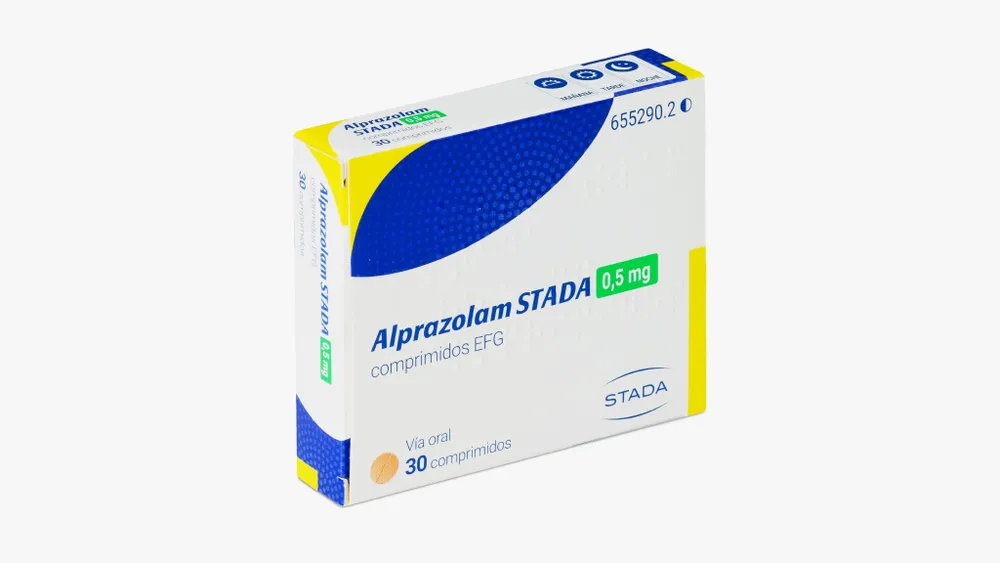
Table of Contents
- Package leaflet: Information for the user
- Introduction
- 1. What Alprazolam Stada is and what it is used for
- 2. What you need to know before taking Alprazolam Stada
- 3. How to take Alprazolam Stada
- 4. Possible adverse effects
- 5. Storage of Alprazolam Stada
- 6. - Contents of the pack and other information
Package leaflet: Information for the user
Introduction
Package leaflet: information for the user
Alprazolam Stada 0.5 mg tablets EFG
Read the entire leaflet carefully before you start taking this medicine, because it contains important information for you.
- Keep this leaflet, as you may need to read it again.
- If you have any questions, ask your doctor or pharmacist.
- This medicine has been prescribed for you only and must not be given to other people, even if they have the same symptoms as you, because it could harm them.
- If you experience any adverse effects, consult your doctor or pharmacist, even if they are adverse effects not listed in this leaflet. See section 4.
Leaflet contents
- What Alprazolam Stada is and what it is used for
- What you need to know before taking Alprazolam Stada
- How to take Alprazolam Stada
- Possible side effects
- How to store Alprazolam Stada
- Contents of the pack and other information
1. What Alprazolam Stada is and what it is used for
Alprazolam belongs to a group of medicines called benzodiazepines (anxiolytic medicines).
Alprazolam is used in adults for the treatment of severe, disabling, or extremely distressing anxiety symptoms. This medicine is intended for short-term use only.
2. What you need to know before taking Alprazolam Stada
Do not take Alprazolam Stada:
- If you are allergic to alprazolam, to benzodiazepines, or to any of the other ingredients of this medicine (listed in section 6)
- If you suffer from breathing difficulties, with or without sleep-related apnea (sleep apnea)
- If you have a condition called myasthenia gravis, which is characterized by muscle weakness
- If you have severe liver problems
Warnings and precautions
Consult your doctor or pharmacist before starting to take alprazolam.
- You have any lung, kidney, or liver problems.
- You have felt or currently feel so depressed that you have had thoughts or ideas about suicide.
- You notice that the effect of the tablets diminishes after taking them for several weeks (tolerance).
- During treatment, you experience symptoms of mania (a state of overexcitement, feelings of euphoria, or hyperirritability) or hypomania (a state of exaggerated excitement and activity).
- You are concerned about physical and mental dependence caused by alprazolam. If you do not wish to stop treatment, you may be mentally dependent on this medicine. If there is physical dependence, stopping treatment may lead to withdrawal symptoms (see section 3, "If you stop taking Alprazolam Stada"). The risk of dependence increases with higher doses and longer treatment duration, especially in patients with a history of alcohol or drug abuse, or when multiple benzodiazepines are combined. Therefore, treatment should be as short as possible.
- You have a history of alcohol, drug, or narcotic abuse.
- You have experienced memory disorders. Memory loss usually occurs several hours after taking the medicine. To reduce this risk, ensure you sleep uninterrupted for 7–8 hours after taking the medicine.
- You experience unexpected reactions such as restlessness, agitation, irritability, aggressiveness, disappointment, rage attacks, nightmares, hallucinations, psychosis, inappropriate behavior, delirium, or other behavioral disorders. These unexpected reactions occur more frequently in children and elderly patients.
- You suffer from a chronic lung disease.
- You are simultaneously consuming alcohol and sedatives.
- You have been diagnosed with a psychiatric disorder.
- You have a certain type of glaucoma.
To minimize the risk of dependence, the following precautions should be observed:
- Benzodiazepines should only be taken under medical prescription (never because they worked for someone else), and you should never recommend them to others.
- Do not increase the doses prescribed by your doctor, nor extend treatment beyond the recommended duration.
- Consult your doctor regularly so they can decide whether you should continue treatment.
- Do not combine multiple benzodiazepines regardless of their indication.
- When stopping alprazolam treatment, symptoms similar to those that led to starting treatment may occur (rebound effect). To avoid this, it is recommended not to stop treatment abruptly, but to gradually reduce the dose according to your doctor's instructions (see section "If you stop taking Alprazolam Stada").
- Benzodiazepines and similar medicines should be used with caution in elderly patients due to the risk of sedation and/or musculoskeletal weakness.
Taking Alprazolam Stada with other medicines
Inform your doctor or pharmacist if you are currently using, have recently used, or might need to use any other medicines.
Alprazolam may interact with other medicines. Inform your doctor or pharmacist if you are taking any of the following:
Medicines that increase the sedative effect of alprazolam:
- Sleeping pills and sedatives
- Antipsychotics and antidepressants
- Antiepileptics
- Anesthetics
- Strong central nervous system-acting analgesics
- Sedating antihistamines
Medicines that increase the effect of alprazolam by reducing its metabolism in the liver:
- Nefazodone, fluvoxamine, fluoxetine, sertraline (medicines for severe depression)
- Cimetidine (used to treat stomach problems)
- Medicines used to treat HIV
- Dextropropoxyphene
- Oral contraceptives
- Diltiazem (medicine for blood pressure and heart conditions)
- Certain antibiotics (such as erythromycin, clarithromycin, telithromycin, and troleandomycin) and certain antifungal medicines (such as itraconazole, ketoconazole, posaconazole, voriconazole)
Medicines that decrease the effect of alprazolam by increasing its metabolism in the liver:
- Carbamazepine or phenytoin (antiepileptics also used for other treatments)
- St. John’s wort (Hypericum perforatum, a herbal remedy)
- Rifampicin (an antituberculosis medicine)
Alprazolam may increase the effect of the following medicines:
- Digoxin (a heart medicine)
- Muscle relaxants
- Imipramine and desipramine (medicines for severe depression)
- Clozapine (a medicine for psychosis). There is an increased risk of cardiac and/or respiratory arrest.
The concomitant use of alprazolam and opioids (strong analgesics, medicines for substitution therapy, and some cough medicines) increases the risk of drowsiness, breathing difficulties (respiratory depression), coma, and may be potentially fatal. For this reason, concomitant use should only be considered when no other treatment options are possible.
However, if your doctor prescribes alprazolam together with opioids, the dose and duration of concomitant treatment must be limited by your doctor.
Inform your doctor about all opioid medicines you are taking and closely follow your doctor's dosing recommendations. It may be helpful to inform friends or relatives so they are aware of the signs and symptoms mentioned above. Contact your doctor if you experience any of these symptoms.
Taking Alprazolam Stada with food, drinks, and alcohol
Avoid alcoholic beverages during treatment. The effect of alcohol may enhance sedation, which can affect your level of alertness (see section "Driving and using machines").
Do not drink alcoholic beverages while taking alprazolam tablets.
Pregnancy, breastfeeding, and fertility
If you are pregnant or breastfeeding, think you may be pregnant, or plan to become pregnant, consult your doctor or pharmacist before using this medicine.
Alprazolam is not recommended during pregnancy or breastfeeding unless, in the doctor's judgment, the benefit outweighs the risk to the child.
If, on medical advice, alprazolam is administered during late pregnancy or during childbirth, effects on the newborn may occur, such as decreased body temperature (hypothermia), reduced muscle tone (hypotonia), and moderate respiratory depression.
Infants born to mothers who chronically take benzodiazepines during the last stage of pregnancy may develop physical dependence, potentially leading to a withdrawal syndrome in the postnatal period.
Use in children and adolescents (under 18 years of age)
Alprazolam is not recommended for children and adolescents under 18 years of age. Benzodiazepines should not be given to children unless strictly necessary and prescribed by a doctor. The efficacy and safety of alprazolam have not been established in individuals under 18 years of age.
Use in elderly patients (over 65 years of age)
Alprazolam may have a greater effect on this group of patients than on younger patients. If you belong to this group, your doctor may reduce your dose and monitor your response to treatment. Please follow their instructions carefully (see section "How to take Alprazolam Stada").
Benzodiazepines and related products should be used with caution in elderly individuals due to the risk of sedation and/or musculoskeletal weakness, which may lead to falls—often with serious consequences in this population.
Special patient groups
If your liver or kidneys are not functioning properly, consult your doctor, who may advise you to take a lower dose of alprazolam.
If you suffer from respiratory disorders, inform your doctor.
Driving and using machines
Alprazolam Stada may impair your ability to drive or operate machinery, as it may cause drowsiness, reduced attention, or decreased reaction ability. These effects are more likely at the beginning of treatment or when the dose is increased. Do not drive or operate machinery if you experience any of these effects. These effects may be intensified if alcohol is consumed simultaneously.
Alprazolam Stada contains lactose
This medicine contains lactose. If your doctor has informed you that you have an intolerance to certain sugars, consult with them before taking this medicine.
Alprazolam Stada contains sodium
This medicine contains less than 23 mg of sodium (1 mmol) per tablet; hence, it is essentially "sodium-free."
Alprazolam Stada contains the colour Orange Yellow S (E-110)
This medicine may cause allergic reactions as it contains the colour Orange Yellow S (E-110). It may trigger asthma, particularly in patients allergic to acetylsalicylic acid.
3. How to take Alprazolam Stada
Follow exactly the instructions for use of this medicine as given by your doctor. If in doubt, please consult your doctor or pharmacist again.
Dosing:
The tablet or part of it should be swallowed whole, without chewing, with a little liquid. Your doctor will prescribe the alprazolam formulation most suitable for your required dose.
The usual doses are as follows:
- The initial dose is 0.25 mg to 0.5 mg of alprazolam three times daily.
- The usual dose ranges from 0.5 mg to a maximum of 4 mg per day, divided into 2 or 3 doses.
In elderly patients with chronic respiratory insufficiency, or with liver or kidney impairment, the initially recommended dose is 0.25 mg of alprazolam, 2 or 3 times daily, resulting in a total daily alprazolam intake of 0.5 mg to 0.75 mg in divided doses. This dose may be gradually increased if necessary and well tolerated.
No individual dose should exceed the limits indicated, nor should the total daily dose, unless your doctor specifically instructs otherwise.
Duration and discontinuation of treatment:
The maximum treatment duration should not exceed 2–4 weeks. Long-term treatment is not recommended. If your doctor considers it necessary to extend treatment in your case, it will be done only for limited periods, with frequent monitoring of your condition.
You must never stop treatment abruptly. Your doctor will determine the duration of treatment based on the progression of your illness and will explain how you should gradually reduce the dose until treatment is completed.
If you feel that the effect of alprazolam is too strong or too weak, inform your doctor or pharmacist.
If you take more Alprazolam Stada than you should
If you have taken more alprazolam than you should, contact your doctor or pharmacist immediately, or go to the nearest hospital, taking this leaflet with you.
Overdose with benzodiazepines generally manifests as varying degrees of central nervous system depression, ranging from drowsiness to coma. Symptoms include drowsiness (sedation), speech disorders (dysarthria), coordination disturbances, confusion, lethargy (a state of prolonged and deep drowsiness), decreased muscle tone (hypotonia), low blood pressure, and respiratory depression. Coma is rare and death is very rare. Serious sequelae are uncommon unless alprazolam is taken together with other drugs or alcohol.
In case of overdose or accidental ingestion, contact your doctor or pharmacist immediately, or call the Toxicology Information Service at telephone number: 91 562 04 20, stating the name of the medicine and the amount ingested. It is recommended to bring the medicine packaging and leaflet to the healthcare professional.
If you forget to take Alprazolam Stada
Do not take a double dose to make up for a missed dose.
If you remember the missed dose shortly after the scheduled time, take it immediately. Otherwise, wait for your next scheduled dose and do not take a double dose to compensate.
If you stop taking Alprazolam Stada
Treatment with alprazolam may lead to dependence; therefore, abruptly stopping alprazolam may cause withdrawal symptoms.
Withdrawal symptoms may include: headache, muscle pain, anxiety, tension, restlessness, confusion, irritability, general feeling of discomfort (dysphoria), insomnia, sensitivity to light, sound, and physical touch, tingling and cramps in the limbs and abdomen, vomiting, sweating, tremor, depersonalization, hallucinations, and seizures. If this occurs, you should consult your doctor immediately.
If you have any further questions about the use of this medicine, ask your doctor or pharmacist.
4. Possible adverse effects
Like all medicines, this medicine can cause adverse effects, although not everyone will experience them.
Adverse effects that may occur during treatment with alprazolam predominantly appear at the beginning of treatment and usually disappear with continued administration or after a dose reduction.
Very common adverse effects (may affect more than 1 in 10 people):
- Depression.
- Sedation, drowsiness, coordination disorder (ataxia), memory impairment, difficulty in articulating words (dysarthria), dizziness, headache.
- Constipation, dry mouth.
- Fatigue, irritability.
Common adverse effects (may affect up to 1 in 10 people):
- Feeling of confusion, disorientation, alteration of sexual desire (libido), anxiety, difficulty sleeping (insomnia), nervousness.
- Abnormal coordination, impaired balance, difficulty concentrating, excessive sleepiness (hypersomnia), prolonged and profound drowsiness (lethargy), tremor.
- Nausea, decreased appetite.
- Blurred vision.
- Dermatitis.
- Sexual dysfunction.
- Weight changes.
Uncommon adverse effects (may affect up to 1 in 100 people):
- Memory loss (amnesia).
- Mental and behavioural disorders (mania), hallucinations, angry reactions, agitation, dependence.
- Loss of muscle strength.
- Inability to retain urine in the bladder (urinary incontinence).
- Irregular menstruation.
- Withdrawal symptoms.
Frequency not known (cannot be estimated from available data):
- Increase in blood levels of prolactin (hormone responsible for stimulating and maintaining lactation after childbirth).
- Mental and behavioural disorders (hypomania), aggression, hostility, abnormal thinking, psychomotor hyperactivity, drug abuse.
- Autonomic nervous system imbalance, involuntary muscle contractions (dystonia).
- Gastrointestinal disorder, hepatitis, alteration of liver function, yellowing of the skin and whites of the eyes (jaundice).
- Peripheral edema.
- Angioedema (swelling beneath the skin surface).
- Photosensitivity (exaggerated response to light).
- Urinary retention in the bladder.
- Increased intraocular pressure.
With the use of benzodiazepines, the following may occur:
- Drowsiness, lack of response to emotional stimuli (emotional blunting), reduced alertness, confusion, fatigue, headache, dizziness, muscle weakness, ataxia, or double vision. These phenomena occur predominantly at the beginning of treatment and usually disappear with continued administration. Gastrointestinal disturbances, changes in sexual desire, or skin reactions may occasionally occur.
- Memory loss (amnesia) may develop, which may be associated with inappropriate behaviour.
- The use of benzodiazepines may unmask an existing depression.
- When using benzodiazepines or similar compounds, reactions such as restlessness, agitation, irritability, aggression, delirium, rage attacks, nightmares, hallucinations, psychosis, inappropriate behaviour, and other behavioural disturbances may occur. These reactions may be severe and occur more frequently in children and elderly patients.
- Administration of the product (even at usual doses) may lead to the development of physical dependence. Discontinuation of treatment may lead to withdrawal or rebound phenomena. Psychological dependence may occur. Cases of abuse have been reported.
Reporting of adverse effects
If you experience any type of adverse effect, consult your doctor or pharmacist, even if it is a possible adverse effect not listed in this leaflet. You may also report them directly via the Spanish Pharmacovigilance System for Human Medicines: https://www.notificaram.es. By reporting adverse effects, you can help provide more information on the safety of this medicine.
5. Storage of Alprazolam Stada
Keep this medicine out of the sight and reach of children.
This medicine does not require any special storage conditions.
Do not use this medicine after the expiry date stated on the container, following "EXP". The expiry date refers to the last day of the month indicated.
Medicines should not be disposed of via wastewater or household waste. Dispose of empty containers and unused medicines at the SIGRE Point in your pharmacy. Ask your pharmacist how to properly discard containers and medicines you no longer need. This will help protect the environment.
6. - Contents of the pack and other information
Composition of Alprazolam Stada
- The active substance is alprazolam. Each tablet contains 0.5 mg of alprazolam.
- The other components (excipients) are: lactose monohydrate, microcrystalline cellulose, maize starch (gluten-free), talc, sodium starch glycolate from potato, magnesium stearate, orange-yellow colour (E-110), and quinoline yellow colour.
Appearance of the product and contents of the pack
Alprazolam Stada 0.5 mg are orange-coloured, round, biconvex tablets, scored on one side.
The tablet can be divided into equal doses.
Alprazolam Stada 0.5 mg tablets are available in packs of 30 or 500 tablets (hospital pack).
Only certain pack sizes may be marketed.
Marketing Authorization Holder and Manufacturer
Marketing Authorization Holder
Laboratorio STADA, S.L.
Frederic Mompou, 5
08960 Sant Just Desvern (Barcelona)
Spain
Manufacturer
LACER, S.A.
C/. Boters, 5 –Parc Tecnològic del Vallès-
08290 Cerdanyola del Vallès (Barcelona)
Spain
Other presentations
Alprazolam Stada 0.25 mg tablets EFG: packs of 30 tablets.
Alprazolam Stada 1 mg tablets EFG: packs of 30 tablets.
Alprazolam Stada 2 mg tablets EFG: packs of 30 or 50 tablets.
Date of the most recent revision of this leaflet: February 2022
Detailed and up-to-date information on this medicine is available on the website of the Spanish Agency of Medicines and Medical Devices (AEMPS) www.aemps.gob.es.