Allopurinol Stada 300 mg tablets EFG
Spain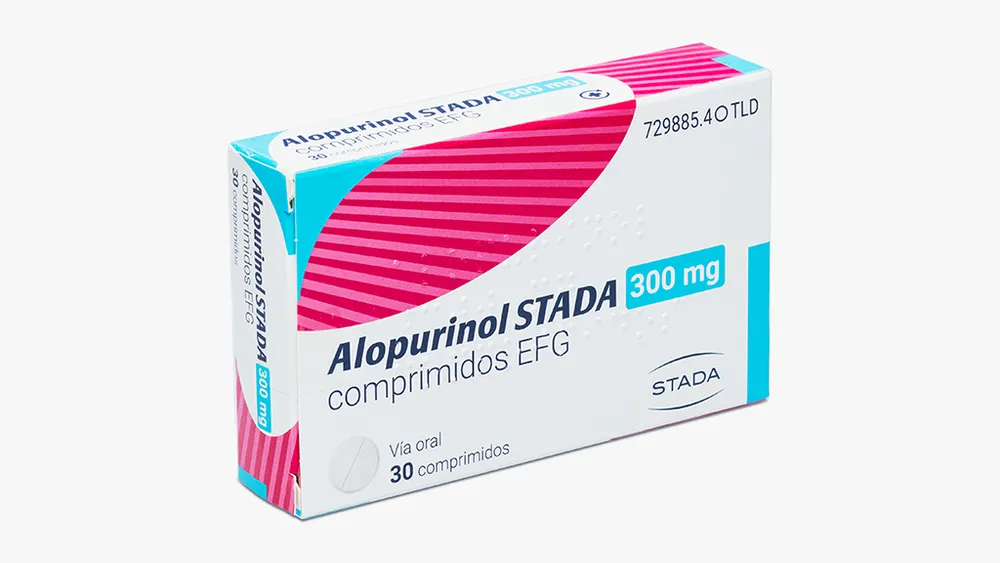
Table of Contents
- Package leaflet: Information for the user
- Introduction
- 1. What Alopurinol Stada is and what it is used for
- 2. What you need to know before taking Alopurinol Stada
- 3. How to take Alopurinol Stada
- 4. Possible adverse effects
- 5. Storage of Allopurinol Stada
- 6. Contents of the pack and other information
Package leaflet: Information for the user
Introduction
Package leaflet: information for the patient
Alopurinol Stada 300 mg tablets EFG
Read the entire leaflet carefully before you start taking this medicine, because it contains important information for you.
- Keep this leaflet, as you may need to read it again.
- If you have any questions, ask your doctor or pharmacist.
- This medicine has been prescribed for you only, and you should not give it to other people, even if they have the same symptoms as you, because it could harm them.
- If you experience any adverse reactions, consult your doctor or pharmacist, even if they are adverse reactions not listed in this leaflet. See section 4.
Leaflet contents
- What Alopurinol Stada is and what it is used for
- What you need to know before taking Alopurinol Stada
- How to take Alopurinol Stada
- Possible side effects
- How to store Alopurinol Stada
- Contents of the pack and other information
1. What Alopurinol Stada is and what it is used for
This medicine contains the active substance allopurinol.
This medicine works by slowing down certain chemical reactions in the body to reduce the level of uric acid in the blood and urine.
High levels of uric acid can cause:
- Gout
- Formation of kidney stones or certain types of kidney problems
In gout, uric acid accumulates in the joints and tendons in the form of crystals. These crystals cause an inflammatory reaction. The inflammation causes the skin around certain joints to swell, become tender, and hurt even upon light touch. Intense pain may also occur when moving the joint.
Alopurinol is used in adults:
- to reduce uric acid levels when diet alone is not sufficient
- for the treatment and prevention of the aforementioned complications in cases where the body produces too much uric acid.
2. What you need to know before taking Alopurinol Stada
Do not take Alopurinol Stada:
- If you are allergic to allopurinol or to any of the other ingredients of this medicine (listed in section 6).
Warnings and precautions
Tell your doctor or pharmacist before taking this medicine if:
- you have liver or kidney problems. Your doctor may prescribe a lower dose or advise you to take it less frequently. They may also monitor you more closely.
- you are currently experiencing a gout attack. Your doctor may also consider prescribing a suitable painkiller or another anti-gout medicine (colchicine) during the first 4 weeks of treatment.
- you have thyroid problems.
- you are of Han Chinese, Thai, or Korean descent.
Take special care with allopurinol:
Severe skin reactions (Hypersensitivity Syndrome, Stevens-Johnson Syndrome, Toxic Epidermal Necrolysis) have been reported with the use of allopurinol. These may initially appear as red, target-shaped or circular spots (often with blisters in the center) on the trunk of the body. The rash frequently involves mouth ulcers, throat, nose, genitals, and conjunctivitis (inflammation and redness of the eyes). These potentially life-threatening skin reactions are often preceded by flu-like symptoms (fever, headache, and body aches). The rash may progress to blistering and widespread skin peeling. If you develop a skin rash or these skin symptoms, stop taking allopurinol and consult your doctor immediately.
If you have previously experienced a severe skin reaction during treatment with allopurinol, you must not be treated with allopurinol again.
These severe skin reactions may be more common in individuals of Han Chinese, Thai, or Korean descent. In addition, the risk of chronic kidney failure may be increased in these patients.
If you have cancer or Lesch-Nyhan syndrome, the amount of uric acid in the urine may increase. To prevent this, ensure you drink enough water to dilute your urine.
If you have kidney stones, the stones may become smaller and enter your urinary tract, which could cause problems. You should produce at least 2 liters of urine per day to reduce the risk of kidney stone formation. Make sure you drink sufficient water.
Other medicines and Alopurinol Stada
Tell your doctor or pharmacist if you are taking, have recently taken, or might need to take any other medicines. This includes medicines obtained without a prescription, including herbal medicines. This is because allopurinol may affect how some medicines work. Also, some other medicines may affect how allopurinol works.
Inform your doctor if you are taking any of the following medicines:
- probenecid, benzbromarone, sulfinpyrazone (medicines for treating gout)
- acetylsalicylic acid
- ampicillin or amoxicillin (antibiotics): do not take allopurinol with ampicillin or amoxicillin, as this may increase the frequency of skin rash. An alternative to ampicillin or amoxicillin should be used when available.
- warfarin (a medicine used to thin the blood)
- chlorpropamide (a medicine used to treat diabetes)
- theophylline (a medicine used for respiratory or heart problems)
- When administered in combination with cytostatic agents (e.g., cyclophosphamide, doxorubicin, bleomycin, procarbazine, alkyl halides), blood dyscrasias occur more frequently than when these active substances are administered alone. Therefore, periodic hematological monitoring should be performed.
- vidarabine (used to treat herpes or chickenpox)
- cyclosporine (a medicine used to reduce immune response)
- phenytoin (a medicine used for epilepsy)
- didanosine (used to treat HIV infection)
- aluminium hydroxide. If aluminium hydroxide is taken concomitantly, the effect of allopurinol may be reduced; therefore, it is advisable to leave an interval of at least 3 hours between taking the two medicines. Therefore, periodic hematological monitoring should be performed.
- furosemide and diuretics (medicines to remove excess fluid from the body), such as thiazides.
- ACE inhibitors (medicines for heart problems or high blood pressure), especially if you have kidney problems or chronic renal failure.
It is especially important that you inform your doctor if you are taking any of the medicines listed below. Your doctor may need to reduce your dose or monitor you more closely, as there is an increased risk of side effects when allopurinol is taken together with:
- 6-mercaptopurine (used to treat blood cancer)
- Azathioprine (used to suppress the immune system)
The administration of 6-mercaptopurine or azathioprine together with allopurinol should be avoided. When 6-mercaptopurine or azathioprine are administered with allopurinol, the dose of 6-mercaptopurine or azathioprine should be reduced because their activity will be prolonged. This could increase the risk of serious blood disorders. In this case, your doctor will closely monitor your blood count during treatment.
Seek immediate medical advice if you notice unexplained bruising, bleeding, fever, or sore throat.
Taking Alopurinol Stada with food, drinks, and alcohol
Avoid foods high in purine, such as organ meats like liver, sweetbreads, kidney, brain, heart, and tongue, as well as meat extracts and alcohol, especially beer.
Pregnancy and breastfeeding
If you are pregnant or breastfeeding, think you may be pregnant, or plan to become pregnant, consult your doctor or pharmacist before using this medicine.
You should not take this medicine during pregnancy unless your doctor specifically recommends it.
Allopurinol passes into breast milk. The use of allopurinol during breastfeeding is not recommended. Your doctor will decide whether to discontinue breastfeeding or to discontinue or abstain from allopurinol therapy.
Driving and using machines
The effect of allopurinol on the ability to drive and use machines is moderate. Do not drive or operate machinery unless you know how this medicine affects you.
You may feel drowsy, dizzy, or have coordination problems. If this occurs, do not drive or use any tools or machines.
Alopurinol Stada contains lactose
If your doctor has informed you that you have an intolerance to certain sugars, consult with him before taking this medicine.
3. How to take Alopurinol Stada
Follow exactly the instructions for use of this medicine as given by your doctor. If in doubt, consult your doctor or pharmacist again.
Adults
The recommended dose is 300 mg of allopurinol per day. Generally, your doctor will start treatment with allopurinol at a low dose (e.g., 100 mg/day) to reduce the risk of possible adverse effects. Your dose may be increased if necessary. Other strengths of this medicine are available if a lower dose is required.
Your doctor may increase the dose to 600 mg up to 800 mg of allopurinol, if needed.
The maximum daily dose is 800 mg of allopurinol.
The tablets should be taken once daily after a meal, especially in patients with a sensitive stomach.
To avoid side effects, no more than 300 mg of allopurinol should be taken in a single dose.
If a daily dose exceeding 300 mg of allopurinol is indicated or if gastrointestinal side effects (nausea, vomiting, diarrhea) occur, the dose may be divided into several doses throughout the day.
Your doctor will determine the correct dose for you.
Make sure you drink enough water while taking this medicine.
Elderly patients
If you are elderly, your doctor may prescribe a lower dose or advise you to take the tablets at longer intervals.
Patients with kidney or liver problems
Alopurinol 300 mg is not suitable if you have severely impaired liver or kidney function due to the high content of allopurinol. Other strengths of this medicine may be more appropriate; consult your doctor or pharmacist.
If you undergo dialysis two or three times a week, your doctor may prescribe a dose of 300 or 400 mg to be taken immediately after dialysis.
Use in children and adolescents under 15 years of age
Alopurinol 300 mg is not suitable for children due to the high content of allopurinol. Other strengths of this medicine may be more appropriate; consult your doctor or pharmacist.
Method of administration
Oral use.
Take the tablet after a meal and swallow it with a glass of water, approximately at the same time each day.
The tablet may be divided into equal doses (half).
Duration of treatment
The duration of treatment with this medicine depends on the underlying condition. Please take allopurinol regularly and for as long as your doctor has instructed.
Continuous monitoring by your doctor is necessary. Your doctor should repeatedly and regularly check your uric acid levels through blood tests. At the same time, possible side effects should be monitored, and you should speak with your doctor or pharmacist if you feel the effect of this medicine is too strong or too weak.
If you take more Alopurinol Stada than you should
If you take more allopurinol than you should, contact your doctor or go to the hospital immediately. Take the medicine package with you. Signs of overdose may include nausea, vomiting, diarrhea, and dizziness.
In case of overdose or accidental ingestion, contact your doctor or pharmacist immediately or call the Toxicology Information Service at telephone: 91 562 04 20, indicating the medicine and the amount ingested.
If you forget to take Alopurinol Stada
If you forget to take a dose, do not take a double dose to make up for the missed doses.
If you have any further questions about the use of this medicine, ask your doctor or pharmacist.
4. Possible adverse effects
Like all medicines, this medicine may cause adverse effects, although not everyone experiences them.
If you experience any of the following adverse effects, stop taking this medicine immediately and inform your doctor.
Hypersensitivity (allergic reactions)
Rare (may affect up to 1 in 1,000 people)
- Fever and chills, headache, muscle pain (flu-like symptoms), and general malaise. Any skin changes, for example; mouth ulcers, throat, nose, genitals, or conjunctivitis (red and swollen eyes), blisters or widespread skin peeling.
- Severe allergic reactions including fever, rash, general pain, and abnormalities in blood tests and liver function tests (these may be signs of a multi-organ sensitivity disorder).
Very rare (may affect up to 1 in 10,000 people)
- Severe and potentially life-threatening skin reaction (hypersensitivity reactions, Stevens-Johnson syndrome, and toxic epidermal necrolysis) (see section 2).
- Severe allergic reaction causing swelling of the face or throat.
- Potentially life-threatening severe allergic reaction.
If you have gout, you may experience a gout attack at the beginning of treatment with allopurinol.
You are more likely to experience adverse effects if you have kidney or liver problems or if you are taking ampicillin or amoxicillin at the same time.
Other adverse effects
Frequent (may affect up to 1 in 10 people)
- Skin reactions (rash)
- Elevated thyroid-stimulating hormone levels in blood
Uncommon (may affect up to 1 in 100 people)
- Feeling unwell (nausea) or being sick (vomiting)
- Abnormal liver function test results
- Diarrhea
Rare (may affect up to 1 in 1,000 people)
- Liver problems, such as inflammation of the liver
Very rare (may affect up to 1 in 10,000 people)
-
May affect the lymph nodes
-
Gastrointestinal bleeding
-
Occasionally, allopurinol tablets may cause blood-related effects, manifesting as unusually frequent bruising, sore throat, or other signs of infection. These effects usually occur in people with kidney or liver problems. Inform your doctor as soon as possible if you experience any of these symptoms.
-
General weakness (asthenia), numbness, unsteadiness on feet, inability to move muscles (paralysis), or loss of consciousness
-
General feeling of malaise or weakness
-
Furunculosis (ulcerative skin inflammation)
-
Chest pain (angina), high blood pressure, or slow pulse
-
High levels of urea in the blood (uraemia)
-
Blood in the urine (haematuria)
-
Vomiting blood (haematemesis)
-
Change in your normal bowel habit or excess fat in your stools (steatorrhoea)
-
Fluid accumulation leading to swelling (oedema), particularly in the face (Quincke's oedema)
-
Enlargement of the breasts in men
-
Tingling, prickling, stinging, or burning sensation on the skin (paraesthesia)
-
Inflammation of the mucous membranes of the mouth
-
High levels of cholesterol in the blood (hyperlipidaemia)
-
Change in taste
-
Hair loss or discoloration
-
Infertility or erectile dysfunction
-
Headache, dizziness, drowsiness, or vision disturbances
-
Lack of voluntary coordination of muscle movements (ataxia), muscle pain
-
Depression
-
Cataracts
-
Abnormal glucose metabolism (diabetes)
Frequency not known (cannot be estimated from available data)
- Aseptic meningitis (inflammation of the membranes surrounding the brain and spinal cord): symptoms include neck stiffness, headache, nausea, fever, or altered consciousness. If you experience any of these symptoms, seek urgent medical attention.
- Lichenoid eruption (reddish-purple rash with itching or whitish-grey thread-like lines on the mucous membranes)
Reporting of adverse effects
If you experience any adverse effects, talk to your doctor or pharmacist, even if they are not listed in this leaflet. You can also report them directly via the Spanish Pharmacovigilance System for Human Medicines: https://www.notificaram.es. By reporting adverse effects, you can help provide more information on the safety of this medicine.
5. Storage of Allopurinol Stada
Keep this medicine out of the sight and reach of children.
Do not use this medicine after the expiry date stated on the packaging and blister after 'EXP'. The expiry date is the last day of the month indicated.
Do not store above 30°C.
Medicines should not be disposed of via wastewater or household waste. Dispose of empty containers and unused medicines at a SIGRE collection point at your pharmacy. If you are unsure, ask your pharmacist how to dispose of containers and medicines you no longer need. This will help protect the environment.
6. Contents of the pack and other information
Composition of Alopurinol Stada
The active substance is allopurinol.
Each tablet contains 300 mg of allopurinol.
The other excipients are monohydrate lactose, corn starch, povidone K 30, magnesium stearate and anhydrous colloidal silica.
Appearance of the product and contents of the pack
Each 300 mg tablet is white, round, biconvex, with a score line on one side.
Alopurinol Stada 300 mg is available in packs of 28, 30, 50, 60 and 100 tablets.
Not all pack sizes may be marketed.
Marketing Authorization Holder and Manufacturer
Marketing Authorization Holder
Laboratorio STADA, S.L.
Frederic Mompou, 5
08960 Sant Just Desvern (Barcelona)
Spain
Manufacturer
Aristo Pharma GmbH
Wallenroder
Straße 8-10,
13435 Berlin, Germany
or
Advance Pharma GmbH
Wallenroder
Straße 12-14,
13435 Berlin, Germany
Date of the most recent review of this leaflet: March 2025
Detailed information on this medicine is available on the website of the Spanish Agency for Medicines and Medical Devices (AEMPS): http://www.aemps.gob.es/