Aliviosin 100 mg suppositories
Spain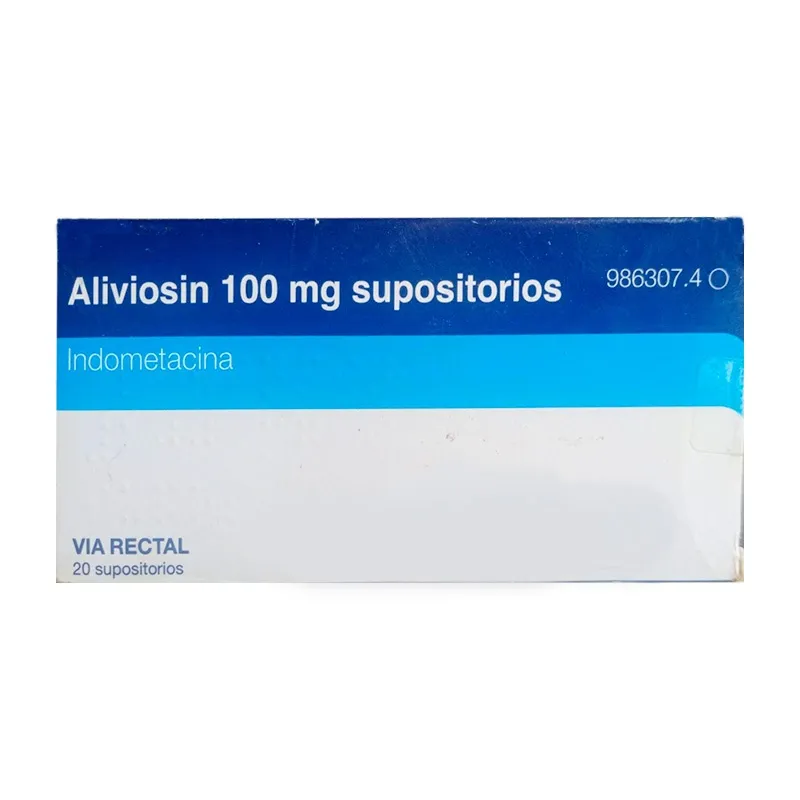
Table of Contents
Patient Information Leaflet
Introduction
Package leaflet: Information for the patient
Aliviosin 100 mg suppositories
Indometacin
Read the entire leaflet carefully before you start using this medicine, as it contains important information for you.
- Keep this leaflet, as you may need to refer to it again.
- If you have any questions, consult your doctor or pharmacist.
- This medicine has been prescribed for you and should not be given to others, even if they have the same symptoms as you, as it may harm them.
- If you experience any adverse effects, consult your doctor or pharmacist, even if they are effects not listed in this leaflet. See section 4.
Leaflet contents
- What Aliviosin is and what it is used for
- What you need to know before using Aliviosin
- How to use Aliviosin
- Possible side effects
- How to store Aliviosin
- Contents of the pack and other information
1. What Aliviosin is and what it is used for
Aliviosin contains indometacin as the active substance. It belongs to a group of medicines called non-steroidal anti-inflammatory drugs (NSAIDs), used to treat pain and inflammation.
It is indicated for the symptomatic treatment of patients suffering from:
- Rheumatoid arthritis, ankylosing spondylitis (inflammation affecting the joints of the spine), and osteoarthritis.
- Acute gout attack.
- Acute musculoskeletal disorders.
- Conditions involving post-traumatic inflammation, pain, and swelling.
2. What you need to know before using Aliviosin
It is important that you use the smallest dose that relieves/controls your pain and that you do not use this medicine, Aliviosin, for longer than necessary to control your symptoms.
Do not use Aliviosin:
- if you are allergic to indometacin, salicylates, or other non-steroidal anti-inflammatory drugs (NSAIDs), or to any of the other ingredients of this medicine (listed in section 6).
- if you have asthma, urticaria, or rhinitis after taking acetylsalicylic acid or other NSAIDs.
- if you have had a stomach or duodenal ulcer, gastrointestinal bleeding, or a perforation of the digestive tract. History of recurrent gastrointestinal injury.
- if you currently have active gastrointestinal ulceration (two or more distinct episodes of ulceration or bleeding confirmed).
- if you have a recent history of rectal inflammation, hemorrhoids, or rectal bleeding (bleeding through the rectum).
- if you have severe heart failure.
- if you are in the third trimester of pregnancy or during breastfeeding.
- children under 14 years of age.
- if you are taking other NSAIDs (e.g., naproxen) or COX-2 inhibitors (e.g., celecoxib).
Warnings and precautions
Consult your doctor or pharmacist before starting to use Aliviosin:
- If you have had or develop a stomach or duodenal ulcer, bleeding, or perforation, which may present as severe or persistent abdominal pain and/or black stools, even without prior warning symptoms. This risk is higher when high doses and prolonged treatments are used, in patients with a history of gastric or duodenal ulcers, and in elderly patients. In such cases, your doctor may consider prescribing a stomach-protective medication. Your doctor should prescribe the lowest effective dose sufficient to relieve your pain. You must inform your doctor if you experience any unusual abdominal symptoms.
- If gastrointestinal bleeding or ulceration occurs, treatment must be stopped immediately.
Inform your doctor:
- If you have bleeding disorders or coagulation problems.
- If you are simultaneously taking medications that affect blood coagulation, such as corticosteroids, oral anticoagulants, or antiplatelet agents like acetylsalicylic acid. You should also inform them about the use of other medicines that could increase the risk of bleeding, such as corticosteroids and selective serotonin reuptake inhibitors (SSRIs).
- If you have Crohn's disease or ulcerative colitis, as medicines like Aliviosin may worsen these conditions.
- If you have a history of high blood pressure (hypertension), congestive heart failure, kidney or liver impairment.
- If you have fluid retention due to liver, kidney, or heart disease.
- If you have peripheral arterial disease (a circulation problem in the legs).
- If you have diabetes mellitus, hyperlipidemia, or are a smoker.
- If you have systemic lupus erythematosus (SLE) or other connective tissue disorders.
The use of anti-inflammatory medicines (indometacin) may be associated with a moderate increase in the risk of heart attack (myocardial infarction) or stroke. This risk is more likely when high doses and prolonged treatments are used. Your doctor must assess the suitability of the treatment. It is important to take the lowest dose of Aliviosin that controls your symptoms for the shortest time necessary.
Also, these types of medicines may cause fluid retention, especially in patients with heart failure and/or high blood pressure.
During prolonged treatment, periodic eye examinations are recommended, as corneal deposits and retinal disturbances have been reported.
At the beginning of treatment, headache may occur, sometimes accompanied by dizziness. The incidence can be minimized by starting with low doses, gradually increasing them. These symptoms usually disappear during continued treatment or upon dose reduction, but if they persist after dose reduction, the medication should be discontinued.
Use with caution in patients with psychiatric disorders, epilepsy, or Parkinson's disease, as the medicine may in some cases worsen these conditions.
Like all potent anti-inflammatory drugs, it may mask the symptoms of an infection. Use with caution in patients with a controlled existing infection.
Exercise caution in post-operative patients, as bleeding time may be prolonged. If you have undergone or are about to undergo surgery, contact your doctor before using this medicine.
In patients with blood disorders, such as decreased white blood cells, red blood cells, or platelets, use should be avoided.
Women who are trying to become pregnant or undergoing infertility investigations should inform their doctor of their intention to become pregnant and if they have had difficulty conceiving.
In rare cases, hepatotoxicity (liver damage) has been associated with the use of indometacin. As with other NSAIDs, a transient increase in liver-related blood test parameters may be expected. However, if abnormal test results persist or worsen, or if signs or symptoms of liver disease appear, or other effects such as eosinophilia (increase in a type of white blood cell) or skin rashes occur, treatment must be stopped. In chronic treatments, periodic monitoring of liver function is advisable.
This medicine may very rarely be associated with serious skin reactions, such as Stevens-Johnson syndrome and toxic epidermal necrolysis. The highest risk is at the beginning of treatment. If skin rashes, blisters, oral ulcers, or any signs of an allergic reaction appear, stop using Aliviosin and consult your doctor.
Your doctor may request tests to monitor your liver and kidney function, blood cell levels, and effects on your stomach and intestines, especially if you are elderly. If you have a history of high blood pressure or heart failure, your doctor may require regular monitoring.
Children and adolescents
It is contraindicated in children under 14 years of age.
Elderly patients
Elderly patients have a higher incidence of adverse reactions, such as gastrointestinal bleeding and perforation.
Using Aliviosin with other medicines
Inform your doctor or pharmacist if you are using, have recently used, or might need to use any other medicines.
The use of acetylsalicylic acid may reduce plasma levels of indometacin.
Concomitant administration with diflunisal may increase plasma levels of indometacin by one-third and reduce renal elimination. Concomitant use of both medicines is not recommended.
Usual precautionary measures should be taken when combining anticoagulants and anti-inflammatory drugs.
This medicine may reduce the effect of diuretics and antihypertensives. It may reduce the antihypertensive effect of beta-blockers (e.g., atenolol), alpha-blockers (e.g., prazosin), angiotensin-converting enzyme inhibitors (ACE inhibitors) (e.g., captopril), angiotensin II receptor antagonists (e.g., valsartan), thiazide diuretics (e.g., hydrochlorothiazide), loop diuretics (e.g., furosemide), or drugs such as hydralazine and nifedipine. When used together, antihypertensive therapy should be reassessed.
It may also increase blood levels of lithium in patients on maintenance therapy with lithium carbonate, due to reduced renal elimination. Therefore, when starting combined treatment, frequent monitoring of plasma lithium levels is required.
Probenecid may also increase plasma levels of indometacin. It may be necessary to reduce the dose during concomitant treatment.
Inform your doctor or pharmacist if you are using:
- Other NSAIDs, including acetylsalicylic acid, naproxen, or COX-2 inhibitors (e.g., celecoxib), or diflunisal (for pain and inflammation).
- Medicines used to thin the blood: oral anticoagulants such as warfarin, antiplatelet agents such as clopidogrel.
- Digoxin (for treatment of heart failure and irregular heart rhythm).
- Phenylpropanolamine (a decongestant in cold and flu medicines).
- Quinolone-type antibiotics.
- Cyclosporine (an immunosuppressant).
- Methotrexate (for treatment of certain types of cancer, psoriasis, or rheumatoid arthritis).
- Corticosteroids.
- Serotonin reuptake inhibitors (SSRIs), such as fluoxetine, citalopram, paroxetine.
- Haloperidol (an antipsychotic).
- Sulfonylureas (oral antidiabetics).
Pregnancy, breastfeeding, and fertility
If you are pregnant or breastfeeding, think you may be pregnant, or plan to become pregnant, consult your doctor or pharmacist before using this medicine.
This medicine should not be administered during pregnancy or breastfeeding. Indometacin is excreted in breast milk.
Precautions during pregnancy and in women of childbearing age
Because the use of medicines like Aliviosin has been associated with an increased risk of congenital abnormalities or miscarriage, administration during the first and second trimesters of pregnancy is not recommended unless strictly necessary. In such cases, the dose and duration should be kept to a minimum.
Administration of Aliviosin is contraindicated during the third trimester of pregnancy.
For women of childbearing age, it should be noted that medicines like Aliviosin have been associated with a reduced ability to conceive.
Driving and use of machines
Due to the risk of dizziness, drowsiness, or vision problems, caution should be taken when driving or operating machinery.
3. How to use Aliviosin
Follow exactly the instructions given by your doctor for administering this medicine. If in doubt, consult your doctor or pharmacist again.
Your doctor will determine the dose you should use and the duration of treatment. It is important to use the lowest dose that controls your pain, and you should not use Aliviosin for longer than necessary to control your symptoms.
The recommended dose is:
Adults
The usual dose is 100 mg to 200 mg of indometacin (1 to 2 suppositories) per day.
It is recommended to administer one 100 mg suppository at night before bedtime, and if necessary, a second 100 mg dose in the morning. The dose should be adjusted according to the individual patient's response and tolerance to the medication.
Maximum daily dose
Do not use more than 200 mg of indometacin per day.
Elderly patients
Your doctor may prescribe a lower daily dose and reduce the duration of treatment.
Use in children and adolescents
Aliviosin must not be used in children under 14 years of age.
Patients with kidney problems
If you have any kidney disease, consult your doctor before using this medicine.
Method of administration:
Rectal use.
If you use more Aliviosin than you should
In case of accidental overdose, symptoms may include: nausea, vomiting, upper stomach pain, abdominal pain, intestinal bleeding, diarrhea, confusion, excitement, coma, dizziness, fainting, occasional seizures, feeling unwell, loss of appetite, drowsiness, headache, tinnitus (ringing or noise in the ears), restlessness, and agitation.
Treatment in such cases includes gastric lavage and supportive care. The patient should be monitored for several days due to the possibility of delayed gastrointestinal ulceration or bleeding. Administration of antacids may be helpful to minimize the risk.
In case of overdose or accidental ingestion, contact your doctor or pharmacist immediately or call the Toxicology Information Service at telephone number 91 562 04 20, indicating the medicine and the amount ingested.
If you forget to use Aliviosin
Do not use a double dose to make up for missed doses.
If you stop treatment with Aliviosin
If you have any further questions about the use of this medicine, ask your doctor or pharmacist.
4. Possible adverse effects
Like all medicines, this medicine can cause adverse effects, although not everyone will experience them.
If you experience any of these adverse effects, stop using this medicine and consult your doctor immediately.
-
Severe allergic reaction, such as swelling of the face, lips, or throat, wheezing or
difficulty breathing, sudden drop in blood pressure, skin rashes. -
Severe abdominal pain (stomach pain) or other abdominal symptoms.
-
Blood in stool.
-
Black-colored stools.
-
Vomiting blood or dark material resembling ground coffee.
-
Jaundice (yellowing of the skin and whites of the eyes).
-
Blisters or skin peeling.
-
Irregular red spots on the skin of the hands and arms.
Very common (may affect more than 1 in 10 people)
Loss of appetite, nausea, vomiting, gastric discomfort, abdominal pain, constipation or diarrhea. Oral inflammation, stomach inflammation, bleeding from the large intestine, either occult or caused by lesions in the intestinal wall, or perforation of pre-existing lesions in the large intestine.
Other described effects include ulcerations (single or multiple) in the esophagus or small intestine, sometimes with bleeding or perforation, gastrointestinal bleeding without evidence of ulcer, increased abdominal pain in patients with pre-existing ulcerative colitis.
Common (may affect up to 1 in 10 people)
Headache, dizziness, or vertigo.
Uncommon (may affect up to 1 in 100 people)
Markedly reduced white blood cell count, failure to produce blood cells in the bone marrow, decreased white blood cell count.
Insomnia, hallucinations, psychotic episodes.
Blurred vision, double vision, eye pain and pain around the eyes. Corneal deposits and retinal disorders, including the appearance of dark spots in the visual field.
Ringing in the ears (tinnitus).
Pruritus, urticaria, inflammation of blood vessels, angioneurotic edema (swelling of the skin in areas such as eyelids, lips, or genitals), erythema nodosum (skin inflammation presenting as painful nodules, usually on the front of the legs), skin rashes, skin peeling, hair loss, rapid drop in blood pressure resembling a "shock" state, bronchospasm, or acute respiratory failure.
Rare (may affect up to 1 in 1,000 people)
Depression, anxiety, and nervousness, personality changes, mental confusion.
Somnolence, seizures, coma, syncope, nerve root disturbances, involuntary muscle movements, or muscle weakness. Most of these effects are transient or resolve upon dose reduction, but sometimes require discontinuation of treatment.
Swelling, fluid retention, arterial hypertension, and heart failure associated with treatment with NSAIDs. Medicines like Aliviosin may be associated with a moderate increase in the risk of heart attack ("myocardial infarction") or stroke (cerebrovascular accident).
Acute inflammation of the kidney with blood in urine, protein in urine, and occasionally loss of large amounts of protein in urine. Renal failure in patients with pre-existing mild, moderate, or severe renal impairment, or sodium retention.
Intestinal ulceration followed by abnormal narrowing and obstruction.
Hepatic injury.
Very rare (may affect up to 1 in 10,000 people)
Blood disorders including decreased platelet count, skin spots due to rupture of blood vessels, decreased red blood cell count due to impaired production or increased destruction, and blood coagulation disorders.
In some patients, iron-deficiency anemia may occur, associated with persistent blood loss or blood loss through the gastrointestinal tract.
Hearing loss.
Hepatitis or jaundice.
Medicines like Aliviosin may be associated with liver disorders causing yellowing of the skin and eyes, sometimes accompanied by high fever or swelling and tenderness or pain in the upper abdomen.
If any of the following reactions occur—yellowing of the skin or eyes—discontinue treatment immediately and inform your doctor without delay.
Medicines like Aliviosin may, very rarely, be associated with severe blistering reactions affecting the skin and mucous membranes, such as Stevens-Johnson Syndrome and Toxic Epidermal Necrolysis.
Vaginal bleeding, elevated blood glucose levels, presence of glucose in urine (glucosuria), bleeding from the nasal cavities (epistaxis), aphthae (ulcers) in the oral mucosa.
Adverse reactions reported due to the pharmaceutical form of Aliviosin
In the specific case of indometacin suppositories, the following have been described: sensation of needing to defecate (tenesmus), inflammation of the rectum (proctitis), vaginal bleeding, or sensations of discomfort, pain, burning, or itching.
Reporting of adverse effects
If you experience any type of adverse effect, consult your doctor or pharmacist, even if they are possible adverse effects not listed in this leaflet. You may also report them directly via the Spanish Pharmacovigilance System for Human Medicines: https://www.notificaram.es. By reporting adverse effects, you can help provide more information on the safety of this medicine.
5. Storage of Aliviosin
Keep this medicine out of the sight and reach of children.
Do not use this medicine after the expiry date stated on the packaging, after EXP. The expiry date refers to the last day of the month indicated.
This medicine does not require any special storage conditions.
Medicines must not be disposed of via wastewater or household waste. Return unused medicines and their containers to the SIGRE Point at your pharmacy. Ask your pharmacist how to dispose of medicines and containers you no longer need. This will help protect the environment.
6. Contents of the pack and other information
Composition of Aliviosin
The active substance is indometacin. Each suppository contains 100 mg of indometacin.
The other components (excipients) are: Massa estearinum B.
Appearance of the medicinal product and contents of the pack
Aliviosin suppositories are presented in packs containing 20 suppositories (4 blisters with 5 suppositories each).
The suppository is slightly yellow in colour.
Marketing Authorization Holder and Manufacturer
Especialidades Farmacéuticas Centrum, S.A.
C/ Sagitario, 14
03006, Alicante
Spain
Telephone: +34 965 28 67 00
Fax: +34 965 28 64 34
Email: [email protected]
Date of the most recent review of this leaflet: June 2017
Detailed information on this leaflet is available on the website of the Spanish Agency of Medicines and Health Products (AEMPS) http://www.aemps.gob.es