Alfuzosin Viatris 10 mg prolonged-release tablets EFG
Spain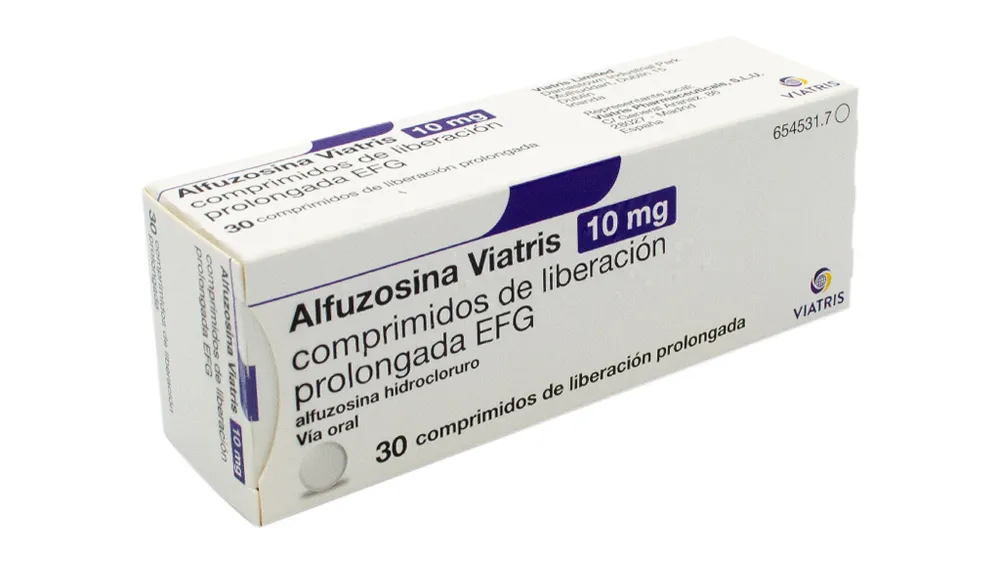
Table of Contents
- Package leaflet: Information for the user
- Introduction
- 1. What Alfuzosin Viatris is and what it is used for
- 2. What you need to know before taking Alfuzosina Viatris
- 3. How to take Alfuzosina Viatris
- 4. Possible adverse effects
- 5. Storage of Alfuzosin Viatris
- 6. Contents of the pack and other information
Package leaflet: Information for the user
Introduction
Package leaflet: information for the patient
Alfuzosin Viatris 10 mg prolonged-release tablets EFG
alfuzosin hydrochloride
For adult men
Read the entire leaflet carefully before you start taking this medicine, because it contains important information for you.
- Keep this leaflet, as you may need to read it again.
- If you have any questions, ask your doctor or pharmacist.
- This medicine has been prescribed for you only and must not be given to other people, even if they have the same symptoms as you, because it could harm them.
- If you experience any adverse effects, consult your doctor or pharmacist, even if they are effects not listed in this leaflet. See section 4.
Leaflet contents
- What Alfuzosin Viatris is and what it is used for
- What you need to know before taking Alfuzosin Viatris
- How to take Alfuzosin Viatris
- Possible side effects
- How to store Alfuzosin Viatris
- Contents of the pack and other information
1. What Alfuzosin Viatris is and what it is used for
Alfuzosin Viatris contains the active substance alfuzosin hydrochloride, which belongs to a group of medicines called alpha-adrenergic receptor antagonists or alpha-blockers.
Alfuzosin Viatris is used to treat moderate to severe symptoms caused by an enlarged prostate gland, a condition also known as benign prostatic hyperplasia (non-cancerous). The prostate gland is located below the bladder and surrounds the urethra, the tube that carries urine out of the body. When the prostate enlarges, it puts pressure on the urethra, making it narrower. Enlargement of the prostate gland can cause urinary problems such as frequent urge to urinate and difficulty passing urine, especially during the night.
Alpha-blockers relax the muscles in the prostate and in the bladder neck. This allows urine to leave the bladder more easily.
In some patients with benign prostatic hyperplasia, the prostate gland enlarges so much that it completely blocks the flow of urine. This is called acute urinary retention. This is very painful and may require a short hospital stay. A thin, flexible tube (catheter) is inserted into the bladder to drain the urine and relieve the pain. Alfuzosin may be used to help restore urine flow.
2. What you need to know before taking Alfuzosina Viatris
Do not take Alfuzosina Viatris:
- If you are allergic to alfuzosin, other quinazoline-type medicines (for example, terazosin, doxazosin), or to any of the other ingredients of this medicine (listed in section 6).
- If you suffer from severe drops in blood pressure upon standing (your doctor may have told you this is called "orthostatic" or "postural hypotension"), which may cause dizziness.
- If you have liver disease.
- If you are taking other medicines of the same type as this medicine, known as alpha-blockers (see section below “Other medicines and Alfuzosina Viatris”).
- If you are taking ritonavir alone or in combination with ombitasvir/paritaprevir, lopinavir, or nirmatrelvir. Taking alfuzosin together with ritonavir may increase the amount of alfuzosin in your body and may lead to a drop in blood pressure. See section below “Other medicines and Alfuzosina Viatris”.
Do not take this medicine if any of the above apply to you. If you are unsure, speak with your doctor or pharmacist before taking alfuzosin.
Warnings and precautions
Talk to your doctor or pharmacist before starting Alfuzosina Viatris.
- If you have severe kidney problems.
- If you are taking medicines for high blood pressure. In this case, your doctor will monitor your blood pressure regularly, especially at the beginning of treatment.
- If you have previously experienced a sudden drop in blood pressure after taking another medicine belonging to the group known as alpha-blockers. In this case, your doctor will start treatment with a low dose and gradually increase it.
- If you have heart failure (weakness of the heart muscle) or other heart problems.
- If you have or have had problems with reduced blood flow to parts of the brain (cerebrovascular disorders).
- If you have chest pain (angina) and are being treated with nitrates. Using nitrates and alfuzosin together may increase the risk of low blood pressure. Your doctor may discontinue treatment with Alfuzosina Viatris if chest pain recurs or worsens.
- If you were born with, or have had conditions associated with an abnormal heart rhythm (which may be seen on an ECG, a recording of the heart's electrical activity), or if you are taking medicines known to increase heart rate.
When taking this medicine, you may experience a sudden drop in blood pressure when standing up (you may feel dizzy, fatigued, weak, or sweaty), especially during the first few hours after taking Alfuzosina Viatris. If you experience a drop in blood pressure, you should remain lying down with your legs and feet elevated until symptoms disappear. These effects usually last a short time and typically occur at the beginning of treatment. Usually, it is not necessary to stop treatment. Inform your doctor, as they may decide to adjust your dose.
In case of an erection (often painful) unrelated to sexual activity that lasts more than 4 hours, contact a doctor or go to a hospital immediately, as you may require treatment. See section below “Possible side effects”.
If you need to undergo cataract surgery (clouding of the lens), please inform your ophthalmologist before the procedure if you are currently taking or have previously taken Alfuzosina Viatris. This is because Alfuzosina Viatris may cause complications during surgery, which can be anticipated and managed by your ophthalmologist if informed in advance.
Children and adolescents
Alfuzosina Viatris is not recommended for use in children and adolescents (patients under 16 years of age).
Other medicines and Alfuzosina Viatris
Tell your doctor or pharmacist if you are taking, have recently taken, or might need to take any other medicines, including those obtained without a prescription.
Do not take Alfuzosina Viatris if you are taking other medicines belonging to the group known as alpha-blockers, such as doxazosin, indoramin, terazosin, prazosin, or tamsulosin.
Ritonavir, either taken alone or in combination with lopinavir (commonly used for the treatment of HIV) or ritonavir in combination with ombitasvir/paritaprevir (commonly used for the treatment of chronic hepatitis C infection) or ritonavir in combination with nirmatrelvir (commonly used for the treatment of mild to moderate COVID-19). Taking alfuzosin together with ritonavir may increase the amount of alfuzosin in your body, which may lead to a drop in blood pressure.
Alfuzosina Viatris may affect the action of other medicines. Tell your doctor or pharmacist if you are taking any of the following medicines:
- Medicines for fungal infections (such as ketoconazole and itraconazole).
- Medicines for bacterial infections (such as clarithromycin and telithromycin).
- Medicines used to treat depression (such as nefazodone).
- Medicines to lower blood pressure.
- Medicines for treating chest pain (angina).
- Medicines commonly used to treat impotence (erectile dysfunction).
- The use of Alfuzosina Viatris together with certain medicines used to treat high blood pressure and nitrates, used to treat heart problems such as chest pain (angina) or to treat impotence, may increase the risk of hypotension (low blood pressure). If this occurs, lie down until symptoms have completely disappeared. Inform your doctor, as your medicine dosage may need to be changed.
If you are going to undergo surgery requiring general anesthesia, inform your doctor or hospital staff that you are taking this medicine. Your doctor may recommend that you stop taking this medicine 24 hours before surgery to prevent the risk of blood pressure changes.
Alfuzosina Viatris with food and drink
Take alfuzosin after meals.
Pregnancy and breastfeeding
Alfuzosina Viatris is indicated only for use in men.
Driving and using machines
Especially at the beginning of treatment, Alfuzosina Viatris may cause dizziness, dizziness, or weakness. Do not drive or operate machinery or perform hazardous tasks until you know how your body reacts to this medicine.
Alfuzosina Viatris contains lactose
This medicine contains lactose. If your doctor has informed you that you have an intolerance to certain sugars, consult with them before taking this medicine.
3. How to take Alfuzosina Viatris
Follow exactly the instructions given by your doctor for taking this medicine. If in doubt, consult your doctor or pharmacist again.
How much to take
Benign Prostatic Hyperplasia
- The recommended dose is one tablet (10 mg of alfuzosin) once daily.
- Take the tablet after dinner.
Acute Urinary Retention
- Your doctor will administer alfuzosin on the day your catheter is inserted.
- You should continue taking alfuzosin once daily after a meal. Follow your doctor's prescription instructions.
Swallow the tablet whole with a sufficient amount of liquid. Do not crush, powder, or chew the tablets, as too much of the active substance, alfuzosin, could enter your body too quickly. This could increase the risk of adverse effects.
If you have kidney problems
If you have moderate or severe kidney disease, your doctor may recommend starting with a lower dose of alfuzosin. If a lower dose is not effective, your doctor may recommend taking one tablet (10 mg of alfuzosin) once daily. Take the tablet after dinner.
Use in children
Alfuzosin is not indicated for use in children.
If you take more Alfuzosina Viatris than you should
In case of overdose or accidental ingestion, contact your doctor or pharmacist immediately or call the Toxicology Information Service at telephone: 91 562 04 20, indicating the medicine and the amount ingested.
If you take large amounts of Alfuzosina Viatris, you may experience a sudden drop in blood pressure and may feel dizzy or even faint. If you start to feel dizzy, sit or lie down until you feel better. If symptoms do not resolve, contact your doctor, as this drop in blood pressure should be treated in a hospital. Do not drive yourself to the hospital.
If you forget to take Alfuzosina Viatris
Do not take a double dose to make up for missed doses, as this may cause a sudden drop in blood pressure. Take the next tablet as instructed.
If you stop taking Alfuzosina Viatris
Do not stop or discontinue treatment with alfuzosin without first consulting your doctor.
If you wish to discontinue treatment or have any other questions about the use of this medicine, ask your doctor or pharmacist.
4. Possible adverse effects
Like all medicines, this medicine can cause adverse effects, although not everyone experiences them.
If you experience any of the following adverse effects, stop taking this medicine, consult your doctor, or go immediately to the nearest hospital emergency department:
- Worsening or new onset of chest pain (angina). This usually occurs only if you have previously had angina.
- Red skin rash (urticaria), swelling of the eyelids, face, lips, mouth, or tongue, difficulty breathing or swallowing. These are symptoms of serious allergic reactions.
- You may experience a higher number of infections (e.g., sore throat, mouth ulcers, etc., and fever). This may be a sign of a reduced number of white blood cells in the blood.
- Abnormal or unusual heartbeat – you may notice a very fast or irregular heartbeat, accompanied by shortness of breath, dizziness, or fainting.
- Liver disturbances due to obstruction of the bile duct. You may feel unwell, lose your appetite, have pale stools, dark urine, or notice yellowing of the skin and whites of the eyes.
- Sudden collapse, numbness or weakness in arms or legs, dizziness and confusion, vision disturbances, difficulty swallowing, difficulty speaking or loss of speech (these may be signs of a stroke or cerebrovascular accident caused by changes in blood supply to parts of the brain). These are more likely in patients who have previously had problems with blood flow to the brain.
- Prolonged erection (priapism) – Priapism is an abnormal, often painful and persistent penile erection unrelated to sexual activity. If you have an erection as described here that lasts longer than 4 hours, contact a doctor or go to a hospital immediately, as you may require treatment. This condition can lead to permanent impotence if not properly treated.
Other possible adverse effects
Frequent (may affect up to 1 in 10 people):
- Fatigue, dizziness, headache, stomach pain, feeling faint (nausea), indigestion, general feeling of weakness, general malaise.
Uncommon (may affect up to 1 in 100 people):
- Drowsiness, eye/vision problems, increased heart rate, fainting (especially at the beginning of treatment with too high a dose or when treatment is resumed), palpitations or rapid heartbeat, dry mouth, runny nose, skin rash, itching, urinary incontinence, fluid retention (e.g., swelling of ankles and feet), facial or body redness (flushing), sweating, sensation of dizziness (vertigo), nausea, vomiting, diarrhea, marked drop in blood pressure upon standing (especially at the beginning of treatment with too high a dose or when treatment is resumed).
Not known (frequency cannot be estimated from available data):
- Painful or prolonged erection (priapism), bruising or bleeding (this may be a sign of reduced platelet count in the blood, which are responsible for blood clotting).
If you are undergoing eye surgery for cataracts (clouding of the eye's lens) and are currently taking or have previously taken alfuzosin, your pupil may dilate poorly and the iris (the colored part of the eye) may become floppy during the procedure. This occurs only during surgery, and it is important that your ophthalmologist is informed, as the surgery may need to be performed differently (see "Warnings and precautions").
Reporting of adverse effects
If you experience any adverse effect, talk to your doctor or pharmacist, even if it is a possible adverse effect not listed in this leaflet. You can also report them directly via the Spanish Pharmacovigilance System for Human Medicines: https://www.notificaram.es. By reporting adverse effects, you can help provide more information on the safety of this medicine.
5. Storage of Alfuzosin Viatris
Keep this medicine out of the sight and reach of children.
Do not use this medicine after the expiry date which is stated on the blister and packaging after EXP. The expiry date refers to the last day of the month indicated.
Do not store above 30°C.
Medicines should not be disposed of via wastewater drains or household waste. Dispose of unused medicines and their packaging at the SIGRE Point at your pharmacy. If in doubt, ask your pharmacist how to properly dispose of medicines and packaging you no longer need. This way, you will help protect the environment.
6. Contents of the pack and other information
Composition of Alfuzosin Viatris
The active substance is alfuzosin hydrochloride. Each prolonged-release tablet contains 10 mg of alfuzosin hydrochloride.
The other components are: lactose monohydrate, hypromellose, povidone and magnesium stearate.
Appearance of the product and contents of the pack
Alfuzosin Viatris 10 mg are white, round, prolonged-release tablets with bevelled edges and no coating.
They are available in blisters of 10, 20, 30, 50, 60, 90 and 100 tablets, and in single-dose perforated blisters of 30 and 60 tablets.
Only certain pack sizes may be marketed.
Marketing Authorisation Holder and Manufacturer
Marketing Authorisation Holder:
Viatris Limited
Damastown Industrial Park
Mulhuddart, Dublin 15
Dublin
Ireland
Manufacturer:
McDermott Laboratories Ltd. t/a Gerard Laboratories
35/36 Baldoyle Industrial Estate, Grange Road
Dublin 13
Ireland
or
Mylan Hungary Kft.
H-2900 Komárom
Mylan utca 1
Hungary
or
Mylan BV
Krijgsman 20
Amstelveen, 1186DM
The Netherlands
For further information about this medicinal product, please contact the local representative of the Marketing Authorisation Holder:
Viatris Pharmaceuticals, S.L.
C/ General Aranaz, 86
28027 - Madrid
Spain
This medicinal product is authorised in the European Economic Area member states under the following names:
Denmark Lafunomyl 10 mg
Slovakia Alfuzosin Mylan 10 mg
Spain Alfuzosina Viatris 10 mg prolonged-release tablets EFG
Ireland Xatger 10 mg prolonged release tablet
Italy Alfuzosina Mylan 10 mg
The Netherlands Alfuzosine HCl Retard Mylan 10 mg, tabletten met gereguleerde afgifte
Portugal Alfuzosina Mylan 10 mg
Sweden Lafunomyl 10 mg
Czech Republic Alfuzosin Mylan 10 mg
Date of the most recent review of this leaflet: March 2026
Detailed and up-to-date information on this medicinal product is available on the website of the Spanish Agency of Medicines and Health Products (AEMPS) (https://www.aemps.gob.es/)