Alfuzosin Stada 10 mg prolonged-release tablets EFG
Spain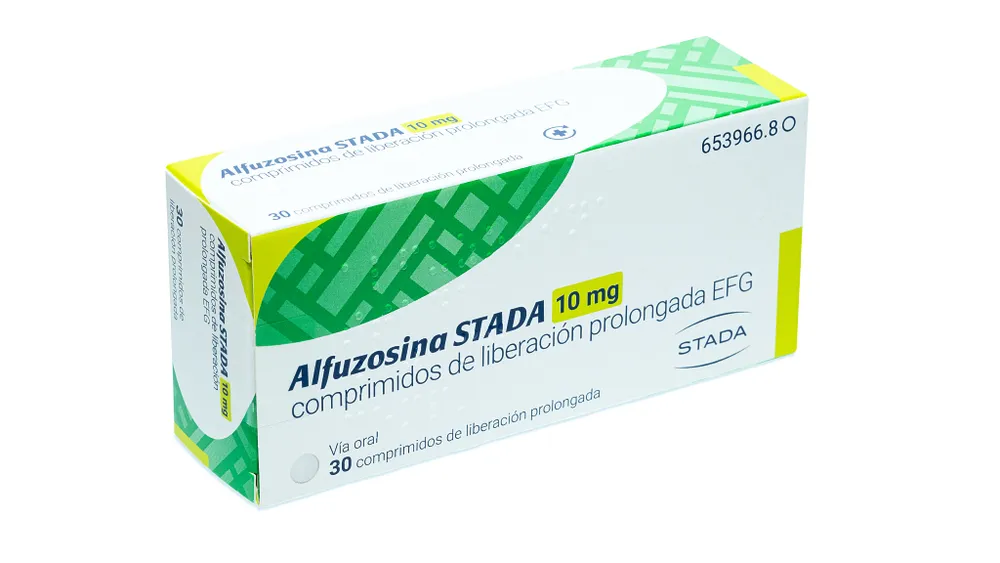
Table of Contents
- Package leaflet: Information for the patient
- Introduction
- 1. What Alfuzosina STADA is and what it is used for
- 2. What you need to know before taking Alfuzosin STADA
- 3. How to take Alfuzosina STADA
- 4. Possible adverse effects
- 5. Storage of Alfuzosin STADA
- 6. Contents of the pack and other information
Package leaflet: Information for the patient
Introduction
Package leaflet: information for the patient
Alfuzosin STADA 10 mg prolonged-release tablets EFG
Alfuzosin hydrochloride
Read the entire leaflet carefully before you start taking this medicine, because it contains important information for you.
- Keep this leaflet. You may need to read it again.
- If you have any questions, ask your doctor or pharmacist.
- This medicine has been prescribed for you only. Do not pass it on to other people, even if they have the same symptoms as you, because it may harm them.
- If you experience any adverse effects, consult your doctor or pharmacist, even if they are effects not listed in this leaflet. See section 4.
Contents of the leaflet
- What Alfuzosin STADA is and what it is used for
- What you need to know before taking Alfuzosin STADA
- How to take Alfuzosin STADA
- Possible adverse effects
- How to store Alfuzosin STADA
- Contents of the pack and other information
1. What Alfuzosina STADA is and what it is used for
Alfuzosina STADA belongs to a group of medicines known as alpha-adrenoceptor antagonists or alpha-blockers.
Alfuzosina is used in the treatment of moderate to severe symptoms caused by an enlarged prostate, also called benign prostatic hyperplasia. Enlargement of the prostate can cause urinary disturbances such as increased frequency and difficulty in urinating, especially at night. Alpha-blockers relax the muscles of the prostate and bladder. This allows urine to pass from the bladder more easily.
2. What you need to know before taking Alfuzosin STADA
Do not take Alfuzosin STADA:
- If you are allergic to alfuzosin, other quinazolines (for example, terazosin, doxazosin, prazosin) or to any of the other ingredients of this medicine (listed in section 6). Symptoms of an allergic reaction include: rash, swelling of the lips, tongue or throat, difficulty swallowing or breathing.
- If you have any condition causing a marked drop in blood pressure upon standing.
- If you have any liver problems.
- If you are taking other medicines belonging to the group of alpha-blockers.
Warnings and precautions
Talk to your doctor or pharmacist before starting to take Alfuzosin STADA:
- If you have severe kidney problems, as the safety of Alfuzosin STADA has not been established in such cases.
- If you are taking other medicines for high blood pressure. In this case, your doctor will monitor your blood pressure regularly, especially at the beginning of treatment.
- Blood pressure should be monitored regularly, particularly at the start of treatment with this medicine, due to the possibility of a pronounced drop in blood pressure. If you experience a sudden drop in blood pressure upon standing, characterized by dizziness, sweating or fatigue, within hours after taking Alfuzosin STADA. If you experience a drop in blood pressure, lie down with your legs and feet raised until symptoms completely disappear. These effects are usually short-lived and occur at the beginning of treatment. Usually, it is not necessary to interrupt treatment.
- If you have previously experienced a marked drop in blood pressure after taking another medicine belonging to the alpha-blocker group. In this case, your doctor will start treatment with alfuzosin at a low dose and gradually increase the dose.
- If you have a heart disorder (acute heart failure).
- If you have chest pain (angina) and are being treated with nitrates, treatment with alfuzosin may increase the risk of low blood pressure. Your doctor will stop treatment with alfuzosin if angina recurs or worsens.
- Your doctor will decide whether to continue treatment for chest pain or discontinue treatment with Alfuzosin STADA, especially if chest pain recurs or worsens.
- If you are undergoing cataract surgery (clouding of the lens), inform your eye specialist before the operation that you are currently taking or have previously taken Alfuzosin STADA. This is because Alfuzosin STADA may cause complications during surgery, which can be avoided if your specialist is adequately prepared.
- If you have a heart rhythm disorder or are taking medicines that may cause a heart rhythm disorder (the medical term for this disorder is QTc interval prolongation). In this case, your doctor must evaluate you before and during treatment with Alfuzosin STADA.
Taking Alfuzosin STADA with other medicines
Inform your doctor or pharmacist if you are taking, have recently taken, or might need to take any other medicines.
Do not take Alfuzosin STADA if you are being treated with other medicines from the group of alpha-blockers.
Alfuzosin STADA and certain medicines may interact with each other. These include:
- Ketoconazole and itraconazole (medicines used to treat fungal infections) and ritonavir (a medicine used to treat HIV).
If you are using or are going to use any of the following medicines, treatment with Alfuzosin STADA may cause a drop in blood pressure:
- Medicines used to treat high blood pressure.
- Medicines (nitrates) used to treat symptoms of chest pain (angina).
- Medicines that must be administered before surgery (general anaesthetics). Your blood pressure may drop significantly. If you are undergoing surgery, inform your doctor that you are taking Alfuzosin STADA.
Taking Alfuzosin STADA with food and drink
Alfuzosin STADA should be taken after meals.
Pregnancy and breastfeeding
This information is not relevant, as Alfuzosin STADA 10 mg is only used in males.
Driving and using machines
At the beginning of treatment with Alfuzosin STADA 10 mg prolonged-release tablets, you may feel dizzy, lightheaded or weak. Do not drive or operate machinery or perform hazardous tasks until you know how you respond to the treatment.
Alfuzosin STADA 10 mg prolonged-release tablets EFG contains lactose
If your doctor has informed you that you have an intolerance to certain sugars, consult with him before taking this medicine.
3. How to take Alfuzosina STADA
Follow exactly the instructions given by your doctor for taking this medicine. If in doubt, consult your doctor or pharmacist again.
Swallow the tablets whole. Do not break, crush, or chew the tablets, as too much active ingredient could enter your body too quickly. This could increase the risk of experiencing unwanted effects.
Take the first tablet just before going to bed. Take the tablets immediately after the same meal each day, swallowing them whole with sufficient liquid. Do not break, chew, or divide the tablets.
Adults:
The recommended dose is 1 prolonged-release tablet (10 mg of alfuzosin) once daily.
Elderly patients:
The recommended dose in elderly patients (over 65 years of age) is 1 prolonged-release tablet (10 mg of alfuzosin) once daily, if the lower initial recommended dose is well tolerated and greater efficacy is required.
Patients with kidney problems:
The recommended dose in patients with mild to moderate kidney impairment is 1 prolonged-release tablet (10 mg of alfuzosin) if the lower dose was insufficient and depending on the response to treatment.
If you take more Alfuzosina STADA than you should
If you take large amounts of Alfuzosina STADA, consult your doctor or go to the nearest hospital immediately. Your blood pressure may drop suddenly, causing dizziness or even fainting. If you begin to feel dizzy, sit or lie down until you feel better.
In case of overdose or accidental ingestion, contact your doctor or pharmacist immediately or call the Toxicology Information Service at telephone number: 91 562 04 20, indicating the medicine and the amount taken.
If you forget to take Alfuzosina STADA
Do not take a double dose to make up for forgotten doses, as this may cause a sudden drop in blood pressure, especially if you are taking medicines to lower blood pressure. Take the next tablet at your usual time.
If you stop taking Alfuzosina STADA
Do not stop taking or discontinue treatment with Alfuzosina STADA without first informing your doctor. If you wish to discontinue treatment or if you have any other questions about using this product, ask your doctor or pharmacist.
4. Possible adverse effects
Like all medicines, this medicine can cause adverse effects, although not everyone experiences them. In very rare cases (may affect up to 1 in 10,000 people), a serious adverse reaction called angioedema has been observed.
Stop taking Alfuzosin STADA and consult your doctor immediately if you experience symptoms of angioedema such as:
- Swelling of the face, tongue, or throat.
- Difficulty swallowing.
- Hives and difficulty breathing.
Common (may affect up to 1 in 10 people):
Fatigue, dizziness, headache, vertigo, marked drop in blood pressure upon standing (especially at the beginning of treatment with a high dose or when restarting treatment after interruption), stomach pain, nausea, indigestion, diarrhea, dry mouth, feeling of weakness and general malaise.
Uncommon (may affect up to 1 in 100 people):
Somnolence, abnormal vision, increased heart rate, loss of consciousness (especially at the beginning of treatment), palpitations, inflammation of the nasal mucosa (rhinitis), vomiting, skin rash (redness, exanthema), itching, urinary incontinence, swelling of the feet and ankles, facial redness (flushing), chest pain.
Very rare (may affect up to 1 in 10,000 people):
Worsening, recurrence, or onset of chest pain (angina pectoris), liver disorders, swelling of the skin and mucosa, especially in the face and around the eyes, prolonged and painful erection of the penis (priapism).
Frequency not known (frequency cannot be estimated from available data):
Low number of white blood cells (neutropenia), intraoperative floppy iris syndrome, IFIS (a complication that may occur during cataract surgery), abnormal heart rhythm, liver problems or liver disease (symptoms may include yellowing of the skin or whites of the eyes), low number of platelets in the blood. Signs may include bleeding of gums and nose, bruising, prolonged bleeding from cuts, rash (small red spots called petechiae).
Reporting of adverse effects:
If you experience any type of adverse effect, consult your doctor or pharmacist, even if it is a possible adverse effect not listed in this leaflet. You may also report them directly via the Spanish Pharmacovigilance System for Human Medicinal Products: https://www.notificaram.es. By reporting adverse effects, you can help provide more information on the safety of this medicine.
5. Storage of Alfuzosin STADA
Keep this medicine out of the sight and reach of children.
Do not store above 30°C.
Do not use this medicine after the expiry date stated on the packaging and on the blister after EXP. The expiry date is the last day of the month indicated.
Medicines must not be disposed of via wastewater or household waste. Dispose of empty containers and any unused medicines at the SIGRE collection point at your pharmacy. If you are unsure, ask your pharmacist how to properly dispose of containers and unused medicines. This will help protect the environment.
6. Contents of the pack and other information
Composition of Alfuzosin STADA 10 mg prolonged-release tablets EFG
The active substance is alfuzosin hydrochloride. Each prolonged-release tablet contains 10 mg of alfuzosin hydrochloride.
The other components are: monohydrate lactose, hypromellose, povidone K 25 and magnesium stearate.
Appearance of the product and contents of the pack
The tablets are white, round, bevel-edged and uncoated.
Alfuzosin STADA is available in packs containing 10, 28, 30, 90 and 100 prolonged-release tablets.
Only some pack sizes may be marketed.
Marketing Authorization Holder and Manufacturer
Marketing Authorization Holder
Laboratorio STADA, S.L.
Frederic Mompou, 5
08960 Sant Just Desvern (Barcelona)
Manufacturer
STADA Arzneimittel AG
Stadastrasse, 2-18
61118 Bad Vilbel (Germany)
or
STADA Arzneimittel GmbH
Muthgasse 36
1190 Vienna
Austria
This medicinal product has been authorized in EEA Member States under the following names:
AT: Alfuzosin STADA 10 mg – Retardtabletten
CZ: Alfuzostad 10 mg tablety s prodlouzenym uvolnovanim
DK: Alfuzosin STADA 10 mg
ES: Alfuzosina STADA 10 mg comprimidos de liberación prolongada EFG
HU: Alfuzostad 10 mg retard tablette
IT: Alfuzosina EG 10 mg Comprese a rilasciato prolungato
PL: Alfuzostad 10 mg
SE: Alfuzosin STADA 10 mg depottablett
Date of the most recent review of this leaflet: March 2022
Detailed and up-to-date information on this medicinal product is available on the website of the Spanish Agency of Medicines and Medical Devices (AEMPS) http://www.aemps.gob.es/