Alecensa 150 mg hard capsules
Spain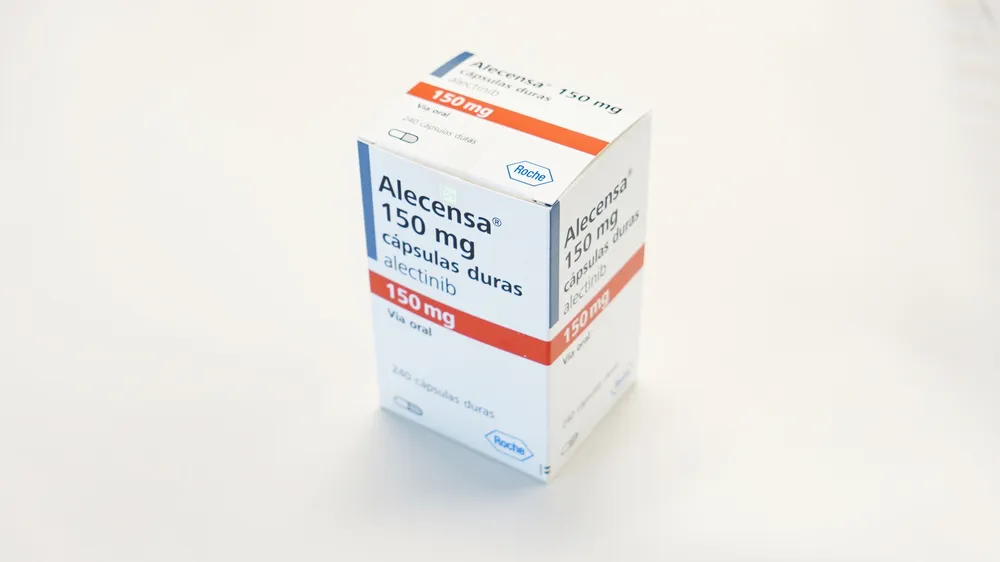
Table of Contents
Package leaflet: Information for the user
Introduction
Package leaflet: Information for the patient
Alecensa 150 mg hard capsules
alectinib
Read this entire leaflet carefully before you start taking this medicine because it contains important information for you.
- Keep this leaflet as you may need to read it again.
- If you have any questions, ask your doctor, pharmacist or nurse.
- This medicine has been prescribed for you only and must not be given to other people, even if they have the same symptoms as you, because it may harm them.
- If you experience any adverse effects, consult your doctor, pharmacist or nurse, even if they are effects not listed in this leaflet. See section 4.
Contents of the leaflet
- What Alecensa is and what it is used for
- What you need to know before taking Alecensa
- How to take Alecensa
- Possible side effects
- How to store Alecensa
- Contents of the pack and other information
1. What Alecensa is and what it is used for
What Alecensa is
Alecensa is an anticancer medicine that contains the active substance alectinib.
What Alecensa is used for
Alecensa is used to treat adults with a type of lung cancer called "non-small cell lung cancer" ("NSCLC") that is "ALK-positive" – this means that their cancer cells have a defect in a gene that results in a fusion of an enzyme called ALK (anaplastic lymphoma kinase); see below 'How Alecensa works'.
Your doctor may prescribe Alecensa:
- after surgical removal of the tumour, as post-surgical (adjuvant) treatment, or
- as first-line treatment for your lung cancer that has spread to other parts of the body (advanced), or if you have previously been treated with a medicine containing 'crizotinib'.
How Alecensa works
Alecensa blocks the action of an enzyme called "ALK tyrosine kinase". Abnormal forms of this enzyme (due to the genetic defect) help stimulate the growth of cancer cells. Alecensa may slow down or stop cancer growth and may prevent the tumour from recurring after surgical removal. It may also help shrink the tumour.
If you have any questions about how Alecensa works or why this medicine has been prescribed for you, please ask your doctor, pharmacist, or nurse.
2. What you need to know before taking Alecensa
Do not take Alecensa
- if you are allergic to alectinib or to any of the other ingredients of this medicine (listed in section 6).
If you are unsure, consult your doctor, pharmacist, or nurse before taking Alecensa.
Warnings and precautions
Talk to your doctor, pharmacist, or nurse before starting to take Alecensa:
- if you have ever had stomach or intestinal problems such as holes (perforation), or if you have conditions causing inflammation inside the abdomen (diverticulitis), or if you have had abdominal cancer (metastases). Alecensa may increase the risk of developing holes in the wall of your intestine.
- if you have a hereditary condition called "galactose intolerance", "congenital lactase deficiency", or "glucose-galactose malabsorption".
If you are unsure, consult your doctor, pharmacist, or nurse before taking Alecensa.
Contact your doctor immediately after taking Alecensa:
- if you experience severe stomach or abdominal pain, fever, chills, illness, vomiting, or abdominal stiffness or swelling, as these could be symptoms of holes in the wall of your intestine.
Alecensa may cause side effects that you must report to your doctor immediately. These include:
- liver damage (hepatotoxicity). Your doctor will perform blood tests before starting treatment, every 2 weeks during the first 3 months of treatment, and less frequently thereafter. This is to check that you do not have any liver problems while taking Alecensa. Report to your doctor immediately if you experience any of the following side effects: yellowing of the skin or whites of the eyes, pain in the right side of the stomach, dark urine, skin itching, loss of appetite, nausea or vomiting, fatigue, easy bleeding or bruising
- slow heart rate (bradycardia)
- lung inflammation (pneumonitis). Alecensa may cause severe or potentially life-threatening lung inflammation during treatment. Symptoms may resemble those of lung cancer. Inform your doctor immediately if you develop new symptoms or worsening of existing symptoms, such as difficulty breathing, shortness of breath, cough with or without mucus, or fever
- severe muscle pain, tenderness, and weakness (myalgia). Your doctor will perform blood tests at least every 2 weeks during the first month and as needed during treatment with Alecensa. Report to your doctor immediately if you notice new or worsening muscle problems, including unexplained muscle aches or muscle pain that does not go away, tenderness, or weakness.
- abnormal destruction of red blood cells (hemolytic anemia). Inform your doctor immediately if you feel tired, weak, or have difficulty breathing.
You should monitor for these symptoms while taking Alecensa. See "Side effects" in section 4 for more information.
Sensitivity to sunlight
Do not expose yourself to prolonged periods of sun while being treated with Alecensa or for 7 days after stopping treatment. You should use sunscreen and lip balm with a sun protection factor (SPF) of 50 or higher to prevent sunburn.
Tests and blood analyses
During treatment with Alecensa, your doctor will perform blood tests before starting treatment, every 2 weeks during the first 3 months of treatment, and less frequently thereafter. This is to check that you do not have any liver or muscle problems while taking Alecensa.
Children and adolescents
Alecensa has not been studied in children or adolescents. Do not give this medicine to children or adolescents under 18 years of age.
Other medicines and Alecensa
Tell your doctor or pharmacist if you are taking, have recently taken, or might need to take any other medicines. This includes medicines purchased with or without a prescription and herbal medicines. This is because Alecensa may affect how other medicines work. Other medicines may also affect how Alecensa works.
In particular, inform your doctor or pharmacist if you are taking any of the following medicines:
- digoxin, a medicine used to treat heart problems
- dabigatran etexilate, a medicine used to treat blood clots
- methotrexate, a medicine used to treat severe joint inflammation, cancer, and psoriasis
- nilotinib, a medicine used to treat certain types of cancer
- lapatinib, a medicine used to treat certain types of breast cancer
- mitoxantrone, a medicine used to treat certain types of cancer or multiple sclerosis (a disease affecting the central nervous system that damages the protective covering of nerves)
- everolimus, a medicine used to treat certain types of cancer or to prevent organ transplant rejection
- sirolimus, a medicine used to prevent organ transplant rejection
- topotecan, a medicine used to treat certain types of cancer
- medicines used in the treatment of acquired immunodeficiency syndrome/human immunodeficiency virus (AIDS/HIV) (e.g., ritonavir, saquinavir)
- medicines used to treat infections. This includes medicines for fungal infections (antifungals such as ketoconazole, itraconazole, voriconazole, posaconazole) and medicines that treat certain types of bacterial infections (antibiotics such as telithromycin)
- St. John’s wort, a herbal remedy used to treat depression
- medicines used to stop seizures or fits (antiepileptics such as phenytoin, carbamazepine, or phenobarbital)
- medicines used to treat tuberculosis (e.g., rifampicin, rifabutin)
- nefazodone, a medicine used to treat depression.
Oral contraceptives
If you take Alecensa while using oral contraceptives, the oral contraceptives may be less effective.
Use of Alecensa with food and drinks
Inform your doctor or pharmacist if you drink grapefruit juice or eat grapefruit or bitter oranges while being treated with Alecensa, as they may alter the amount of Alecensa in your body.
Contraception, pregnancy, and breastfeeding
Contraception – Information for women
- You must not become pregnant during treatment with this medicine. If you are able to become pregnant, you must use a highly effective method of contraception during treatment and for at least 5 weeks after stopping treatment with Alecensa. If you take Alecensa while using oral contraceptives, the oral contraceptives may be less effective.
Contraception – Information for men
- You must not father a child during treatment with this medicine. If your partner can become pregnant, you must use a highly effective method of contraception during treatment and for at least 3 months after stopping treatment.
Consult your doctor about suitable contraceptive methods for you and your partner.
Pregnancy
- Do not take Alecensa if you are pregnant, as it could harm your baby.
- If you become pregnant while taking this medicine or within 5 weeks after your last dose, inform your doctor immediately.
- If your female partner becomes pregnant while you are taking this medicine or within 3 months after your last dose, inform your doctor immediately and your female partner should seek medical advice.
Breastfeeding
- You must not breastfeed while taking this medicine. It is unknown whether Alecensa passes into breast milk and could therefore harm your baby.
Driving and using machines
Exercise caution when driving or operating machinery, as you may experience vision problems, slow heartbeat, or low heart rate, which could lead to fainting or dizziness while taking Alecensa.
Alecensa contains lactose
Alecensa contains lactose (a type of sugar). If your doctor has informed you that you have an intolerance to certain sugars, consult him before taking this medicine.
Alecensa contains sodium
This medicine contains 48 mg of sodium (the main component of common/table salt) per recommended daily dose (1200 mg). This corresponds to 2.4% of the maximum recommended daily intake of sodium for an adult.
3. How to take Alecensa
Follow exactly the instructions given by your doctor or pharmacist for taking this medicine. If you are unsure, consult your doctor, pharmacist, or nurse again.
How much to take
- The recommended dose is 4 capsules (600 mg) twice daily.
- This amounts to a total of 8 capsules (1,200 mg) per day.
If you have severe liver problems before starting treatment with Alecensa:
- The recommended dose is 3 capsules (450 mg) twice daily.
- This means you will take a total of 6 capsules (900 mg) each day.
Occasionally, your doctor may reduce your dose, temporarily interrupt your treatment, or completely discontinue treatment if you feel unwell.
How to take it
- Alecensa is taken orally. Swallow the capsules whole. Do not open or dissolve the capsules.
- Alecensa must be taken with food.
If you vomit after taking Alecensa
If you vomit after taking a dose of Alecensa, do not take an extra dose. Wait and take your next dose at the usual time.
If you take more Alecensa than you should
If you take more Alecensa than you should, inform a doctor immediately or go to the hospital. Take the medicine packaging and this leaflet with you.
If you forget to take Alecensa
- If there are more than 6 hours until your next dose, take the missed dose as soon as you remember.
- If there are less than 6 hours before your next dose, do not take the missed dose. Take your next dose at the usual time.
- Do not take a double dose to make up for a missed dose.
If you stop taking Alecensa
Do not stop treatment with this medicine without first consulting your doctor. It is important that you take Alecensa twice daily for the duration prescribed by your doctor.
If you have any further questions about the use of this medicine, ask your doctor, pharmacist, or nurse.
4. Possible adverse effects
Like all medicines, this medicine can cause adverse effects, although not everyone will experience them. The following adverse effects may occur with this medicine.
Some adverse effects may be serious.
Contact your doctor immediately if you experience any of the following adverse effects. Your doctor may reduce your dose, interrupt your treatment for a short period of time, or completely discontinue treatment:
- New symptoms or worsening of symptoms including difficulty breathing, shortness of breath, or cough with or without mucus, or fever. Symptoms may resemble those of your lung cancer (potential signs of lung inflammation: pneumonitis). Alecensa can cause severe or potentially fatal inflammation of the lungs during treatment.
- Yellowing of the skin or whites of the eyes, pain in the right side of the stomach, dark urine, skin itching, loss of appetite, nausea or vomiting, fatigue, bleeding or bruising more easily (potential signs of liver problems).
- New symptoms or worsening of symptoms of muscle problems, including unexplained muscle pain or muscle pain that does not go away, tenderness or weakness (potential signs of muscle problems).
- Fainting, dizziness, and low blood pressure (potential signs of slow heart rate).
- Feeling tired, weak, or short of breath (potential signs of abnormal destruction of red blood cells, known as hemolytic anemia).
Other adverse effects
Tell your doctor, pharmacist, or nurse if you experience any of the following adverse effects:
Very common (may affect more than 1 in 10 people):
- Abnormal blood test results used to monitor liver function (elevated levels of alanine aminotransferase, aspartate aminotransferase, and bilirubin)
- Abnormal blood test results used to detect muscle injury (elevated levels of creatine phosphokinase)
- Abnormal blood test results indicating liver disease or bone disorders (high levels of alkaline phosphatase)
- Feeling tired, weak, or short of breath due to a reduced number of red blood cells, known as anemia
- Vomiting: if you vomit after taking a dose of Alecensa, do not take an extra dose; wait for the next dose at the usual time
- Constipation
- Diarrhea
- Nausea
- Rash
- Swelling due to fluid retention in the body (edema)
- Weight gain
- Abnormal blood test results used to monitor kidney function (high creatinine levels)
Common (may affect up to 1 in 10 people):
- Inflammation of the mucous membranes in the mouth
- Sensitivity to sunlight: avoid sun exposure for prolonged periods while taking Alecensa and for 7 days after stopping treatment. Use sunscreen and lip balm with a Sun Protection Factor of 50 or higher to prevent sunburn
- Altered sense of taste
- Vision problems such as blurred vision, vision loss, seeing black or white spots, and double vision
- Increased levels of uric acid in the blood (hyperuricemia)
- Kidney problems including rapid loss of kidney function (acute kidney failure)
Reporting of adverse effects
If you experience any adverse effect, talk to your doctor, pharmacist, or nurse, even if it is a possible adverse effect not listed in this leaflet. You may also report them directly through the national reporting system detailed in Appendix V. By reporting adverse effects, you can help provide more information on the safety of this medicine.
5. Storage of Alecensa
- Keep this medicine out of the sight and reach of children.
- Do not use this medicine after the expiry date stated on the packaging and on the blister or on the bottle after EXP. The expiry date is the last day of the month indicated.
- For Alecensa in blister packs, store in the original packaging to protect it from moisture.
- For Alecensa in bottles, store in the original packaging and keep the bottle tightly closed to protect it from moisture.
- Medicines must not be disposed of via wastewater or household waste. Ask your pharmacist how to dispose of any unused medicine and its packaging. This will help protect the environment.
6. Contents of the pack and other information
Composition of Alecensa
- The active substance is alectinib. Each hard capsule contains alectinib hydrochloride equivalent to 150 mg of alectinib.
- The other components are:
- Capsule contents: lactose monohydrate (see section 2 "Alecensa contains lactose"), hydroxypropylcellulose, sodium lauryl sulfate (see section 2 “Alecensa contains sodium”), magnesium stearate and calcium carmellose.
- Capsule shell: hypromellose, carrageenan, potassium chloride, titanium dioxide (E171), maize starch and carnauba wax.
- Printing ink: red iron oxide (E172), yellow iron oxide (E172), indigo carmine aluminum lake (E132), carnauba wax, white lake and glycerol monooleate.
Nature and contents of the container
Alecensa hard capsules are white, with “ALE” printed in black ink on the cap and “150 mg” printed in black ink on the body.
The capsules are presented in blisters and available in packs containing 224 hard capsules (4 packs of 56). They are also available in plastic bottles containing 240 hard capsules.
It is possible that only certain pack sizes are marketed.
Marketing Authorization Holder
Roche Registration GmbH
Emil-Barell-Strasse 1
79639
Grenzach-Wyhlen
Germany
Manufacturer
Roche Pharma AG
Emil-Barell-Strasse 1
79639 Grenzach-Wyhlen
Germany
Further information on this medicinal product is available by contacting the local representative of the Marketing Authorization Holder:
Belgium/Belgium/Belgium, Luxembourg/Luxembourg N.V. Roche S.A. Belgium/Belgium/Belgium Tel/Tel: +32 (0) 2 525 82 11 | Latvia Roche Latvija SIA Tel: +371 - 6 7039831 |
| Lithuania UAB “Roche Lietuva” Tel: +370 5 2546799 |
Czech Republic Roche s. r. o. Tel.: +420 - 2 20382111 | Hungary Roche (Hungary) Kft. Tel.: +36 - 1 279 4500 |
Denmark Roche Pharmaceuticals A/S Tel.: +45 - 36 39 99 99 | Netherlands Roche Nederland B.V. Tel: +31 (0) 348 438000 |
Germany Roche Pharma AG Tel.: +49 (0) 7624 140 | Norway Roche Norge AS Tlf: +47 - 22 78 90 00 |
Estonia Roche Eesti OÜ Tel.: + 372 - 6 177 380 | Austria Roche Austria GmbH Tel: +43 (0) 1 27739 |
Greece, Cyprus Roche (Hellas) A.E. Greece Tel.: +30 210 61 66 100 | Poland Roche Polska Sp.z o.o. Tel: +48 - 22 345 18 88 |
Spain Roche Farma S.A. Tel.: +34 - 91 324 81 00 | Portugal Roche Farmacêutica Química, Lda Tel: +351 - 21 425 70 00 |
France Roche Tel: +33 (0) 1 47 61 40 00 | Romania Roche România S.R.L. Tel: +40 21 206 47 01 |
Croatia Roche d.o.o. Tel.: +385 1 4722 333 | Slovenia Roche farmacevtska družba d.o.o. Tel: +386 - 1 360 26 00 |
Ireland, Malta Roche Products (Ireland) Ltd. Ireland/L-Irlanda Tel.: +353 (0) 1 469 0700 | Slovak Republic Roche Slovensko, s.r.o. Tel: +421 - 2 52638201 |
Iceland Roche Pharmaceuticals A/S c/o Icepharma hf Sími: +354 540 8000 | Finland Roche Oy Puh/Tel: +358 (0) 10 554 500 |
Italy Roche S.p.A. Tel.: +39 - 039 2471 | Sweden Roche AB Tel: +46 (0) 8 726 1200 |
Date of the most recent review of this leaflet:
Other sources of information
Detailed information on this medicine is available on the European Medicines Agency website: http://www.ema.europa.eu.