Akeega 100 mg/500 mg film-coated tablets
Spain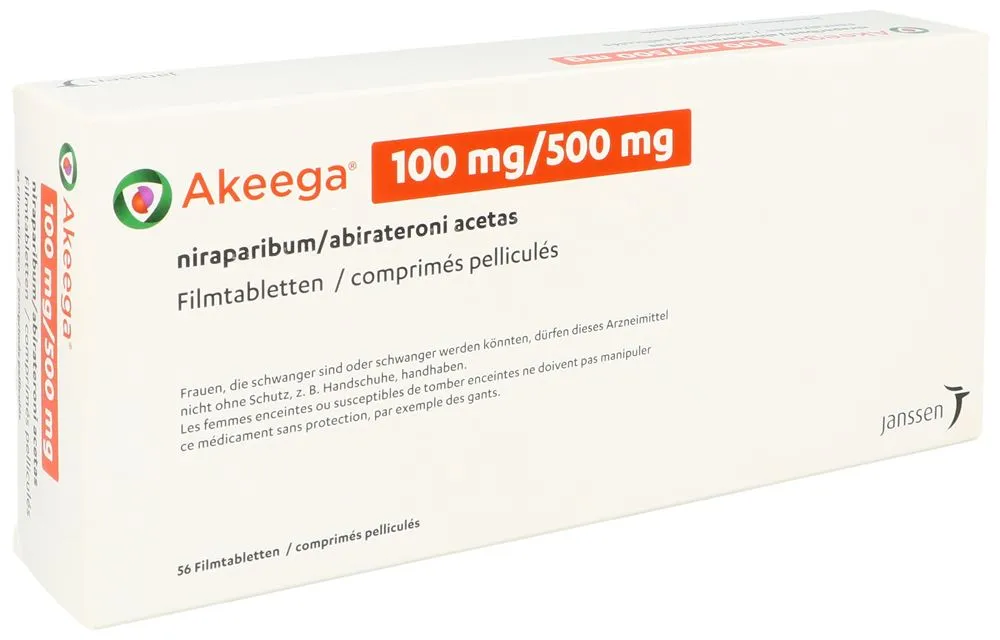
Table of Contents
Package leaflet: Information for the user
Introduction
Package leaflet: information for the user
Akeega 100 mg/500 mg film-coated tablets
niraparib/abiraterone acetate
Read the entire leaflet carefully before you start taking this medicine because it contains important information for you.
- Keep this leaflet as you may need to read it again.
- If you have any questions, ask your doctor or pharmacist.
- This medicine has been prescribed for you only, and you should not give it to others, even if they have the same symptoms as you, because it could harm them.
- If you experience any adverse reactions, consult your doctor or pharmacist, even if they are adverse reactions not listed in this leaflet (see section 4).
Leaflet contents
- What Akeega is and what it is used for
- What you need to know before taking Akeega
- How to take Akeega
- Possible side effects
- How to store Akeega
- Contents of the pack and other information
1. What Akeega is and what it is used for
Akeega is a medicine that contains two active substances: niraparib and abiraterone acetate, and works in two different ways.
Akeega is used to treat adult men with prostate cancer who have certain gene abnormalities and whose prostate cancer has spread to other parts of the body and no longer responds to medical or surgical treatments that reduce testosterone (also known as metastatic castration-resistant prostate cancer).
Niraparib is a type of anticancer medicine called a PARP inhibitor. PARP inhibitors block an enzyme called poly [adenosine diphosphate ribose] polymerase (PARP). PARP helps cells repair damaged DNA. When PARP is blocked, cancer cells cannot repair their DNA, leading to tumor cell death and helping to control the cancer.
Abiraterone causes the body to stop producing testosterone; thus, it can delay the growth of prostate cancer.
When you take this medicine, your doctor will also prescribe another medicine called prednisone or prednisolone, which is intended to reduce the risk of developing high blood pressure, fluid retention (accumulation of excess fluid in the body), or low levels of a chemical substance called potassium in the blood.
2. What you need to know before taking Akeega
Do not take Akeega:
- if you are allergic to niraparib or abiraterone acetate, or to any of the other ingredients of this medicine (listed in section 6).
- if you are a woman who is pregnant or may be pregnant.
- if you have severe liver disease.
- in combination with Ra-223 treatment (used for the treatment of prostate cancer). This is due to a possible increased risk of bone fracture or death.
Do not take this medicine if any of the above apply to you. If you are not sure, consult your doctor or pharmacist before starting to take this medicine.
Warnings and precautions
Talk to your doctor or pharmacist before starting or while taking this medicine if you have:
- low blood cell counts. Signs and symptoms to monitor include fatigue, fever or infection, and unusual bruising or bleeding. Akeega may also reduce blood cell counts. Your doctor will perform regular blood tests during your treatment.
- high blood pressure, heart failure, or low levels of potassium in the blood (low potassium levels may increase the risk of heart rhythm problems), if you have had other heart or blood vessel problems, if you have a fast or irregular heartbeat, if you have difficulty breathing, if you have gained weight rapidly, or if you have swelling in your feet, ankles, or legs. Your doctor will measure your blood pressure regularly throughout treatment.
- headaches, vision changes, confusion, or seizures. These may be signs of a rare neurological side effect called reversible posterior encephalopathy syndrome (PRES), which has been associated with the use of niraparib, one of the active substances in Akeega.
- high fever, fatigue, and other signs and symptoms of serious infection.
- blood clots in the lungs, or if you have had them in the past.
- liver problems.
- low or high blood sugar levels.
- muscle weakness and/or muscle pain.
If any of the above apply to you (or you are not sure), consult your doctor or pharmacist before taking this medicine.
If you have low blood cell counts for a prolonged period while taking Akeega, this may be a sign of more serious bone marrow problems, such as myelodysplastic syndrome (MDS) or acute myeloid leukemia (AML). Your doctor may wish to examine your bone marrow to check for these conditions.
Before starting Akeega, also consult your doctor or pharmacist about:
- the effect Akeega may have on your bones.
- taking prednisone or prednisolone (another medicine you must take with Akeega).
If you are not sure whether any of the above apply to you, consult your doctor or pharmacist before taking this medicine.
Blood tests
Akeega may affect your liver, but you may not notice any symptoms of liver problems. Therefore, while taking this medicine, your doctor will perform periodic blood tests to monitor any effects on your liver.
Children and adolescents
This medicine must not be used in children or adolescents. If a child or adolescent accidentally swallows Akeega, take them immediately to hospital and bring this leaflet with you to show the emergency doctor.
Other medicines and Akeega
Tell your doctor or pharmacist if you are taking, have recently taken, or might need to take any other medicines. This is because Akeega may affect how other medicines work. In addition, other medicines may affect how Akeega works.
Treatment with medicines that induce the body to stop producing testosterone may increase the risk of heart rhythm problems. Inform your doctor if you are taking medicines:
- for heart rhythm problems (e.g., quinidine, procainamide, amiodarone, and sotalol);
- that increase the risk of heart rhythm problems (e.g., methadone), used for pain relief and as part of drug addiction detoxification; moxifloxacin (an antibiotic); antipsychotics used for serious mental illnesses).
Consult your doctor if you are taking any of the medicines listed above.
Taking Akeega with food
- This medicine must not be taken with food (see section 3, "How to take Akeega"), as this could increase the risk of side effects.
Pregnancy and breastfeeding
Akeega is not indicated for use in women.
- This medicine may be harmful to the fetus if taken by pregnant women.
- Pregnant women or women who may become pregnant must wear gloves if they need to touch or handle Akeega.
Contraception for men using Akeega
- If you have sexual intercourse with a woman of childbearing potential, you must use a condom and another effective contraceptive method. Use contraceptive methods during treatment and for 4 months after stopping treatment. Consult your doctor if you have any questions about contraception.
- If you have sexual intercourse with a pregnant woman, you must use a condom to protect the fetus.
Driving and using machines
Taking Akeega may make you feel weak, unfocused, tired, or dizzy. This could affect your ability to drive and operate machinery. Exercise caution when driving or operating machinery.
Akeega contains lactose and sodium
- Akeega contains lactose. If your doctor has informed you that you have an intolerance to certain sugars, consult with them before taking this medicine.
- This medicine contains less than 1 mmol of sodium (23 mg) per dose, i.e., it is essentially "sodium-free".
3. How to take Akeega
Follow exactly the instructions given by your doctor for taking this medicine. If you are unsure, consult your doctor or pharmacist again.
How much to take
The recommended starting dose is 200 mg/1 000 mg (two tablets) once daily.
How to take Akeega
-
Take this medicine by mouth.
-
Do not take Akeega with food.
-
Take Akeega tablets as a single dose once daily on an empty stomach, at least one hour before or at least two hours after eating (see section 2, "Taking Akeega with food").
-
Swallow the tablets whole with water. Do not break, crush, or chew the tablets. This will ensure the medicine works as effectively as possible.
-
Akeega is administered together with a medicine called prednisone or prednisolone.
-
Take prednisone or prednisolone exactly as instructed by your doctor.
-
You will need to take prednisone or prednisolone every day while you are taking Akeega.
-
In a medical emergency, the amount of prednisone or prednisolone you take may need to be adjusted. Your doctor will advise you if any adjustment is necessary. Do not stop taking prednisone or prednisolone unless your doctor tells you to do so.
Your doctor may also prescribe other medicines while you are taking Akeega.
If you take more Akeega than you should
If you take more tablets than you should, contact your doctor. You may have an increased risk of experiencing adverse effects.
If you forget to take Akeega
If you forget to take Akeega or prednisone or prednisolone, take your usual dose as soon as you remember on the same day.
If you have forgotten to take Akeega or prednisone or prednisolone for more than one day, consult your doctor immediately.
Do not take a double dose to make up for missed doses.
If you have any further questions about the use of this medicine, ask your doctor, pharmacist, or nurse.
If you stop taking Akeega
Do not stop taking Akeega or prednisone or prednisolone unless your doctor tells you to do so.
If you have any further questions about the use of this medicine, ask your doctor, pharmacist, or nurse.
4. Possible adverse effects
Like all medicines, this medicine can cause adverse effects, although not everybody will experience them.
Serious adverse effects
Stop taking Akeega and seek immediate medical attention if you experience any of the following symptoms:
Very common (may affect more than 1 in 10 people):
-
Bruising or bleeding for longer than usual after an injury: these may be signs of a low platelet count (thrombocytopenia).
-
Difficulty breathing, feeling very tired, pale skin, or rapid heartbeat: these may be signs of a low red blood cell count (anemia).
-
Fever or infection: a low white blood cell count (neutropenia) can increase the risk of infection. Signs may include fever, chills, feeling weak or confused, cough, or pain or burning when urinating. Some infections may be severe and can lead to death.
-
Muscle weakness, muscle cramps, or strong heartbeats (palpitations). These may be signs of low potassium levels in the blood (hypokalemia).
-
Increased levels of the enzyme "alkaline phosphatase" in the blood.
Frequency not known (cannot be estimated from available data): not reported with Akeega use but reported with niraparib or abiraterone acetate (components of Akeega)
- Allergic reaction (including severe allergic reaction which may be potentially life-threatening). Signs include raised, itchy rash (urticaria), swelling, sometimes of the face or mouth (angioedema), causing difficulty breathing, collapse, or loss of consciousness.
- Sudden increase in blood pressure, which may be a medical emergency that could cause organ damage or may be potentially life-threatening.
Other adverse effects
If you experience any adverse effects, consult your doctor. These include:
Very common (may affect more than 1 in 10 people):
- Urinary tract infection
- Low white blood cell count (leukopenia), observed in blood tests
- Decreased appetite
- Difficulty sleeping (insomnia)
- Dizziness
- Shortness of breath
- Constipation
- Feeling unwell (nausea)
- Vomiting
- Back pain
- Joint pain
- Feeling very tired
- Feeling weak
- Weight loss
- Bone fractures
Common (may affect up to 1 in 10 people):
- Pneumonia
- Lung infection (bronchitis)
- Infection of the nose and throat (nasopharyngitis)
- Low count of a type of white blood cells (lymphopenia), observed in blood tests
- High levels of a type of fat (hypertriglyceridemia) in the blood
- Depression
- Feeling anxious
- Headache
- Tachycardia
- Rapid or irregular heartbeats (palpitations)
- Irregular heartbeats (atrial fibrillation)
- Heart failure, causing shortness of breath and swelling of the legs
- Heart attack
- Cough
- Blood clot in the lungs, causing chest pain and difficulty breathing
- Inflammation in the lungs
- Stomach pain
- Indigestion
- Diarrhea
- Swelling
- Mouth sores
- Dry mouth
- Liver inflammation (hepatitis), as shown by blood tests
- Skin rash
- Muscle pain
- Blood in the urine
- Swelling of hands, ankles, or feet
- Increased levels of "creatinine" in the blood
- Increased levels of the enzyme "aspartate aminotransferase" in the blood
- Increased levels of the enzyme "alanine aminotransferase" in the blood
Uncommon (may affect up to 1 in 100 people):
- Severe infection (sepsis) spreading from the urinary tract to the whole body
- Inflammation of the eye (conjunctivitis)
- Confusion
- Difficulty thinking, remembering information, or solving problems (cognitive impairment)
- Changes in taste sensation
- Chest discomfort, often triggered by physical activity
- Abnormal ECG (electrocardiogram), which could be a sign of heart problems
- Nosebleeds
- Inflammation of the protective linings of body cavities, such as the nose, mouth, or digestive system
- Sudden liver failure
- Increased skin sensitivity to sunlight
- Increased levels of "gamma-glutamyltransferase" in the blood
Frequency not known (cannot be estimated from available data) – not reported with Akeega use but reported with niraparib or abiraterone acetate (components of Akeega)
- Low count of all types of blood cells (pancytopenia)
- Brain disease with symptoms such as seizures, headache, confusion, and vision changes (posterior reversible encephalopathy syndrome or PRES), which is a medical emergency that may cause organ damage or may be potentially life-threatening
- Adrenal gland problems (related to salt and water imbalances) due to insufficient hormone production, which may cause symptoms such as weakness, fatigue, loss of appetite, nausea, dehydration, and skin changes
- Lung inflammation due to an allergic reaction (allergic alveolitis)
- Muscle disease (myopathy), which could cause weakness, stiffness, or muscle spasms
- Breakdown of muscle tissue (rhabdomyolysis), which could cause muscle pain or cramps, fatigue, and dark urine
Reporting of adverse effects
If you experience any adverse effects, talk to your doctor or pharmacist, even if they are possible adverse effects not listed in this leaflet. You can also report them directly through the national reporting system included in Appendix V. By reporting adverse effects, you can help provide more information on the safety of this medicine.
5. Storage of Akeega
Keep this medicine out of sight and reach of children.
Do not use this medicine after the expiry date stated on the packaging (blister pack, inner carton, outer carton, and box) following EXP. The expiry date refers to the last day of the month indicated.
This medicine does not require any special storage conditions.
Medicines must not be disposed of via wastewater or household waste. Ask your pharmacist how to dispose of medicines and packaging that you no longer need. This will help protect the environment.
6. Contents of the pack and other information
Composition of Akeega
- The active substances are niraparib and abiraterone acetate. Each film-coated tablet contains 100 mg of niraparib and 500 mg of abiraterone acetate.
- The other components of the tablet core are colloidal anhydrous silica, crospovidone, hypromellose, lactose monohydrate, magnesium stearate, microcrystalline cellulose, and sodium lauryl sulfate. The film coating contains red iron oxide (E172), yellow iron oxide (E172), sodium lauryl sulfate, glycerol monocaprylocaprate, polyvinyl alcohol, talc, and titanium dioxide (E171) (see section 2, Akeega contains lactose and sodium).
Appearance of the product and contents of the pack
Akeega film-coated tablets are orange, oval-shaped, with
"N 100 A" engraved on one side and smooth on the other.
Each 28-day pack contains 56 film-coated tablets, supplied in two cardboard boxes containing 28 film-coated tablets each.
Marketing Authorization Holder
Janssen-Cilag International NV
Turnhoutseweg 30
B-2340 Beerse
Belgium
Manufacturer
Janssen Cilag SpA
Via C. Janssen,
Borgo San Michele
Latina 04100
Italy
For further information about this medicinal product, please contact the local representative of the Marketing Authorization Holder:
Belgium/Belgium/Belgium Janssen-Cilag NV Tel/Tel: +32 14 64 94 11 | Lithuania UAB "JOHNSON & JOHNSON" Tel: +370 5 278 68 88 |
| Luxembourg/Luxembourg Janssen-Cilag NV Tel/Tel: +32 14 64 94 11 |
Czech Republic Janssen-Cilag s.r.o. Tel: +420 227 012 227 | Hungary Janssen-Cilag Kft. Tel.: +36 1 884 2858 |
Denmark Janssen-Cilag A/S Tlf: +45 4594 8282 | Malta AM MANGION LTD Tel: +356 2397 6000 |
Germany Janssen-Cilag GmbH Tel: +49 2137 955 955 | Netherlands Janssen-Cilag B.V. Tel: +31 76 711 1111 |
Estonia UAB "JOHNSON & JOHNSON" Estonia branch Tel: +372 617 7410 | Norway Janssen-Cilag AS Tlf: +47 24 12 65 00 |
Greece Janssen-Cilag Φαρμακευτική Α.Ε.Β.Ε. Tel: +30 210 80 90 000 | Austria Janssen-Cilag Pharma GmbH Tel: +43 1 610 300 |
Spain Janssen-Cilag, S.A. Tel: +34 91 722 81 00 | Poland Janssen-Cilag Polska Sp. z o.o. Tel.: +48 22 237 60 00 |
France Janssen-Cilag Tel: 0 800 25 50 75 / +33 1 55 00 40 03 | Portugal Janssen-Cilag Farmacêutica, Lda. Tel: +351 214 368 600 |
Croatia Johnson & Johnson S.E. d.o.o. Tel: +385 1 6610 700 | Romania Johnson & Johnson România SRL Tel: +40 21 207 1800 |
Ireland Janssen Sciences Ireland UC Tel: +353 1 800 709 122 | Slovenia Johnson & Johnson d.o.o. Tel: +386 1 401 18 00 |
Iceland Janssen-Cilag AB c/o Vistor hf. Tel: +354 535 7000 | Slovakia Johnson & Johnson, s.r.o. Tel: +421 232 408 400 |
Italy Janssen-Cilag SpA Tel: 800.688.777 / +39 02 2510 1 | Finland Janssen-Cilag Oy Tel: +358 207 531 300 |
| Sweden Janssen-Cilag AB Tel: +46 8 626 50 00 |
Latvia UAB "JOHNSON & JOHNSON" Latvia branch Tel: +371 678 93561 | United Kingdom (Northern Ireland) Janssen Sciences Ireland UC Tel: +44 1 494 567 444 |


Date of the most recent review of this leaflet: MM/YYYY.
Other sources of information
Detailed information on this medicinal product is available on the website of the European Medicines Agency: http://www.ema.europa.eu.