Aiacet 75 micrograms film-coated tablets EFG
Spain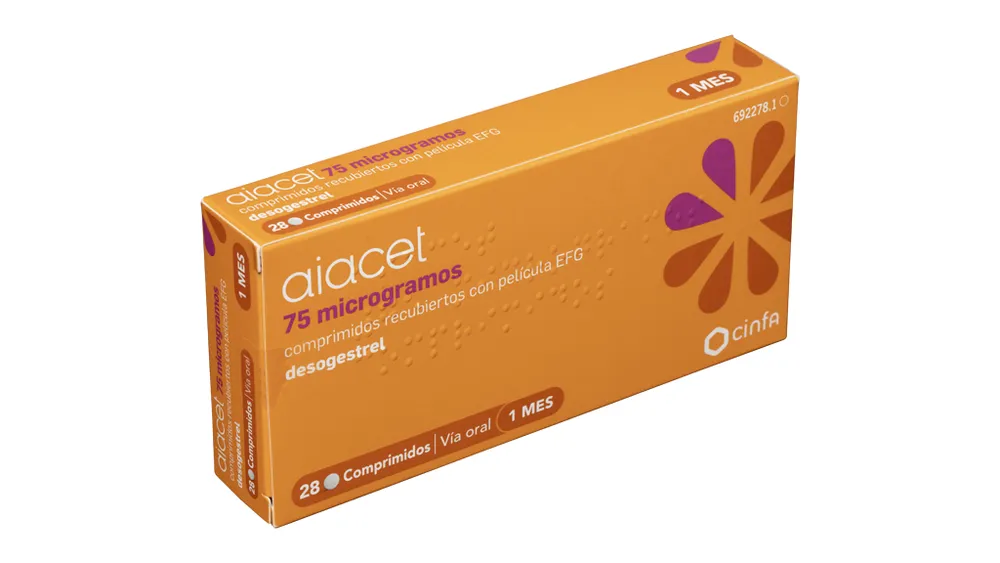
Table of Contents
Package leaflet: Information for the user
Introduction
Package leaflet: information for the user
aiacet 75 micrograms film-coated tablets EFG
desogestrel
Read all of this leaflet carefully before you start taking this medicine because it contains important information for you.
- Keep this leaflet. You may need to read it again.
- If you have any questions, ask your doctor, pharmacist, or nurse.
- This medicine has been prescribed for you only, and you should not give it to other people, even if they have the same symptoms as you. It may harm them.
- If you get any side effects, talk to your doctor, pharmacist, or nurse, even if the side effects are not listed in this leaflet. See section 4.
Contents of the leaflet
- What aiacet is and what it is used for
- What you need to know before taking aiacet
- How to take aiacet
- Possible side effects
- How to store aiacet
- Contents of the pack and other information
1. What aiacet is and what it is used for
aiacet is used to prevent pregnancy.
There are two main types of hormonal contraceptives:
- The combined pill, “the pill”, which contains two types of female sex hormones, oestrogen and progestogen.
- The progestogen-only pill, or mini-pill, which does not contain oestrogen-type hormones.
aiacet is a progestogen-only pill.
aiacet contains a small dose of a type of female hormone, the progestogen desogestrel.
Most progestogen-only pills work primarily by preventing sperm from entering the uterus, but they do not always prevent the egg from maturing, which is the main action of combined pills.
aiacet differs from other progestogen-only pills because its dose is high enough in most cases to prevent the egg from maturing. Therefore, aiacet provides high contraceptive effectiveness.
Unlike the combined pill, aiacet can be taken by women who cannot tolerate oestrogens and by women who are breastfeeding.
One disadvantage is that you may experience irregular vaginal bleeding while taking aiacet. You may also have no bleeding at all.
2. What you need to know before starting to take aiacet
aiacet, like other hormonal contraceptives, does not protect against HIV (AIDS) infection or any other sexually transmitted disease.
Do not take aiacet:
- if you are allergic to desogestrel or to any of the other components of this medicine (listed in section 6).
- if you have a thrombosis. Thrombosis is the formation of a blood clot in a blood vessel [for example in the legs (deep vein thrombosis) or in the lungs (pulmonary embolism)].
- if you have or have ever had jaundice (yellowing of the skin) or severe liver disease and your liver still does not function normally.
- if you have or are suspected of having a cancer related to sex steroids, such as certain types of breast cancer.
- if you have any unexplained vaginal bleeding.
Inform your doctor before using aiacet if any of these conditions apply to you. Your doctor may recommend that you use a non-hormonal method of birth control.
Contact your doctor immediately if any of these conditions occur for the first time while you are using aiacet.
Warnings and precautions
Consult your doctor or pharmacist before starting to take aiacet if:
- you have ever had breast cancer;
- you have liver cancer, as a possible effect of aiacet cannot be ruled out;
- you have ever had a thrombosis;
- you have diabetes;
- you suffer from epilepsy (see section “Taking aiacet with other medicines”);
- you suffer from tuberculosis (see section “Taking aiacet with other medicines”);
- you have high blood pressure;
- you have or have had chloasma (yellowish-brown patches on the skin, particularly on the face); in this case, you should avoid intense exposure to sunlight or ultraviolet radiation.
If you use aiacet under any of the described circumstances, you must remain under medical supervision. Your doctor can explain what you should do.
Breast cancer
Examine your breasts regularly and contact your doctor as soon as possible if you notice any lump in your breasts.
Breast cancer has been observed slightly more frequently in women taking the pill than in women of the same age who do not take it. If a woman stops taking the pill, the risk gradually decreases, so that 10 years after stopping, the risk is the same as in women who have never taken it. Breast cancer is rare before the age of 40, but the risk increases as a woman gets older. Therefore, the number of additional breast cancer cases diagnosed is higher the older the age at which the pill was discontinued. The duration of pill use is not as important.
Among 10,000 women who took the pill for up to 5 years and stopped around age 20, there will be fewer than one additional case of breast cancer observed up to 10 years after stopping the pill, added to the 4 cases normally diagnosed in this age group. Likewise, among 10,000 women who took the pill for up to 5 years and stopped around age 30, there will be 5 additional cases on top of the 44 cases normally diagnosed. In 10,000 women who took the pill for up to 5 years and stopped around age 40, there will be 20 additional cases on top of the 160 cases normally diagnosed.
It is believed that the risk of breast cancer in users of progestogen-only pills such as aiacet is similar to that in women taking the combined pill, although the data do not allow clear conclusions.
The breast cancers found in women taking the pill appear to be less advanced than those found in women not taking the pill. It is unknown whether the difference in breast cancer risk is due to the pill. It could be that women undergo more frequent check-ups, so that breast cancer is detected earlier.
Thrombosis
Contact your doctor immediately if you notice possible signs of thrombosis (see also “Regular check-ups”).
Thrombosis is the formation of a blood clot that can block a blood vessel. Thrombosis sometimes occurs in the deep veins of the legs (deep vein thrombosis). If the clot breaks loose from the veins where it formed, it can travel to and block the arteries in the lungs, causing what is known as “pulmonary embolism,” which can be fatal. Pulmonary embolism can cause chest pain, difficulty breathing, collapse, and even death.
Deep vein thrombosis is rare. It can develop whether or not you are taking the pill. It can also occur during pregnancy.
The risk of thrombosis is higher in users of the pill than in non-users. It is believed that the risk in users of progestogen-only pills such as aiacet is lower than in users of pills that also contain estrogens (combined pills).
Psychiatric disorders
Some women who use hormonal contraceptives such as aiacet have reported depression or a depressed mood. Depression can be severe and sometimes may lead to suicidal thoughts. If you experience mood changes or depressive symptoms, contact your doctor for additional medical advice as soon as possible.
Children and adolescents
No clinical data are available on safety and efficacy in adolescents under 18 years of age.
Taking aiacet with other medicines
Inform your doctor or pharmacist if you are taking, have recently taken, or might need to take any other medicine. Also inform any other doctor or dentist who prescribes you another medicine (or your pharmacist) that you are taking aiacet. They can advise you whether you need to take additional contraceptive measures (for example, use of condoms), and if so, for how long, or whether you should modify the use of the other medicine.
Some medicines:
- may influence the levels of aiacet in the blood;
- may make it less effective in preventing pregnancy;
- may cause unexpected bleeding.
These include medicines used to treat:
- epilepsy (for example primidone, phenytoin, carbamazepine, oxcarbazepine, felbamate, topiramate, and phenobarbital);
- tuberculosis (for example rifampicin, rifabutin);
- HIV infection (for example ritonavir, nelfinavir, nevirapine, efavirenz);
- hepatitis C virus infection (for example, boceprevir, telaprevir);
- other infectious diseases (for example griseofulvin);
- high blood pressure in the blood vessels of the lungs (bosentan);
- depressive mood (herbal products containing St. John’s wort);
- certain bacterial infections (for example, clarithromycin, erythromycin);
- fungal infections (for example, ketoconazole, itraconazole, fluconazole);
- high blood pressure (hypertension), angina, or certain heart rhythm disorders (for example, diltiazem).
If you are taking medicines or herbal products that could make aiacet less effective, a barrier contraceptive method should also be used. Since the effect of another medicine on aiacet may last up to 28 days after stopping the medicine, a barrier contraceptive method must be used during that time. Your doctor can advise you whether you need to take additional contraceptive measures and, if so, for how long.
aiacet may also interfere with the effect of other medicines, causing an increase in effect (for example, medicines with cyclosporine) or a decrease in effect (for example, lamotrigine).
Consult your doctor or pharmacist before taking any medicine.
Pregnancy and breastfeeding
If you are pregnant or breastfeeding, think you might be pregnant, or plan to become pregnant, consult your doctor or pharmacist before using this medicine.
Pregnancy
Do not use aiacet if you are pregnant or suspect you may be pregnant.
Breastfeeding
aiacet may be used during breastfeeding. Desogestrel does not appear to affect the quantity or quality of breast milk. However, a decrease in breast milk production has been reported infrequently during use of aiacet. A small amount of the active ingredient in aiacet passes into breast milk.
The health of infants breastfed for 7 months by mothers using aiacet has been studied until the children were 2.5 years old. No effects on growth or development of the children were observed.
If you are breastfeeding and wish to use aiacet, consult your doctor.
Driving and using machines
There are no indications that the use of aiacet affects the ability to drive or operate machinery.
aiacet contains lactose.
This medicine contains lactose. If your doctor has informed you that you have an intolerance to certain sugars, consult with him before taking this medicine.
Regular check-ups
During treatment with aiacet, your doctor will require you to undergo regular check-ups. In general, the frequency and nature of these check-ups will depend on your individual circumstances.
Contact your doctor as soon as possible in the following cases:
|
3. How to take aiacet
Follow exactly the instructions for taking this medicine as given by your doctor or pharmacist. If in doubt, consult your doctor or pharmacist again.
How and when to take the tablets
Each aiacet blister contains 28 tablets. Take the first tablet from the blister on the day corresponding to the correct day of the week. Each time you start a new aiacet blister, take a tablet from the top row, but not any tablet—specifically the one marked with the correct day. For example, if you start on a Wednesday, take the tablet in the top row marked "WED". Continue taking one tablet daily until the blister is empty, always following the direction of the arrows. By looking at the front side of the blister, you can easily check whether you have already taken your tablet for a given day.
Take your tablet at approximately the same time each day, swallowing it whole with water. You may experience some bleeding while using aiacet, but you should continue taking the tablets as usual. When you finish one blister, start a new one the next day—without any break and without waiting for bleeding to occur.
Starting the first pack of aiacet
- When you have not used hormonal contraception in the previous month:
Wait for your menstrual period and take the first aiacet tablet on the first day of your period. In this case, you do not need to take any additional contraceptive precautions.
You may also start on days 2 to 5 of your cycle, but in this case, make sure to use an additional contraceptive method (barrier method, condom) during the first 7 days of tablet treatment.
- When switching from a combined oral contraceptive pill, vaginal ring, or transdermal patch:
If you are not currently in a pill, ring, or patch-free interval:
You may start taking aiacet the day after taking the last tablet of your current pack or on the day of removal of the vaginal ring or transdermal patch (meaning you do not need to take a break from pills, ring, or patch). If your current pill contains inactive (placebo) tablets, you may start taking aiacet the day after taking the last active tablet (if you are unsure, consult your doctor or pharmacist). If you follow these instructions, you do not need to take any additional contraceptive precautions.
If you are currently in a pill, ring, or patch-free interval:
You may also start the day after the end of the pill-free, ring-free, or patch-free interval, or after the inactive (placebo) tablets of your current contraceptive. If you follow this approach, make sure to use an additional contraceptive method (barrier method) during the first 7 days of taking the tablets.
- If you were taking another progestogen-only pill:
You may stop your current preparation at any time and start desogestrel immediately. You do not need to take any additional contraceptive precautions.
- If you were using an injectable, implant, or intrauterine progestogen-releasing system (IUS):
Start using aiacet at the time when your next injection is due, or on the day your implant or IUS is removed. You do not need to take any additional contraceptive precautions.
- After childbirth:
You may start aiacet between days 21 and 28 after the birth of your baby. If you start later, make sure to use an additional contraceptive method (barrier method) during the first 7 days of taking the tablets. However, if you have already had sexual intercourse, pregnancy must be ruled out before starting aiacet. More information about breastfeeding can be found in section 2 “Pregnancy and breastfeeding”. Your doctor can also advise you.
- After an abortion:
Your doctor will advise you.
If you take more aiacet than you should
No serious harmful effects have been reported from taking too many desogestrel tablets at once. Possible symptoms include nausea, vomiting, and in younger women, slight vaginal bleeding.
For more information, consult your doctor.
In case of overdose or accidental ingestion, contact your doctor or pharmacist immediately or call the Toxicology Information Service at telephone number 91 562 04 20, indicating the medicine and the amount ingested.
If you forget to take aiacet
- If less than 12 hours have passed since your usual tablet-taking time, the effectiveness of aiacet remains intact. Take the missed tablet as soon as you remember, and take the following tablets at your usual time.
- If more than 12 hours have passed since your usual tablet-taking time, effectiveness may have been reduced. The more consecutive tablets you have missed, the greater the risk that contraceptive effectiveness has decreased. Take the most recently missed tablet as soon as you remember and continue taking the following tablets at your usual time, while also using an additional contraceptive method (barrier method) for the next 7 days.
If you miss one or more tablets during the first week of starting treatment and have had sexual intercourse during the week before missing the tablets, there is a possibility you may be pregnant. Consult your doctor.
If you experience gastrointestinal disturbances (e.g., vomiting or severe diarrhea)
Follow the instructions for missed tablets. If you vomit within 3–4 hours after taking your aiacet tablet or have severe diarrhea, the active ingredient may not have been completely absorbed.
If you stop taking aiacet
You may stop taking aiacet at any time. From the day you stop taking it, you will no longer be protected against pregnancy.
If you have any further questions about the use of this medicine, ask your doctor or pharmacist.
4. Possible adverse effects
Like all medicines, this medicine may cause adverse effects, although not everyone will experience them. Contact your doctor if you experience any of the following adverse effects, especially if they are severe or persistent.
Serious adverse effects associated with the use of aiacet are described in the sections “Breast cancer” and “Thrombosis” in section 2 “What you need to know before you start taking aiacet”. Please read this section carefully for detailed information and consult your doctor immediately if necessary.
Seek immediate medical advice if you experience allergic reactions (hypersensitivity), including swelling of the face, lips, tongue and/or throat causing difficulty in breathing or swallowing (angioedema and/or anaphylaxis).
Irregular vaginal bleeding may occur during the use of aiacet. This may range from light spotting that does not even require the use of a sanitary pad, to heavier bleeding resembling a light menstruation, which may require sanitary protection (tampons or pads). It is also possible not to have any bleeding at all. Irregular bleeding is not a sign that the contraceptive protection provided by aiacet is reduced. In general, no action is needed other than continuing to take aiacet. However, if the bleeding is heavy or prolonged, consult your doctor.
How frequently do other possible adverse effects occur?
Frequent (may affect up to 1 in 10 women):
- mood changes, depressed mood, decreased sexual desire (libido)
- headache
- nausea
- acne
- breast pain, irregular menstruation or absence of menstruation
- weight gain
Uncommon (may affect up to 1 in 100 women):
- vaginal infection
- discomfort when wearing contact lenses
- vomiting
- hair loss
- painful menstruation, ovarian cysts
- fatigue
Rare (may affect up to 1 in 1,000 women):
- rash, urticaria, painful purple lumps on the skin (erythema nodosum) (skin-related effects)
Frequency not known (cannot be estimated from available data):
- allergic reactions
In addition to these adverse effects, breast milk secretion may occur.
Reporting of adverse effects
If you experience any type of adverse effect, consult your doctor or pharmacist, even if it is a possible adverse effect not listed in this leaflet. You can also report them directly via the Spanish Pharmacovigilance System for Human Medicines: https://www.notificaram.es. By reporting adverse effects, you can help provide more information on the safety of this medicine.
5. Storage of aiacet
Keep this medicine out of the sight and reach of children.
Do not use this medicine after the expiry date stated on the packaging after EXP. The expiry date is the last day of the month indicated.
This medicine does not require any special storage conditions.
Medicines must not be disposed of via wastewater drains or household waste. Dispose of unused medicines and their containers at the SIGRE collection point at your pharmacy. If you are in doubt, ask your pharmacist how to dispose of medicines and containers you no longer need. This will help protect the environment.
6. Contents of the pack and other information
Composition of aiacet
-
The active substance is desogestrel. Each tablet contains 75 micrograms of desogestrel.
-
The other components are: Tablet core: colloidal anhydrous silica, alpha-tocopherol, monohydrate lactose, maize starch, povidone, and stearic acid. Coating: hypromellose, macrogol 6000, propylene glycol, talc, and titanium dioxide (E-171).
Appearance of the product and contents of the pack
Film-coated tablet, cylindrical, biconvex, white in colour, approximately 6.00 mm in diameter.
aiacet is available in PVC/aluminum blisters.
Each individual blister is packed in an outer sachet, which is placed in a cardboard carton.
Pack sizes:
28 film-coated tablets
84 film-coated tablets
168 film-coated tablets
Only certain pack sizes may be marketed.
Marketing Authorisation Holder and Manufacturer
Marketing Authorisation Holder
Laboratorios Cinfa, S.A.
Carretera Olaz-Chipi, 10. Polígono Industrial Areta
31620 Huarte (Navarra) - Spain
Manufacturer
Cyndea Pharma, S.L.
Polígono Industrial Emiliano Revilla Sanz
Avenida de Ágreda, 31,
Ólvega, 42110 Soria
Spain
Date of the most recent revision of this leaflet: October 2020
Detailed and up-to-date information on this medicinal product is available on the website of the Spanish Agency of Medicines and Health Products (AEMPS) http://www.aemps.gob.es/
You can access detailed and up-to-date information about this medicine by scanning with your mobile phone (smartphone) the QR code included in the package leaflet and carton. You can also access this information at the following internet address: https://cima.aemps.es/cima/dochtml/p/76226/P_76226.html
QR code linking to: https://cima.aemps.es/cima/dochtml/p/76226/P_76226.html