Agamree 40 mg/ml oral suspension
Spain
Table of Contents
Package leaflet: Information for the user
Introduction
Package leaflet: information for the patient
AGAMREE 40 mg/ml oral suspension
vamorolone
This medicinal product is subject to additional monitoring, which will enable rapid identification of new information on its safety. You can help by reporting any side effects you may experience. Information on how to report side effects is included at the end of section 4.
Read all of this leaflet carefully before you start taking this medicine, because it contains important information for you.
- Keep this leaflet, as you may need to read it again.
- If you have any questions, ask your doctor or pharmacist.
- This medicine has been prescribed for you only; do not give it to others, even if they have the same symptoms as you, as it may harm them.
- If you experience any side effects, talk to your doctor or pharmacist, even if they are side effects not listed in this leaflet. See section 4.
Contents of this leaflet
- What AGAMREE is and what it is used for
- What you need to know before taking AGAMREE
- How to take AGAMREE
- Possible side effects
- How to store AGAMREE
- Contents of the pack and other information
1. What AGAMREE is and what it is used for
AGAMREE is a steroidal anti-inflammatory medicine that contains the active substance vamorolone.
AGAMREE is used for the treatment of patients aged 4 years and older with Duchenne muscular dystrophy (DMD). DMD is a genetic disease caused by defects in the dystrophin gene, which normally produces a protein that keeps muscles healthy and strong. In patients with DMD, this protein is not produced, and the body is unable to develop new muscle cells or replace damaged muscle. This causes the muscles in the body to weaken over time.
AGAMREE is used to stabilize or improve muscle strength in patients with DMD.
2. What you need to know before taking AGAMREE
Do not take AGAMREE
- if you are allergic to vamorolone or any of the other ingredients of this medicine (listed in section 6);
- if you have severe liver problems;
- if you are planning to receive or have received any vaccination with live or attenuated vaccines (against measles, mumps, rubella, or varicella) within the past 6 weeks. Consult your doctor if you are already being treated with AGAMREE and are considering vaccination.
Warnings and precautions
Talk to your doctor before starting to take AGAMREE.
Endocrine function disturbances: adrenal insufficiency
AGAMREE reduces the amount of a hormone called cortisol that your body can produce. This is known as adrenal insufficiency.
- you must not reduce the dose of AGAMREE or stop taking it without consulting your doctor; if you abruptly reduce or stop taking AGAMREE for a few days, you may develop symptoms of acute adrenal insufficiency, such as excessive fatigue, dizziness, or confusion, which could be life-threatening; your doctor may need to monitor your treatment more closely if the dose is changed;
- if you experience unusual stress (such as an acute infection, traumatic injury, or major surgery), you may need to take an additional corticosteroid medicine to prevent acute adrenal insufficiency. Discuss with your doctor what to do in case of unusual stress before starting treatment with AGAMREE;
- if you are currently being treated with another corticosteroid, such as prednisone, you may switch directly to AGAMREE, but your doctor will advise you on the correct dose of AGAMREE to take;
- if you have a type of adrenal gland tumor called a pheochromocytoma, your doctor may need to monitor your treatment more closely.
IMPORTANT: The AGAMREE package includes a patient alert card containing important safety information about adrenal crises. Always carry this card with you.
Weight gain
- AGAMREE may increase your appetite and therefore your weight, mainly during the first few months of treatment; your doctor or nurse will provide dietary advice before and during treatment.
Patients with altered thyroid function
- if you have hypothyroidism (underactive thyroid) or hyperthyroidism (overactive thyroid), your doctor may need to monitor your treatment more closely or adjust your dose.
Ophthalmic effects
- if you or a family member has glaucoma (increased intraocular pressure), your doctor may need to monitor your treatment more closely.
Increased risk of infections
AGAMREE may reduce your body's natural resistance to infections.
- if you have a weakened immune response (due to immunodeficiency syndrome, illness, or other medicines that suppress the immune system), your doctor may need to monitor your treatment more closely;
- if you develop an infection while being treated with AGAMREE, your doctor may need to monitor you more closely and you may require treatment with an additional corticosteroid medicine.
Diabetes mellitus
- Over time, the use of AGAMREE may increase the likelihood of developing diabetes mellitus (a condition related to sugar); your doctor may check your blood sugar levels regularly.
Vaccination
- if you are planning to receive a vaccination with live attenuated or live vaccines, you should be vaccinated at least 6 weeks before starting treatment with AGAMREE;
- if you have never had chickenpox or have not been vaccinated against chickenpox, you may discuss vaccination with your doctor before starting treatment with AGAMREE.
Thromboembolic events
- if you have had thromboembolic events (blood clots inside the body) or a disease that increases the risk of blood clotting, your doctor may need to monitor your treatment more closely.
Hepatic impairment
- if you have liver disease, your doctor may need to adjust your dose.
Children
Do not give AGAMREE to children under 4 years of age, as this medicine has not been studied in this patient group.
Other medicines and AGAMREE
Tell your doctor or pharmacist if you are taking, have recently taken, or might need to take any other medicines.
Inform your doctor if you are taking any of the following medicines:
- Medicines used to treat seizures and neuropathic pain, such as carbamazepine or phenytoin, as they may affect the medicine’s action;
- Medicines used to treat fungal infections (including candidiasis and aspergillosis) known as triazoles, such as itraconazole and voriconazole, as they may affect the medicine’s action;
- Antibiotics known as macrolides (such as clarithromycin) or "ketolides" (such as telithromycin), as they may affect the medicine’s action;
- Antibiotics known as rifamycins, such as rifampicin, as they may affect the medicine’s action;
- Spironolactone or eplerenone, known as potassium-sparing diuretics (treatments that increase urine production), which may be used to reduce blood pressure and protect cardiovascular function, as they may have effects similar to those of AGAMREE; your doctor may need to monitor your potassium levels and adjust the dose of these medicines;
- St. John’s wort (Hypericum perforatum), a herbal medicine used to treat depression and emotional disorders, as it may affect the medicine’s action.
If you need to receive a vaccine, consult your doctor first (see section 2: "Do not take AGAMREE"). If you are to be vaccinated with certain types of vaccines (live or live attenuated vaccines), vaccination should occur at least 6 weeks before starting treatment with AGAMREE, as in this combination, these vaccines could trigger the infection they are intended to prevent.
AGAMREE with food and drink
Avoid grapefruit and grapefruit juice during treatment with AGAMREE, as they may affect the medicine’s action.
Pregnancy, breastfeeding, and fertility
If you are pregnant or breastfeeding, think you may be pregnant, or are planning to become pregnant, consult your doctor before taking this medicine.
If you are pregnant, you should not take AGAMREE unless clearly indicated by your doctor.
If you are a woman of childbearing potential, you should use effective contraception during treatment with AGAMREE.
Animal studies have shown that long-term treatment with AGAMREE may affect male and female fertility.
Driving and using machines
Consult your doctor to determine whether your medical condition allows you to drive vehicles, including bicycles, or operate machinery safely. AGAMREE is not expected to affect your ability to drive, ride a bicycle, or use machines.
AGAMREE contains sodium benzoate and sodium
AGAMREE contains 1 mg of sodium benzoate (E211) per ml.
AGAMREE contains less than 23 mg of sodium per 7.5 ml; this is essentially "sodium-free".
3. How to take AGAMREE
Follow exactly the instructions for administering this medicine as given by your doctor or pharmacist. If in doubt, consult your doctor or pharmacist.
The recommended dose of AGAMREE depends on your body weight and age.
If the patient is 4 years of age or older and weighs less than 40 kg, the usual dose is 6 mg per kg of body weight, administered once daily.
If the patient is 4 years of age or older and weighs 40 kg or more, the usual dose is 240 mg, taken once daily.
If you experience certain adverse effects while taking AGAMREE (see section 4), your doctor may reduce the dose or temporarily or permanently discontinue treatment. Your doctor may reduce your dose if you have hepatic disease.
This medicine is taken orally. AGAMREE should preferably be taken with food (see section 2, "AGAMREE with food and drink").
To extract the medicine, use one of the oral syringes provided in the package. Use only these oral syringes to measure the dose. Your doctor will indicate how much you should draw up into the syringe for your daily dose.
Caregivers should assist in the administration of AGAMREE, particularly in using oral syringes to measure and administer the prescribed dose.
Shake the bottle well before withdrawing medicine with the syringe. Fill the oral syringe with the prescribed dose, then immediately and slowly dispense the contents of the syringe into the mouth. Read the instructions below for more information on how to correctly measure and take the dose. Consult your doctor or pharmacist if you are unsure how to use the oral syringe.
After taking the prescribed dose, disassemble the syringe, wash the syringe and plunger under cold running water, and air-dry. Store the clean syringe in the package until next use. The oral syringe should only be used for a maximum of 45 days. After this time, discard it and use the second oral syringe provided in the package. If you have any further questions about the use of this medicine, ask your doctor or pharmacist.
HOW TO PREPARE THE DOSE OF AGAMREE ORAL SUSPENSION
Before taking/administering AGAMREE | ||
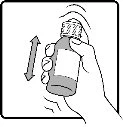
Step 1 | Ensure the child-resistant cap on the bottle is securely fastened and shake the bottle well. |
|
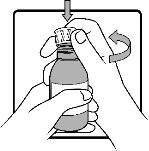
Step 2 | Remove the child-resistant cap by pressing down firmly and turning it counterclockwise. |
|
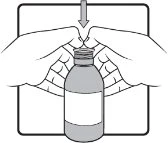
Step 3 | Firmly insert the adapter into the bottle. This should be done the first time you open the bottle. After this, the adapter will remain in the bottle. If the adapter becomes dislodged, clean it with cold running water and air-dry it for at least 2 hours. |
|
Preparing a dose of AGAMREE | ||
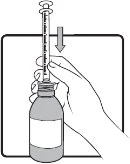
Step 4 | Keep the bottle in an upright position. Before inserting the oral syringe tip into the adapter, press the plunger down fully until it reaches the stopper at the tip of the syringe. Then firmly insert the tip into the opening of the bottle adapter. |
|
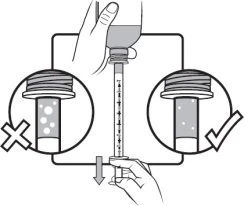
Step 5 | Keep the syringe in place and carefully turn the bottle upside down. Slowly pull the plunger until the desired amount of medication is drawn into the syringe. If there are large air bubbles in the syringe (as shown in the figure on the left) or if an incorrect dose of AGAMREE has been drawn, firmly reinsert the syringe tip into the adapter while the bottle is in an upright position. Push the plunger down to return the AGAMREE to the bottle and repeat steps 4 to 6. |
|
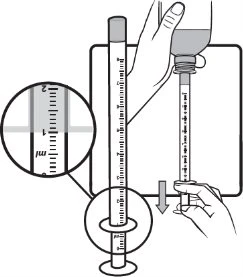
Step 6 | Check the dose in milliliters (mL) as prescribed by the doctor. Locate the graduation mark on the plunger to read the dose in milliliters (mL), as shown in the image on the right. On the scale shown, each line corresponds to 0.1 mL. The example shows a 1 mL dose. Do not take/administer more than the prescribed daily dose. |
|
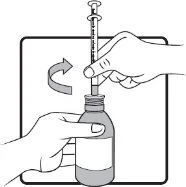
Step 7 | Turn the bottle right-side up and carefully remove the syringe from the bottle. Do not hold the syringe by the plunger, as it may detach. |
|
Administering AGAMREE | ||
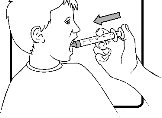
Step 8 | Do not mix the medication with any liquid before administration. The patient should be in an upright sitting position when taking the medication. Empty the syringe directly into the mouth. Gently press the plunger to empty the syringe. Do not push forcefully. To avoid the risk of choking, ensure the medication does not spray directly toward the back of the mouth or throat. |
|
After administering AGAMREE | ||
Step 9 | Close the bottle with the child-resistant cap after each use. | |
Step 10 | Disassemble the oral syringe, rinse it with cold tap water, and air-dry it before the next use. Each oral syringe supplied with AGAMREE can be used for up to 45 days. |
Enteral feeding tube
AGAMREE can be administered through an enteral feeding tube, following the instructions included in the enteral feeding tube kit. The usual prescribed dose of AGAMREE should be used; dilution is not required. Do not mix with enteral feeding formula or other products. The enteral feeding tube should be flushed before and after administration of AGAMREE, using the syringe provided in the enteral feeding tube kit. At least 20 ml of water should be used to flush the enteral feeding tube.
If you take more AGAMREE than you should
If you take too much AGAMREE, contact your doctor or a hospital for advice. Show them the AGAMREE packaging and this leaflet. Medical treatment may be necessary.
If you forget to take AGAMREE
Do not take a double dose and do not repeat the missed dose.
Take the next dose at the usual scheduled time.
Speak to your healthcare professional if you are concerned.
If you stop using AGAMREE
Take AGAMREE for as long as your doctor tells you to. Consult your doctor before stopping treatment with AGAMREE, as it is necessary to gradually reduce the dose to avoid adverse reactions.
If you have any further questions about the use of this medicine, ask your doctor or pharmacist.
4. Possible adverse effects
Like all medicines, this medicine can cause adverse effects, although not everyone experiences them.
Treatment with AGAMREE causes adrenal insufficiency. Consult your doctor before starting AGAMREE (see section 2 for more information).
The following adverse effects have been reported with AGAMREE in the category of very common (may affect more than 1 in 10 people):
- Puffiness and a more rounded appearance of the face (Cushing's syndrome)
- Increase in body weight (weight gain)
- Increased appetite
- Irritability
- Vomiting
The following adverse effects have been reported in the category of common (may affect up to 1 in 10 people):
- Stomach ache (abdominal pain)
- Pain in the upper part of the stomach (upper abdominal pain)
- Diarrhoea
- Headache
Reporting of adverse effects
If you experience any type of adverse effect, consult your doctor or pharmacist, even if it is a possible adverse effect not listed in this leaflet. You may also report them directly through the national reporting system included in Appendix V. By reporting adverse effects, you can help provide more information on the safety of this medicine.
5. Storage of AGAMREE
Keep this medicine out of the sight and reach of children.
Do not use this medicine after the expiry date stated on the carton and on the label of the vial after "EXP". The expiry date refers to the last day of the month indicated.
This medicine does not require any special storage temperature.
After first opening AGAMREE, store the vial upright in a refrigerator (between 2 °C and 8 °C). The medicine may be stored in the refrigerator for up to 3 months.
Discard any unused medicine within 3 months after first opening the vial.
Medicines should not be disposed of via wastewater or household waste. Ask your pharmacist how to dispose of medicines and packaging that you no longer need. This will help protect the environment.
6. Contents of the pack and other information
What AGAMREE contains
The active substance is vamorolone. Each ml of suspension contains 40 mg of vamorolone.
The other components are: citric acid (monohydrate) (E 330), disodium phosphate (E 339), glycerol (E 422), orange flavour, purified water, sodium benzoate (E 211) (see section 2, "AGAMREE contains sodium benzoate"), sucralose (E 955), xanthan gum (E 415), and hydrochloric acid (for pH adjustment). See section 2, "AGAMREE contains sodium benzoate and sodium".
What AGAMREE looks like and contents of the pack
AGAMREE is a white to off-white oral suspension. It is supplied in an amber glass bottle with a child-resistant polypropylene cap and a low-density polyethylene lining. The bottle contains 100 ml of oral suspension. Each pack contains one bottle, a bottle adapter, and two identical oral syringes for administration. The oral syringes are graduated from 0 to 8 ml in 0.1 ml increments.
Marketing Authorisation Holder and Manufacturer
Santhera Pharmaceuticals (Deutschland) GmbH
Marie-Curie-Straße 8
D-79539 Lörrach
Germany
Date of the most recent revision of this leaflet:
Detailed information about this medicine is available on the website of the European Medicines Agency: http://ema.europa.eu