Aerrane 100% liquid for vapor inhalation
Spain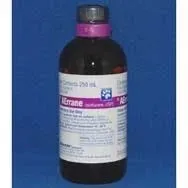
Table of Contents
Package leaflet: Information for the user
Introduction
PACKAGE LEAFLET: INFORMATION FOR THE USER
Aerrane 100% liquid for vapour inhalation
isoflurane
Read the entire leaflet carefully before you start using this medicine, because it contains important information for you.
- Keep this leaflet, as you may need to read it again.
- If you have any questions, consult your doctor or nurse.
- If you experience any adverse effects, consult your doctor or nurse, even if they are adverse effects not listed in this leaflet. See section 4.
In this leaflet:
1. What Aerrane 100% is and what it is used for
2. Before using Aerrane 100%
3. How to use Aerrane 100%
4. Possible side effects
5. How to store Aerrane 100%
6. Contents of the pack and other information
1. What Aerrane 100% is and what it is used for
Aerrane is an inhalation anesthetic that belongs to the group of halogenated hydrocarbons.
Aerrane is used for the induction and maintenance of general anesthesia.
2. Before using Aerrane 100%
Do not use Aerrane
- If you are allergic to isoflurane or any of the other components of this medicine (listed in section 6).
- If you are allergic to other halogenated agents, especially if you have experienced hepatic dysfunction (liver impairment with increased bilirubin and transaminases), jaundice (yellowing of the skin and eyes), unexplained fever, leukocytosis (increased white blood cells in the blood), or eosinophilia (increased levels of a type of white blood cells called eosinophils), after administration of halogenated anesthetics.
- If you have known or suspected genetic susceptibility to malignant hyperthermia (malignant hyperthermia is a rapid rise in body temperature and acute muscle contractions).
- If you are undergoing dental procedures outside a hospital or day-care medical facility.
Warnings and precautions
Consult your doctor or nurse before starting to use Aerrane.
Take special care with Aerrane
Inform your doctor:
- If you are at risk of increased intracranial pressure.
- If you are susceptible to malignant hyperthermia, as this may trigger increased metabolism in skeletal muscle, leading to high oxygen demand, hypercapnia (CO2 in the blood), rapid pulse (tachycardia), breathing difficulties, bluish discoloration of the skin, heart rhythm disturbances (arrhythmias), and/or unstable blood pressure.
- If you have pre-existing liver disease and have received a halogenated anesthetic within the previous 3 months, since, as with other halogenated anesthetics, associated hypoxia (reduced oxygen supply to the body or tissue) and repeated exposure to isoflurane increase the risk of hepatotoxicity (liver toxicity).
- If you suffer from severe coronary insufficiency.
- If you have myasthenia gravis (fluctuating weakness of the body's voluntary muscles).
Take special care because:
- All patients anesthetized with isoflurane must be closely monitored, including electrocardiogram (ECG) and blood pressure monitoring.
- Aerrane may cause a slight decrease in intellectual function for 2 to 4 days after anesthesia. As with other anesthetics, mood changes and symptoms may persist up to 6 days after administration.
- If you are an elderly patient, the concentration of Aerrane required to maintain anesthesia will be lower.
- Cases of QT interval prolongation associated with torsade de pointes (fatal in rare cases) have been reported. Caution should be exercised when administering isoflurane to patients at risk of QT interval prolongation.
- Caution should be exercised when administering general anesthesia, including isoflurane, to patients with mitochondrial disorders.
- Isoflurane relaxes uterine muscle; therefore, the lowest possible concentration is recommended during gynecological procedures.
- Rarely, cardiac arrhythmias (irregular heartbeat), increased serum potassium levels, and postoperative death have occurred in children, primarily in patients with diseases affecting the nervous system and muscles (such as Duchenne muscular dystrophy), and often with concomitant administration of other drugs acting at this level (succinylcholine).
- Repeated exposure to this type of anesthetic, especially if the interval is less than 3 months, may increase the risk of liver damage.
- In case of pre-existing liver disease, your doctor may choose a non-halogenated anesthetic.
- Cases of extreme heat, smoke, or spontaneous fire in anesthesia machines have been reported with this class of drugs when used with dried CO2 absorbents.
- If you have hypovolemia (low blood volume), hypotension (low blood pressure), or are debilitated, a low concentration of isoflurane is recommended.
- If you have a neuromuscular disease, such as myasthenia gravis (a disease characterized by muscle weakness), increased neuromuscular fatigue may occur.
- If you are at risk of bronchoconstriction (narrowing of the airways), bronchospasms may occur.
- If you have taken narcotic medications or other drugs that may cause respiratory depression, your doctor will monitor your breathing and provide assistance if necessary.
- If you have taken any of the muscle relaxants commonly used, as they significantly enhance the effect of Aerrane.
Children under two years of age:
Isoflurane can be used in neonates and children under 2 years of age with an acceptable margin of efficacy and safety and is compatible with all medications used in routine anesthetic practice.
Using Aerrane with other medicines
Inform your doctor or nurse if you are using, have recently used, or might need to use any other medicine.
It is important that you inform your doctor if you are taking or have recently taken any of the following medicines:
- Non-selective MAO inhibitors (antidepressants). Treatment with these medicines should be discontinued 2 weeks before surgery.
- Beta-sympathomimetics (such as isoprenaline for asthma treatment) and alpha- and beta-sympathomimetics (such as epinephrine and norepinephrine, medicines acting on blood pressure and heart): due to the potential risk of ventricular arrhythmias, isoflurane should be used with caution when combined with these medicines.
- Beta-blockers (medicines used for heart rhythm disorders, hypertension, and after heart attack).
- Succinylcholine (used as a muscle relaxant during anesthesia): its use in combination with isoflurane may cause serious cardiac arrhythmias in the postoperative period.
- Isoniazid (for the treatment of tuberculosis). Treatment with isoniazid should be discontinued one week before surgery and should not be restarted until 15 days after surgery, as concomitant use of isoflurane and isoniazid may increase the risk of liver toxicity.
- Amphetamines and their derivatives, psychostimulants, appetite suppressants, ephedrine and its derivatives (used to treat hypotension, sinusitis, rhinitis, and other disorders); it is preferable to discontinue treatment with these medicines a few days before surgery due to the risk of hypertension.
- Inducers of CYP2E1 (isoniazid, alcohol), which may increase serum fluoride levels.
- All muscle relaxants commonly used, as they significantly enhance the effect of Aerrane.
- Opioid analgesics (opium derivatives for pain relief), benzodiazepines, and other sedative agents (used to treat anxiety): these medicines enhance the respiratory depressant effect of isoflurane and should therefore be administered with caution when used concomitantly.
- Calcium channel antagonist antihypertensives, due to the risk of hypotension, particularly dihydropyridine derivatives.
- Clonidine.
Pregnancy, breastfeeding, and fertility
Use during pregnancy
If you are pregnant or breastfeeding, think you may be pregnant, or plan to become pregnant, consult your doctor or nurse before using this medicine.
Isoflurane should only be used during pregnancy when the benefit outweighs the potential risk.
Isoflurane relaxes uterine muscle; therefore, during gynecological procedures, the lowest possible concentration should be used.
Use in cesarean sections
Isoflurane has been shown to be safe and effective for maintenance of anesthesia during cesarean sections at concentrations up to 0.75%.
Breastfeeding
It is unknown whether isoflurane passes into breast milk; therefore, caution should be exercised if isoflurane is administered to nursing women. Consult your doctor or nurse if you are breastfeeding.
Driving and use of machines
Do not drive or operate tools or machinery after receiving Aerrane, as this medicine may affect your reaction ability. Your doctor will advise you how long you should wait before driving or operating machinery.
Performing activities requiring mental alertness, such as driving or operating heavy machinery, may be impaired for up to 1 day after isoflurane anesthesia.
Before resuming normal daily activities, including driving or operating machinery, you should consider that mood changes and reduced mental alertness may last up to 6 days after anesthesia.
3. How to use Aerrane 100%
Aerrane will always be administered to you by an anaesthetist using a specially calibrated vaporizer designed for this product, so that the released concentration can be precisely controlled. The anaesthetist will decide the dose you will receive, depending on your age, weight and the type of procedure you are undergoing.
Your child must be closely monitored during administration of isoflurane.
Induction of anaesthesia at the beginning of anaesthesia
Isoflurane is not recommended for use in infants and children for induction of anaesthesia.
Medication prior to anaesthesia
The anaesthetist may decide to administer medication to your child to counteract possible respiratory depression and decreased heart rate, effects which may occur with the use of isoflurane.
This medication should only be administered by or under the supervision of specialists trained in anaesthesia, with appropriate facilities available for airway management, artificial ventilation, supplemental oxygen, and circulatory resuscitation.
Increasing the concentration produces a decrease in blood pressure and respiratory depression, which are dose-dependent effects of Aerrane.
Recovery from general anaesthesia must be carefully assessed before leaving the recovery room.
If you are given more Aerrane than you should
The doctor will stop administration and apply the necessary measures.
In case of overdose or accidental ingestion, contact the Toxicology Information Service at telephone number 915.620.420.
4. Possible adverse effects
Like all medicines, this medicine may cause adverse effects, although not everyone experiences them.
The following adverse effects have been observed with unknown frequency:
-
Respiratory disorders such as narrowing of the lungs and airways causing breathing difficulty, inadequate ventilation, or laryngospasm (closure of the larynx), respiratory depression.
-
Increased blood sugar or potassium levels. Rare cases of abnormal heart rhythms (arrhythmias) and death associated with the use of inhaled anesthetics in children shortly after surgery have been reported.
-
Carboxyhemoglobinemia (excess hemoglobin bound to carbon monoxide in the blood) with the use of fluorinated inhaled anesthetics such as desflurane, enflurane, and isoflurane.
-
Seizures, agitation, and delirium.
-
Mild changes in mood. Symptoms may last up to 6 days after administration of isoflurane.
-
Decreased intellectual function. Symptoms may persist for 2–4 days after anesthesia.
-
Cardiac disorders such as arrhythmias, bradycardia and tachycardia (slow or fast heart rate), cardiac arrest, or electrocardiogram abnormalities.
-
Decreased blood pressure.
-
Bleeding in patients who have undergone uterine mucosal curettage (dilation and curettage).
-
Respiratory disorders such as bronchospasm (narrowing of the airways), inadequate ventilation, or laryngospasm (closure of the larynx).
-
Intestinal obstruction, vomiting, and nausea.
-
Liver cell damage that may lead to liver tissue death.
-
Alterations in blood values including increased white blood cell count, creatinine, liver enzymes, bilirubin, and fluoride; and decreased blood urea, cholesterol, and alkaline phosphatase.
-
Malignant hyperthermia (a condition characterized by increased intramuscular calcium leading to sustained muscle contraction, elevated body temperature, tachycardia, skin and renal changes, metabolic acidosis, increased blood potassium, etc.).
-
Chills.
-
Abnormal electroencephalogram.
-
Potential risk of uterine bleeding due to the uterine-relaxing effects of isoflurane and other inhaled agents.
-
Myoglobinuria (excretion of myoglobin in urine).
-
Rhabdomyolysis (abnormal breakdown of muscle tissue).
Hypersensitivity reactions have rarely been reported, including facial swelling, contact dermatitis, skin rash, difficulty breathing (dyspnea), wheezing (sound of air passing through a congested airway), chest discomfort, or severe allergic reaction (anaphylactic reaction), especially in individuals with prolonged exposure to isoflurane, for example due to occupational exposure.
Paediatric population:
Rarely, increased blood potassium levels have been observed, which may lead to cardiac arrhythmias and death in paediatric patients during the postoperative period.
During induction of anesthesia, increased salivation and increased tracheobronchial secretions may occur, which can provoke laryngospasms.
Other special populations:
Neuromuscular diseases: Rarely, increased blood potassium levels have been observed, which may lead to cardiac arrhythmias and death in paediatric patients during the postoperative period. Patients with neuromuscular disorders, especially those with Duchenne muscular dystrophy, are most vulnerable.
Elderly patients:
In elderly patients, the doses of isoflurane required to maintain anesthesia are lower.
Reporting of adverse effects
If you experience any type of adverse effect, consult your doctor or nurse, even if they are possible adverse effects not listed in this leaflet. You may also report them directly via the Spanish Pharmacovigilance System for Human Medicines: https://www.notificaram.es. By reporting adverse effects, you can help provide more information on the safety of this medicine.
5. Storage of Aerrane 100%
Keep this medicine out of the sight and reach of children.
Do not use this medicine after the expiry date stated on the container after EXP. The expiry date is the last day of the month indicated.
Store in an upright position.
Disposal of unused medicine and of all materials that have been in contact with it must be carried out in accordance with local regulations.
6. Additional information
Composition of Aerrane 100%
The active substance is isoflurane. Each ml contains 1 ml of isoflurane.
There are no other ingredients.
Appearance of the product and contents of the container
Aerrane is presented as a liquid for vapor inhalation in 250 ml bottles. The non-flammable vaporized liquid is administered by inhalation using a specifically calibrated vaporizer.
Pack sizes are:
1 bottle of 250 ml
6 bottles of 250 ml per box.
Only certain pack sizes may be marketed.
Marketing Authorization Holder
Baxter S.L.
Pouet de Camilo 2,
46394 Ribarroja del Turia (Valencia)
Manufacturer
Baxter SA,
Boulevard Rene Branquart 80,
B-7860 Lessines,
Belgium
Further information on this medicinal product can be obtained by contacting the Marketing Authorization Holder:
Date of latest review of this summary: November 2018
Detailed and up-to-date information on this medicinal product is available on the website of the Spanish Agency for Medicines and Health Products (AEMPS) http://www.aemps.gob.es.
This information is intended exclusively for healthcare professionals:
Isoflurane must be administered only by personnel trained in general anesthesia, using a vaporizer specifically designed and intended for use with isoflurane.
Like other halogenated anesthetics, isoflurane may interact with dry carbon dioxide absorbents, forming carbon monoxide. To minimize this risk in closed anesthetic circuits and thereby prevent elevated carboxyhemoglobin levels, effective (moist) absorbents must be used.
Disposal of unused medicinal product and of all materials that have come into contact with it must be carried out in accordance with local regulations.
Dosage and administration
Aerrane must be administered using vaporizers specifically calibrated so that the concentration of anesthetic released can be accurately calculated.
Induction of anesthesia.
If isoflurane is used to induce anesthesia, an initial concentration of 0.5% is recommended. Concentrations of 1.3–3.0% generally achieve surgical anesthesia within 7 to 10 minutes.
It is recommended to use a hypnotic dose of a fast-acting barbiturate or another agent such as propofol, etomidate, or midazolam to prevent coughing or laryngospasm, which may occur if induction is performed with Aerrane alone or in combination with oxygen or an oxygen-nitrous oxide mixture.
Maintenance of anesthesia.
Anesthesia may be maintained during surgery using a concentration of 1.0 to 2.5% with concomitant administration of nitrous oxide and oxygen.
A higher concentration, 1.5 to 3.5%, of Aerrane is required when administered with pure oxygen.
Minimum alveolar concentration (M.A.C.) values for Aerrane (isoflurane) decrease with age, declining from 1.28% in oxygen at twenty years of age, to 1.15% at forty years, and down to 1.05% at sixty years.
ADULTS | ||
Age | Mean MAC value in 100% Oxygen | 70% N2O |
26 ± 4 years | 1.28% | 0.56% |
44 ± 7 years | 1.15% | 0.50% |
65 ± 5 years | 1.05% | 0.37% |
PEDIATRIC POPULATION | ||
Age | Mean MAC value in 100% Oxygen | |
Premature neonates with less than 32 weeks gestational age | 1.28% | |
Premature neonates between 32–37 weeks gestational age | 1.41% | |
0–1 month | 1.60% | |
1–6 months | 1.87% | |
6–12 months | 1.80% | |
1–5 years | 1.60% |
Recovery.
The concentration of Aerrane should be reduced to 0.5% at the end of the procedure, or to 0% during wound closure to allow immediate recovery.
If administration of all anesthetic agents has been discontinued, the patient's airways should be ventilated several times with 100% oxygen until the patient is fully awake.
If the carrier gas is a mixture of 50% O2 and 50% N2O, the minimum alveolar concentration (MAC) of isoflurane is approximately 0.65%.
Premedication.
Medications used for premedication should be individually selected, taking into account the respiratory depressant effect of isoflurane. The use of anticholinergic drugs is a matter of choice, but may be advisable for inhalation induction in pediatric patients.
Induction of anesthesia in children.
Isoflurane is not recommended for use as an inhaled induction agent in infants and children due to the occurrence of coughing, apnea, desaturation, increased secretions, and laryngospasm (see section 4.4).