Adasuve 9.1 mg inhalation powder (single dose)
Spain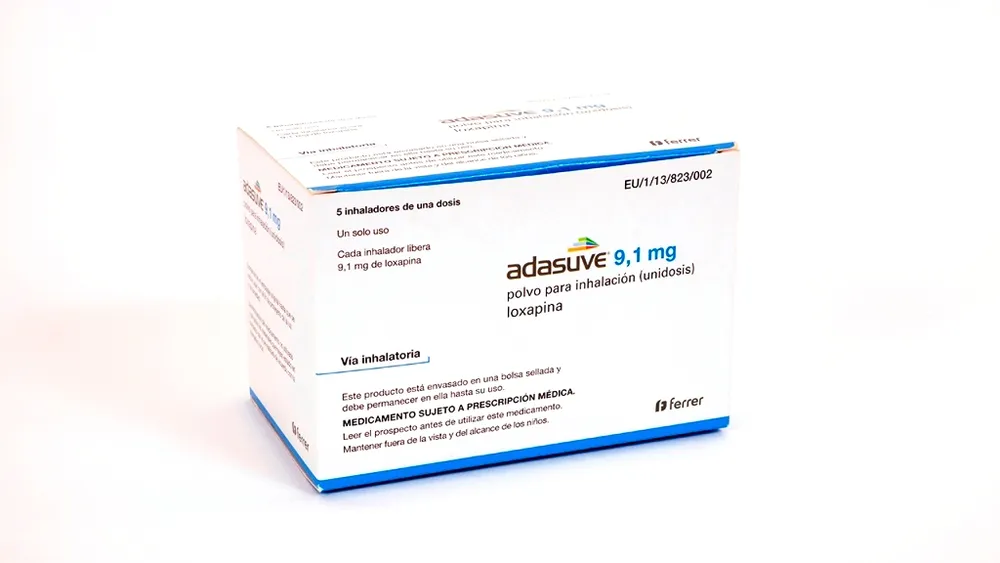
Table of Contents
Package leaflet: Information for the user
Introduction
Package leaflet: information for the user
ADASUVE 9.1 mg inhalation powder (single dose)
loxapine
Read the entire leaflet carefully before you start using this medicine, because it contains important information for you.
-
Keep this leaflet, as you may need to read it again.
-
If you have any questions, consult your doctor or nurse.
-
If you experience any adverse reactions, consult your doctor or nurse, even if they are adverse reactions not listed in this leaflet. See section 4.
Leaflet contents
- What ADASUVE is and what it is used for
- What you need to know before using ADASUVE
- How to use ADASUVE
- Possible adverse effects
- How to store ADASUVE
- Contents of the pack and other information
1. What ADASUVE is and what it is used for
ADASUVE contains the active substance loxapine, which belongs to a group of medicines called antipsychotics. ADASUVE works by blocking certain chemicals in the brain (neurotransmitters), such as dopamine and serotonin, thereby producing calming effects and relief from aggressive behaviour.
ADASUVE is used to treat acute symptoms of mild to moderate agitation that may occur in adult patients with schizophrenia or bipolar disorder. These are conditions characterised by symptoms such as:
-
(Schizophrenia) seeing, hearing or feeling things that do not exist, distrust, false beliefs, incoherent speech and behaviour, and emotional indifference. People with this illness may also feel depressed, guilty, anxious or tense.
-
(Bipolar Disorder) a sense of "high" mood, with excessive energy, requiring much less sleep than normal, speaking very rapidly with many ideas, and sometimes extreme irritability.
2. What you need to know before using ADASUVE
Do not use ADASUVE
- if you are allergic to loxapine or amoxapine;
- if you have symptoms of wheezing or dyspnea (shortness of breath);
- if you have lung problems such as asthma or chronic obstructive pulmonary disease (which your doctor may refer to as “COPD”).
Warnings and precautions
Consult your doctor or nurse before starting to use ADASUVE to determine whether it is suitable for you.
-
ADASUVE may cause narrowing of the airways (bronchospasm) and symptoms such as wheezing, coughing, chest tightness, or shortness of breath. These usually occur within 25 minutes after administration.
-
Neuroleptic Malignant Syndrome (NMS) is a group of symptoms that may occur when taking antipsychotics, including ADASUVE. These symptoms may include high fever, muscle rigidity, irregular or rapid heart rate or pulse. NMS can be fatal. Do not use ADASUVE again if you have previously experienced NMS.
-
Antipsychotic medicines such as ADASUVE may cause uncontrollable movements, for example facial grimacing, tongue protrusion, lip smacking or biting, rapid blinking, or fast movements of the legs, arms, or fingers. If this occurs, treatment with ADASUVE should be discontinued.
-
ADASUVE should be used with caution in patients who are intoxicated or experiencing delirium.
Before taking ADASUVE, inform your doctor or nurse:
-
if you have or have had respiratory problems such as asthma or other chronic lung diseases such as bronchitis or emphysema;
-
if you have or have had heart problems or stroke;
-
if you have or have had low or high blood pressure (hypotension or hypertension);
-
if you have or have had seizures (convulsions);
-
if you have or have had glaucoma (increased eye pressure);
-
if you have or have had urinary retention (incomplete emptying of the urinary bladder);
-
if you have previously used ADASUVE and experienced symptoms of wheezing or dyspnea;
-
if you have experienced uncontrollable muscle or eye movements, lack of coordination, constant muscle contractions, or a feeling of restlessness or inability to stay still;
-
if you are an elderly person with dementia (loss of memory and other mental abilities).
Children and adolescents
The use of ADASUVE is not recommended in children and adolescents under 18 years of age.
Use of ADASUVE with other medicines
Inform your doctor if you are taking, have recently taken, or might need to take any other medicines, including:
- adrenaline;
- medicines to treat a respiratory condition;
- medicines that may cause seizures (e.g., clozapine, tricyclics, SSRIs, tramadol, mefloquine);
- medicines used to treat Parkinson’s disease;
- lorazepam or other centrally acting medicines (used to treat anxiety, depression, pain, or for sleep), or other medicines that cause drowsiness;
- illicit drugs (illegal drugs);
- medicines such as fluvoxamine, propranolol, and enoxacin, and other medicines that inhibit a liver enzyme called “CYP450 1A2”;
- medicines used to treat schizophrenia, depression, or pain, as these may increase your risk of seizures.
The combined use of ADASUVE and adrenaline may cause hypotension.
Use of ADASUVE with alcohol
Since ADASUVE affects the central nervous system, alcohol consumption should be avoided during treatment with ADASUVE.
Pregnancy and breastfeeding
If you are pregnant or breastfeeding, think you may be pregnant, or plan to become pregnant, consult your doctor before using this medicine. Women are advised not to breastfeed for a period of 48 hours after administration of ADASUVE and to discard milk produced during that time. Newborn babies of mothers treated with antipsychotic medicines during the third trimester of pregnancy may experience the following symptoms: tremor, muscle stiffness and/or weakness, drowsiness, agitation, breathing difficulties, and feeding problems. If your baby shows any of these symptoms, contact your doctor immediately.
Driving and using machines
Do not drive or operate tools or machinery after taking ADASUVE until you know how it affects you, as possible adverse effects of ADASUVE include dizziness, sedation, and drowsiness.
3. How to use ADASUVE
Always use this medicine exactly as instructed by your doctor or nurse. If in doubt, consult your doctor or nurse again.
The recommended initial dose is 9.1 mg. After 2 hours, your doctor may prescribe a second dose after carefully considering your condition, and may reduce the dose to 4.5 mg if your doctor considers this a more appropriate dose for treating your condition.
ADASUVE must be used under the supervision of a doctor or nurse.
ADASUVE is indicated for inhalation use. After the doctor or nurse has prepared ADASUVE, you will be asked to hold the device in your hand, exhale, place the mouthpiece into your mouth, inhale the medicine through the device, and hold your breath for a few seconds.
If you take more ADASUVE than you should
If you think you have taken more ADASUVE than you should, inform your doctor or nurse. Patients who receive more ADASUVE than intended may experience any of the following symptoms: extreme tiredness or drowsiness, breathing difficulties, hypotension, throat irritation, bad taste in the mouth, or uncontrolled muscle or eye movements.
If you have any further questions about the use of this medicine, ask your doctor or nurse.
4. Possible adverse effects
Like all medicines, this one may cause adverse effects, although not everyone will experience them.
If you experience any of the following adverse effects, consult your doctor immediately and stop taking the medicine:
-
respiratory symptoms, such as wheezing, cough, shortness of breath, or tightness in the chest, as this may indicate that the medicine is irritating the airways (uncommon unless you have asthma or COPD);
-
dizziness or fainting, as this may indicate that the medicine is lowering your blood pressure (uncommon);
-
worsening of agitation or confusion, especially combined with fever or muscle stiffness (uncommon). These may be associated with a serious condition called neuroleptic malignant syndrome (NMS).
Also, consult your doctor if you experience any of the following adverse effects, which have also been reported with other forms of this medicine:
Very common (may affect more than 1 in 10 people): bad taste in mouth or somnolence.
Common (may affect up to 1 in 10 people): dizziness, throat irritation, dry mouth, or fatigue.
Uncommon (may affect up to 1 in 100 people): uncontrolled muscle or eye movements, lack of coordination, constant muscle contraction, or feeling restless or unable to stay still.
Other additional effects that have been associated with long-term oral use of loxapine and that may be relevant for ADASUVE include fainting upon standing, increased heart rate, hypertension, blurred vision, dry eyes, and decreased urine output.
Reporting of adverse effects
If you experience any adverse effects, talk to your doctor or nurse, even if they are possible adverse effects not listed in this leaflet. You may also report them directly through the national reporting system detailed in Appendix V. By reporting adverse effects, you can help provide more information on the safety of this medicine.
5. Storage of ADASUVE
Keep this medicine out of the sight and reach of children.
Do not use ADASUVE after the expiry date stated on the label. The expiry date refers to the last day of the month indicated.
Store in the original packaging until ready for use, in order to protect it from light and moisture.
Do not use ADASUVE if the pouch is open or torn, or if there are any signs of physical damage to the medicine.
Medicines must not be disposed of via household waste. Ask your pharmacist how to dispose of medicines and packaging that you no longer need. This will help protect the environment.
6. Contents of the pack and other information
The active substance is loxapine. Each single-dose inhaler contains 10 mg of loxapine and delivers 9.1 mg of loxapine.
What ADASUVE looks like and contents of the pack
ADASUVE 9.1 mg inhalation powder (single dose) consists of a white, disposable, single-use plastic inhaler containing loxapine. Each inhaler is packaged in a sealed aluminium pouch. ADASUVE 9.1 mg is available in packs of 1 or 5 single-dose inhalers.
Marketing Authorisation Holder
Ferrer Internacional, S.A.
Gran Vía Carlos III, 94
08028 - Barcelona
Spain
Manufacturer
Ferrer Internacional, S.A.
Joan Buscalla, 1-9, 08173 Sant Cugat del Vallès
Barcelona, Spain
For more information about this medicine, please contact the local representative of the Marketing Authorisation Holder:
België/Belgique/BelgienLietuva
Ferrer Internacional, S.A. AOP Orphan Pharmaceuticals AG LT
Tél/Tel: +34 93 600 37 00 Tel +370 672 12222
????????Luxembourg/Luxemburg
AOP Orphan Pharmaceuticals AG BG Ferrer Internacional, S.A.
Te?.: +35 988 6666096 Tél/Tel: +34 93 600 37 00
Ceská republikaMagyarország
AOP Orphan Pharmaceuticals AG CZ AOP Orphan Pharmaceuticals AG HU
Tel: +420 251 512 947 Tel.: +36 1 3192633
DanmarkMalta
Ferrer Internacional, S.A. Ferrer Internacional, S.A.
Tlf: +34 93 600 37 00 Tel.: +34 93 600 37 00
DeutschlandNederland
Ferrer Deutschland GmbH Ferrer Internacional, S.A.
Tel: +49 (0) 2407 502311 0 Tel.: +34 93 600 37 00
EestiNorge
AOP Orphan Pharmaceuticals AG LT Ferrer Internacional, S.A.
Tel: +370 672 12222 Tlf: +34 93 600 37 00
Ελλ?δαÖsterreich
Ferrer Galenica S.A. AOP Orphan Pharmaceuticals AG
Τηλ: +30 210 52 81 700 Tel: +43 1 5037244-0
EspañaPolska
Ferrer Farma, S.A. AOP Orphan Pharmaceuticals S.A. PL
Tel.: +34 93 600 37 00 Tel: +48 22 5424068
FrancePortugal
Ferrer Internacional, S.A. Ferrer Portugal, S.A.
Tél: +34 93 600 37 00 Tel: +351 214449600
HrvatskaRomânia
AOP Orphan Pharmaceuticals AG Galenica S.A.
Tel: +43 1 5037244-0 Tel: +30 210 52 81 700
IrelandSlovenija
Ferrer Internacional, S.A. AOP Orphan Pharmaceuticals AG
Tel.: +34 93 600 37 00 Tel: +43 1 5037244-0
ÍslandSlovenská republika
Ferrer Internacional, S.A. AOP Orphan Pharmaceuticals AG SK
Sími: +34 93 600 37 00
Tel: +421 31 5502271
Italy Angelini S.p.A. Tel: +39 06 780531 | Finland Ferrer Internacional, S.A. Tel: +34 93 600 37 00 |
Cyprus Thespis Pharmaceutical Ltd Tel: +357 22 67 77 10 | Sweden Ferrer Internacional, S.A. Tel: +34 93 600 37 00 |
Latvia AOP Orphan Pharmaceuticals AG LT Tel: +370 672 12222 | United Kingdom Ferrer Internacional, S.A. Tel: +34 93 600 37 00 |
Date of the most recent review of this leaflet:
Other sources of information
Detailed information on this medicine is available on the European Medicines Agency website: http://www.ema.europa.eu.
This information is intended for healthcare professionals only:
Read all instructions before using this medicine. See the SmPC for more information.
Become familiar with ADASUVE: The following images show the important parts of ADASUVE.
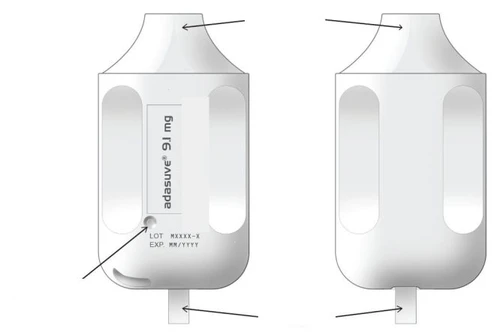 Mouthpiece
inhalation powder, loxapine |
Indicator light
Tab
-
ADASUVE is packaged in a sealed pouch.
-
When ADASUVE is removed from the pouch, the indicator light is off.
-
The indicator light turns on (green) when the tab is removed. The inhaler is ready to use.
-
The indicator light turns off automatically after the medication has been inhaled. Read the following 5 steps before administering ADASUVE to a patient.
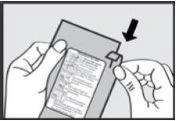
-{}- 1. Open the pouch
Do not open the pouch until ready to use. Tear open the aluminum pouch and remove the inhaler from its packaging.
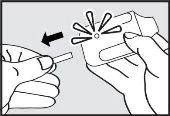
- Pull the tab.
Firmly pull the plastic tab from the back of the inhaler. The green light will turn on, indicating that the inhaler is ready to use.
Use within the first 15 minutes after removing the tab (or until the green light turns off) to prevent automatic deactivation of the inhaler.
Instruct the patient to:
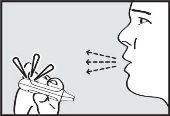
- Exhale
Keep the inhaler away from the mouth and exhale fully to empty the lungs.
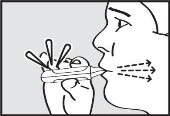
- Inhale
Breathe in deeply and steadily through the mouthpiece.
IMPORTANT: Check that the green light turns off after inhalation.
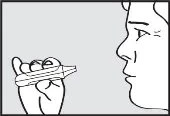
- Hold breath
Remove the mouthpiece from the mouth and hold breath for a few seconds.
NOTE: If the green light remains on after the patient has inhaled, instruct the patient to repeat steps 3 to 5.