Actromadol 660 mg modified-release tablets
Spain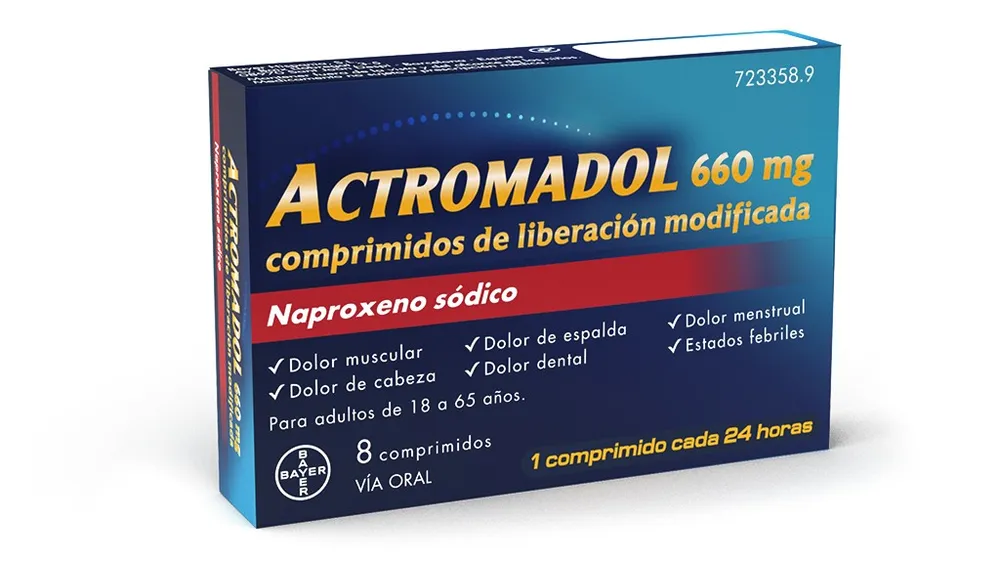
Table of Contents
Package Leaflet: Information for the User
Introduction
Package Leaflet: Information for the Patient
Actromadol 660 mg modified-release tablets
naproxen sodium
Read the entire leaflet carefully before you start taking this medicine, because it contains important information for you.
Follow exactly the instructions for administration of the medicine contained in this leaflet or those indicated by your doctor or pharmacist.
- Keep this leaflet, as you may need to read it again.
- If you need advice or more information, consult your pharmacist.
- If you experience adverse effects, consult your doctor or pharmacist, even if they are adverse effects not listed in this leaflet. See section 4.
- You should consult a doctor if you worsen or do not improve after 5 days for pain or 3 days for fever.
Leaflet Contents:
- What Actromadol is and what it is used for
- What you need to know before taking Actromadol
- How to take Actromadol
- Possible adverse effects
- How to store Actromadol
- Contents of the pack and other information
1. What Actromadol is and what it is used for
Actromadol contains the active substance naproxen sodium, a substance belonging to the group of medicines known as non-steroidal anti-inflammatory drugs (NSAIDs), and works by reducing pain and fever.
Actromadol is indicated in adults aged 18 to 65 years for the symptomatic relief of mild to moderate occasional pain, such as headaches, dental pain, menstrual pain, muscle pain (muscle spasms), or back pain (lumbago), as well as for febrile conditions.
You should consult a doctor if your condition worsens or does not improve after 3 days for fever or 5 days for pain.
2. What you need to know before starting to take Actromadol
Do not take Actromadol:
-
if you are allergic to naproxen or to any of the other ingredients of this medicine (listed in section 6),
-
if you currently have or have had on more than one occasion: a stomach or intestinal ulcer or bleeding,
- if you have previously experienced stomach or duodenal bleeding or a gastrointestinal perforation while taking a non-steroidal anti-inflammatory drug (NSAID),
-
if you have had allergic reactions such as asthma attacks (difficulty breathing, suffocation, bronchospasms, and in some cases coughing or wheezing) or hives after taking anti-inflammatory medicines, acetylsalicylic acid, or other analgesics,
-
if you suffer from asthma,
-
if you have nasal polyps,
-
if you have severe kidney, liver, and/or heart disease (renal, hepatic, and/or cardiac insufficiency),
-
if you are in the third trimester of pregnancy.
Warnings and precautions
Consult your doctor or pharmacist before starting to take Actromadol.
It is important to use the lowest effective dose that relieves your pain, and you should not take this medicine longer than necessary to control your symptoms.
Take special care if:
- You have had or develop a stomach or duodenal ulcer, bleeding, or perforation, which may present as severe or persistent abdominal pain and/or black stools, or even without prior warning symptoms.
- This risk is higher when high doses are used, with prolonged treatment, in patients with a history of peptic ulcer, and in elderly patients. In such cases, your doctor may consider adding a stomach-protective medicine.
Inform your doctor:
- If you are taking medicines that affect blood clotting or increase the risk of ulcers, such as oral anticoagulants or antiplatelet agents like acetylsalicylic acid. You should also mention the use of other medicines that could increase the risk of such bleeding, such as corticosteroids and selective serotonin reuptake inhibitors (SSRIs).
- If you have Crohn's disease or ulcerative colitis, as medicines like Actromadol may worsen these conditions.
- If you have high blood pressure, or reduced kidney, heart, or liver function, or have blood clotting disorders,
- If you have or have had rhinitis or hives,
- If you are in the first or second trimester of pregnancy.
Serious skin reactions, including Stevens-Johnson Syndrome (SJS), toxic epidermal necrolysis (Lyell's syndrome), and drug reaction with eosinophilia and systemic symptoms (DRESS), have been reported in association with Actromadol. Stop taking Actromadol and consult your doctor immediately if you notice any symptoms related to serious skin reactions described in section 4.
Cardiovascular precautions
Medicines like Actromadol may be associated with a moderate increase in the risk of heart attacks ("myocardial infarction") or strokes. This risk is more likely when high doses are used or treatment is prolonged. Do not exceed the recommended dose or duration of treatment (which is 1 tablet of 660 mg of sodium naproxen per day for a maximum of 5 days).
If you have heart problems, a history of stroke, or think you may be at risk for these conditions (for example, if you have high blood pressure, diabetes, high cholesterol, or are a smoker), you should discuss this treatment with your doctor or pharmacist.
In addition, these medicines may cause fluid retention, especially in patients with heart problems (heart failure) and/or high blood pressure (hypertension).
Concomitant use of this medicine with alcohol should be avoided.
Allergic reactions to this medicine, including breathing difficulties, swelling of the face and neck (angioedema), and chest pain, have also been reported with naproxen. Stop taking Actromadol immediately and contact your doctor or medical emergency services if you experience any of these symptoms.
Children and adolescents
Do not give this medicine to children or adolescents under 18 years of age.
Taking Actromadol with other medicines
Inform your doctor or pharmacist if you are taking, have recently taken, or might need to take any other medicines.
This is especially important in the case of:
- other analgesics or non-steroidal anti-inflammatory drugs (medicines used to treat pain, fever, and/or inflammation),
- certain antidepressants, such as selective serotonin reuptake inhibitors (SSRIs), as they increase the risk of bleeding,
- anticoagulants (medicines used to "thin" the blood and prevent clots), such as warfarin,
- medicines used to prevent transplant rejection (cyclosporine and tacrolimus),
- corticosteroids, as they may increase the risk of gastrointestinal bleeding,
- diuretics, ACE inhibitors, and angiotensin II receptor antagonists (used to treat high blood pressure or hypertension),
- lithium (used in certain psychiatric conditions),
- methotrexate (a medicine used to treat cancer and rheumatoid arthritis),
- low-dose acetylsalicylic acid (used to prevent blood clots).
Taking Actromadol with food, drinks, and alcohol
Take this medicine with food or milk.
Do not take this medicine with alcohol to avoid stomach damage.
If you regularly consume alcohol (three or more alcoholic drinks – beer, wine, spirits, etc. – per day), taking Actromadol may cause stomach bleeding.
Pregnancy, breastfeeding, and fertility
If you are pregnant or breastfeeding, think you may be pregnant, or are planning to become pregnant, consult your doctor or pharmacist before using this medicine.
Pregnancy
Do not take Actromadol during the last 3 months of pregnancy, as it may harm the fetus or cause complications during delivery. This medicine may cause kidney and heart problems in the fetus. It may affect your bleeding tendency and that of your baby, potentially leading to delayed or prolonged labor. Because the use of medications containing naproxen has been associated with an increased risk of congenital malformations and miscarriages, you should not take Actromadol during the first 6 months of pregnancy unless absolutely necessary. If treatment is required during this period or while trying to become pregnant, the dose should be limited to the lowest possible for the shortest duration. If you take Actromadol for several days starting from week 20 of pregnancy, it may cause kidney problems in the fetus, leading to low amniotic fluid levels (oligohydramnios) or narrowing of a blood vessel (ductus arteriosus) in the baby's heart. If prolonged treatment is needed, your doctor may recommend additional monitoring. |
Lactation
Women who are breastfeeding should consult their doctor before using this medicine, as naproxen passes into breast milk.
Fertility
For female patients of reproductive age, it should be considered that medicines containing naproxeno have been associated with a reversible decrease in fertility.
Driving and use of machinery
This medicine should be used with caution in patients whose activities require attention and who experience fatigue, dizziness, vertigo, insomnia, or visual disturbances during treatment with this medicine.
Actromadol contains lactose and sodium
This medicine contains lactose. If your doctor has informed you that you have an intolerance to certain sugars, consult with him before taking this medicine.
This medicine contains 60 mg of sodium (main component of table/cooking salt) per tablet. This corresponds to 3% of the maximum daily intake of sodium recommended for an adult.
3. How to take Actromadol
Follow exactly the dosage instructions for this medicine provided in this leaflet or those given by your doctor or pharmacist. If in doubt, consult your doctor or pharmacist.
The recommended dose is:
Adults aged 18 to 65 years: Take 1 tablet (660 mg of sodium naproxen) every 24 hours. The maximum daily dose is 1 tablet per day.
Do not take more than 1 tablet every 24 hours.
Patients over 65 years of age: Do not administer to patients over 65 years of age. Elderly individuals are more likely to experience adverse effects, so lower doses are recommended in these patients.
Patients with liver, kidney, or heart disease: Administration of this medicine is not recommended, as dose reduction is advised in these patients, using the lowest effective dose required. Consult your doctor.
Use in children and adolescents
Do not administer this medicine to children and adolescents under 18 years of age, due to insufficient data on its safety and efficacy.
Method of administration:
This medicine is administered orally.
Take the tablet whole, with a glass of water and without chewing, with food or milk, especially if gastrointestinal discomfort occurs.
Administration of this medicine should only occur when painful or febrile symptoms appear. As symptoms resolve, this medication should be discontinued.
If pain persists for more than 5 days, fever for more than 3 days, or if symptoms worsen or new symptoms appear, discontinue treatment and consult your doctor.
If you take more Actromadol than you should
If you have taken more Actromadol than recommended, consult your doctor or pharmacist immediately.
Symptoms of overdose include: headache, dizziness, tinnitus, blurred vision, drowsiness, sweating, rapid breathing, confusion, nausea, vomiting, and occasionally diarrhea. It is recommended to bring the medicine packaging and leaflet to the healthcare professional.
In case of overdose or accidental ingestion, contact your doctor or pharmacist immediately, go to a medical center, or call the Toxicology Information Service at: 91 562 04 20, stating the name of the medicine and the amount ingested.
4. Possible adverse effects
Like all medicines, this medicine can cause adverse effects, although not everyone will experience them.
Common adverse effects (may affect up to 1 in 10 patients):
- Gastrointestinal disorders, such as dyspepsia (stomach pain or heaviness), nausea, burning sensation, stomach pain,
- Headache, dizziness, feeling faint.
Uncommon adverse effects (may affect up to 1 in 100 people):
- Feeling of drowsiness, insomnia, somnolence,
- Vomiting, constipation or diarrhoea,
- Dizziness,
- Hypersensitivity reactions with exanthema (skin rash), pruritus, urticaria.
Rare adverse effects (may affect up to 1 in 1,000 patients):
- Gastrointestinal bleeding, peptic ulcers with or without bleeding, haematemesis and/or melaena (vomiting blood and/or blood in stools),
- Kidney damage,
- Liver injury,
- Angioedema (severe allergic reaction),
- Peripheral oedema (especially in patients with hypertension or renal insufficiency), fever, chills.
Very rare adverse effects (may affect up to 1 in 10,000 patients):
- Colitis, stomatitis (inflammation of the mouth mucosa), oesophagitis, pancreatitis, aphthae, intestinal ulcers,
- Jaundice (yellowing of the skin), hepatitis (inflammation of the liver), altered liver function,
- Kidney disorders such as interstitial nephritis (inflammation at the kidney level), capillary necrosis, nephrotic syndrome (characterized by cloudy urine and facial swelling), acute renal failure, haematuria, proteinuria,
- Aplastic or haemolytic anaemia (reduction in the number of red blood cells, white blood cells and platelets in the blood), increased blood pressure, blood disorders (leucopenia (reduced number of white blood cells), thrombocytopenia (reduced number of platelets), eosinophilia (increase in certain white blood cells), agranulocytosis (increase/decrease in certain white blood cells)), vasculitis (inflammation of blood vessels),
- Dyspnoea (shortness of breath), asthma, eosinophilic pneumonitis, sweating, photosensitivity (sensitivity to light), hair loss, chilblains, exudative multiform erythema (blisters on the skin), fixed drug eruption (rash), bullous skin reactions such as Stevens-Johnson syndrome and toxic epidermal necrolysis (Lyell's syndrome), lichen planus (skin inflammation with red papules mainly on the neck, forearm and abdomen), erythema nodosum (skin nodules), systemic lupus erythematosus, purpura (bleeding under the skin), porphyria and bullous epidermolysis,
- Anaphylaxis/anaphylactoid reactions (characterized by swelling due to fluid accumulation in the face, tongue or larynx (facial, lingual and laryngeal oedema), dyspnoea (shortness of breath), tachycardia and drop in blood pressure),
- Vision disturbances, corneal opacity (alteration of the cornea ranging from a faint spot to a greyish-white spot visible to the naked eye), papillitis (inflammation of the optic disc), papilloedema (swelling of the optic disc), and optic neuritis (inflammation of the optic nerve),
- Hearing impairment (reduced hearing), tinnitus (ringing in the ears) and auditory disorders,
- Congestive heart failure, pulmonary oedema (swelling due to fluid accumulation in the lungs),
- Psychiatric disorders, depression, sleep abnormalities, difficulty concentrating,
- Oedema (swelling due to fluid accumulation), thirst, malaise,
- Increased serum creatinine levels and liver values, hyperkalaemia,
- Symptoms resembling aseptic meningitis (general malaise, headache, vomiting and neck stiffness) in patients with autoimmune disorders, cognitive dysfunction (impaired cognition), or seizures.
If you notice any of the following adverse effects, stop taking Actromadol and consult your doctor immediately:
Frequency not known: cannot be estimated from the available data
- Generalized skin rash, high body temperature, elevated liver enzyme levels, blood abnormalities (eosinophilia), enlarged lymph nodes and involvement of other organs (Drug Reaction with Eosinophilia and Systemic Symptoms, also known as DRESS). See also section 2.
- A characteristic allergic skin reaction known as fixed drug eruption, which usually reappears at the same site upon re-exposure to the medicine and may appear as round or oval red patches, skin swelling, blisters (urticaria), and itching.
- Chest pain, which may be a symptom of a potentially serious allergic reaction called Kounis syndrome.
If you consider any of the adverse effects you experience to be severe, or if you notice any adverse effects not listed in this leaflet, inform your doctor or pharmacist.
Reporting of adverse effects
If you experience any type of adverse effect, consult your doctor or pharmacist, even if it is a possible adverse effect not listed in this leaflet. You may also report them directly via the Spanish Pharmacovigilance System for Human Medicines: https://notificaram.es. By reporting adverse effects, you can help provide more information on the safety of this medicine.
5. Storage of Actromadol
Keep this medicine out of the sight and reach of children.
No special storage conditions are required.
Do not use this medicine after the expiry date stated on the packaging after EXP. The expiry date is the last day of the month indicated.
Medicines must not be disposed of via wastewater or household waste. Dispose of unused medicines and their containers at the Punto Sigre collection point in your pharmacy. If you are unsure, ask your pharmacist how to dispose of medicines and containers you no longer need. This will help protect the environment.
6. Contents of the pack and other information
Composition of Actromadol
- The active substance is sodium naproxen. Each modified-release tablet contains 660 mg of sodium naproxen (equivalent to 600 mg of naproxen and 60 mg of sodium).
- The other components (excipients) are: microcrystalline cellulose, povidone, talc, magnesium stearate, hypromellose 2208, monohydrate lactose, colloidal anhydrous silica, hypromellose 2910, titanium dioxide, aluminium lake (E132) and carnauba wax.
Appearance of the product and contents of the pack
Actromadol 660 mg are modified-release tablets. The tablets are oval-shaped and blue in colour.
They are available in packs containing 4 and 8 modified-release tablets.
Marketing Authorization Holder
Bayer Hispania, S.L.
Av. Baix Llobregat, 3 – 5
08970 Sant Joan Despí (Barcelona)
Spain
Manufacturer
Bayer Bitterfeld GmbH,
Salegaster Chaussee 1
06803 Bitterfeld-Wolfen (Germany)
Date of the most recent revision of this leaflet: April 2025
Detailed and up-to-date information on this medicinal product is available on the website of the Spanish Agency for Medicines and Health Products (AEMPS) http://www.aemps.gob.es/