Aciclovir Altan 250 mg powder for solution for infusion EFG
Spain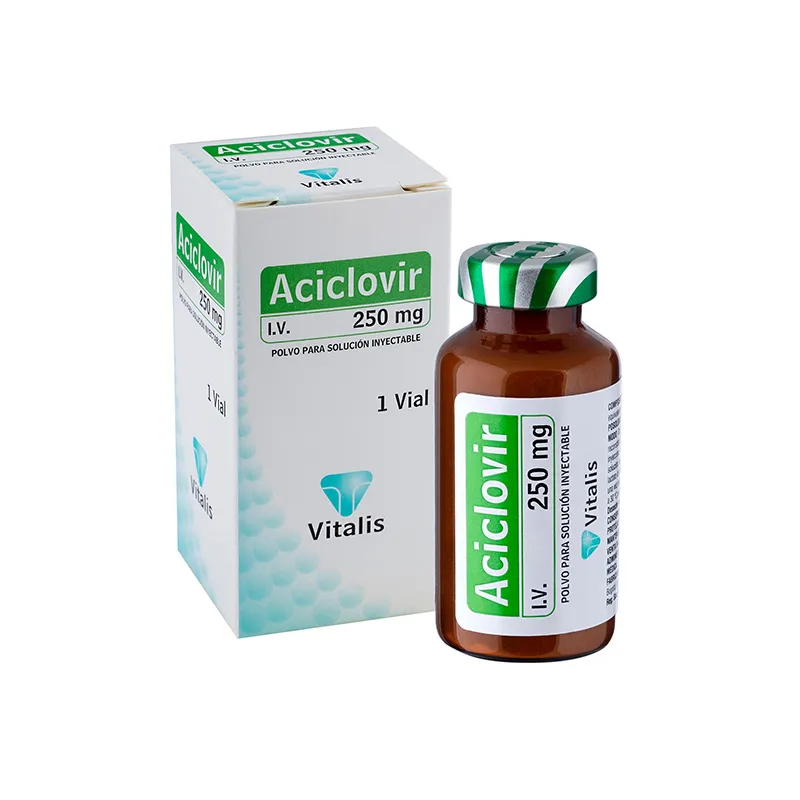
Table of Contents
- Package leaflet: Information for the user
- Introduction
- 1. What Aciclovir Altan 250 mg powder for solution for infusion is and what it is used for
- 2. What you need to know before starting to use Aciclovir Altan 250 mg powder for solution for infusion
- Aciclovir can pass into breast milk. If you are breastfeeding, consult your doctor before using Aciclovir Altan.
- **Aciclovir Altan 250 mg powder for solution for infusion EFG contains**:
- 3. How to use Aciclovir Altan 250 mg powder for solution for infusion
- Your doctor may adjust the dose of Aciclovir Altan if:
- 4. Possible adverse effects
- 5. Storage of Aciclovir Altan 250 mg powder for solution for infusion
- 6. Contents of the pack and other information
Package leaflet: Information for the user
Introduction
Package leaflet: information for the patient
Aciclovir Altan 250 mg powder for solution for infusion EFG
Read the entire leaflet carefully before you start using this medicine, because it contains important information for you.
-
Keep this leaflet as you may need to read it again.
-
If you have any questions, ask your doctor, pharmacist, or nurse.
-
This medicine has been prescribed for you only and must not be given to other people, even if they have the same symptoms as you, because it could harm them.
-
If you experience any adverse reactions, consult your doctor, pharmacist, or nurse, even if the reactions are not listed in this leaflet. See section 4.
Leaflet contents:
- What Aciclovir Altan is and what it is used for
- What you need to know before using Aciclovir Altan
- How to use Aciclovir Altan
- Possible side effects
- How to store Aciclovir Altan
- Contents of the pack and other information
1. What Aciclovir Altan 250 mg powder for solution for infusion is and what it is used for
Aciclovir Altan contains a drug called aciclovir, which belongs to a group of medicines known as antivirals.
This medicine is indicated for:
- treatment of Herpes simplex infections in immunocompromised patients (people with a weakened immune system, i.e., whose bodies have a reduced ability to fight infection).
- treatment of chickenpox and shingles (varicella-zoster infections) in immunocompromised patients (people with a weakened immune system).
- prevention of Herpes simplex infections in severely immunocompromised patients (whose immune system functions poorly).
- treatment of recurrent varicella-zoster and initial episodes of severe genital herpes in non-immunocompromised patients with a normally functioning immune system.
- treatment of herpes encephalitis (brain inflammation caused by the Herpes simplex virus).
- treatment of Herpes simplex infections in neonates.
2. What you need to know before starting to use Aciclovir Altan 250 mg powder for solution for infusion
Do not use Aciclovir
If you are allergic to aciclovir or valaciclovir or to any of the other ingredients of this medicine (listed in section 6).
Warnings and precautions
Talk to your doctor, pharmacist, or nurse before starting to use Aciclovir Altan if:
- you have kidney problems
- you are over 65 years of age.
If you are unsure whether the above applies to you, consult your doctor or pharmacist before using Aciclovir Altan.
It is important to drink plenty of water while using Aciclovir Altan.
Other medicines and Aciclovir Altan
Inform your doctor or pharmacist if you are taking, have recently taken, or might need to take any other medicines.
This includes medicines obtained without a prescription, including medicinal herbs.
In particular, tell your doctor or pharmacist if you are taking any of the following medicines:
-
probenecid, used to treat gout
-
cimetidine, used to treat ulcers
-
tacrolimus, ciclosporin, or mycophenolate mofetil, used to prevent your body from rejecting transplanted organs
-
theophylline, used for breathing problems
-
lithium, used to treat mental health conditions.
Pregnancy, breastfeeding and fertility
If you are pregnant or breastfeeding, think you may be pregnant, or are planning to become pregnant, consult your doctor or pharmacist before using this medicine.
Aciclovir Altan must not be prescribed without prior consultation with your doctor, who will assess the benefit versus the risk to the baby of taking Aciclovir Altan powder for solution for infusion during pregnancy.
Aciclovir can pass into breast milk. If you are breastfeeding, consult your doctor before using Aciclovir Altan.
Driving and use of machines
No studies have been conducted on the effects of aciclovir on driving or the ability to operate machinery.
Aciclovir Altan 250 mg powder for solution for infusion EFG contains:
This medicine contains 23.55 mg of sodium (main component of table/cooking salt) per vial. This is equivalent to 1.17% of the maximum daily sodium intake recommended for an adult.
3. How to use Aciclovir Altan 250 mg powder for solution for infusion
Aciclovir Altan will be administered to you by a doctor or nurse via intravenous injection.
Before administration, the medicine must be diluted.
Aciclovir Altan will be administered by continuous intravenous infusion slowly over a period of no less than 1 hour.
The doctor will determine the correct dose to be administered; the frequency and duration of dosing will depend on:
- the type of infection you have
- body weight
- age
Your doctor may adjust the dose of Aciclovir Altan if:
- you have kidney problems. If you have kidney problems, it is important that you receive plenty of fluids during treatment with Aciclovir Altan.
Consult your doctor before using Aciclovir Altan if you experience any of the above conditions.
If you use more Aciclovir Altan than you should
If you think you have been given an overdose of Aciclovir Altan, contact your doctor or nurse immediately.
If you are given an overdose of Aciclovir Altan, your laboratory test results may be altered (increased blood urea and creatinine levels), which may lead to impaired kidney function (renal failure).
In addition, you may:
- feel confused or agitated
- have hallucinations (seeing or hearing things that are not real)
- experience seizures
- lose consciousness (coma).
In case of overdose or accidental ingestion, contact your doctor or pharmacist immediately, or call the Toxicology Information Service at telephone number: 91 562 04 20, stating the name of the medicine and the amount ingested.
4. Possible adverse effects
Like all medicines, this medicine may cause adverse effects, although not everyone experiences them.
If you experience an allergic reaction, stop taking Aciclovir Altan and contact your doctor immediately.
You may experience the following adverse effects with this medicine:
Frequent (may affect 1 in 10 people)
- swelling and redness at the infusion site (phlebitis)
- nausea, vomiting
- itching, hives
- rash including skin reaction after exposure to sunlight (photosensitivity)
- changes in certain laboratory tests (increased blood urea, creatinine, and some liver enzymes)
Uncommon (may affect 1 in 100 people)
- reduction in the number of red blood cells (anaemia)
- reduction in the number of white blood cells (leucopenia)
- reduction in the number of platelets in the blood (thrombocytopenia)
Very rare (may affect 1 in 10,000 people)
- severe allergic reaction (anaphylaxis)
- swelling of the lips, face, neck, and throat causing breathing difficulty (angioedema)
- breathing difficulty (dyspnoea)
- headache (cephalalgia)
- dizziness
- confusion or agitation
- tremors
- unsteadiness while walking and lack of coordination (ataxia)
- slow and difficult speech (dysarthria)
- seeing or hearing things that are not real (hallucinations)
- disturbances in thought and perception associated with a psychiatric disorder (psychotic symptoms)
- seizures
- drowsiness
- brain damage (encephalopathy)
- loss of consciousness (coma)
- diarrhoea
- abdominal pain
- yellowing of the whites of the eyes or skin (jaundice)
- liver inflammation (hepatitis)
- reduced kidney function (renal failure, acute renal failure)
- lower back pain in the area corresponding to the kidneys (kidney pain)
- fatigue
- fever
- local inflammatory reactions
- abnormal laboratory tests (increased bilirubin)
Reporting of adverse effects
If you experience any type of adverse effect, talk to your doctor, pharmacist, or nurse, even if it is a possible adverse effect not listed in this leaflet. You can also report them directly through the National Pharmacovigilance System for Human Medicines: www.notificaRAM.es. By reporting adverse effects, you can help provide more information on the safety of this medicine.
5. Storage of Aciclovir Altan 250 mg powder for solution for infusion
Keep this medicine out of the sight and reach of children.
This medicine does not require any special storage conditions.
Do not use this medicine after the expiry date stated on the carton after 'EXP'. The expiry date refers to the last day of the month indicated.
Shelf life of the reconstituted product
After reconstitution of the vial with 10 ml of water for injections, the solutions are stable for 12 hours at 25°C.
6. Contents of the pack and other information
Composition of Aciclovir Altan
- The active substance is aciclovir. Each vial contains 250 mg of aciclovir (sodium).
- The other components (excipients) are: sodium hydroxide.
Appearance of Aciclovir and contents of the pack
Aciclovir Altan 250 mg powder for solution for infusion is supplied in packs of 5 and 50 vials.
Marketing Authorization Holder:
Altan Pharmaceuticals, S.A.
C/ Cólquide, 6. Portal 2. 1st floor. Office F.
Edificio Prisma
28230 Las Rozas. Madrid
Spain
Manufacturer:
Altan Pharmaceuticals, S.A.
Avda. Constitución 198-199
Polígono Industrial Monte Boyal
45950 Casarrubios del Monte (Toledo)
Spain
Date of the most recent review of this leaflet: September 2022
The following information is intended for healthcare professionals only:
DOSAGE AND ADMINISTRATION. FOR INFORMATIONAL PURPOSES ONLY
Refer to the product's Summary of Product Characteristics (SmPC) for complete prescribing information.
Pharmaceutical form
Powder for solution for infusion.
Dosage and method of administration
Adults
In patients with Herpes simplex (except herpes encephalitis) or recurrent Varicella zoster infections, the dose of Aciclovir Altan is 5 mg/kg body weight every 8 hours, provided renal function is normal (see Dosage in Renal Impairment).
In immunocompromised patients with Varicella zoster infections or patients with herpes encephalitis, the dose of Aciclovir Altan is 10 mg/kg body weight every 8 hours, provided renal function is normal (see Dosage in Renal Impairment).
In obese patients, the recommended adult dose should be based on ideal body weight rather than actual body weight.
Paediatric population
The dose of Aciclovir Altan in infants and children aged 3 months to 12 years is calculated based on body surface area.
In infants and children aged 3 months or older with Herpes simplex infections (except herpes encephalitis) or recurrent Varicella zoster infections, the dose of Aciclovir Altan should be 250 mg/m² body surface area every 8 hours if renal function is normal.
In immunocompromised children with Varicella zoster infections or children with herpes encephalitis, the dose of Aciclovir Altan should be 500 mg/m² body surface area every 8 hours if renal function is normal.
Neonates and infants up to 3 months of age
The dosage of Aciclovir Altan in neonates and infants up to 3 months of age is calculated based on body weight.
The recommended regimen for neonates and infants being treated for known or suspected neonatal herpes is aciclovir 20 mg/kg body weight administered intravenously every 8 hours, for 21 days in cases of disseminated disease or CNS involvement, or for 14 days in cases of disease limited to skin and mucous membranes.
Neonates and children with impaired renal function require appropriately adjusted doses according to the degree of impairment (see Dosage in Renal Impairment).
Elderly
Renal impairment should be considered in elderly patients, and dosage should be adjusted accordingly (see Dosage in Renal Impairment).
Adequate hydration should be maintained.
Renal impairment
Caution should be exercised when administering Aciclovir Altan to patients with renal impairment.
Adequate hydration should be maintained.
Dosage adjustment in patients with renal impairment is based on creatinine clearance, expressed in units of ml/min for adults and adolescents and in units of ml/min/1.73 m² for children under 13 years of age. The following dosage adjustments are recommended:
Table 1: Dosage adjustment for intravenous aciclovir in adults and adolescents with renal impairment.
Creatinine clearance | Dosage |
25 to 50 ml/min | The recommended dose (5 or 10 mg/kg body weight) should be administered every 12 hours. |
10 to 25 ml/min | The recommended dose (5 or 10 mg/kg body weight) should be administered every 24 hours. |
0 (anuric) to 10 ml/min | The recommended dose (5 or 10 mg/kg body weight) should be reduced by half and administered every 24 hours. |
Patients undergoing hemodialysis | The recommended dose for patients undergoing hemodialysis (5 or 10 mg/kg body weight) should be reduced by half and administered every 24 hours, with an additional dose administered after dialysis. |
Table 2: Dosage adjustment for intravenous aciclovir in neonates, infants, and children with renal impairment
Creatinine clearance | Dosage |
25 to 50 ml/min/1.73 m2 | The recommended dose (250 or 500 mg/m2 body surface area or 20 mg/kg body weight) should be administered every 12 hours. |
10 to 25 ml/min/1.73 m2 | The recommended dose (250 or 500 mg/m2 body surface area or 20 mg/kg body weight) should be administered every 24 hours. |
0 (anuric) to 10 ml/min/1.73 m2 | The recommended dose (250 or 500 mg/m2 body surface area or 20 mg/kg body weight) should be reduced by half and administered every 24 hours. |
Patients undergoing hemodialysis | In patients receiving hemodialysis, the recommended dose (250 or 500 mg/m2 body surface area or 20 mg/kg body weight) should be reduced by half and administered every 24 hours, with an additional dose administered after dialysis. |
Duration
Treatment with Aciclovir Altan usually lasts 5 days, but should be adjusted according to the patient's condition and response to therapy. Treatment for herpes encephalitis typically lasts 10 days. Treatment for neonatal herpes infections generally lasts 14 days for mucocutaneous infections (skin, eyes, mouth) and 21 days for disseminated disease or disease involving the central nervous system.
The duration of prophylactic administration of Aciclovir Altan is determined according to the length of the risk period.
Method of Administration
The solution must be administered intravenously, continuously and very slowly, so that it is infused over a period of not less than one hour.
Reconstitution and/or dilution should be performed immediately before use. The vial contains no preservatives; therefore, any unused solution must be discarded. If visible turbidity or crystallization occurs before or during infusion, the solution must be discarded. The reconstituted or diluted solution must not be refrigerated.
Reconstitution of the Lyophilized Powder
The intravenous aciclovir vial, containing 250 mg of lyophilized aciclovir, must be reconstituted by adding 10 ml of water for injectable preparations or 0.9% sodium chloride solution for intravenous infusion. The reconstituted solution has a concentration of 25 mg/ml.
Route of Administration
Direct IV administration:
The reconstituted solution should be administered using a controlled-rate infusion pump over a period of not less than one hour.
IV Infusion:
The reconstituted solution may be further diluted for administration by infusion. Dilution, either total or partial depending on the required dose, is performed by adding and mixing it with at least 50 ml of infusion solution to obtain a final concentration not exceeding 0.5% (250 mg/50 ml). The contents of two vials (500 mg of aciclovir) may be added to 100 ml of infusion solution. If a dose greater than 500 mg is required, a second volume of infusion solution may be used.
IV Infusion:
The reconstituted solution may be diluted for administration by infusion. Dilution, either total or partial depending on the required dose, is performed by adding and mixing it with at least 50 ml of infusion solution to obtain a final concentration not exceeding 0.5% (250 mg/50 ml). The contents of two vials (500 mg of aciclovir) may be added to 100 ml of infusion solution.
Intravenous aciclovir is compatible with the following infusion solutions:
- Sodium chloride 4.5 mg/ml (0.45%)
- Sodium chloride 9 mg/ml (0.9%)
- Sodium chloride 1.8 mg/ml (0.18%) + Glucose (4% w/v)
- Sodium chloride 4.5 mg/ml (0.45%) + Glucose (2.5% w/v)
- Sodium lactate compound (Hartmann's solution)
Once intravenous aciclovir is added to the infusion solution, the mixture should be shaken well to ensure adequate homogeneity.
Following accidental extravasation of intravenous aciclovir, severe inflammation of extravascular tissue may occur, sometimes followed by ulceration. Infusion using mechanical pumps carries higher risks than gravity-driven infusion. Phlebitis and inflammation at the infusion site may occur.
Detailed and up-to-date information on this medicinal product is available on the website of the Spanish Agency of Medicines and Medical Devices (AEMPS): http://www.aemps.gob.es/