Aceclofenac STADA 100 mg film-coated tablets EFG
Spain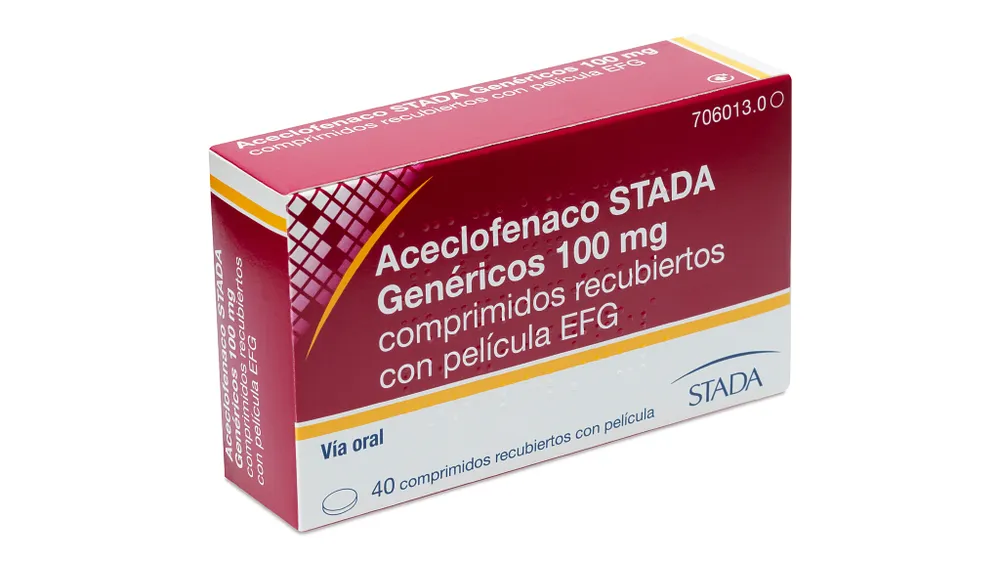
Table of Contents
- Package leaflet: Information for the user
- Introduction
- 1. What Aceclofenaco Stada is and what it is used for
- 2. What you need to know before taking Aceclofenaco Stada
- 3. How to take Aceclofenac Stada
- 4. Possible adverse effects
- 5. Storage of Aceclofenac Stada
- Keep this medicine out of the sight and reach of children.
- 6. Contents of the pack and other information
Package leaflet: Information for the user
Introduction
Package leaflet: information for the user
Aceclofenac Stada 100 mg film-coated tablets EFG
Read the entire leaflet carefully before you start taking this medicine.
- Keep this leaflet. You may need to read it again.
- If you have any questions, ask your doctor or pharmacist.
- This medicine has been prescribed for you only and must not be given to other people, even if they have the same symptoms as you. It may harm them.
- If you experience any adverse reactions, consult your doctor or pharmacist, even if they are adverse reactions not listed in this leaflet. See section 4.
Leaflet contents
- What Aceclofenac Stada is and what it is used for
- What you need to know before taking Aceclofenac Stada
- How to take Aceclofenac Stada
- Possible side effects
- How to store Aceclofenac Stada
- Contents of the pack and other information
1. What Aceclofenaco Stada is and what it is used for
Aceclofenaco Stada contains aceclofenac. This belongs to a group of medicines called non-steroidal anti-inflammatory drugs (NSAIDs).
Aceclofenac is used to relieve pain and inflammation in patients suffering from:
- Inflammation of the joints (osteoarthritis). This usually occurs in patients over 50 years of age and causes loss of cartilage and bone tissue adjacent to the joint.
- Autoimmune disease causing chronic inflammation of the joints (rheumatoid arthritis).
- Inflammation of the spine that may lead to fusion of the vertebrae (ankylosing spondylitis).
2. What you need to know before taking Aceclofenaco Stada
Do not take Aceclofenaco Stada:
-
if you are allergic to aceclofenac or to any of the other ingredients of this medicine (listed in section 6).
-
if you are allergic (hypersensitive) to acetylsalicylic acid or any other non-steroidal anti-inflammatory drug (NSAIDs) such as ibuprofen, naproxen, or diclofenac.
-
if you have taken acetylsalicylic acid or any other NSAID and experienced any of the following symptoms:
-
asthma attack
-
nasal discharge, itching, and/or sneezing (nasal irritation)
-
appearance of a rash with irregular red circular spots on the skin, possibly itchy or with a burning sensation
-
severe allergic reaction (anaphylactic shock). Symptoms include difficulty breathing, wheezing, unusual pain, and vomiting
- if you have had, currently have, or suspect you have a stomach or duodenal ulcer (the duodenum is the upper part of the small intestine), gastrointestinal bleeding, or perforation.
- if you have severe kidney disease
- if you suffer from severe hepatic insufficiency
- if you are in the third trimester of pregnancy (from the beginning of the sixth month of pregnancy).
- if you have bleeding disorders or coagulation problems (you bleed easily)
- if you have established heart disease and/or cerebrovascular disease, for example, if you have had a heart attack, stroke, mini-stroke (TIA), blockages in blood vessels of the heart or brain, or undergone surgery to remove an obstruction or coronary bypass
- if you have or have had circulatory problems (peripheral arterial disease)
The use of aceclofenac is not recommended in children.
Warnings and precautions
Consult your doctor or pharmacist before starting to take Aceclofenaco Stada:
- if you suffer from any other kidney or liver disease.
- if you have had or develop a stomach or duodenal ulcer, bleeding, or perforation, which may present as severe or persistent abdominal pain and/or black stools, or even without prior warning symptoms.
This risk is higher when high doses are used and treatment is prolonged, in patients with a history of peptic ulcer, and in elderly patients. In these cases, your doctor may consider prescribing a stomach-protective medication.
- if you have Crohn's disease (or ulcerative colitis), as this type of medication may worsen these conditions.
- if you have previously suffered from or still suffer from bronchial asthma
- if you have hepatic porphyria, aceclofenac may trigger an attack.
- if you have systemic lupus erythematosus, a chronic disease of the skin and connective tissue with a typical rash across the nose and cheeks.
- If chickenpox occurs, the use of this medicine should be avoided, as severe skin infections related to its use may rarely occur.
- if you are recovering from major surgery
- if you are an elderly patient (your doctor will prescribe the lowest effective dose for the shortest possible duration).
Hypersensitivity reactions may occur, including angioedema (swelling mainly around the eyes and lips, even without prior exposure to the drug). Serious skin reactions, including exfoliative dermatitis (skin irritation with peeling), Stevens-Johnson syndrome (skin and mucous membrane lesions), and toxic epidermal necrolysis. Very rarely, cases of necrolysis (a serious skin condition in which the epidermis detaches in sheets) have been reported associated with the use of NSAIDs (see section 4. Possible side effects). The risk is higher during the first month of treatment. Immediately discontinue treatment with aceclofenac at the first signs of skin rash, mucosal lesions, or other signs of hypersensitivity.
Medications such as aceclofenac may be associated with an increased risk of heart attack ("myocardial infarction") or stroke. In addition, these types of medications may cause fluid retention, especially in patients with heart failure and/or high blood pressure (hypertension).
Make sure to inform your doctor before starting to take aceclofenac:
- If you smoke
- If you have diabetes
- If you have angina, blood clots, high blood pressure, high cholesterol, or high triglycerides
All patients receiving an anti-inflammatory medication (medication from the group to which aceclofenac belongs) should be carefully monitored, among other things, for liver and kidney function, as well as blood counts.
Elderly patients have a higher incidence of adverse effects, particularly gastrointestinal bleeding and perforations (in some cases fatal).
Side effects can be minimized by using the lowest effective dose for the shortest possible time. Do not exceed the recommended dose or duration of treatment.
Children and adolescents
Currently, there are no clinical data on the use of aceclofenac in children, so its administration is not recommended.
Other medicines and Aceclofenaco Stada
Inform your doctor or pharmacist if you are taking, have recently taken, or might need to take any other medicine, including those obtained without a prescription.
Your doctor must decide whether you can take aceclofenac with other medicines. Do not start or stop taking any medicine, including those obtained without a prescription and herbal remedies, before consulting your doctor.
Please inform your doctor if you are taking:
-
Lithium (a mood-stabilizing medication used in the treatment of depression and bipolar disorder) and digoxin (a medication used in heart failure). Several NSAIDs inhibit the elimination of lithium and digoxin, leading to increased blood concentrations. Therefore, combination should be avoided unless frequent monitoring of lithium and digoxin levels is possible.
-
Antihypertensives (used to lower blood pressure). NSAIDs may reduce the effect of antihypertensives. If your renal function is impaired (for example, if you have lost a lot of fluids or are elderly), coadministration of antihypertensives such as ACE inhibitors or angiotensin II antagonists with NSAIDs may increase the risk of acute renal failure, usually reversible. In these cases, adequate hydration is important, and monitoring of renal function after starting concomitant therapy and periodically thereafter should be considered.
-
Quinolone antibiotics. Due to the interaction between quinolone antibiotics and NSAIDs, seizures may occur. This may happen in patients with or without a history of seizures.
-
Diuretics (medications used to increase the rate of urine excretion). Aceclofenac, like other NSAIDs, may inhibit the activity of diuretics. Therefore, blood pressure should be monitored. When administered concomitantly with potassium-sparing diuretics, your doctor will periodically monitor your blood potassium levels.
-
Anticoagulants (medications that prevent blood clotting), such as warfarin, heparin. Like other NSAIDs, aceclofenac may increase the activity of anticoagulants. Therefore, it is recommended that you remain under your doctor's supervision when receiving simultaneous treatment with aceclofenac and anticoagulants.
-
Antiplatelet agents. Concomitant use with NSAIDs may increase the risk of gastrointestinal bleeding.
-
Selective serotonin reuptake inhibitors (SSRIs, medications used to treat depression). Concomitant use with NSAIDs may increase the risk of gastrointestinal bleeding.
-
Methotrexate (used to treat cancers such as leukemias, lymphomas, and autoimmune disorders such as rheumatoid arthritis, lupus, and psoriasis). The possible interaction between NSAIDs and methotrexate should also be considered when low doses of methotrexate are administered, especially in patients with reduced renal function. NSAIDs and methotrexate should not be taken during the same 24-hour period because the amount of methotrexate retained in the blood may increase, posing a risk of toxic effects.
-
Mifepristone, which is used to induce abortion
-
Any type of steroids (estrogens, androgens, or glucocorticoids). Concomitant administration of corticosteroids may increase the risk of gastric or intestinal ulcers or bleeding.
-
Cyclosporine (a medication used in autoimmune diseases, rheumatoid arthritis, nephrotic syndrome, chronic glomerulonephritis, and organ transplantation). Concomitant administration of NSAIDs with cyclosporine may increase the risk of renal toxicity. Therefore, monitoring of renal function is important during combination therapy.
-
Tacrolimus (a medication used in organ transplantation). Concomitant administration of NSAIDs with tacrolimus may increase the risk of renal toxicity. Therefore, monitoring of renal function is important during combination therapy.
-
Zidovudine (a medication used to treat HIV). When NSAIDs are administered with zidovudine, there may be an increased risk of hematological toxicity, hemarthrosis (bleeding into the joint), and hematoma (bruising).
-
Antidiabetic medications (medications used to lower blood sugar levels). Isolated cases of hypoglycemic (decrease in blood sugar levels) and hyperglycemic (increase in blood sugar levels) effects have been reported. Therefore, it is recommended to consider the possibility of adjusting antidiabetic doses when administered concomitantly with aceclofenac.
-
Any other NSAID (acetylsalicylic acid, ibuprofen, naproxen), including COX-2 inhibitors. Concomitant use of two anti-inflammatory medications increases the likelihood of unwanted effects.
Taking Aceclofenaco Stada with food and drinks
Aceclofenac should preferably be taken with or after meals.
Pregnancy, breastfeeding, and fertility
If you are pregnant or breastfeeding, think you may be pregnant, or plan to become pregnant, consult your doctor or pharmacist before using this medicine.
Pregnancy
Do not take aceclofenac during the last 3 months of pregnancy, as it may harm your unborn child or cause problems during delivery. It may cause kidney and heart problems in your unborn baby. It may affect your tendency and that of your baby to bleed and may make labor later or longer than expected.
You should not take aceclofenac during the first 6 months of pregnancy unless absolutely necessary and advised by your doctor. If treatment is needed during this period or while trying to conceive, the lowest possible dose should be used for the shortest possible time. If taken for more than a few days starting from 20 weeks of pregnancy, aceclofenac may cause kidney problems in your unborn baby, which may lead to low levels of amniotic fluid surrounding the baby (oligohydramnios) or narrowing of a blood vessel (ductus arteriosus) in the baby's heart. If treatment is needed for more than a few days, your doctor may recommend additional monitoring.
Breastfeeding
There is no information available on the secretion of aceclofenac into human breast milk. However, in rats, only a very small amount of the drug was observed to pass into rat milk; therefore, the use of aceclofenac is not recommended.
Fertility
NSAIDs may negatively affect female fertility, and therefore, the use of aceclofenac is not recommended in women intending to become pregnant. Administration of aceclofenac should be discontinued in women experiencing difficulty conceiving or undergoing fertility testing.
Consult your doctor or pharmacist before taking any medicine.
Driving and using machines
If you are taking aceclofenac and experience dizziness, drowsiness, fatigue, visual disturbances, or any other neurological disorder, you should not drive or operate machinery.
If you have previously taken other anti-inflammatory medications (non-steroidal anti-inflammatory drugs) with similar effects, you should exercise particular caution when taking aceclofenac for the first time.
3. How to take Aceclofenac Stada
Follow exactly the dosing instructions for aceclofenac as prescribed by your doctor. You will be prescribed the lowest effective dose for the shortest possible time in order to reduce side effects. If in doubt, consult your doctor or pharmacist again.
The recommended daily dose for adults is 200 mg (2 aceclofenac tablets). One 100 mg tablet should be taken in the morning and another in the evening.
The tablets should be swallowed whole with a sufficient amount of water and taken during or after meals. Do not crush or chew the tablets.
Do not exceed the recommended daily dose.
Use in children and adolescents
Aceclofenac is not recommended for use in children.
Use in elderly patients
If you are elderly, you are more likely to experience serious side effects (listed in section 4 "Possible adverse effects").
If your doctor prescribes aceclofenac, you will be given the lowest effective dose for the shortest possible time.
Use in patients with renal or cardiac insufficiency
Your doctor will advise you on the appropriate dose. Caution is recommended, and periodic checks should be performed.
Use in patients with hepatic impairment
The dose should be reduced to 1 tablet of 100 mg per day.
Long-term treatment
If you take aceclofenac for a prolonged period, your doctor should perform quarterly monitoring, including kidney, liver, and blood tests.
If you suffer from osteoarthritis, you should not take aceclofenac continuously. Aceclofenac is only needed when inflammation begins. Analgesics may be used between these episodes. Your doctor will advise you which analgesics to take and how to take them.
If you take more Aceclofenac Stada than you should
In case of overdose or accidental ingestion, contact your doctor or pharmacist immediately, or call the Toxicology Information Service at telephone: 91 562 04 20, stating the medication and the amount ingested. It is recommended to bring the medicine packaging and leaflet to the healthcare professional.
Treatment, if necessary, consists of gastric lavage and administration of repeated doses of activated charcoal and antacids as needed, or other symptomatic treatment.
Specific therapies such as forced diuresis, dialysis, or hemoperfusion do not allow effective elimination of non-steroidal anti-inflammatory drugs due to their high degree of binding to plasma proteins and extensive metabolism.
Symptoms of overdose may include nausea, vomiting, stomach pain, dizziness, drowsiness, and headache.
If you forget to take Aceclofenac Stada
If you miss a dose, do not worry; simply take the next dose at your usual time.
Do not take a double dose to make up for missed doses.
If you stop taking Aceclofenac Stada
Do not stop taking aceclofenac unless your doctor tells you to do so.
If you have any further questions about the use of this medicine, ask your doctor or pharmacist.
Aceclofenac Stada contains sodium
This medicine contains less than 23 mg of sodium (1 mmol) per tablet; therefore, it is essentially "sodium-free".
4. Possible adverse effects
Like all medicines, aceclofenac may cause adverse effects, although not everyone experiences them.
STOP taking the medicine and consult a doctor IMMEDIATELY if you experience any of the following adverse effects:
Rare (may affect up to 1 in 1,000 people):
- swelling of the face, tongue or throat, difficulty swallowing, itchy rash and bronchospasm (angioedema), visual disturbances, high blood pressure, worsening of pre-existing high blood pressure, heart failure, difficulty breathing
- severe stomach pain or any sign of bleeding in the stomach or intestines, gastrointestinal bleeding (blood in stools or black stools)
Very rare (may affect up to 1 in 10,000 people):
- yellowing of the skin and eyes, sometimes with high fever or swelling and tenderness in the upper abdomen (hepatitis and/or pancreatitis)
- vomiting blood
- peeling of the skin or mucous membranes (Stevens-Johnson syndrome and toxic epidermal necrolysis, characterized by red blisters and eroded, bloody or crusted skin, and bullous necroepidermolysis, a condition with blisters and shedding of the upper layers of the skin)
STOP taking the medicine and seek medical attention if you experience:
- indigestion or heartburn
- abdominal pain (stomach ache) or other abnormal stomach symptoms
The following side effects have also been reported:
Common (may affect up to 1 in 10 people):
- dizziness
- abdominal pain, nausea
- diarrhea
- increased liver enzymes in blood
Uncommon (may affect up to 1 in 100 people):
- gas (flatulence)
- inflammation or irritation of the stomach lining (gastritis)
- constipation
- vomiting
- mouth ulcers
- Itching
- rash
- skin inflammation (dermatitis)
- raised, red, itchy, burning or stinging skin patches (urticaria)
- increased blood urea levels
- increased blood creatinine levels
Rare (may affect up to 1 in 1,000 people):
- anemia (low red blood cell count)
- hyperkalemia (high potassium levels in blood)
- hypersensitivity (allergic reaction)
- severe allergic reaction, including anaphylactic shock
Very rare (may affect up to 1 in 10,000 people):
- decreased number of platelets in blood (thrombocytopenia)
- decreased hemoglobin concentration in blood due to destruction of red blood cells (hemolytic anemia)
- severe reduction in granulocyte count in blood (granulocytopenia)
- reduced functionality of the bone marrow producing blood cells (bone marrow depression)
- depression
- unusual dreams
- inability to sleep
- tingling, pricking or numbness of the skin
- uncontrollable trembling (tremor)
- drowsiness
- headaches
- abnormal taste in the mouth
- sensation of spinning when standing
- ringing in the ears (tinnitus)
- pounding or rapid heartbeat (palpitations)
- flushing
- hot flushes
- inflammation of the veins (vasculitis)
- shortness of breath
- high-pitched breathing sound
- mouth inflammation
- stomach ulcer
- intestinal perforation
- worsening of ulcerative colitis and Crohn's disease
- spontaneous skin bleeding (appearing as a rash), severe skin reactions
- skin irritation (eczema)
- kidney failure
- fluid retention and swelling
- tiredness
- leg cramps
- increased blood alkaline phosphatase levels
- weight gain
Other side effects reported with this type of medicine (NSAIDs) include:
- hallucinations
- confusion
- partial or complete blurred vision loss
- painful eye movement
- worsened asthma
- skin reaction to sunlight
- kidney inflammation
- general malaise
Exceptionally, severe skin infections have been observed during chickenpox.
Medicines such as aceclofenac may be associated with a small increased risk of heart attack ("myocardial infarction") or stroke.
Reporting of adverse effects
If you experience any kind of adverse effect, consult your doctor or pharmacist, even if it is an effect not listed in this leaflet. You can also report them directly via the Spanish Pharmacovigilance System for Human Medicines: https://www.notificaram.es. By reporting adverse effects, you can help provide more information on the safety of this medicine.
5. Storage of Aceclofenac Stada
Keep this medicine out of the sight and reach of children.
Do not use this medicine after the expiry date stated on the carton and blister (after EXP). The expiry date is the last day of the month indicated.
This medicine does not require any special storage conditions.
Medicines should not be disposed of via wastewater or household waste. Dispose of unused medicines and their containers at the SIGRE point at your pharmacy. If in doubt, ask your pharmacist how to dispose of medicines and containers you no longer need. This will help protect the environment.
6. Contents of the pack and other information
Composition of Aceclofenac Stada
- The active substance is aceclofenac. Each tablet contains 100 mg of the active substance aceclofenac.
- The other components are: microcrystalline cellulose (E460i), sodium croscarmellose, copovidone, talc (E553b), colloidal anhydrous silica, glycerol distearate.
The coating contains: HPMC 2910/hypromellose, microcrystalline cellulose, titanium dioxide (E171), polyoxyl 40 stearate (macrogol stearate).
Appearance of the medicinal product and pack contents
Aceclofenac Stada 100 mg is presented as white, round, biconvex film-coated tablets.
Available in aluminum/aluminum blisters in packs containing 20, 30, 40, 60, 90, 100 or 180 tablets.
Only some pack sizes may be marketed.
Marketing Authorization Holder and Manufacturer
Marketing Authorization Holder
Laboratorio STADA, S.L.
Frederic Mompou, 5
08960 Sant Just Desvern (Barcelona)
Spain
Manufacturer
Holsten Pharma GmbH
Hanstrasse 31-35
Frankfurt am Main
60528 Hessen
Germany
This medicinal product is authorized in the European Economic Area member states under the following names:
BE: Aceclofenac EG 100 mg filmomhulde tabletten
ES: Aceclofenac Stada 100 mg film-coated tablets EFG
FR: ACECLOFENAC EG LABO 100 mg comprimés pelliculés
IT: ACECLOFENAC EG 100 mg compresse rivestite con film
LU: Aceclofenac EG 100 mg comprimés pelliculés
Date of the most recent review of this leaflet: February 2023
Detailed and up-to-date information on this medicinal product is available on the website of the Spanish Agency of Medicines and Health Products (AEMPS) http://www.aemps.gob.es/