Aceclofenac CINFA 100 mg film-coated tablets EFG
Spain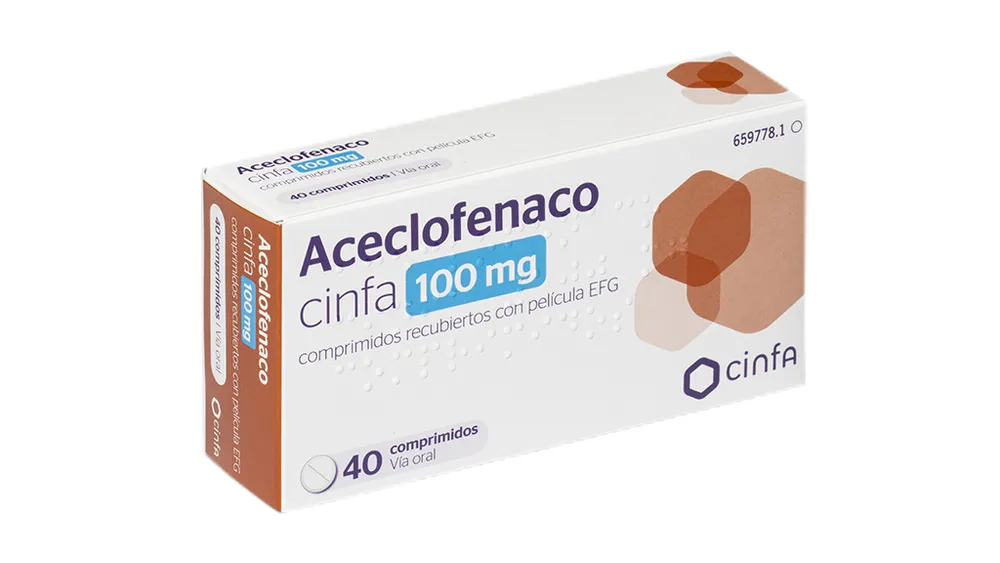
Table of Contents
- Package leaflet: Information for the user
- Introduction
- 1. What aceclofenac cinfa is and what it is used for
- 2. What you need to know before starting to take aceclofenac cinfa
- 3. How to take aceclofenac cinfa
- 4. Possible adverse effects
- 5. Storage of aceclofenac cinfa
- 6. Contents of the container and additional information
Package leaflet: Information for the user
Introduction
Package leaflet: information for the user
aceclofenac cinfa 100 mg film-coated tablets EFG
Read all of this leaflet carefully before you start taking this medicine, because it contains important information for you.
- Keep this leaflet. You may need to read it again.
- If you have any further questions, ask your doctor or pharmacist.
- This medicine has been prescribed for you only. Do not give it to other people, even if they have the same symptoms as yours, because it may harm them.
- If you experience any adverse effects, talk to your doctor or pharmacist, even if they are effects not listed in this leaflet. See section 4.
Contents of the leaflet
- What aceclofenac cinfa is and what it is used for.
- What you need to know before taking aceclofenac cinfa.
- How to take aceclofenac cinfa.
- Possible side effects.
- How to store aceclofenac cinfa.
- Contents of the pack and other information.
1. What aceclofenac cinfa is and what it is used for
Aceclofenac cinfa are film-coated tablets for oral administration.
Aceclofenac has analgesic, anti-inflammatory, and antirheumatic properties.
Your doctor has prescribed this medicine for the treatment of painful inflammatory conditions such as lower back pain (lumbago), toothache (odontalgia), and joint pain (shoulder periarthritis and extra-articular rheumatism). Aceclofenac cinfa is also indicated for the long-term treatment of pain and inflammation associated with chronic joint disorders: osteoarthritis, rheumatoid arthritis, and ankylosing spondylitis.
2. What you need to know before starting to take aceclofenac cinfa
It is important that you use the lowest dose that relieves/controls your pain and that you do not take aceclofenac cinfa for longer than necessary to control your symptoms.
Do not take aceclofenac cinfa:
- If you are in the third trimester of pregnancy or if you are breastfeeding.
- If you are allergic to aceclofenac or to any of the other components of this medicine (listed in section 6).
- If acetylsalicylic acid or other non-steroidal anti-inflammatory drugs (NSAIDs) have caused you asthma, rhinitis, urticaria, or any other allergic reaction.
- If you have had a stomach or duodenal ulcer, gastrointestinal bleeding, or a perforation of the digestive tract.
- If you have bleeding disorders or coagulation problems (you bleed easily).
- If you have severe renal impairment.
- If you have severe hepatic impairment.
- If you have established heart disease and/or cerebrovascular disease, for example, if you have had a heart attack, stroke, mini-stroke (TIA), blockages in the blood vessels of the heart or brain, or surgery to remove an obstruction or coronary bypass.
- If you have or have had circulatory problems (peripheral arterial disease).
Warnings and precautions
Talk to your doctor or pharmacist before starting to take aceclofenac cinfa
- If you have had or develop a stomach or duodenal ulcer, bleeding, or perforation, which may present as severe or persistent abdominal pain and/or black stools, or even without prior warning symptoms.
This risk is higher when high doses are used or treatment is prolonged, in patients with a history of peptic ulcer, and in elderly patients. In such cases, your doctor may consider prescribing a stomach-protecting medicine.
Elderly patients have a higher incidence of adverse effects, particularly gastrointestinal bleeding and perforation (in some cases fatal).
- If you have any liver disease.
- If you have renal impairment.
- If you have heart problems or have had a stroke (cerebrovascular accident, hemorrhage).
- If you smoke.
- If you have diabetes.
- If you have angina, blood clots, high blood pressure, high cholesterol, or high triglycerides.
Medicines such as aceclofenac cinfa may be associated with an increased risk of heart attacks ("myocardial infarction"). Adverse effects can be minimized by using the lowest effective dose for the shortest possible duration. Do not exceed the recommended dose or duration of treatment.
Also, this type of medicine may cause fluid retention, especially in patients with heart failure and/or high blood pressure (hypertension).
-
If you have blood disorders.
-
If you are taking medications that affect blood coagulation, such as oral anticoagulants like warfarin, or antiplatelet agents such as acetylsalicylic acid, inform your doctor. You should also mention the use of other medicines that could increase the risk of bleeding, such as corticosteroids and selective serotonin reuptake inhibitor (SSRI) antidepressants.
-
If you have Crohn's disease or ulcerative colitis, because medicines like aceclofenac cinfa may worsen these conditions.
-
If you are recovering from major surgery.
-
If you have had or still suffer from bronchial asthma.
-
In case of chickenpox, the use of this medicine should be avoided, as serious skin infections related to its use may rarely occur.
-
Hypersensitivity reactions may occur, and very rarely, severe allergic reactions (see section 4. Possible side effects). The risk is higher during the first month of treatment. Discontinue treatment immediately at the first signs of skin rash, mucosal lesions, or other signs of hypersensitivity.
Consult your doctor, even if any of the above circumstances have occurred to you in the past.
Taking aceclofenac cinfa with other medicines
Inform your doctor or pharmacist if you are taking, have recently taken, or might need to take any other medicine.
Certain medicines may interact with aceclofenac. In such cases, it may be necessary to adjust the dose or discontinue treatment with one of the medicines.
This is especially important if you are taking lithium, digoxin, diuretics, antihypertensives, anticoagulants, antiplatelet agents, hypoglycemic agents, methotrexate, corticosteroids, acetylsalicylic acid or other non-steroidal anti-inflammatory drugs, selective serotonin reuptake inhibitors (SSRI antidepressants), cyclosporine, tacrolimus, or zidovudine.
Taking aceclofenac cinfa with food and drink
aceclofenac cinfa can be taken with or without food.
Pregnancy, breastfeeding, and fertility
If you are pregnant or breastfeeding, think you may be pregnant, or are planning to become pregnant, consult your doctor or pharmacist before using this medicine.
Pregnancy and women of childbearing age:
Do not take aceclofenac if you are in the last 3 months of pregnancy, as it may harm the fetus or cause problems during delivery. It may cause kidney and heart problems in your fetus. It may affect your tendency and that of your baby to bleed and may delay or prolong labor beyond expectations. You should not take aceclofenac during the first 6 months of pregnancy unless strictly necessary and as directed by your doctor. If treatment is needed during this period or while trying to conceive, you should take the lowest possible dose for the shortest possible time. From week 20 of pregnancy, aceclofenac may cause kidney problems in your fetus if taken for more than a few days, which may lead to low levels of amniotic fluid surrounding the baby (oligohydramnios) or narrowing of a blood vessel (ductus arteriosus) in the baby's heart. If treatment for longer than a few days is needed, your doctor may recommend additional monitoring.
For women of childbearing age, it should be noted that medicines like aceclofenac have been associated with a reduced ability to conceive.
Breastfeeding
Aceclofenac should not be taken if you are breastfeeding.
Driving and using machines
If you experience dizziness, fainting, vertigo, or other central nervous system disturbances while taking aceclofenac, do not drive or operate any tools or machinery.
aceclofenac cinfa contains sodium
This medicine contains less than 1 mmol of sodium (23 mg) per tablet; therefore, it is essentially "sodium-free".
3. How to take aceclofenac cinfa
Follow exactly the instructions for use of this medicine as given by your doctor or pharmacist. If in doubt, consult your doctor or pharmacist again.
The recommended dose is 200 mg per day, i.e. one tablet in the morning and one at night (1 tablet every 12 hours).
The tablets should be swallowed whole with a little water.
The score line is only intended to divide the tablet if you have difficulty swallowing it whole.
The duration of treatment will be determined by your doctor. Do not stop treatment earlier than indicated, even if you feel better.
If you think that the effect of aceclofenac is too strong or too weak, inform your doctor or pharmacist.
Use in children:
Not recommended.
Use in elderly patients:
Your doctor will determine the dose to be taken and should carry out periodic checks.
Use in patients with renal insufficiency or heart failure:
Your doctor will determine the dose to be taken and should carry out periodic checks.
Use in patients with hepatic insufficiency:
The dose should be reduced to 1 tablet per day.
Long-term treatment:
If you take aceclofenac for a prolonged period, your doctor should carry out quarterly checks, for example of kidney and liver function and blood tests.
If you take more aceclofenac cinfa than you should
In case of overdose or accidental ingestion, consult your doctor or pharmacist immediately, or call the Toxicology Information Service (telephone: 915 620 420), indicating the medicine and the amount ingested.
If you forget to take aceclofenac cinfa
Do not worry. Do not take a double dose to make up for forgotten doses. Take the next dose according to the usual schedule.
If you have any further questions about the use of this medicine, ask your doctor or pharmacist.
4. Possible adverse effects
Like all medicines, this medicine may cause adverse effects, although not everyone experiences them.
The adverse effects that may occur with aceclofenac include:
Frequent (may affect up to 1 in 10 patients)
- Gastrointestinal discomfort, abdominal pain, nausea, and diarrhea.
- Dizziness.
- Increased liver enzymes.
Uncommon (may affect up to 1 in 100 patients)
- Flatulence, stomach inflammation, constipation, vomiting, and mouth ulcers.
- Itching, skin rash, skin inflammation (dermatitis), and urticaria.
- Increased urea, increased creatinine.
Rare (may affect up to 1 in 1,000 patients)
- Blood in stool, gastrointestinal bleeding, gastrointestinal ulcer.
- Facial swelling.
- Heart failure, high blood pressure.
- Anemia.
- Severe allergic reaction, allergies.
- Vision abnormalities.
- Difficulty breathing.
Very rare (may affect up to 1 in 10,000 patients)
- Inflammation of the mucosa of the mouth, inflammation of the pancreas, intestinal perforation, vomiting with blood.
- Worsening of ulcerative colitis and Crohn's disease has also been observed.
- Purple spots on the skin, severe skin reactions.
- Medicines such as aceclofenac may, in very rare cases, be associated with very serious mucocutaneous reactions such as Stevens-Johnson Syndrome and Toxic Epidermal Necrolysis.
- Palpitations, flushing, feeling of warmth, inflammation of blood vessels (vasculitis).
- Liver injury (including hepatitis), increased alkaline phosphatase.
Medicines like aceclofenac may be associated with liver disorders causing yellowing of the skin and eyes, sometimes accompanied by high fever or swelling and tenderness in the upper abdomen. If any of the following reactions occur—yellowing of the skin or eyes—discontinue treatment and inform your doctor IMMEDIATELY.
- Decrease in white blood cells, decrease in platelets, bone marrow suppression, hemolytic anemia.
- Increased potassium in blood.
- Depression, sleep disturbances, difficulty falling asleep.
- Tingling, drowsiness, headache, taste disturbances, tremors.
- Dizziness, ringing in the ears (tinnitus).
- Noisy breathing, bronchospasm.
- Leg cramps.
- Impaired kidney function (nephrotic syndrome), kidney failure.
- Fatigue, fluid retention (edema).
- Weight gain.
Exceptionally, severe skin infections have been observed during chickenpox.
Reporting of adverse effects
If you experience any type of adverse effect, consult your doctor or pharmacist, even if it is a possible adverse effect not listed in this leaflet. You may also report them directly via the Spanish Pharmacovigilance System for Human Medicines: https://www.notificaram.es. By reporting adverse effects, you can help provide more information on the safety of this medicine.
5. Storage of aceclofenac cinfa
Keep this medicine out of the sight and reach of children.
Do not store above 30°C.
Do not use this medicine after the expiry date stated on the packaging after “EXP”. The expiry date refers to the last day of the month indicated.
Medicines must not be disposed of via wastewater or household waste. Dispose of unused medicines and their packaging at the SIGRE Point at your pharmacy. If you are unsure, ask your pharmacist how to dispose of medicines and packaging you no longer need. This will help protect the environment.
6. Contents of the container and additional information
Composition of aceclofenac cinfa
The active substance is aceclofenac. Each tablet contains 100 mg of aceclofenac.
The other components are:
- Tablet core: microcrystalline cellulose (E-460i), povidone, sodium croscarmellose, polysorbate 80, glycerol distearate and anhydrous colloidal silica.
- Tablet coating: Opadry Y-5-7068 (hypromellose, hydroxypropylcellulose (E-463), titanium dioxide (E-171) and macrogol 400).
Appearance of the product and contents of the container
aceclofenac cinfa is presented as white, cylindrical, biconvex, film-coated tablets, scored on one side. Each pack contains 20, 40 or 500 tablets (hospital pack).
Only certain pack sizes may be marketed.
Marketing authorization holder and manufacturer
Laboratorios Cinfa, S.A.
Carretera Olaz-Chipi, 10. Polígono Industrial Areta.
31620 Huarte (Navarra), Spain
Date of the most recent review of this leaflet: March 2023.
Detailed information on this medicinal product is available on the website of the Spanish Agency of Medicines and Health Products (AEMPS) http://www.aemps.es/
You can access detailed and up-to-date information on this medicine by scanning the QR code included in the package leaflet and outer packaging with your mobile phone (smartphone). You can also access this information at the following internet address: https://cima.aemps.es/cima/dochtml/p/69223/P_69223.html
QR code link: https://cima.aemps.es/cima/dochtml/p/69223/P_69223.html