Acarbose Tecnigen 100 mg tablets
Spain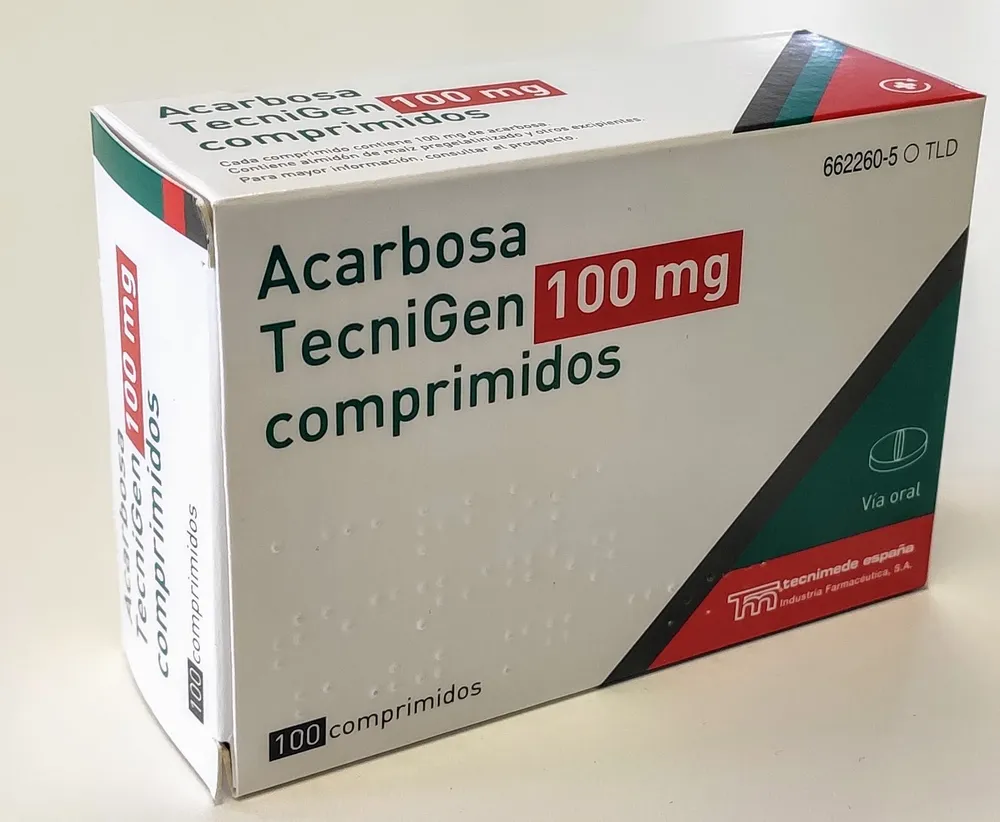
Table of Contents
- Package leaflet: Information for the user
- Introduction
- 1. What Acarbosa TecniGen 100 mg tablets are and what they are used for
- 2. What you need to know before taking Acarbosa TecniGen 100 mg tablets
- 3. How to take Acarbosa TecniGen 100 mg tablets
- 4. Possible adverse effects
- 5. Storage of Acarbose TecniGen 100 mg tablets
- 6. Contents of the pack and other information
Package leaflet: Information for the user
Introduction
Package leaflet: Information for the patient
Acarbose TecniGen 100 mg tablets
Read all of this leaflet carefully before you start taking this medicine because it contains important information for you.
- Keep this leaflet as you may need to read it again.
- If you have any questions, ask your doctor or pharmacist.
- This medicine has been prescribed for you only and must not be given to other people, even if they have the same symptoms as you, because it could harm them.
- If you experience any adverse effects, consult your doctor or pharmacist, even if they are adverse effects not listed in this leaflet. See section 4.
Contents of the leaflet
- What Acarbose TecniGen 100 mg tablets are and what they are used for
- What you need to know before taking Acarbose TecniGen 100 mg tablets
- How to take Acarbose TecniGen 100 mg tablets
- Possible side effects
- How to store Acarbose TecniGen 100 mg tablets
- Contents of the pack and other information
1. What Acarbosa TecniGen 100 mg tablets are and what they are used for
Acarbosa TecniGen belongs to the group of oral antidiabetic medicines, which reduce blood glucose levels.
Acarbosa slows down the breakdown of carbohydrates (sugars) present in food, resulting in their slower absorption. Thus, blood sugar levels do not rise as sharply after eating. Persistently high blood sugar levels may, over time, cause serious damage to blood vessels and vital organs such as the heart, brain, kidneys, eyes, and nervous system. Acarbosa helps maintain blood sugar levels within normal limits, reducing the incidence or delaying the onset of such complications.
To achieve optimal effect, acarbose should be taken at the beginning of meals.
Acarbosa is administered to diabetic patients. It is used for the treatment of adult-onset diabetes when dietary management alone is insufficient, or as an adjunct to treatment with sulfonylureas, metformin, or insulin.
2. What you need to know before taking Acarbosa TecniGen 100 mg tablets
Do not take Acarbosa TecniGen 100 mg
- if you are allergic (hypersensitive) to acarbose or to any of the other components of this medicine
- if you have chronic intestinal disorders associated with digestion and absorption problems
- if you have any intestinal disease (e.g. Roemheld syndrome, large hernias, intestinal obstructions, or intestinal ulcers)
- if you have kidney disease
- if you have diabetic ketoacidosis or severe hepatic insufficiency (e.g. hepatic cirrhosis).
Take special care with Acarbosa TecniGen 100 mg
- if you experience fatigue, loss of appetite, abdominal pain, dark urine, or yellowing of the skin or eyes, consult your doctor immediately
- during the first 6–12 months of treatment. Rarely, during treatment with acarbose, liver enzymes may increase. Therefore, your doctor will monitor these enzymes during the first 6–12 months.
Other medicines and Acarbosa TecniGen 100 mg
Inform your doctor or pharmacist if you are taking, have recently taken, or might need to take any other medicines, including those obtained without a prescription:
- if you are taking sulfonylureas, metformin, or insulin
- if Acarbosa TecniGen causes you diarrhea, it may interfere with the absorption of other orally administered medicines. Concurrent use with laxatives may enhance their effect. The effectiveness of Acarbosa TecniGen may be reduced by simultaneous use of antacids, certain cholesterol-lowering drugs, intestinal adsorbents, or digestive enzyme preparations. Therefore, these combinations should be avoided.
- in isolated cases, acarbose may affect the bioavailability of digoxin, requiring an adjustment in digoxin dosage.
- if you take acarbose and neomycin (a bactericidal antibiotic) at the same time, the post-meal rise in blood glucose may be further reduced and may lead to more frequent or more severe abdominal discomfort. If symptoms are severe, speak with your doctor. Your doctor may consider a temporary reduction in the dose of acarbose.
Taking Acarbosa TecniGen 100 mg with food and drinks
It is recommended to limit the intake of table sugar and foods containing sugar, as they may cause abdominal discomfort or diarrhea.
Pregnancy and breastfeeding
If you are pregnant or breastfeeding, think you may be pregnant, or are planning to become pregnant, consult your doctor or pharmacist before using any medicine.
Do not take acarbose if you are pregnant, as there are no data regarding its safety in pregnant women.
If you become pregnant or suspect pregnancy, inform your doctor. The use of Acarbosa TecniGen is also not recommended during breastfeeding.
Driving and using machines
No effects on the ability to drive or use machines have been reported.
Diabetes treatment with acarbose as monotherapy does not cause hypoglycemia (low blood sugar levels) and therefore does not affect the ability to drive or operate machinery. However, if you take acarbose together with other diabetes medications, hypoglycemia may occur (symptoms of low blood sugar such as fainting, confusion, increased sweating, vision disturbances, or difficulty concentrating), and therefore you should exercise extreme caution when driving or operating dangerous machinery.
3. How to take Acarbosa TecniGen 100 mg tablets
Follow exactly the instructions for use of this medicine provided by your doctor or pharmacist. If in doubt, consult your doctor or pharmacist again.
The recommended dose is 100 mg (1 tablet), 3 times daily.
On rare occasions, if considered necessary, the dose may be increased up to a maximum of 200 mg (2 tablets), 3 times daily.
Your doctor will determine the frequency and duration of treatment.
The tablets should be taken at the beginning of meals. They may be swallowed whole with a little liquid or chewed together with the first bites of food.
The tablets should be removed from the blister pack immediately before each dose.
Use in children and adolescents:
The safety and efficacy of acarbose in children and adolescents under 18 years of age have not been established.
If you take more Acarbosa TecniGen 100 mg than you should
In case of overdose or accidental ingestion, consult your doctor or pharmacist immediately, or call the Toxicology Information Service at 91 562 04 20, indicating the medicine and the amount taken. It is recommended to bring the medicine's packaging and leaflet to the healthcare professional.
No specific symptoms are expected if an overdose of acarbose is ingested outside of meals. However, if taken with sugary drinks or foods, only a worsening of the described adverse reactions would occur. In such cases, the intake of sugary foods or drinks should be avoided for the next 4–6 hours after taking the medicine. If one or more of these symptoms occur, inform your doctor immediately or go to the nearest medical center.
If you forget to take Acarbosa TecniGen 100 mg
Do not take a double dose to make up for forgotten doses.
If you stop taking Acarbosa TecniGen 100 mg tablets
If you stop treatment with this medicine suddenly, without appropriate substitute treatment for diabetes, your blood glucose levels may rise. Speak with your doctor before stopping this medicine.
If you have any further questions about the use of this medicine, ask your doctor or pharmacist.
4. Possible adverse effects
Like all medicines, Acarbose TecniGen may cause adverse effects, although not everyone experiences them.
The following adverse effects have been reported, with frequency assessments based on the following categories: very common (may affect more than 1 in 10 people), common (may affect up to 1 in 10 people), uncommon (may affect up to 1 in 100 people), rare (may affect up to 1 in 1,000 people), very rare (may affect up to 1 in 10,000 people), frequency not known (cannot be estimated from available data).
Blood and lymphatic system disorders
- Thrombocytopenia occurs with frequency not known.
Immune system disorders
-
Acute hypersensitivity reactions include mild to moderate allergic reactions with frequency not known.
-
Associated clinical symptoms are skin-related (frequency not known: rash, erythema, exanthema, urticaria).
Vascular disorders
- Non-specific vascular symptoms such as edema occur rarely.
Gastrointestinal disorders
-
Non-specific gastrointestinal and abdominal symptoms include flatulence (very common), and diarrhea and abdominal pain (common).
-
Nausea, vomiting, and digestive disturbances are uncommon.
-
Cases of intestinal subocclusion/obstruction and cystic pneumatosis (formation of gas-filled cysts located in the gastrointestinal wall) have been reported with frequency not known.
Hepatobiliary disorders
-
Hepatic reactions consist of transient and uncommon elevations of liver enzymes (including increases in transaminases, alkaline phosphatase, and γ-GT).
-
Yellowish discoloration of the skin occurs rarely.
-
Hepatitis has been reported with frequency not known.
Skin and subcutaneous tissue disorders
- Generalized exanthematous pustulosis has been reported with frequency not known.
After marketing, cases of hepatic disorders, altered liver function, and liver damage have been reported.
Isolated cases of fulminant hepatitis with fatal outcome have also been reported, particularly in Japan.
Gastrointestinal symptoms may worsen if you do not follow your diet. If these symptoms occur despite strict adherence to your diet, consult your doctor. In such cases, your doctor may consider temporarily or permanently reducing your dose.
If you consider any of the adverse effects you experience to be severe, or if you notice any adverse effects not mentioned in this leaflet, inform your doctor or pharmacist.
Reporting of adverse effects:
If you experience any type of adverse effect, consult your doctor, pharmacist, or nurse, even if it is a possible adverse effect not listed in this leaflet. You may also report them directly via the Spanish Pharmacovigilance System for Human Medicinal Products: www.notificaRAM.es. By reporting adverse effects, you can help provide more information on the safety of this medicine.
5. Storage of Acarbose TecniGen 100 mg tablets
Keep this medicine out of the sight and reach of children.
Do not store above 30°C.
Remove tablets from the original packaging immediately before administration. Acarbose TecniGen must be stored in its original packaging.
Do not use this medicine after the expiry date stated on the packaging after EXP. The expiry date refers to the last day of the month indicated.
Medicines must not be disposed of via wastewater or household waste. Unused medicines and their packaging should be returned to the SIGRE point at your pharmacy. If you have any doubts, ask your pharmacist how to properly dispose of unused medicines and their packaging. This will help protect the environment.
6. Contents of the pack and other information
Composition of Acarbose TecniGen 100 mg
The active substance is acarbose. Each tablet contains 100 mg of acarbose.
The other components are pregelatinized corn starch, microcrystalline cellulose, anhydrous colloidal silica, magnesium stearate.
Nature of the product and pack sizes
Acarbose TecniGen 100 mg is available in packs containing 30 or 100 tablets, in transparent PVC/Aclar(PCTFE)/PVC blisters sealed with an aluminum foil.
The tablets are round, white or yellowish, flat, and scored on one side. The score line is intended only to facilitate breaking the tablet and swallowing, but not to divide it into equal doses.
Marketing Authorization Holder and Manufacturer:
Marketing Authorization Holder:
Tecnimede España Industria Farmacéutica, S.A.
Avda. de Bruselas, 13, 3º D. Edificio América. Polígono Arroyo de la Vega,
28108 Alcobendas, Madrid, Spain
Manufacturer:
Atlantic Pharma – Produções Farmacêuticas SA
Rua da Tapada Grande nº 2, Abrunheira. 2710 – 089 Sintra (Portugal).
Date of the most recent revision of this leaflet: March 2024
Detailed information about this medicine is available on the website of the Spanish Agency of Medicines and Health Products (AEMPS) http://www.aemps.es/