Abrysvo powder and solvent for solution for injection
Spain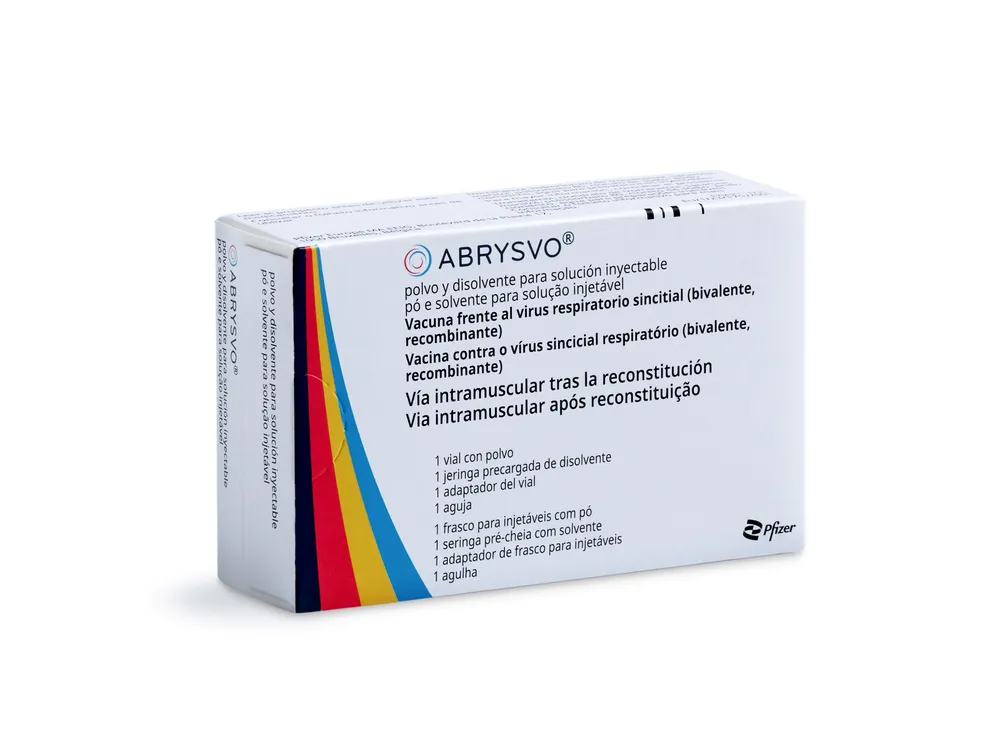
Table of Contents
Package leaflet: Information for the user
Introduction
Package leaflet: information for the user
Abrysvo powder and solvent for injectable solution
recombinant bivalent respiratory syncytial virus vaccine
This medicinal product is subject to additional monitoring, which will allow for faster identification of new safety information. You can help by reporting any adverse reactions you may experience. Information on how to report adverse reactions is included at the end of section 4.
Read the entire leaflet carefully before you start receiving this vaccine, as it contains important information for you.
- Keep this leaflet, as you may need to read it again.
- If you have any questions, ask your doctor, pharmacist, or nurse.
- If you experience any adverse reactions, consult your doctor, pharmacist, or nurse, even if they are possible adverse reactions not listed in this leaflet. See section 4.
Leaflet contents
- What Abrysvo is and what it is used for
- What you need to know before receiving Abrysvo
- How Abrysvo is administered
- Possible adverse reactions
- How to store Abrysvo
- Contents of the pack and other information
1. What Abrysvo is and what it is used for
Abrysvo is a vaccine used to prevent lung (respiratory) disease caused by a virus called respiratory syncytial virus (RSV). Abrysvo is administered to:
- pregnant women to protect their babies from birth up to 6 months of age,
or
- individuals 18 years of age and older.
RSV is a common virus that, in most cases, causes mild cold-like symptoms such as sore throat, cough, or nasal congestion. However, in young infants, RSV can cause serious lung problems. In older adults and people with chronic medical conditions, RSV can worsen diseases such as chronic obstructive pulmonary disease (COPD) and congestive heart failure (CHF). RSV may lead to hospitalization in severe cases and, in some circumstances, can be fatal.
How Abrysvo works
This vaccine helps the immune system (the body's natural defenses) produce antibodies (substances in the blood that help the body fight infections) that protect against RSV-related lung disease. In pregnant women vaccinated between weeks 24 and 36 of pregnancy, these antibodies pass to the baby through the placenta before birth, protecting infants when they are at highest risk of contracting RSV.
2. What you need to know before receiving Abrysvo
Abrysvo must not be given to you
- if you are allergic to the active substances or to any of the other ingredients of this vaccine (listed in section 6).
Warnings and precautions
Talk to your doctor, pharmacist, or nurse before you are given this vaccine
- If you have ever had a severe allergic reaction or breathing problems after receiving any other vaccine or after being given Abrysvo in the past.
- If you feel anxious about receiving the vaccine or have ever fainted after an injection. Fainting can occur before or after any injection.
- If you have an infection with a high fever. If this is the case, vaccination will be postponed. There is no need to delay vaccination for a mild infection, such as a cold, but consult your doctor first.
- If you have a bleeding disorder or bruise easily.
- If you have a weakened immune system which may prevent you from getting the full benefit from Abrysvo.
- If you are less than 24 weeks pregnant.
If any of the above situations apply (or you are unsure), consult your doctor, pharmacist, or nurse before receiving Abrysvo.
Like with any vaccine, Abrysvo may not fully protect all individuals who receive it.
Children and adolescents
Abrysvo is not recommended for children and young people under 18 years of age, except during pregnancy (see section “Pregnancy” below).
Other medicines and Abrysvo
Tell your doctor or pharmacist if you are taking, have recently taken, or might need to take any other medicines, or if you have recently received any other vaccine.
Abrysvo can be given at the same time as the influenza or COVID-19 vaccine. An interval of at least two weeks is recommended between administration of Abrysvo and the tetanus, diphtheria, and acellular pertussis vaccine.
Pregnancy and breastfeeding
Pregnant women may receive this vaccine during the late second or third trimester (weeks 24 to 36). If you are breastfeeding, consult your doctor or nurse before receiving this vaccine.
Driving and using machines
It is unlikely that Abrysvo will affect your ability to drive or use machines.
Abrysvo contains sodium
This medicine contains less than 1 mmol of sodium (23 mg) per dose; essentially “sodium-free”.
Abrysvo contains polysorbate 80
One dose of Abrysvo contains 0.08 mg of polysorbate 80. Polysorbates may cause allergic reactions. Inform your doctor if you have any known allergies.
3. How Abrysvo is administered
You will be given a 0.5 ml injection into a muscle in the upper arm.
If you have any questions about the use of Abrysvo, consult your doctor, pharmacist, or nurse.
4. Possible adverse effects
Like all vaccines, this vaccine may cause adverse effects, although not everyone experiences them.
Serious adverse effects
Very rare (may affect up to 1 in 10,000 people)
- severe allergic reactions: signs of a severe allergic reaction include swelling of the face, lips, tongue or throat, difficulty breathing or swallowing, and dizziness. See also section 2.
- Guillain-Barré syndrome (a neurological disorder that usually begins with tingling and weakness in the limbs and may progress to partial or complete paralysis of the body).
Inform your doctor immediately if you notice signs of these serious adverse effects.
The following adverse effects have been reported in pregnant women
Very common (may affect more than 1 in 10 people)
- pain at the injection site
- headache
- muscle pain (myalgia).
Common (may affect up to 1 in 10 people)
- redness at the injection site
- swelling at the injection site.
Rare (may affect up to 1 in 1,000 people)
- allergic reactions such as rash or hives
- swollen glands (lymphadenopathy).
No adverse effects were reported in infants born to vaccinated mothers.
The following adverse effects have been reported in individuals aged 18 years and older
Very common (may affect more than 1 in 10 people)
- tiredness (fatigue)
- headache
- pain at the injection site
- muscle pain (myalgia).
Common (may affect up to 1 in 10 people)
- joint pain (arthralgia)
- redness at the injection site
- swelling at the injection site.
Uncommon (may affect up to 1 in 100 people)
- fever (pyrexia).
Rare (may affect up to 1 in 1,000 people)
- allergic reactions such as rash or hives
- swollen glands (lymphadenopathy)
- bruising at the injection site (haematoma)
- itching at the injection site (pruritus).
Very rare (may affect up to 1 in 10,000 people)
- severe allergic reactions (see Serious adverse effects, above)
- Guillain-Barré syndrome (see Serious adverse effects, above).
Reporting of adverse effects
If you experience any adverse effect, talk to your doctor, pharmacist or nurse, even if it is a possible adverse effect not listed in this leaflet. You can also report them directly through the national reporting system listed in Appendix V.
By reporting adverse effects, you can help provide more information on the safety of this medicine.
5. Storage of Abrysvo
Keep this medicine out of the sight and reach of children.
Do not use this medicine after the expiry date which is stated on the container and label after EXP. The expiry date is the last day of the month indicated.
Store in a refrigerator (between 2 ºC and 8 ºC).
Do not freeze. Discard if the container has been frozen.
After reconstitution, Abrysvo should be administered immediately or within 4 hours if stored between 15 ºC and 30 ºC. Do not freeze.
6. Contents of the pack and other information
Composition of Abrysvo
The active substances are:
Prefusion-stabilized F antigen of RSV subgroup A,1,2 60 micrograms
Prefusion-stabilized F antigen of RSV subgroup B,1,2 60 micrograms
(RSV antigens)
1 Stabilized F glycoprotein in prefusion conformation.
2 Produced in Chinese hamster ovary (CHO) cells using recombinant DNA technology.
The other components are:
Powder
- tromethamine
- tromethamine hydrochloride
- sucrose
- mannitol (E421)
- polysorbate 80 (E433)
- sodium chloride
- hydrochloric acid
Solvent
- water for injections
Nature of the product and contents of the pack
Abrysvo is supplied as:
- white powder in a glass vial
- solvent in a pre-filled syringe or vial for reconstitution of the powder.
After reconstituting the powder with the solvent, the solution is clear and colourless.
Abrysvo is available as:
- one pack containing 1 vial of powder, 1 pre-filled syringe of solvent, 1 vial adapter with 1 needle or needle-free (1-dose pack);
- one pack containing 5 vials of powder, 5 pre-filled syringes of solvent, 5 vial adapters with 5 needles or needle-free (5-dose pack);
- one pack containing 10 vials of powder, 10 pre-filled syringes of solvent, 10 vial adapters with 10 needles or needle-free (10-dose pack);
- one pack containing 5 vials of powder and 5 vials of solvent (5-dose pack);
- one pack containing 10 vials of powder and 10 vials of solvent (10-dose pack).
Some pack sizes may not be marketed.
Marketing Authorization Holder
Pfizer Europe MA EEIG
Boulevard de la Plaine 17
1050 Brussels
Belgium
Manufacturer
Pfizer Manufacturing Belgium NV
Rijksweg 12
2870 Puurs-Sint-Amands
Belgium
Pfizer Ireland Pharmaceuticals
Grange Castle Business Park
Clondalkin, Dublin 22
Ireland
Further information on this medicinal product is available upon request to the local representative of the Marketing Authorization Holder:
Belgium/Belgium/Belgium Luxembourg/Luxembourg Pfizer NV/SA Tel/Tel: + 32 (0)2 554 62 11 | Latvia Pfizer Luxembourg SARL filiale Latvija Tel.: + 371 670 35 775 |
| Lithuania Pfizer Luxembourg SARL filialas Lietuvoje Tel: +370 5 251 4000 |
Czech Republic Pfizer, spol. s r.o. Tel: +420 283 004 111 | Hungary Pfizer KftTel: + 36 1 488 37 00 |
Denmark Pfizer ApS Tlf: + 45 44 20 11 00 | Malta Vivian Corporation Ltd. Tel: + 356 21344610 |
Germany PFIZER PHARMA GmbH Tel: +49 (0)30 550055-51000 | Netherlands Pfizer bv Tel: +31 (0)800 63 34 636 |
Estonia Pfizer Luxembourg SARL Eesti filiaal Tel: +372 666 7500 | Norway Pfizer AS Tlf: +47 67 52 61 00 |
Greece Pfizer Hellas S.A. Tel.: +30 210 6785800 | Austria Pfizer Corporation Austria Ges.m.b.H Tel: +43 (0)1 521 15-0 |
Spain Pfizer, S.L. Tel: +34 91 490 99 00 | Poland Pfizer Polska Sp. z o.o. Tel.: +48 22 335 61 00 |
France Pfizer Tel: +33 (0)1 58 07 34 40 | Portugal Laboratórios Pfizer, Lda. Tel: +351 21 423 5500 |
Croatia Pfizer Croatia d.o.o. Tel: + 385 1 3908 777 | Romania Pfizer Romania S.R.L Tel: +40 (0) 21 207 28 00 |
Ireland Pfizer Healthcare Ireland Unlimited Company Tel: +1800 633 363 (toll free) Tel: +44 (0)1304 616161 | Slovenia Pfizer Luxembourg SARL Pfizer, podružnica za svetovanje s podrocja farmacevtske dejavnosti, Ljubljana Tel.: +386 (0)1 52 11 400 |
Iceland Icepharma hf. Simi: + 354 540 8000 | Slovakia Pfizer Luxembourg SARL, organisational unit Tel: + 421 2 3355 5500 |
Italy Pfizer S.r.l. Tel: +39 06 33 18 21 | Finland Pfizer Oy Puh/Tel: +358 (0)9 430 040 |
Cyprus Pfizer Hellas S.A. (Cyprus Branch) Tel: +357 22817690 | Sweden Pfizer AB Tel: +46 (0)8 550 520 00 |
Date of the most recent review of this summary:
Other sources of information
Detailed information on this medicine is available on the European Medicines Agency website: https://www.ema.europa.eu
This information is intended for healthcare professionals only:
Traceability
In order to improve the traceability of biological medicines, the name and batch number of the administered medicine should be clearly recorded.
Administration
Abrysvo must only be administered by intramuscular route.
The unopened vial is stable for 5 days when stored at temperatures of 8 °C to 30 °C. At the end of this period, Abrysvo must be used or discarded. This information is intended to guide healthcare professionals only in the case of temporary deviations from recommended temperature conditions.
Storage of the reconstituted vaccine
Abrysvo should be administered immediately after reconstitution or within 4 hours. Store the reconstituted vaccine between 15 °C and 30 °C. Do not freeze the reconstituted vaccine.
Chemical and physical in-use stability has been demonstrated for 4 hours between 15 °C and 30 °C. From a microbiological standpoint, the vaccine should be used immediately. If not used immediately, the storage times and conditions prior to use are the responsibility of the user.
Preparation for administration
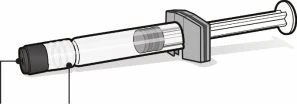
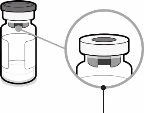
For use with the Abrysvo antigen vial (powder), pre-filled syringe with solvent, and vial adapter
The powder must only be reconstituted with the solvent provided in the pre-filled syringe, using the vial adapter.
Prefilled Syringe with Solvent for Abrysvo | Vial with Antigens for Abrysvo (powder) | Vial Adapter | |
|
|
| |
Syringe cap | Luer lock adapter | Vial stopper (without removable seal cap) |

| Step 1. Attach the vial adapter
|
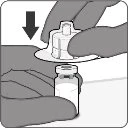
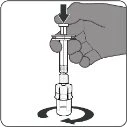
| Step 2. Reconstitute the lyophilized component (antigens) to form Abrysvo
|
| Step 3. Withdraw the reconstituted vaccine
|
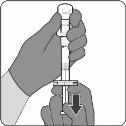
The prepared vaccine is a clear, colourless solution. Visually inspect the vaccine for large particles and discoloration prior to administration. Do not use if large particles or discoloration are observed.
For use of the Abrysvo antigen vial (powder) and the solvent vial
The powder must be reconstituted only with the provided solvent vial.
- Using a sterile needle and syringe, withdraw the entire contents of the solvent vial and inject all the contents of the syringe into the vial containing the powder.
- Gently swirl the vial with circular motions until the powder is completely dissolved. Do not shake.
- Withdraw 0.5 mL from the vial of reconstituted vaccine.
The prepared vaccine is a clear, colourless solution. Visually inspect the vaccine for large particles and discoloration prior to administration. Do not use if large particles or discoloration are observed.
Disposal
Disposal of unused product and all materials that have come into contact with it should be carried out in accordance with local regulations.