Abiraterone Dr. Reddy's 500 mg film-coated tablets EFG
Spain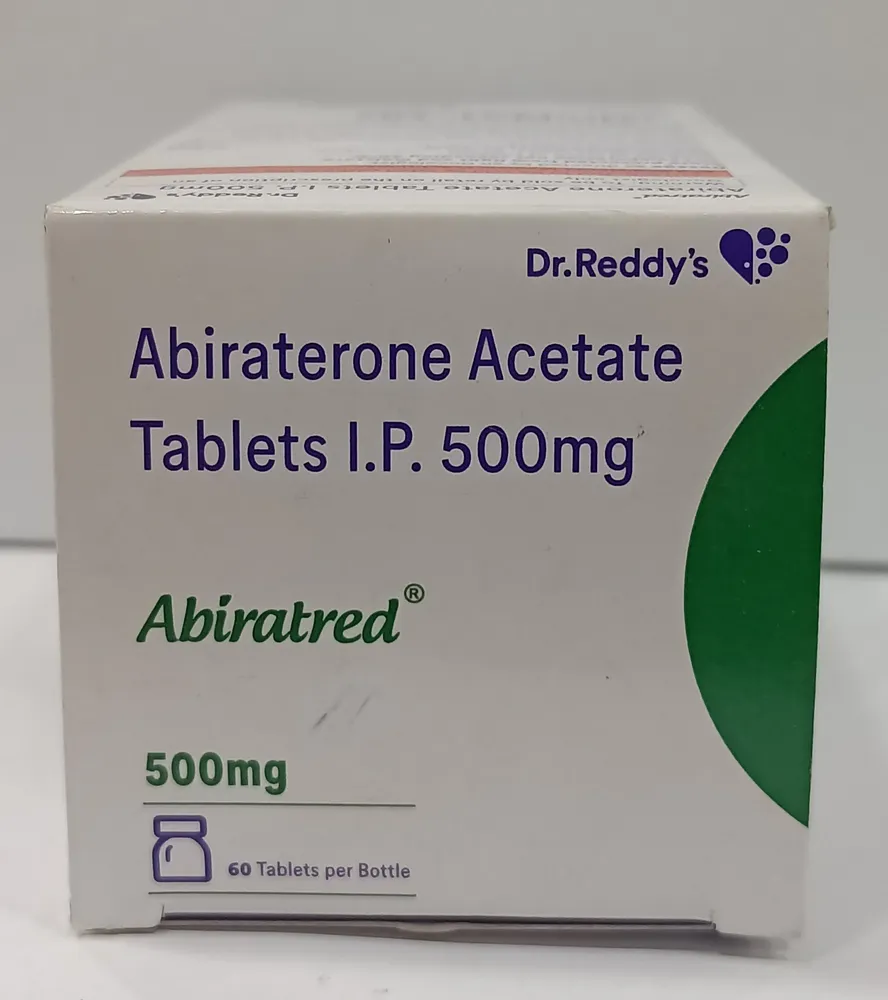
Table of Contents
- Package leaflet: Information for the user
- Introduction
- 1. What Abiraterone Dr. Reddy's is and what it is used for
- 2. What you need to know before taking Abiraterone Dr. Reddys
- 3. How to take Abiraterone Dr. Reddy's
- 4. Possible adverse effects
- 5. Storage of Abiraterone Dr. Reddy's
- 6. Contents of the pack and other information
Package leaflet: Information for the user
Introduction
Package leaflet: information for the user
Abiraterone Dr. Reddy's 500 mg film-coated tablets EFG
abiraterone acetate
Read the entire leaflet carefully before you start taking this medicine, because it contains important information for you.
-
Keep this leaflet, as you may need to read it again.
-
If you have any questions, consult your doctor or pharmacist.
-
This medicine has been prescribed only for you; do not give it to others, even if they have the same symptoms as you, because it could harm them.
- If you experience any adverse effects, consult your doctor or pharmacist, even if they are adverse effects not listed in this leaflet. See section 4.
Contents of the package leaflet
- What Abiraterone Dr. Reddy's is and what it is used for
- What you need to know before taking Abiraterone Dr. Reddy's
- How to take Abiraterone Dr. Reddy's
- Possible adverse effects
5 Storage of Abiraterone Dr. Reddy's
- Contents of the pack and other information
1. What Abiraterone Dr. Reddy's is and what it is used for
Abiraterone Dr. Reddy's contains a medicine called abiraterone acetate. It is used to treat prostate cancer in adult men when the disease has spread to other parts of the body. Abiraterone causes your body to stop producing testosterone; this way it can slow down the growth of prostate cancer.
When Abiraterone Dr. Reddy's is prescribed at earlier stages of the disease and there is still response to hormone treatment, it is used in combination with a treatment to reduce testosterone (androgen deprivation therapy).
When you take this medicine, your doctor will also prescribe another medicine called prednisone or prednisolone, to reduce the risk of developing high blood pressure, retaining too much fluid in your body (fluid retention), or having low levels of a chemical substance called potassium in your blood.
2. What you need to know before taking Abiraterone Dr. Reddys
Do not take Abiraterone Dr. Reddys:
- if you are allergic to abiraterone acetate or to any of the other ingredients of this medicine (listed in section 6).
- if you are a woman, especially if you are pregnant. Abiraterone should only be used in male patients.
- if you have severe liver disease.
- in combination with Ra-223 (used for the treatment of prostate cancer).
Do not take this medicine if any of the above apply to you. If you are unsure, consult your doctor or pharmacist before taking this medicine.
Warnings and precautions
Talk to your doctor or pharmacist before starting this medicine:
- if you have liver problems
- if you have been told you have high blood pressure, heart failure, or low levels of potassium in your blood (low blood potassium levels may increase the risk of heart rhythm problems)
- if you have had other heart or blood vessel problems
- if you have a fast or irregular heartbeat
- if you have difficulty breathing
- if you have gained weight rapidly
- if you have swelling in your feet, ankles, or legs
- if you have previously taken a medicine called ketoconazole for prostate cancer
- about the need to take this medicine with prednisone or prednisolone
- about possible adverse effects on your bones
- if you have high blood sugar levels.
Inform your doctor if you have been diagnosed with any heart or blood vessel disorder, including heart rhythm problems (arrhythmia), or if you are being treated with medicines for these conditions.
Inform your doctor if you develop yellowing of the skin or eyes, darkened urine, or severe nausea or vomiting, as these may be signs or symptoms of liver problems. Rarely, liver function failure (called acute liver failure) may occur, which can lead to death.
A decrease in red blood cell count, reduced sexual desire, and cases of muscle weakness and/or muscle pain may occur.
Abiraterone must not be administered in combination with Ra-223 due to a possible increased risk of bone fracture or death.
If you plan to take Ra-223 after treatment with abiraterone and prednisone/prednisolone, you must wait 5 days before starting Ra-223 treatment.
If you are unsure whether any of the above applies to you, consult your doctor or pharmacist before taking this medicine.
Blood tests
Abiraterone may affect your liver even if you do not have any symptoms. While taking this medicine, your doctor will perform periodic blood tests to monitor for any effects on your liver.
Children and adolescents
This medicine must not be used in children or adolescents. If a child or adolescent accidentally ingests abiraterone, seek immediate medical attention at a hospital and bring the package leaflet with you to show the emergency doctor.
Other medicines and Abiraterone Dr. Reddys
Talk to your doctor or pharmacist before taking any medicine.
Tell your doctor or pharmacist if you are taking, have recently taken, or might need to take any other medicines. This is important because abiraterone may increase the effects of a number of medicines, including medicines for the heart, tranquilizers, certain diabetes medicines, herbal remedies (e.g., St. John's wort), and others. Your doctor may consider adjusting the dose of these medicines. In addition, some medicines may increase or decrease the effects of abiraterone. This could lead to adverse effects or reduce the effectiveness of abiraterone.
Androgen deprivation therapy may increase the risk of heart rhythm problems. Inform your doctor if you are taking medicines:
- used to treat heart rhythm problems (e.g., quinidine, procainamide, amiodarone, and sotalol);
- that increase the risk of heart rhythm problems [e.g., methadone (used for pain relief and as part of drug addiction detoxification), moxifloxacin (an antibiotic), antipsychotics (used for serious mental illnesses)].
Discuss with your doctor if you are taking any of the medicines listed above.
Abiraterone Dr. Reddys with food
This medicine must not be taken with food (see section 3, “How to take this medicine”).
Taking abiraterone with food may cause adverse effects.
Pregnancy and breastfeeding
Abiraterone Dr. Reddys is not indicated for use in women.
Pregnant women or women who may be pregnant must wear gloves if they need to handle Abiraterone Dr. Reddys.
This medicine may be harmful to the fetus if taken by a pregnant woman.
If you have sexual intercourse with a woman of childbearing age, you must use a condom and another effective contraceptive method.
If you have sexual intercourse with a pregnant woman, you must use a condom to protect the fetus.
Driving and using machines
It is unlikely that this medicine will affect your ability to drive or operate tools or machinery.
Abiraterone Dr. Reddys contains lactose and sodium
If your doctor has informed you that you have an intolerance to certain sugars, consult with him before taking this medicine.
This medicine contains 24 mg of sodium (a main component of cooking/table salt) in each two-compressed 500 mg dose. This corresponds to 1% of the maximum daily recommended sodium intake for an adult.
3. How to take Abiraterone Dr. Reddy's
Follow exactly the instructions given by your doctor for taking this medicine. If in doubt, consult your doctor or pharmacist again.
How much to take
The recommended dose is 1,000 mg (two 500 mg tablets) once daily.
How to take this medicine
Take this medicine by mouth.
Do not take abiraterone with food.
Taking abiraterone with food may cause your body to absorb more medicine than intended, which may lead to side effects.
Take abiraterone tablets as a single daily dose on an empty stomach.
Abiraterone must be taken at least two hours after eating, and no food should be consumed for at least one hour after taking abiraterone. (See section 2, “Abiraterone and food”).
Swallow the tablets whole with water.
Do not split the tablets.
Abiraterone is administered together with a medicine called prednisone or prednisolone. Take prednisone or prednisolone exactly as directed by your doctor.
You will need to take prednisone or prednisolone every day while you are taking abiraterone.
If you have a medical emergency, the dose of prednisone or prednisolone you are taking may need to be adjusted. Your doctor will advise you if this is necessary. Do not stop taking prednisone or prednisolone unless instructed by your doctor.
Your doctor may also prescribe other medicines while you are taking abiraterone and prednisone or prednisolone.
If you take more Abiraterone Dr. Reddy's than you should
If you take more than you should, consult your doctor or go to hospital immediately.
In case of overdose or accidental ingestion, contact your doctor or pharmacist immediately or call the Toxicology Information Service at: 91 562 04 20, stating the medicine and the amount taken.
If you forget to take Abiraterone Dr. Reddy's
If you forget to take abiraterone or prednisone or prednisolone, take your usual dose the next day.
If you forget to take abiraterone or prednisone or prednisolone for more than one day, consult your doctor immediately.
If you stop taking Abiraterone Dr. Reddy's
Do not stop taking abiraterone or prednisone or prednisolone unless your doctor tells you to.
If you have any further questions about the use of this medicine, ask your doctor or pharmacist.
4. Possible adverse effects
Like all medicines, this medicine can cause adverse effects, although not everyone experiences them.
Stop taking Abiraterone Dr. Reddy's and contact your doctor immediately if you experience any of the following effects:
- Muscle weakness, muscle cramps, or increased heart rate (palpitations). These may be signs of low potassium levels in your blood.
Other adverse effects include:
Very common (may affect more than 1 in 10 people):
- Fluid retention in the legs or feet
- Decreased blood potassium levels
- Increased liver function test results
- High blood pressure
- Urinary tract infection
- Diarrhea
Common (may affect up to 1 in 10 people):
- High levels of fats in the blood
- Chest pain, irregular heartbeat (atrial fibrillation), heart failure, tachycardia
- Serious infections called sepsis
- Bone fractures
- Indigestion
- Blood in the urine
- Skin rash
Uncommon (may affect up to 1 in 100 people):
- Adrenal gland problems (related to salt and water imbalances)
- Abnormal heart rhythm (arrhythmia)
- Muscle weakness and/or muscle pain
Rare (may affect up to 1 in 1,000 people):
- Lung inflammation (also known as allergic alveolitis)
- Liver dysfunction (also called acute liver failure)
Not known (frequency cannot be estimated from available data):
- Heart attack, changes in electrocardiogram-ECG (QT prolongation)
- Severe allergic reactions with difficulty swallowing or breathing, swelling of the face, lips, tongue or throat, or itchy rash.
Bone density loss may occur in men receiving treatment for prostate cancer. Abiraterone Dr. Reddy's in combination with prednisone or prednisolone may increase this bone density loss.
Reporting of adverse effects
If you experience any type of adverse effect, talk to your doctor, hospital pharmacist, or nurse, even if it is a possible adverse effect not listed in this leaflet. You may also report them directly via the Spanish Pharmacovigilance System for Human Medicinal Products: https://www.notificaram.es. By reporting adverse effects, you can help provide more information on the safety of this medicine.
5. Storage of Abiraterone Dr. Reddy's
Keep this medicine out of the sight and reach of children.
Do not use this medicine after the expiry date stated on the carton and/or HDPE bottle and/or blister pack. The expiry date is the last day of the month indicated.
This medicine does not require any special storage conditions.
Medicines must not be disposed of via wastewater or household waste. Instead, return unused medicines and their containers to the SIGRE point at your pharmacy. If you are unsure how to dispose of unused medicines or their packaging, ask your pharmacist. This will help protect the environment.
6. Contents of the pack and other information
Composition of Abiraterone Dr. Reddy's
- The active substance is abiraterone acetate.
- Each film-coated tablet contains 500 mg of abiraterone acetate.
- The other components are monohydrate lactose, microcrystalline cellulose, sodium croscarmellose, hypromellose, sodium lauryl sulfate, colloidal anhydrous silica, and magnesium stearate (tablet core); polyvinyl alcohol, titanium dioxide (E 171), macrogol, talc, red iron oxide (E 172), black iron oxide (E 172) (tablet coating).
Appearance of the product and contents of the pack
Abiraterone Dr. Reddy's 500 mg are film-coated tablets, purple, oval-shaped, approximately 19 mm in length by 11 mm in width, marked with “A7TN” on one side and “500” on the other.
Each blister pack contains 14, 56, 56x1, 60, 60x1 or 112 film-coated tablets.
Each bottle pack contains one bottle with 60 film-coated tablets.
Only certain pack sizes may be marketed.
Marketing Authorization Holder and Manufacturer
Marketing Authorization Holder
Reddy Pharma Iberia, S.A.
Avda. Josep Tarradellas nº 38
08039 Barcelona (Spain)
Telephone: 93.355.49.16
Fax: 93.355.49.61
Manufacturer
Synthon Hispania S.L.
Castelló 1
Polígono Las Salinas
08830 Sant Boi de Llobregat (Barcelona)
Spain
or
Synthon BV
Microweg 22
545 CM Nijmegen
The Netherlands
This medicinal product is authorized in the Member States of the European Economic Area under the following names:
Netherlands | Abirateron betapharm 500 mg, film-coated tablets |
Germany | Abirateron beta 500 mg Filmtabletten |
Spain | Abiraterone Dr. Reddy's 500 mg film-coated tablets EFG |
France | ABIRATERONE REDDY PHARMA 500 mg, film-coated tablet |
Italy | Abiraterone Dr. Reddy’s |
Romania | Abiraterone Dr. Reddy’s 500 mg film-coated tablets |
Date of the most recent review of this leaflet: March 2024
Detailed information about this medicine is available on the website of the Spanish Agency for Medicaments and Health Products (AEMPS) (http://www.aemps.gob.es/)