Abecma 260-500 x 10e6 cells dispersion for infusion
Spain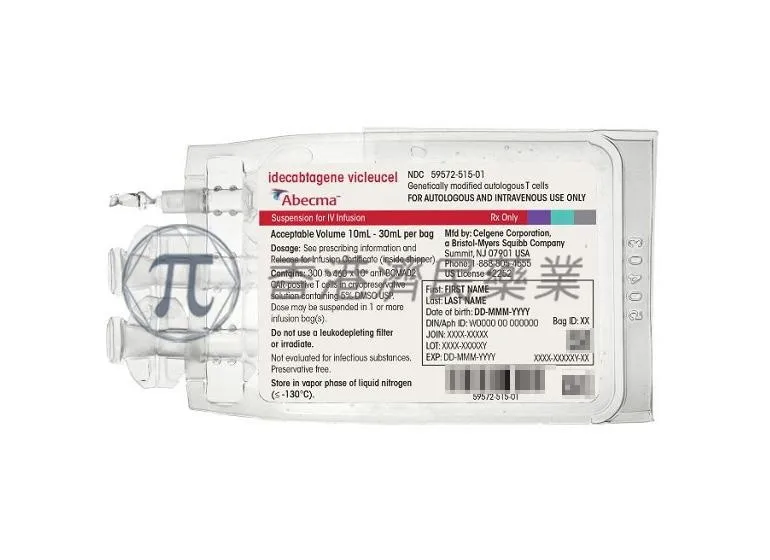
Table of Contents
Package leaflet: Information for the user
Introduction
Package leaflet: information for the patient
Abecma 260-500×10⁶ cells infusion dispersion
idecabtagene vicleucel (viable CAR+ T cells)
This medicinal product is subject to additional monitoring, which will allow for faster detection of new safety information. You can help by reporting any adverse reactions you may experience. The end of section 4 includes information on how to report these adverse reactions.
Read this leaflet carefully before you are given this medicine, because it contains important information for you.
- Keep this leaflet, as you may need to read it again.
- If you have any questions, consult your doctor or nurse.
- Your doctor will provide you with a patient information card. Read the card carefully and follow the instructions it contains.
- Always show the patient information card to your doctor or nurse when you see them, or if you go to a hospital.
- If you experience any adverse reactions, consult your doctor or nurse, even if they are adverse reactions not listed in this leaflet. See section 4.
Leaflet contents
- What Abecma is and what it is used for
- What you need to know before you are given Abecma
- How Abecma is administered
- Possible adverse reactions
- How to store Abecma
- Contents of the pack and other information
1. What Abecma is and what it is used for
What Abecma is
Abecma is a type of medicine called a "genetically modified cell therapy". The active substance in the medicine is idecabtagene vicleucel, which is made from your own white blood cells called T lymphocytes.
What Abecma is used for
Abecma is used to treat adults with multiple myeloma, which is a cancer of the bone marrow.
It is given when previous treatments for your cancer have not worked or the cancer has come back.
How Abecma works
White blood cells are collected from your blood and are genetically modified so that they can target myeloma cells in your body.
When Abecma is infused into your blood, the modified white blood cells will attack the myeloma cells.
2. What you need to know before Abecma is administered to you
Do not receive Abecma
- if you are allergic to any of the other components of this medicine (listed in section 6). If you think you may be allergic, consult your doctor.
- if you are allergic to any of the components of the medications you will be given as lymphodepleting chemotherapy, intended to prepare your body for treatment with Abecma.
Warnings and precautions
Before receiving Abecma, you must inform your doctor if:
- you have heart or lung problems.
- you have low blood pressure.
- you have received a stem cell transplant within the last 4 months.
- you have signs or symptoms of graft-versus-host disease. This condition occurs when transplanted cells attack your own body and causes symptoms such as skin rash, nausea, vomiting, diarrhea, and blood in the stool.
- you have an infection. You will receive treatment for the infection before Abecma is administered.
- you notice that your cancer symptoms are worsening. In the case of multiple myeloma, these may include fever, feeling weak, bone pain, or unexplained weight loss.
- you have previously had an infection with cytomegalovirus (CMV), hepatitis B virus, hepatitis C virus, or human immunodeficiency virus (HIV).
- you have been vaccinated within the past 6 weeks or plan to receive a vaccine in the coming months.
If you are in any of the above situations (or are unsure), consult your doctor before Abecma is administered to you.
Patients treated with Abecma may develop new types of cancer. Cases have been reported of patients developing cancer originating from a type of white blood cells called T lymphocytes, after treatment with Abecma and similar medicines. Consult your doctor if you experience any new swelling of the glands (lymph nodes) or changes in the skin, such as new rashes or lumps.
Tests and examinations
Before receiving Abecma, your doctor will:
- examine your lungs, heart, and blood pressure.
- look for signs of infection (any infection will be treated before Abecma is administered).
- check whether your cancer is worsening.
- perform a blood test to detect infection with CMV, hepatitis B virus, hepatitis C virus, or HIV.
After receiving Abecma:
- There are serious adverse effects that you must report immediately to your doctor or nurse, which may require immediate medical attention. See “serious adverse effects” in section 4.
- Your doctor will perform periodic blood tests to monitor your blood counts, as the number of blood cells may decrease.
- You must remain close to the treatment center where you received Abecma for at least 2 weeks. Your doctor may recommend staying longer to ensure that post-treatment care meets your individual needs. See sections 3 and 4.
- Do not donate blood, organs, tissues, or cells for transplantation.
Children and adolescents
Abecma must not be given to children or adolescents under 18 years of age.
Other medicines and Abecma
Inform your doctor or nurse if you are taking, have recently taken, or might need to take any other medicines, including those obtained without a prescription.
Medicines affecting the immune system
Before receiving Abecma, inform your doctor or nurse if you are taking medicines that weaken the immune system, for example, corticosteroids. This is important because these medicines may interfere with the effect of Abecma.
For information about the medicines you will receive before Abecma, see section 3.
Vaccinations
You must not receive certain vaccines, particularly so-called live vaccines:
- within 6 weeks before receiving a short course of chemotherapy (called lymphodepleting chemotherapy) administered to prepare your body for Abecma.
- during treatment with Abecma.
- after treatment, while your immune system is recovering.
Consult your doctor if you need to receive any vaccine.
Pregnancy and breastfeeding
If you are pregnant or breastfeeding, think you may be pregnant, or plan to become pregnant, consult your doctor before receiving this medicine. The effects of Abecma in pregnant or breastfeeding women are unknown and may be harmful to the unborn or breastfed baby.
- If you are pregnant or think you may be pregnant after treatment with Abecma, consult your doctor immediately.
- A pregnancy test will be performed before starting treatment. Abecma should only be administered if test results indicate that you are not pregnant.
If you have received Abecma, consult your doctor regarding pregnancy.
Driving and use of machines
Do not drive, operate machinery, or participate in activities requiring alertness for at least 4 weeks after treatment or until your doctor informs you that you are fully recovered. Abecma may cause drowsiness, confusion, or seizures (convulsions). Depending on your individual needs, your doctor may advise you to wait longer before driving.
Abecma contains sodium, potassium, and dimethyl sulfoxide (DMSO)
This medicine contains up to 752 mg of sodium (main component of table/cooking salt) per dose. This corresponds to 37.6% of the recommended maximum daily sodium intake for an adult.
This medicine contains up to 274 mg of potassium per dose, which should be taken into account when treating patients with renal insufficiency or those on low-potassium diets.
If you have not been previously exposed to DMSO, you should be closely monitored during the first minutes of the infusion period.
3. How Abecma is administered
Blood donation to manufacture Abecma from your white blood cells
- Your doctor will draw blood through a line (catheter) inserted into a vein. Some white blood cells will be separated from the blood, and the remainder of the blood will be returned to your body. This procedure is called "leukapheresis" and may take from 3 to 6 hours. It may be necessary to repeat the procedure.
- Your white blood cells will then be frozen and sent for the manufacturing of Abecma.
Other medicines you will receive before Abecma
- A few days before receiving Abecma, you will be given a short course of chemotherapy. The purpose of this is to deplete your white blood cells.
- Shortly before receiving Abecma, you will be given paracetamol and an antihistamine medicine. The purpose of these is to reduce the risk of infusion reactions and fever.
How Abecma is administered
- Your doctor will verify that Abecma has been prepared from your own blood by checking that the patient identification information on the medicine labels matches your details.
- Abecma is administered into a vein through an intravenous infusion line.
After Abecma administration
- You must remain close to the treatment center where you received Abecma for at least 2 weeks.
- You may be monitored daily at the treatment center for at least 1 week to check whether the treatment is working and to manage any side effects. See sections 2 and 4.
- Do not donate blood, organs, tissues, or cells for transplantation.
If you miss an appointment
Contact your doctor or the treatment center as soon as possible to schedule another appointment.
4. Possible side effects
Like all medicines, this medicine can cause side effects, although not everyone will experience them.
Serious side effects
Inform your doctor immediately if you experience any of the following side effects after treatment with Abecma. These usually occur within the first 8 weeks after infusion, but may also appear later:
Very common: may affect more than 1 in 10 people
- fever, chills, difficulty breathing, dizziness or lightheadedness, nausea, headache, rapid heartbeat, low blood pressure, or fatigue. These may be symptoms of cytokine release syndrome (CRS), a serious and potentially life-threatening condition.
- any signs of infection, for example, fever, chills or shaking chills, cough, difficulty breathing, rapid breathing, or fast pulse.
- extreme tiredness or weakness, or difficulty breathing, which may be signs of a low red blood cell count (anemia).
- bleeding or bruising more easily without cause, including nosebleeds or bleeding from the mouth or intestines, which may be a sign of low platelet levels in the blood.
Common: may affect up to 1 in 10 people
- tremors, weakness with loss of movement on one side of the body, tremor, slow movements, or stiffness, which may be symptoms of parkinsonism.
Uncommon: may affect up to 1 in 100 people
- confusion, memory problems, difficulty speaking or slurred speech, difficulty understanding language, imbalance or lack of coordination, disorientation, decreased level of consciousness, or excessive sleepiness, loss of consciousness, delirium, seizures (convulsions), which may be symptoms of a condition called immune effector cell-associated neurotoxicity syndrome (ICANS).
Inform your doctor immediately if you experience any of these side effects, as you may require urgent medical treatment.
Other possible side effects
Very common: may affect more than 1 in 10 people
- lack of energy
- high blood pressure
- decreased appetite
- constipation
- swelling of the ankles, arms, legs, and face
- joint pain
- difficulty sleeping
- low white blood cell count (neutrophils, leukocytes, and lymphocytes), which may increase the risk of infection
- infections, such as pneumonia or infections of the respiratory tract, mouth, skin, urinary tract, or blood, which may be caused by bacteria, viruses, or fungi
- laboratory test results showing low levels of antibodies, called immunoglobulins (hypogammaglobulinemia), which are important for fighting infections
- laboratory test results showing decreased levels of calcium, sodium, magnesium, potassium, phosphate, or albumin, which may cause fatigue, weakness, muscle cramps, or irregular heartbeats
- laboratory test results showing increased levels of liver enzymes (abnormal liver function tests) or elevated levels of a protein (C-reactive protein) in the blood, which may indicate inflammation.
Common: may affect up to 1 in 10 people
- severe inflammation due to activation of the immune system, which could cause serious damage to the body
- muscle pain
- abnormal or uncoordinated body movements
- irregular or arrhythmic heartbeats
- fluid in the lungs
- low oxygen levels in the blood, which may cause difficulty breathing, confusion, or drowsiness.
Rare: may affect up to 1 in 1,000 people
- a new type of cancer starting in a type of white blood cells called T lymphocytes (secondary T-cell neoplasia).
Reporting of side effects
If you experience any side effects, talk to your doctor or nurse, even if they are side effects not listed in this leaflet. You can also report them directly through the national reporting system listed in Appendix V. By reporting side effects, you can help provide more information on the safety of this medicine.
5. Storage of Abecma
The following information is intended for healthcare professionals only.
Do not use this medicine after the expiry date stated on the label of the cassette and infusion bag following “EXP”.
Store and transport frozen in the vapor phase of liquid nitrogen (≤−130 °C). Do not thaw the medicine until it is ready for use. Do not refreeze.
Do not use this medicine if the infusion bag is damaged or leaking.
6. Contents of the container and other information
Composition of Abecma
- The active substance is idecabtagene vicleucel. Each Abecma infusion bag contains a cell dispersion of idecabtagene vicleucel at a batch-dependent concentration of genetically modified autologous T lymphocytes expressing a chimeric antigen receptor targeting BCMA (viable CAR-positive T cells). One or more infusion bags contain a total of 260 to 500 × 10⁶ viable CAR-positive T cells.
- The other components (excipients) are CryoStor CS10, sodium chloride, sodium gluconate, trihydrate sodium acetate, potassium chloride, magnesium chloride, and water for injections. See section 2, “Abecma contains sodium, potassium and DMSO”.
This medicinal product contains genetically modified human blood cells.
Presentation of the product and contents of the container
Abecma is a colourless cell dispersion for infusion supplied in one or more infusion bags, each wrapped in a transparent plastic sleeve folded behind the bag and individually packaged in a metal cartridge. Each bag contains between 10 ml and 100 ml of cell dispersion.
Marketing Authorization Holder
Bristol-Myers Squibb Pharma EEIG
Plaza 254
Blanchardstown Corporate Park 2
Dublin 15, D15 T867
Ireland
Manufacturer responsible
Celgene Distribution B.V.
Orteliuslaan 1000
3528 BD Utrecht
The Netherlands
BMS Netherlands Operations B.V.
Francois Aragostraat 2
2342 DK Oegstgeest
The Netherlands
For further information about this medicinal product, please contact the local representative of the marketing authorization holder:
Belgium/Belgium/Belgium N.V. Bristol-Myers Squibb Belgium S.A. Tel/Tel: + 32 2 352 76 11 | Lithuania Swixx Biopharma UAB Tel: + 370 52 369140 |
| Luxembourg/Luxembourg N.V. Bristol-Myers Squibb Belgium S.A. Tel/Tel: + 32 2 352 76 11 |
Czech Republic Bristol-Myers Squibb spol. s r.o. Tel: + 420 221 016 111 | Hungary Bristol-Myers Squibb Kft. Tel.: + 36 1 301 9797 |
Denmark Bristol-Myers Squibb Denmark Tlf: + 45 45 93 05 06 | Malta A.M. Mangion Ltd Tel: + 356 23976333 |
Germany Bristol-Myers Squibb GmbH & Co. KGaA Tel: 0800 0752002 (+ 49 89 121 42 350) | Netherlands Bristol-Myers Squibb B.V. Tel: + 31 (0)30 300 2222 |
Estonia Swixx Biopharma OÜ Tel: + 372 640 1030 | Norway Bristol-Myers Squibb Norway AS Tlf: + 47 67 55 53 50 |
Greece Bristol-Myers Squibb A.E. Tel: + 30 210 6074300 | Austria Bristol-Myers Squibb GesmbH Tel: + 43 1 60 14 30 |
Spain Bristol-Myers Squibb, S.A. Tel: + 34 91 456 53 00 | Poland Bristol-Myers Squibb Polska Sp. z o.o. Tel.: + 48 22 2606400 |
France Bristol-Myers Squibb SAS Tél: + 33 (0)1 58 83 84 96 | Portugal Bristol-Myers Squibb Farmacêutica Portuguesa, S.A. Tel: + 351 21 440 70 00 |
Croatia Swixx Biopharma d.o.o. Tel: + 385 1 2078 500 | Romania Bristol-Myers Squibb Marketing Services S.R.L. Tel: + 40 (0)21 272 16 19 |
Ireland Bristol-Myers Squibb Pharmaceuticals uc Tel: 1 800 749 749 (+ 353 (0)1 483 3625) | Slovenia Swixx Biopharma d.o.o. Tel: + 386 1 2355 100 |
Iceland Vistor ehf. Sími: + 354 535 7000 | Slovakia Swixx Biopharma s.r.o. Tel: + 421 2 20833 600 |
Italy Bristol-Myers Squibb S.r.l. Tel: + 39 06 50 39 61 | Finland/Sweden Oy Bristol-Myers Squibb (Finland) Ab Puh/Tel: + 358 9 251 21 230 |
Cyprus Bristol-Myers Squibb A.E. Tel: 800 92666 (+ 30 210 6074300) | Sweden Bristol-Myers Squibb Aktiebolag Tel: + 46 8 704 71 00 |
Latvia Swixx Biopharma SIA Tel: + 371 66164750 |
Date of the most recent review of this leaflet:
Other sources of information
Detailed information on this medicine is available on the website of the European Medicines Agency: https://www.ema.europa.eu. Links to other websites on rare diseases and orphan medicinal products are also available.
This information is intended for healthcare professionals only:
It is important that you read the entire content of this procedure before administering Abecma.
Precautions to be taken before handling or administering the medicine
- Abecma must be transported within the facility in closed, break-resistant, and leak-proof containers.
- This medicine contains human blood cells. Healthcare professionals handling Abecma must take appropriate precautions (wear gloves and eye protection) to avoid potential transmission of infectious diseases.
Preparation prior to administration
- Prior to infusion of Abecma, patient identity must be confirmed to match the patient identifiers on the cartridge(s), infusion bag(s), and Abecma Release for Infusion Certificate (RfIC).
- The Abecma infusion bag must not be removed from the cartridge if the information on the patient-specific label does not match the identity of the patient to be treated. In case of discrepancies between labels and patient identifiers, contact the company immediately.
- If more than one infusion bag has been received for treatment, each bag must be thawed one at a time. The timing of Abecma thawing must be coordinated with the infusion. The infusion start time must be confirmed in advance and adjusted accordingly to ensure Abecma is available for infusion when the patient is ready.
Thawing
- Remove the Abecma infusion bag from the cartridge and inspect it for any loss of container integrity, such as breaks or cracks, before thawing. If the infusion bag appears damaged or leaking, it must not be infused and should be discarded according to local guidelines for handling human biological materials.
- Place the infusion bag into a secondary sterile bag.
- Thaw Abecma at approximately 37 °C using an authorized thawing device or a water bath until no visible ice remains in the infusion bag. Gently mix the bag contents to disperse any visible clumps of cellular material. Small clumps of cellular material are normal in Abecma. Do not wash, invert, or resuspend Abecma in a new medium prior to infusion.
- The Abecma infusion bag is wrapped in a transparent plastic sleeve folded to the back of the bag. Carefully remove the infusion bag from the wrapper by opening the plastic sleeve from the back to extract it. Pull the bag completely out of the wrapper.
Administration
- DO NOT use a leukocyte-depletion filter.
- Intravenous infusion of Abecma must only be administered by a healthcare professional experienced in managing immunocompromised patients and prepared to manage cases of anaphylaxis.
- Ensure that tocilizumab and emergency equipment are available before infusion and during the recovery period. In the exceptional case where tocilizumab is unavailable due to a shortage listed in the European Medicines Agency’s shortage catalogue, ensure that appropriate alternative measures are available at the facility instead of tocilizumab to treat CRS.
- A central venous access may be used for Abecma infusion and is recommended in patients with poor peripheral access.
- Prior to administration, confirm that patient identifiers match the information specific to that patient on the Abecma infusion bag and accompanying documentation. The total number of infusion bags to be administered must also be confirmed by cross-checking with the patient-specific information on the Release for Infusion Certificate (RfIC).
- Prime the infusion set tubing with 9 mg/ml (0.9%) sodium chloride injection solution prior to infusion. Use an infusion set with an in-line filter (a non-leukocyte-depletion filter with a pore size range of 170 to 260 μm) for thawed products.
- Infuse Abecma within 1 hour of the start of thawing, at the fastest rate tolerated, via gravity flow.
- After the entire contents of the infusion bag have been infused, flush the line, including the in-line filter, with 9 mg/ml (0.9%) sodium chloride injection solution at the same infusion rate to ensure maximum delivery of cells to the patient.
- All other infusion bags for the identified patient must be administered following the same procedure.
Measures to be taken in case of accidental exposure
- In the event of accidental exposure, follow local guidelines for handling human-derived materials. Work surfaces and materials that may have come into contact with Abecma must be decontaminated with an appropriate disinfectant.
Precautions to be taken for disposal of the medicine
- Unused medicine and all materials that have come into contact with Abecma (solid and liquid waste) must be handled and disposed of as potentially infectious waste in accordance with local guidelines for handling human-derived materials.