A.A.S. 500 mg tablets
Spain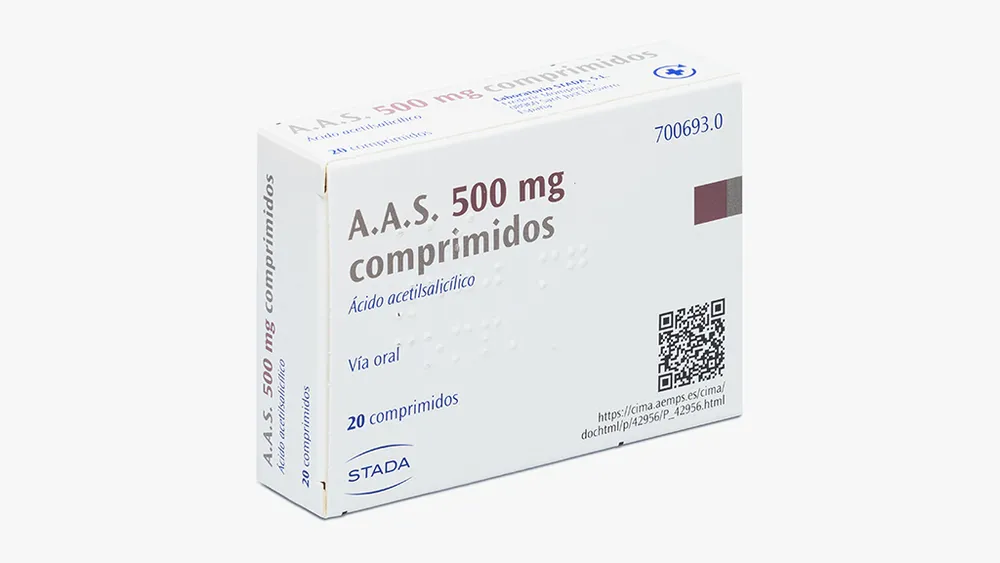
Table of Contents
Patient Information Leaflet
Introduction
Patient Information Leaflet
A.A.S. 500 mg tablets
Acetylsalicylic acid
Read the entire leaflet carefully before you start taking this medicine, because it contains important information for you.
|
Package leaflet
- What A.A.S. 500 mg is and what it is used for
- What you need to know before taking A.A.S. 500 mg
- How to take A.A.S. 500 mg
- Possible side effects
- Storage of A.A.S. 500 mg
Pack contents and additional information
1. What A.A.S. 500 mg is and what it is used for
Acetylsalicylic acid, the active substance of this medicine, works by reducing pain and fever.
This medicine is indicated for adults and children over 16 years of age for the:
- Symptomatic relief of mild to moderate occasional pain.
- Treatment of fever.
2. What you need to know before taking A.A.S. 500 mg
Do not take A.A.S. 500 mg
- If you are allergic to acetylsalicylic acid or to any of the other components of this medicine (listed in section 6).
- If you have mastocytosis (usually characterized by urticaria), as severe hypersensitivity reactions (severe and exaggerated allergic reactions with flushing, hypotension, tachycardia, and vomiting) may occur.
- If you have or have had gastric, duodenal ulcer, or recurrent gastric discomfort.
- If you have experienced asthma-type allergic reactions (difficulty breathing, suffocation, bronchospasm, and in some cases coughing or wheezing) when taking anti-inflammatory medicines, acetylsalicylic acid, other analgesics, or tartrazine dye.
- If you have or have had asthma or nasal polyps associated with asthma induced or worsened by acetylsalicylic acid, rhinitis, or urticaria.
- If you have hemophilia or other blood coagulation disorders that predispose you to internal bleeding, any other bleeding disorders, or risk of bleeding.
- If you are being treated with medications to improve blood circulation (oral anticoagulants) (see “Taking A.A.S. 500 mg with other medicines”).
- If you are being treated with methotrexate at doses exceeding 20 mg/week (see “Taking A.A.S. 500 mg with other medicines”).
- If you have severe liver failure.
- If you have severe renal failure.
- If you have severe, uncontrolled heart failure.
- If you are under 16 years of age, unless specifically advised by a doctor, as acetylsalicylic acid use has been linked to Reye's syndrome, a rare but serious illness.
- If you are in your third trimester of pregnancy (more than 24 weeks gestation), at doses exceeding 100 mg/day (see “Pregnancy, breastfeeding, and fertility”).
Warnings and precautions
Consult your doctor or pharmacist before taking A.A.S. 500 mg if you are in any of the following situations:
- You have kidney, heart, or liver disease.
- You have mild or moderate liver impairment (in case of severe liver failure, it is contraindicated; see “Do not take A.A.S. 500 mg”).
- You are scheduled for surgery, including dental surgery. In such cases, inform your doctor or dentist.
- If you have recently been vaccinated.
- You have blood coagulation disorders or are being treated with anticoagulants.
- You have gout. Acetylsalicylic acid alters serum uric acid at analgesic doses.
- You have uterine bleeding outside the menstrual period, metrorrhagia, or menorrhagia (prolonged and increased menstrual bleeding).
- If you have rhinitis and/or urticaria.
- At high doses (anti-inflammatory doses), consult your doctor if you experience tinnitus, noises in the ears, reduced hearing, or dizziness.
- If you have glucose-6-phosphate dehydrogenase deficiency due to the risk of hemolysis (see “Possible side effects”).
- Concomitant treatment with levothyroxine (for hypothyroidism) and salicylates should be avoided (see “Taking A.A.S. 500 mg with other medicines”).
- If you are taking anti-inflammatory drugs or other medicines, as certain medicines may interact with A.A.S. 500 mg and cause unwanted effects (see “Taking A.A.S. 500 mg with other medicines”).
- You have hypertension.
- With treatment doses ≥ 500 mg/day, female fertility may be affected due to effects on ovulation; this effect is reversible upon discontinuation of treatment.
- You should avoid alcohol, as it increases gastrointestinal adverse effects of acetylsalicylic acid and is a triggering factor for chronic irritation caused by acetylsalicylic acid (see “Taking A.A.S. 500 mg with food, drinks, and alcohol”).
- In patients treated with nicorandil and acetylsalicylic acid, there is an increased risk of serious complications such as gastrointestinal ulcer, perforation, and bleeding (see “Taking A.A.S. 500 mg with other medicines”).
- History of gastroduodenal ulcer, gastrointestinal bleeding, or gastritis. Avoid concomitant use with other medicines that may increase the risk of bleeding. Consult your doctor.
- Patients with asthma: asthma attacks may be related to allergy to non-steroidal anti-inflammatory drugs or acetylsalicylic acid. In such cases, this medicine is contraindicated.
- Reye's syndrome, a very rare but potentially fatal disease, has been observed in children and adolescents with viral infections (especially chickenpox and influenza) who are taking acetylsalicylic acid. Therefore, acetylsalicylic acid should be given to these children and adolescents only under medical advice, when other measures have failed. In case of persistent vomiting, loss of consciousness, or abnormal behavior, treatment with acetylsalicylic acid should be discontinued.
- This medicine contains acetylsalicylic acid. Other medicines also contain it; do not take them simultaneously to avoid exceeding the recommended daily dose.
- Regular use of analgesics, especially when analgesics are combined, may cause persistent kidney damage with risk of renal failure.
- Use of this medicine is not recommended during breastfeeding (see “Pregnacy, breastfeeding, and fertility”).
Consult your doctor, even if any of the above circumstances have occurred to you in the past.
Taking A.A.S. 500 mg with other medicines
Inform your doctor or pharmacist if you are using, have recently used, or might need to use any other medicine, including over-the-counter medicines, homeopathic remedies, herbal medicines, and other health-related products, as it may be necessary to interrupt treatment or adjust the dose of one or more of them.
This is especially important in the case of:
- Medicines used to prevent transplant rejection (cyclosporine and tacrolimus).
- High blood pressure (diuretics, angiotensin II receptor antagonists, and ACE inhibitors).
- Methotrexate (a medicine used for cancer and rheumatoid arthritis treatment).
- Other analgesics or non-steroidal anti-inflammatory drugs (medicines used to treat pain and/or muscle inflammation).
- Anticoagulants (medicines used to "thin" the blood and prevent clot formation), thrombolytics (to dissolve blood clots), antiplatelet agents, and other medicines associated with bleeding risk.
- Medicines that lower blood sugar levels (oral antidiabetics and insulin).
- Barbiturates (medicines used to treat sleep disorders, as sedatives, and anticonvulsants).
- Corticosteroids (except hydrocortisone), as they may increase the risk of gastrointestinal bleeding.
- Cimetidine and ranitidine (used to reduce stomach acidity).
- Digoxin (a medicine used to treat heart conditions).
- Phenytoin and valproic acid (antiepileptic drugs).
- Lithium and serotonin receptor inhibitors (used in the treatment of depression).
- Probenecid and sulfinpyrazone (used in the treatment of gout).
- The antibiotic vancomycin and sulfonamides (used to treat infections).
- Interferon alfa.
- Zidovudine (used in the treatment of AIDS).
- Metamizole (another analgesic/antipyretic medicine).
- Acetazolamide (a diuretic).
- Varicella vaccine (do not take salicylates within 6 weeks after vaccination).
- Levothyroxine (thyroid hormone).
- Tenofovir (used in the treatment of AIDS).
- Nicorandil (used in the treatment of heart diseases) (see “Warnings and precautions”).
- Pemetrexed: increased risk of pemetrexed toxicity.
- Alcohol: alcohol may increase the risk of gastrointestinal damage when taken with acetylsalicylic acid (see “Warnings and precautions”).
Interference with diagnostic tests
If you are scheduled for any diagnostic tests (including blood and urine tests), inform your doctor that you are taking this medicine, as A.A.S. 500 mg may alter test results.
Taking A.A.S. 500 mg with food, drinks, and alcohol
Take this medicine after meals or with food.
If you regularly consume alcohol (three or more alcoholic drinks—beer, wine, spirits, etc.—per day), taking A.A.S. 500 mg may cause stomach bleeding.
Pregnancy, breastfeeding, and fertility
Pregnancy
If you are pregnant or breastfeeding, think you may be pregnant, or plan to become pregnant, consult your doctor or pharmacist before using this medicine.
Taking this medicine during the first and second trimesters of pregnancy may be harmful to the embryo or fetus and should be monitored by your doctor.
If acetylsalicylic acid is administered to a woman who wishes to become pregnant or is less than six months pregnant, the dose should be as low as possible and the treatment duration as short as possible. Prolonged use is discouraged.
Do not take this medicine if you are in your third trimester of pregnancy (see “Do not take A.A.S. 500 mg”).
Breastfeeding
Women who are breastfeeding should consult their doctor before using this medicine, as acetylsalicylic acid passes into breast milk. Its use is not recommended during breastfeeding due to the risk of adverse effects in the infant.
Fertility
Acetylsalicylic acid may affect fertility by influencing ovulation. This effect is reversible after stopping the medicine.
Driving and using machines
A.A.S. 500 mg does not appear to have any effect on the ability to drive vehicles or operate machinery.
A.A.S. 500 mg contains sucrose
This medicine contains sucrose. If your doctor has informed you that you have an intolerance to certain sugars, consult him before taking this medicine.
A.A.S. 500 mg contains sodium
This medicine contains less than 1 mmol of sodium (23 mg) per tablet; this is essentially “sodium-free”.
3. How to take A.A.S. 500 mg
Follow exactly the instructions for use provided in this leaflet or those given by your doctor or pharmacist. If in doubt, consult your doctor or pharmacist.
The route of administration for this medicine is oral. The medicine should be taken with food or milk, especially if gastrointestinal discomfort is noticed. This medicine must not be taken on an empty stomach.
The recommended dose is:
- Adults and patients over 16 years of age: 1 A.A.S. 500 mg tablet every four or six hours, i.e., 500 mg of acetylsalicylic acid every four or six hours, as needed, while symptoms persist. No more than 8 tablets should be taken daily, i.e., 4 grams of acetylsalicylic acid within 24 hours.
Administration should be based on the presence of symptoms and must be discontinued once symptoms have disappeared.
If pain persists for more than 5 days, fever for more than 3 days, or if symptoms worsen or new symptoms appear, treatment must be stopped and a doctor consulted.
Patients with liver or kidney problems: should consult their doctor, as it may be necessary to reduce the dose of acetylsalicylic acid.
Always use the lowest effective dose.
Your doctor will advise you on the duration of your treatment with A.A.S. 500 mg.
Use in children and adolescents
This medicine must not be given to individuals under 16 years of age.
Use in elderly patients
Elderly patients should not take this medicine without consulting their doctor, as they are more likely to experience adverse effects.
If you take more A.A.S. 500 mg than you should
The main symptoms of moderate overdose are: headache, confusion, dizziness, tinnitus, sensation of hearing loss, blurred vision, drowsiness, nausea, vomiting, and occasionally diarrhea. These may be controlled by reducing the dose.
Symptoms of severe poisoning include fever, hyperventilation, ketosis, respiratory alkalosis, metabolic acidosis, coma, cardiocirculatory collapse, and respiratory failure.
Non-cardiogenic pulmonary edema may occur with acute and chronic overdose of acetylsalicylic acid (see "Possible side effects").
Salicylate overdose is particularly significant in elderly patients and especially in young children, and may lead to severe hypoglycemia and potentially fatal poisoning.
In case of overdose or accidental ingestion, consult your doctor or pharmacist immediately, go to a medical center immediately, or call the Toxicology Information Service at telephone number: 91 562 04 20, indicating the medicine and the amount ingested.
If you forget to take A.A.S. 500 mg
Do not take a double dose to make up for missed doses.
If you have any further questions about the use of this medicine, ask your doctor or pharmacist.
4. Possible adverse effects
Like all medicines, this medicine can cause adverse effects, although not everyone experiences them.
Common (may affect up to 1 in 10 patients):
Blood disorders:
- Impaired blood clotting when administered at high doses (hypoprothrombinemia).
Respiratory system disorders:
- Rhinitis, difficulty breathing
- Feeling of breathlessness.
Gastrointestinal disorders: nausea and vomiting.
Uncommon (may affect up to 1 in 100 patients):
Blood disorders:
- Anaemia.
Liver disorders:
- Liver toxicity.
General disorders:
- In patients allergic to acetylsalicylic acid and/or other non-steroidal anti-inflammatory drugs, generalized allergic reactions may occur. This adverse effect may also occur in individuals who have not previously shown allergy to acetylsalicylic acid.
The following adverse effects have been observed after prolonged treatment with acetylsalicylic acid, but their frequency cannot be accurately estimated:
-
Haemorrhagic syndromes: bruising, urogenital bleeding, nosebleeds, bleeding gums, appearance of red spots on the skin. If a wound or cut occurs, bleeding may take longer than normal to stop.
-
Fixed eruption, itching, fluid accumulation in skin and mucous membranes, skin reactions.
-
Non-cardiogenic pulmonary oedema (fluid accumulation in the lungs without cardiac involvement) with chronic use and associated with an allergic reaction due to acetylsalicylic acid, bronchospasm, asthma.
- Confusion.
-
Intracranial haemorrhage, which may be fatal, especially in elderly patients.
-
Tinnitus, deafness (see “If you take more A.A.S. 500 mg than you should”).
- Gastrointestinal disorders:
- Inflammation of the oesophagus, duodenum and gastric mucosa, oesophageal ulcer, intestinal ulcers, colitis and perforation. These reactions may occur with or without bleeding.
- Acute pancreatitis (inflammation of the pancreas).
- Abdominal pain, dyspepsia, gastric ulcer and duodenal ulcer.
- Stomach bleeding, which may be seen in stools or cause vomiting of blood.
- Blood disorders: thrombocytopenia (decreased platelet levels), pancytopenia (decreased white blood cells, red blood cells and platelets), bicytopenia (decreased levels of two types of blood cells), aplastic anaemia, bone marrow failure, agranulocytosis (decreased granulocytes: a type of white blood cell), neutropenia (decreased neutrophils: a type of white blood cell) and leucopenia (decreased white blood cells). Haemolytic anaemia in patients with glucose-6-phosphate dehydrogenase deficiency (see “Warnings and precautions”).
- Gastrointestinal disorders:
-
Increased liver enzymes and liver damage. Chronic hepatitis. Reye's syndrome (in children with fever, influenza or varicella) (see “Warnings and precautions”).
- Kidney inflammation and other renal problems.
- Haemospermia (presence of blood in semen).
- Sweating, headache, dizziness and confusion may occur with prolonged high doses.
- Bleeding which may be fatal, vasculitis, including Henoch-Schönlein purpura.
- Simultaneous occurrence of cardiac events and allergic reactions (Kounis syndrome).
- Oedema (fluid accumulation) with high (anti-inflammatory) doses of acetylsalicylic acid.
- Hypersensitivity reactions, anaphylactic reactions (severe allergic reaction with breathing difficulty and even loss of consciousness).
If you notice any of the following:
- Stomach discomfort or pain, stomach or intestinal bleeding, or black stools.
- Skin disorders such as rashes or redness.
- Difficulty breathing.
- Unexpected change in the amount or appearance of urine.
- Swelling of the face, feet or legs.
- Deafness, tinnitus or dizziness.
Stop taking the medicine and consult your doctor immediately, as these may indicate adverse effects requiring urgent medical attention.
Reporting of adverse effects
If you experience any type of adverse effect, talk to your doctor or pharmacist, even if it is a possible adverse effect not listed in this leaflet. You can also report them directly via the Spanish Pharmacovigilance System for Human Medicines: https://www.notificaram.es. By reporting adverse effects, you can help provide more information on the safety of this medicine.
5. Storage of A.A.S. 500 mg
No special storage conditions are required.
Keep this medicine out of the sight and reach of children.
Do not use this medicine after the expiry date stated on the container. The expiry date is the last day of the month indicated.
Medicines should not be disposed of via wastewater or household waste. Dispose of empty containers and unused medicines at the SIGRE collection point at your pharmacy. If you are unsure, ask your pharmacist how to properly dispose of unused containers and medicines. This will help protect the environment.
6. Contents of the pack and other information
Composition of A.A.S. 500 mg
- The active substance is acetylsalicylic acid. Each tablet contains 500 mg of acetylsalicylic acid.
- The other components (excipients) are: sodium saccharin, mannitol (E 421), corn starch, gum arabic, and orange flavour (containing sucrose, maltodextrin, modified corn starch (E 1450), butylated hydroxyanisole (E 320)).
Appearance of the product and contents of the pack
A.A.S. 500 mg is presented as round, biconvex, doubly scored, white tablets. Each pack contains 20 tablets.
Marketing Authorization Holder
Laboratorio STADA, S.L.
Frederic Mompou, 5
08960 Sant Just Desvern
Spain
Manufacturer
sanofi-aventis, S.A
Ctra. C35 La Batlloria a Hostalrich, Km. 63.09
17404 - Riells i Viabrea (Girona)
Spain
Date of the most recent revision of this leaflet: October 2022
Other sources of information
Detailed and up-to-date information on this medicinal product is available on the website of the Spanish Agency of Medicines and Health Products (AEMPS) http://www.aemps.gob.es/