Zyvox
Ukraine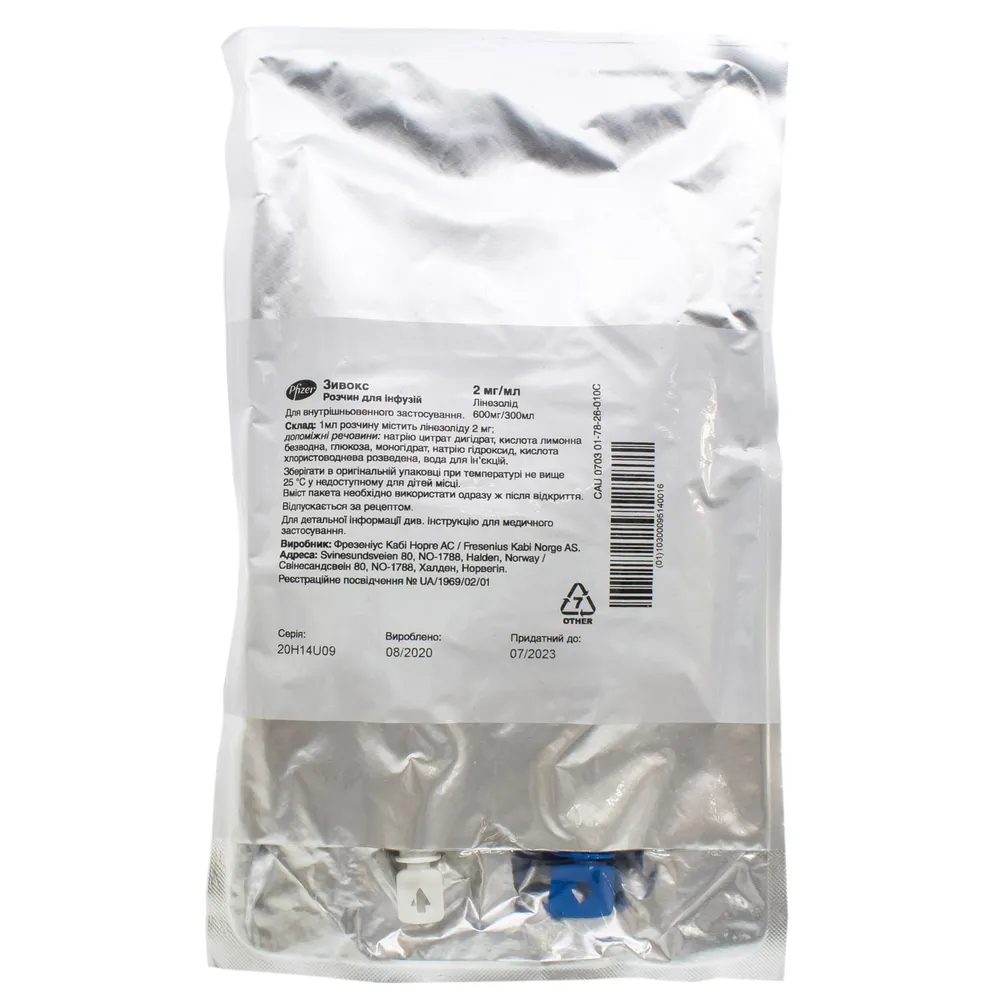
Table of Contents
INSTRUCTIONS FOR MEDICAL USE OF THE MEDICINAL PRODUCT ZYVOX (ZYVOX®)
Composition:
Active substance: linezolid;
1 ml of solution contains 2 mg of linezolid;
Excipients: sodium citrate dihydrate, citric acid anhydrous, glucose monohydrate, sodium hydroxide, hydrochloric acid diluted, water for injections.
Pharmaceutical form. Infusion solution.
Main physicochemical characteristics:
clear solution, practically free from visible particles, ranging from colorless to yellow.
Pharmacotherapeutic group. Antibacterial agents for systemic use. ATC code J01X X08.
Pharmacological properties.
Pharmacodynamics.
General characteristics.
Linezolid is a synthetic antibacterial agent belonging to a new class of antimicrobials – oxazolidinones. It exhibits in vitro activity against aerobic Gram-positive bacteria and anaerobic microorganisms. Linezolid selectively inhibits bacterial protein synthesis through a unique mechanism of action. It directly binds to bacterial ribosomes (23S portion of the 50S subunit) and interferes with the formation of the functional 70S initiation complex (a key component of the translation process).
The prevalence of acquired resistance may vary geographically and over time for specific species; therefore, it is advisable to refer to local information regarding microbial resistance, especially when treating severe infections. If necessary, when the local prevalence of microbial resistance is such that the benefit of using the medicinal product, at least for certain types of infections, is questionable, expert consultation should be sought.
Susceptible microorganisms
Gram-positive aerobic microorganisms: Enterococcus faecalis, Enterococcus faecium, Staphylococcus aureus, coagulase-negative staphylococci, Streptococcus agalactiae, Streptococcus pneumoniae, Streptococcus pyogenes, Group C streptococci, Group G streptococci.
Gram-positive anaerobic microorganisms: Clostridium perfringens, Peptostreptococcus anaerobius, Peptostreptococcus species.
Resistant microorganisms: Haemophilus influenzae, Moraxella catarrhalis, Neisseria species, Enterobacteriaceae, Pseudomonas species.
* Clinical efficacy has been demonstrated for susceptible strains according to approved indications.
Although linezolid demonstrates some in vitro activity against Legionella, Chlamydia pneumoniae, and Mycoplasma pneumoniae, there is insufficient data to confirm clinical efficacy in these cases.
Cross-resistance
The mechanism of action of linezolid differs from that of other classes of antibiotics. In vitro studies of clinical isolates (methicillin-resistant staphylococci, vancomycin-resistant enterococci, as well as penicillin- and erythromycin-resistant streptococci) show that linezolid is generally active against microorganisms resistant to one or more other classes of antimicrobial agents.
Resistance to linezolid is associated with point mutations in the 23S rRNA.
Pharmacokinetics.
The drug Zyvox contains linezolid, which is the biologically active substance and is metabolized to inactive derivatives.
Absorption
Linezolid is rapidly absorbed after oral administration. Maximum plasma concentration is reached approximately 1–2 hours after dosing, and the absolute bioavailability of the drug is about 100%. Therefore, linezolid can be administered orally or intravenously without dose adjustment.
Linezolid can be administered regardless of food intake. Time to maximum concentration increases from 1.5 to 2.2 hours, and Cmax decreases by approximately 17% when linezolid is taken with a high-fat meal. However, total exposure, assessed by AUC0–∞, is similar in both cases.
Distribution
Pharmacokinetic studies have shown that linezolid rapidly distributes into well-perfused tissues. Approximately 31% of linezolid is protein-bound in plasma, and this binding is independent of drug concentration. The volume of distribution of linezolid at steady state in healthy adult volunteers averages 40–50 L.
Linezolid concentrations have been measured in various fluids involving a limited number of participants in Phase 1 studies after multiple doses of linezolid. The ratio of linezolid concentration in saliva to plasma concentration was 1.2:1, and the ratio of linezolid concentration in sweat to plasma concentration was 0.55:1.
Metabolism
Linezolid is primarily metabolized by oxidation of the morpholine ring, forming two inactive ring-opened carboxylic acid metabolites: the metabolite of aminoethoxyacetic acid (A) and the metabolite of hydroxyethylglycine (B). Formation of metabolite A is thought to occur via an enzymatic pathway, whereas formation of metabolite B is mediated by a non-enzymatic mechanism involving chemical oxidation in vitro. In vitro studies have demonstrated that linezolid undergoes minimal metabolism, with possible involvement of the human cytochrome P450 system. However, the metabolic pathways for linezolid are not fully understood.
Excretion
Non-renal clearance accounts for approximately 65% of the total clearance of linezolid. At steady state, approximately 30% of the dose is recovered in urine as linezolid, 40% as metabolite B, and 10% as metabolite A. The mean renal clearance of linezolid is 40 mL/min, indicating net tubular reabsorption. Linezolid is practically undetectable in feces, whereas approximately 6% of the dose is recovered in feces as metabolite B and 3% as metabolite A.
A slight non-linearity in clearance was observed with increasing doses of linezolid, which appears to result from lower renal and non-renal clearance of the drug at higher concentrations. However, this difference in clearance was minor and did not affect the apparent elimination half-life.
Patients with renal impairment. The pharmacokinetics of linezolid are not altered in patients with any degree of renal impairment; however, the two main metabolites of linezolid accumulate in patients with renal impairment, with increasing accumulation observed in patients with more severe renal dysfunction. The pharmacokinetics of linezolid and its two metabolites were also studied in patients with end-stage renal disease (ESRD) undergoing hemodialysis. In an ESRD study, 14 patients received 600 mg of linezolid every 12 hours for 14.5 days. Since similar plasma concentrations of linezolid were achieved regardless of renal function, dose adjustment is not recommended for patients with renal impairment. However, given the lack of information on the clinical significance of accumulation of the main metabolites, the benefits of using linezolid in patients with renal impairment should be weighed against the potential risks of metabolite accumulation. Both linezolid and its two metabolites are removed by hemodialysis. Information on the effect of peritoneal dialysis on linezolid pharmacokinetics is lacking.
Patients with hepatic impairment. The pharmacokinetics of linezolid were not altered in 7 patients with mild to moderate hepatic dysfunction (Child-Pugh class A or B). Based on available data, dose adjustment is not recommended for patients with mild to moderate hepatic impairment. The pharmacokinetics in patients with severe hepatic impairment have not been evaluated.
Clinical characteristics.
Indications.
Treatment of infections caused by susceptible strains of specified microorganisms in the following conditions:
- Hospital-acquired pneumonia;
- Community-acquired pneumonia;
- Complicated skin and soft tissue infections, including infections associated with diabetic foot without concomitant osteomyelitis, caused by Staphylococcus aureus (methicillin-susceptible and methicillin-resistant isolates), Streptococcus pyogenes, or Streptococcus agalactiae. Zyvox has not been studied in the treatment of pressure ulcer infections.
- Uncomplicated skin and soft tissue infections caused by Staphylococcus aureus (methicillin-susceptible isolates only) or Streptococcus pyogenes;
- Vancomycin-resistant infections caused by Enterococcus faecium strains, including infections associated with bacteremia.
Zyvox is not indicated for the treatment of infections caused by Gram-negative microorganisms. In cases of suspected or confirmed Gram-negative pathogens, specific Gram-negative therapy should be initiated immediately.
Contraindications.
Known hypersensitivity to linezolid or any other component of the drug.
Zyvox should not be administered to patients receiving any medicinal products that inhibit monoamine oxidase A and B (e.g., phenelzine, isocarboxazid, selegiline, moclobemide), or within two weeks of discontinuation of such agents.
Except in cases where close monitoring and blood pressure surveillance are possible, Zyvox should not be prescribed to patients with the following concomitant clinical conditions or concurrently with the following medications:
- Uncontrolled hypertension, pheochromocytoma, carcinoid syndrome, thyrotoxicosis, bipolar depression, schizoaffective disorder, acute episodes of dizziness.
- Serotonin reuptake inhibitors, tricyclic antidepressants, 5-HT1 serotonin receptor agonists (triptans), direct and indirect sympathomimetics (including adrenergic bronchodilators, pseudoephedrine, phenylpropanolamine), vasopressors (epinephrine, norepinephrine), dopaminergic agents (dopamine, dobutamine), meperidine, or buspirone.
Breastfeeding should be discontinued during treatment (see section "Use during pregnancy or breastfeeding").
Interaction with other medicinal products and other types of interactions.
Monoamine oxidase inhibitors
Linezolid is a non-selective, reversible inhibitor of monoamine oxidase (MAO). In drug interaction and safety studies of linezolid, very limited data are available on the use of linezolid in patients receiving concomitant therapy with agents that pose certain risks due to MAO inhibition. Therefore, the use of linezolid under such circumstances is not recommended unless close patient monitoring and surveillance are possible (see sections "Contraindications" and "Special precautions").
Potential interactions leading to increased blood pressure
In healthy volunteers with normal blood pressure, linezolid enhances the blood pressure increase caused by pseudoephedrine and phenylpropanolamine hydrochloride. Concomitant administration of linezolid with pseudoephedrine or phenylpropanolamine hydrochloride results in an average increase in systolic blood pressure of 30–40 mm Hg, compared to an increase of 11–15 mm Hg with linezolid alone, 14–18 mm Hg with pseudoephedrine or phenylpropanolamine alone, and 8–11 mm Hg with placebo. Similar studies in patients with hypertension have not been conducted. Careful dose selection of agents with vasopressor effects, including dopaminergic agents, is recommended to achieve the desired outcome when linezolid is used concomitantly with these agents.
Potential serotonergic interactions
Potential interactions between linezolid and dextromethorphan were studied in a trial involving healthy volunteers. Participants received dextromethorphan (two 20 mg doses administered 4 hours apart) with or without linezolid. In healthy volunteers receiving both linezolid and dextromethorphan, no symptoms of serotonin syndrome (confusion, delirium, agitation, tremor, pathological flushing, diaphoresis, hyperpyrexia) were observed.
Post-marketing experience: one report has been received of symptoms resembling serotonin syndrome in a patient taking linezolid and dextromethorphan; symptoms resolved after discontinuation of both drugs.
During clinical use of linezolid with serotonergic agents, including antidepressants (such as selective serotonin reuptake inhibitors [SSRIs]), cases of serotonin syndrome have been reported. Thus, although concomitant use of these agents is contraindicated (see section "Contraindications"), management of patients for whom treatment with both linezolid and serotonergic agents is essential is described in the section "Special precautions".
Concomitant use with tyramine-rich foods
In patients receiving linezolid and tyramine in amounts less than 100 mg, no significant pressor effect was observed. This suggests that only excessive consumption of foods and beverages high in tyramine (i.e., aged cheeses, yeast extracts, non-distilled alcoholic beverages, and fermented soy products such as soy sauce) should be avoided.
Drugs metabolized by cytochrome P450
Linezolid is not metabolized by the cytochrome P450 enzyme system and does not inhibit the function of any clinically significant human cytochrome P450 isoenzymes (1A2, 2C9, 2C19, 2D6, 2E1, 3A4). Similarly, linezolid does not induce cytochrome P450 isoenzymes in rats. Therefore, a pharmacokinetic effect of linezolid on other drugs metabolized by CYP450 is not expected.
Rifampicin. The effect of rifampicin on the pharmacokinetics of linezolid was studied in sixteen healthy male volunteers who received linezolid (600 mg twice daily for 2.5 days) alone and in combination with rifampicin (600 mg once daily for 8 days). Rifampicin reduced Cmax and AUC of linezolid by an average of 21% (90% CI 15, 27) and 32% (90% CI 27, 37), respectively. The mechanism of this interaction and its clinical significance are unknown.
Warfarin. A 10% reduction in mean maximum INR and a 5% reduction in AUC of INR were observed when warfarin was added to a stable linezolid regimen. Data on patients receiving warfarin and linezolid concomitantly are insufficient to assess the clinical significance, if any, of these findings.
Antibiotics
Aztreonam. The pharmacokinetics of linezolid or aztreonam are not altered when these drugs are administered concomitantly.
Gentamicin. The pharmacokinetics of linezolid or gentamicin are not altered when these drugs are administered concomitantly.
In vitro studies have demonstrated additivity or indifference between linezolid and vancomycin, gentamicin, rifampicin, imipenem-cilastatin, aztreonam, ampicillin, streptomycin.
Antioxidants
No dose adjustment of linezolid is recommended when administered concomitantly with vitamin C or vitamin E.
Special precautions for use.
Myelosuppression
Myelosuppression (including anemia, leukopenia, pancytopenia, and thrombocytopenia) has been reported in patients receiving linezolid. In such cases, hematological parameters returned to pre-treatment levels after discontinuation of linezolid. The risk of these effects is likely related to the duration of treatment. Elderly patients may have a higher risk of developing blood abnormalities during linezolid therapy compared to younger patients. In patients with severe renal insufficiency (regardless of whether they are undergoing dialysis), there may be an increased frequency of thrombocytopenia. Therefore, careful monitoring of blood parameters is necessary in the following patient groups: patients with pre-existing anemia, granulocytopenia, or thrombocytopenia; patients receiving concomitant medications capable of reducing hemoglobin levels, decreasing blood cell counts, or negatively affecting platelet count or function; patients with severe renal impairment; and patients receiving treatment for more than 10–14 days. Linezolid should be used in such patients only with careful monitoring of hemoglobin levels, complete blood count, and, if possible, platelet count.
If significant myelosuppression develops during linezolid therapy, treatment should be discontinued, except in cases where continuation is considered absolutely necessary. In such situations, careful monitoring of complete blood count parameters and implementation of appropriate treatment strategies are required.
Additionally, weekly monitoring of complete blood count (including hemoglobin levels, platelet count, total leukocyte count, and differential leukocyte count) is recommended in all patients receiving linezolid, regardless of baseline blood parameters.
In compassionate use studies involving unapproved medicinal products, an increased incidence of severe anemia was observed in patients receiving linezolid for more than 28 days (the maximum recommended duration of treatment). Such patients more frequently required blood transfusions. Cases of anemia requiring blood transfusion have also been reported in the post-marketing period. Such anemia occurred more frequently in patients treated with linezolid for more than 28 days.
Cases of sideroblastic anemia have been reported in the post-marketing period. Among cases with known timing of anemia onset, most patients had received linezolid for more than 28 days. After discontinuation of linezolid, most patients recovered fully or partially with or without treatment for anemia.
Mortality imbalance in a clinical study involving patients with catheter-related bloodstream infections caused by Gram-positive pathogens
In an open-label study of patients with serious intravascular infections caused by catheter use, increased mortality was observed in the group receiving linezolid compared to the vancomycin/dicloxacillin/oxacillin treatment group (78 of 363 (21.5%) vs 58 of 363 (16.0%)). The primary factor influencing mortality was the presence of Gram-positive infection at baseline.
Mortality rates in patients with infections caused exclusively by Gram-positive organisms were similar (relative risk 0.96; 95% confidence interval 0.58–1.59), but in the linezolid treatment group, the frequency of fatal outcomes was significantly higher (p=0.0162) in patients with any additional pathogen or no pathogen at baseline (relative risk 2.48; 95% confidence interval: 1.38–4.46). The greatest imbalance occurred during treatment and within 7 days after discontinuation of the investigational drug. Most patients in the linezolid group developed Gram-negative infections during the study and died from infections caused by Gram-negative pathogens or polymicrobial infections. Therefore, in complicated skin and soft tissue infections in patients with established or suspected concomitant Gram-negative infection, linezolid should be used only when no other treatment options are available (see section "Indications"). In such circumstances, concomitant treatment for Gram-negative infection should be initiated.
Diarrhea and antibiotic-associated colitis
Diarrhea and colitis associated with antibiotic use, including pseudomembranous colitis and Clostridium difficile-associated diarrhea (CDAD), have been reported with nearly all antibiotics, including linezolid, with severity ranging from mild diarrhea to colitis with fatal outcome. It is therefore important to consider this diagnosis in patients who develop diarrhea during or after linezolid therapy. If antibiotic-associated diarrhea or colitis is suspected or confirmed, current antibacterial therapy (including linezolid) should be discontinued and appropriate therapeutic measures initiated immediately. In such situations, the use of agents that inhibit peristalsis is contraindicated.
Lactic acidosis
Cases of lactic acidosis have been reported during linezolid therapy. Patients who develop symptoms or signs of metabolic acidosis during linezolid treatment, including recurrent nausea or vomiting, abdominal pain, low bicarbonate levels, or hyperventilation, should seek immediate medical attention. If lactic acidosis develops, the benefit of continuing linezolid therapy versus potential risks should be carefully considered.
Mitochondrial dysfunction
Linezolid inhibits mitochondrial protein synthesis. As a result of this inhibition, adverse reactions such as lactic acidosis, anemia, and neuropathy (peripheral and optic nerve) may occur. These events are more common with treatment durations exceeding 28 days.
Potential interactions causing increased blood pressure
Except in cases where patients can be monitored for possible increases in blood pressure, linezolid should not be prescribed to patients with uncontrolled hypertension, pheochromocytoma, thyrotoxicosis, and/or concomitant use of medications such as direct and indirect sympathomimetics (e.g., pseudoephedrine), vasoconstrictors (e.g., epinephrine, norepinephrine), or dopaminergic agents (e.g., dopamine, dobutamine).
Serotonin syndrome
Spontaneous reports of serotonin syndrome associated with concomitant use of linezolid and serotonergic agents, including antidepressants (such as selective serotonin reuptake inhibitors (SSRIs)), have been received. Therefore, concomitant use of linezolid and serotonergic agents is contraindicated (see "Contraindications"), except when the use of both linezolid and concomitant serotonergic agents is deemed essential. In such cases, patients should be closely monitored for symptoms of serotonin syndrome, such as cognitive disturbances, hyperpyrexia, hyperreflexia, and motor incoordination. If such symptoms occur, the physician should consider discontinuing one or both agents. Withdrawal symptoms may occur after discontinuation of the serotonergic agent.
Peripheral neuropathy and optic neuropathy
Cases of peripheral neuropathy, optic neuropathy, and optic neuritis, sometimes progressing to vision loss, have been reported in patients receiving treatment with Zyvox. These reports primarily involved patients treated for more than 28 days (the maximum recommended treatment duration).
All patients should be advised to report symptoms of visual disturbance, such as changes in visual acuity, changes in color perception, blurred vision, or visual field defects. In such cases, prompt ophthalmological evaluation should be performed, with referral to an ophthalmologist if necessary. If a patient is receiving Zyvox for longer than the recommended 28 days, regular vision testing is required.
If peripheral neuropathy or optic neuropathy develops, the benefit of continuing Zyvox therapy versus potential risks should be carefully considered.
The risk of neuropathies may be increased when linezolid is used to treat patients who are receiving or have recently received antituberculosis therapy.
Seizures
Cases of seizures have been reported in patients receiving Zyvox therapy. In most cases, a risk factor such as a history of seizures was reported. Patients should inform their physicians if they have previously experienced seizures.
Monoamine oxidase inhibitors
Linezolid is a non-selective, reversible inhibitor of monoamine oxidase (MAO). However, at doses used for antibacterial therapy, it does not exhibit antidepressant effects. Very limited data on the use of linezolid for primary disease treatment and/or concomitant use with agents that may carry certain risks due to MAO inhibition were obtained in drug interaction and safety studies. Therefore, linezolid use under such circumstances is not recommended unless close patient monitoring is possible (see sections "Contraindications" and "Interaction with other medicinal products and other forms of interaction").
Concomitant use with tyramine-rich foods
Patients should be advised to avoid consuming large amounts of tyramine-rich foods (see section "Interaction with other medicinal products and other forms of interaction").
Hypoglycemia
Post-marketing reports indicate cases of symptomatic hypoglycemia in diabetic patients receiving insulin or oral hypoglycemic agents during treatment with linezolid, a non-selective, reversible MAO inhibitor. Some MAO inhibitors have been associated with hypoglycemic episodes in diabetic patients receiving insulin or hypoglycemic agents. Although a causal relationship between linezolid and hypoglycemia has not been established, diabetic patients should be warned of the potential for hypoglycemic reactions during linezolid therapy.
If hypoglycemia occurs, dose reduction of insulin or oral hypoglycemic agent, or discontinuation of the oral hypoglycemic agent, insulin, or linezolid may be necessary.
Hyponatremia and/or syndrome of inappropriate antidiuretic hormone secretion (SIADH)
Cases of hyponatremia and/or syndrome of inappropriate antidiuretic hormone secretion (SIADH) have been observed in patients receiving linezolid in the post-marketing period. Signs and symptoms in these cases included confusion, drowsiness, general weakness, and in severe cases, respiratory failure and even death. Regular monitoring of serum sodium levels is recommended in elderly patients, patients taking diuretics, and other patients at risk of hyponatremia and/or SIADH during treatment with Zyvox. If signs and symptoms of hyponatremia and/or SIADH occur, the medicinal product should be discontinued and appropriate supportive measures taken.
Superinfection
The effect of linezolid on normal flora has not been studied during clinical trials.
Antibiotic use may sometimes lead to overgrowth of resistant organisms. For example, approximately 3% of patients receiving linezolid at recommended doses in clinical studies developed drug-related candidiasis. Appropriate measures should be taken if superinfection occurs during treatment.
Special patient populations
Linezolid should be used with caution and only when the expected benefit outweighs the theoretical risk in patients with severe renal impairment (see section "Dosage and administration").
Linezolid should be used only when the expected benefit outweighs the theoretical risk in patients with severe hepatic impairment (see section "Dosage and administration").
No dose adjustment is necessary based on patient gender.
Fertility impairment
Linezolid decreased fertility and caused morphological abnormalities in sperm quality in healthy adult male rats at exposure levels approximately similar to those expected in humans. These changes were reversible. The potential effect of linezolid on male reproductive function is unknown.
Clinical trials
The safety and efficacy of linezolid when used for more than 28 days have not been established.
Controlled clinical trials did not include patients with pressure ulcers, ischemic lesions, severe burns, or gangrene. Therefore, experience with the use of linezolid for the treatment of these conditions is limited.
Excipients
1 ml of solution contains 45.7 mg (i.e., 13.7 g/300 ml) of glucose. This should be considered when treating patients with diabetes mellitus or other conditions associated with glucose intolerance. 1 ml of solution also contains 0.38 mg (114 mg/300 ml) of sodium. Sodium content should be considered for patients on a sodium-restricted diet.
Use during pregnancy or breastfeeding.
Use during pregnancy. Data on the use of Zyvox in pregnant women are limited. Animal studies have demonstrated reproductive toxicity. There is a potential risk for humans. Zyvox should not be used during pregnancy except when the expected benefit outweighs the potential risk.
Use during breastfeeding. Animal studies have shown that linezolid and its metabolites can pass into breast milk. Therefore, breastfeeding should be discontinued during treatment.
Ability to affect reaction speed when driving or operating machinery.
Patients should be warned of the possible development of dizziness or visual disturbances (see sections "Special precautions for use" and "Adverse reactions") during linezolid therapy and advised not to drive or operate machinery if these symptoms occur.
Administration and Dosage.
The duration of treatment depends on the causative pathogen, the site and severity of the infection, as well as the clinical response.
The recommendations for treatment duration provided below were applied in clinical studies. For certain types of infections, a shorter duration of treatment may be appropriate, although this has not been evaluated in clinical trials.
The maximum duration of treatment is 28 days. The safety and efficacy of linezolid administered for longer than 28 days have not been studied.
There is no need to increase the recommended doses or duration of treatment in cases of infections associated with bacteremia.
Patients who have initiated treatment with intravenous infusions of Zyvox may be switched to oral Zyvox therapy. In such cases, dosage adjustment is not required, as the oral bioavailability of linezolid is nearly 100%.
Dosage recommendations according to indications are provided in the table below.
| Indications |
Dose and route of administration |
Recommended duration of treatment (consecutive days) |
|
| Paediatric patients† (from birth to 11 years of age) |
Adults and children (12 years of age and older) |
||
| Hospital-acquired pneumonia |
10 mg/kg intravenously or orally‡ every 8 hours |
600 mg intravenously or orally‡ every 12 hours |
10–14 |
| Community-acquired pneumonia (including forms associated with bacteremia) |
|||
| Complicated skin and skin structure infections |
|||
| Infections caused by vancomycin-resistant Enterococcus faecium, including infections associated with bacteremia |
10 mg/kg intravenously or orally‡ every 8 hours |
600 mg intravenously or orally‡ every 12 hours |
14–28 |
| Uncomplicated skin and skin structure infections |
Children under Children 5–11 years of age: 10 mg/kg orally‡ every 12 hours |
Adults: 400 mg orally‡ every 12 hours. Children 12 years of age: 600 mg orally‡ every 12 hours |
10–14 |
†Neonates <7 days of age. Most preterm neonates <7 days of age (<34 weeks gestation) have lower systemic clearance and higher AUC values of linezolid than most term neonates and children under 1 year of age. Treatment of such neonates should be initiated at a dose of 10 mg/kg every 12 hours. For neonates with inadequate clinical response to the drug, administration of 10 mg/kg every 8 hours may be considered. All patients under 7 days of age should receive a dose of 10 mg/kg every 8 hours.
‡ Administered using another dosage form allowing appropriate dosing.
Instructions for use
Zyvox for intravenous infusion is supplied in single-use, ready-to-use infusion bags. Immediately before use, remove the foil overwrap and visually inspect the drug solution for particulate matter; squeeze the bag for approximately 1 minute to ensure its integrity. If the bag leaks, do not use the solution, as its sterility may be compromised. Any unused solution should be discarded according to applicable regulations.
Intravenous infusion should be administered over 30–120 minutes. Do not connect infusion bags in series! Do not add other drugs to this solution.
When administering Zyvox for intravenous infusion simultaneously with other agents, each drug should be administered separately, according to the recommended dose and route of administration for each medicinal product.
When using a single intravenous line for sequential administration of multiple drugs, the line should be flushed before and after administration of Zyvox for intravenous infusion with an infusion solution compatible with both Zyvox and the other agent being administered through the line.
Compatible infusion solutions: 0.9% sodium chloride injection, 5% dextrose injection, lactated Ringer’s injection.
Major incompatibilities
Physical incompatibility occurred when Zyvox for intravenous infusion was administered through a Y-site connector together with the following drugs: amphotericin B, chlorpromazine hydrochloride, diazepam, pentamidine isethionate, erythromycin lactobionate, sodium phenytoin, and trimethoprim/sulfamethoxazole. Additionally, Zyvox for intravenous infusion was chemically incompatible with ceftriaxone sodium.
Use in elderly patients. Dose adjustment is not required.
Use in patients with renal insufficiency. Dose adjustment is not required. Since approximately 30% of the dose is eliminated during a 3-hour hemodialysis session initiated 3 hours after drug administration, linezolid should be administered to patients undergoing hemodialysis after the dialysis session. (See section “Pharmacological properties. Pharmacokinetics”).
Use in patients with hepatic insufficiency. Dose adjustment is not required. (See section “Pharmacological properties. Pharmacokinetics”).
Children.
Can be administered from the first days of life.
In children aged 1 week to 12 years, administration of the drug at a dose of 10 mg/kg every 8 hours daily provides exposure approaching that achieved in adults receiving 600 mg twice daily.
In neonates under 1 week of age, systemic clearance of linezolid (per kg body weight) increases rapidly during the first week of life. Therefore, in neonates receiving the drug at 10 mg/kg every 8 hours daily, higher systemic exposure to the drug is observed on the first day after birth. However, excessive drug accumulation is not expected with this dosing regimen during the first week of life due to the rapidly increasing clearance of the drug during the first 7 days of life (see section “Dosage and administration”).
In children aged 12 to 17 years, the pharmacokinetics of linezolid are similar to those in adults when the drug is administered at a dose of 600 mg. Thus, in adolescents receiving 600 mg every 12 hours daily, exposure will be the same as in adult patients receiving the same dose.
Overdose.
There is no specific antidote.
No cases of overdose have been reported.
In the event of overdose, symptomatic treatment should be administered along with measures to support glomerular filtration. Approximately 30% of the administered dose is removed during 3 hours of hemodialysis, but there are no data on the elimination of linezolid during peritoneal dialysis or hemoperfusion. The two major metabolites of linezolid are also removed by hemodialysis.
Adverse Reactions
The information provided is based on data obtained from clinical trials in which more than 2000 adult patients received the recommended doses of Zyvox for up to 28 days.
The most commonly reported adverse reactions were diarrhea (8.4%), headache (6.5%), nausea (6.3%), and vomiting (4.0%). The most frequent adverse reactions leading to discontinuation of Zyvox were headache, diarrhea, nausea, and vomiting. Approximately 3% of patients discontinued treatment due to drug-related adverse reactions.
Adverse reactions reported after marketing of the drug are included in the list below, categorized with a frequency of "frequency not known," as their frequency cannot be estimated from the available data.
The adverse reactions reported during treatment are listed below by the following frequency classification: very common (≥ 1/10); common (≥ 1/100 to < 1/10); uncommon (≥ 1/1000 to < 1/100); rare (≥ 1/10,000 to < 1/1000); very rare (< 1/10,000); frequency not known – frequency cannot be estimated from the available data.
Infections and infestations:
Common – candidiasis, oral candidiasis, vaginal candidiasis, fungal infections;
Uncommon – vaginitis;
Rare – antibiotic-associated colitis, including pseudomembranous colitis*.
Blood and lymphatic system disorders:
Common – anemia*†;
Uncommon – leukopenia*, neutropenia, thrombocytopenia*, eosinophilia;
Rare – pancytopenia*;
Frequency not known – myelosuppression*, sideroblastic anemia*.
Immune system disorders:
Frequency not known – anaphylaxis.
Metabolism and nutrition disorders:
Uncommon – hyponatremia;
Frequency not known – lactic acidosis*.
Psychiatric disorders:
Common – insomnia.
Nervous system disorders:
Common – headache, taste disturbances (metallic taste), dizziness;
Uncommon – seizures*, hypoesthesia, paraesthesia;
Frequency not known – serotonin syndrome**, peripheral neuropathy*.
Eye disorders:
Uncommon – blurred vision*;
Rare – visual field defect*;
Frequency not known – optic neuropathy*, optic neuritis*, vision loss*, change in visual perception*, color vision changes*.
Ear and labyrinth disorders:
Uncommon – tinnitus.
Cardiac disorders:
Uncommon – arrhythmia (tachycardia).
Vascular disorders:
Common – arterial hypertension;
Uncommon – transient ischemic attack, phlebitis, thrombophlebitis.
Gastrointestinal disorders:
Common – diarrhea, nausea, vomiting, localized or generalized abdominal pain, constipation, dyspepsia;
Uncommon – pancreatitis, gastritis, abdominal distension, dry mouth, glossitis, frequent loose stools, stomatitis, tongue disorders or color changes;
Rare – discoloration of tooth surfaces.
Hepatobiliary disorders:
Common – abnormal liver function tests, increased levels of ALT, AST, or alkaline phosphatase;
Uncommon – increased total bilirubin.
Skin and subcutaneous tissue disorders:
Common – pruritus, rash;
Uncommon – urticaria, dermatitis, excessive sweating;
Frequency not known – bullous skin reactions such as Stevens-Johnson syndrome and toxic epidermal necrolysis, angioedema, alopecia.
Renal and urinary disorders:
Common – increased blood urea nitrogen;
Uncommon – renal failure, increased creatinine, polyuria.
Reproductive system and breast disorders:
Uncommon – vulvovaginal disorders.
General disorders and administration site conditions:
Common – pyrexia, localized pain;
Uncommon – chills, fatigue, injection site pain, thirst.
Investigations.
Biochemistry:
Common – increased lactate dehydrogenase, creatine kinase, lipase, amylase, or postprandial (non-fasting) glucose levels; decreased total protein, albumin, sodium, and calcium; increased or decreased potassium or bicarbonate;
Uncommon – increased sodium or calcium, decreased glucose (non-fasting), increased or decreased chloride.
Hematology:
Common – increased neutrophils or eosinophils, decreased hemoglobin, hematocrit, or erythrocyte count, increased or decreased platelet or leukocyte count;
Uncommon – increased reticulocyte count, decreased neutrophil count.
* See section "Special Warnings and Precautions for Use".
** See sections "Contraindications" and "Interaction with Other Medicinal Products and Other Forms of Interaction".
† In controlled clinical trials where linezolid was administered for up to 28 days, anemia was observed in 2.0% of patients. In a compassionate use program involving patients with life-threatening infections and comorbid conditions, the percentage of patients who developed anemia after receiving linezolid was 2.5% (33 of 1326) among those treated for ≤ 28 days, compared to 12.3% (53 of 430) among those treated for > 28 days. The proportion of documented cases of severe anemia requiring blood transfusion attributed to the drug was 9% (3 of 33) in patients treated for ≤ 28 days and 15% (8 of 53) in those treated for > 28 days.
Adverse reactions associated with linezolid use, which were assessed in rare cases as severe: localized abdominal pain, transient ischemic attack, and arterial hypertension.
During the post-marketing period, cases of symptomatic hypoglycemia have been reported in diabetic patients receiving insulin or oral hypoglycemic agents when treated with linezolid, a non-selective, reversible MAO inhibitor. Some MAO inhibitors have been associated with hypoglycemic episodes in diabetic patients receiving insulin or hypoglycemic agents.
In patients receiving linezolid during the post-marketing period, cases of hyponatremia and/or syndrome of inappropriate antidiuretic hormone secretion (SIADH) have been observed. Signs and symptoms in these cases included confusion, drowsiness, general weakness, and in severe cases, respiratory insufficiency and even death.
Reporting of suspected adverse reactions
Reporting suspected adverse reactions after medicine authorization is important. It allows continued monitoring of the benefit-risk balance of the medicine. Healthcare professionals are encouraged to report any suspected adverse reactions according to the local reporting system.
Shelf life. 3 years.
Storage conditions. Store in the original packaging at a temperature not exceeding 25 °C, in a place inaccessible to children. The contents of the bag should be used immediately after opening.
Incompatibilities. See section "Dosage and Administration".
Packaging. 100 ml in an intravenous administration system; 1 system per laminated foil pack labeled in Ukrainian or in the language of EU member states with a Ukrainian-language sticker;
300 ml in an intravenous administration system; 1 system per laminated foil pack labeled in Ukrainian.
Prescription status. Prescription only.
Manufacturer.
Fresenius Kabi Norge AS / Fresenius Kabi Norge AS.
Manufacturer's address and location of operations.
Svinesundsveien 80, NO-1788 Halden, Norway / Svinesundsveien 80, NO-1788 Halden, Norway.