Zidena
Ukraine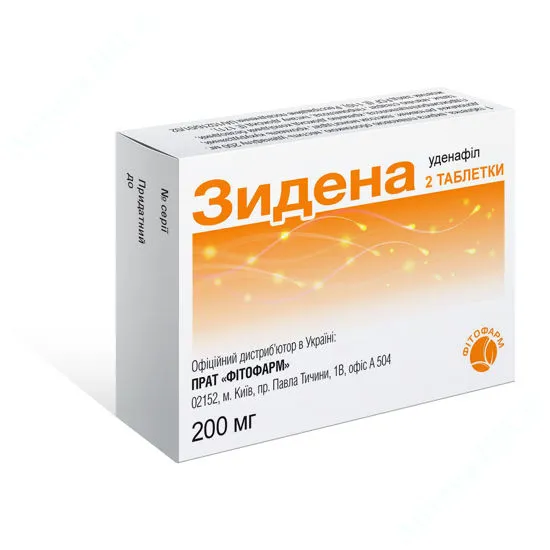
Table of Contents
INSTRUCTIONS FOR MEDICAL USE OF THE MEDICINAL PRODUCT ZYDENA (ZYDENA®)
Composition:
Active substance: udenafil;
One film-coated tablet contains 100 mg or 200 mg of udenafil;
Excipients: lactose monohydrate, corn starch, hydroxypropylcellulose, colloidal anhydrous silicon dioxide, talc, magnesium stearate, hypromellose, titanium dioxide (E 171), yellow FCF (E 110).
Pharmaceutical form. Film-coated tablets.
Main physicochemical characteristics: film-coated tablets of pale orange color, oval-shaped, with embossing "100" for the 100 mg strength and "200" for the 200 mg strength on one side, and "Z" and "Y" separated by a line on the other side.
Pharmacotherapeutic group. Medicinal products affecting the urogenital system and sex hormones. Urological medicinal products. Medicinal products used in erectile dysfunction. Udenafil.
ATC code: G04BE11.
Pharmacological Properties
Pharmacodynamics
Udenafil is a selective, reversible inhibitor of cyclic guanosine monophosphate (cGMP)-specific phosphodiesterase type 5 (PDE-5).
Udenafil does not exert a direct relaxant effect on isolated corpus cavernosum; however, under sexual stimulation, it enhances the relaxing effect of nitric oxide by inhibiting PDE-5, the enzyme responsible for cGMP degradation in the corpus cavernosum. This results in relaxation of smooth muscles of penile arteries and increased blood flow into penile tissues, leading to erection. The drug is not effective in the absence of sexual stimulation.
Udenafil is a selective inhibitor of the PDE-5 enzyme. PDE-5 is present in the smooth muscles of the corpus cavernosum, vascular smooth muscles of internal organs, skeletal muscles, platelets, kidneys, lungs, and cerebellum. As an inhibitor, udenafil is 10,000 times more potent against PDE-5 than against PDE-1, PDE-2, PDE-3, and PDE-4, which are located in the heart, brain, blood vessels, liver, and other organs.
Moreover, udenafil is 700 times more active against PDE-5 than against PDE-6, found in the retina and responsible for color vision. Udenafil does not inhibit PDE-11, which explains the absence of cases of myalgia, back pain, and testicular toxicity.
The optimal duration of drug action is up to 24 hours. The effect manifests as early as 30 minutes after drug intake, provided sexual stimulation is present.
In healthy volunteers, udenafil does not cause clinically significant changes in systolic and diastolic blood pressure compared to placebo, either in supine or standing positions (mean maximum reduction was 1.6/0.8 mmHg and 0.2/4.6 mmHg, respectively). Udenafil does not affect color discrimination (blue/green), which is explained by its low affinity for PDE-6. Udenafil does not influence visual acuity, electroretinogram, intraocular pressure, or pupil size.
No clinically significant effect of the drug on sperm count and concentration, sperm motility, or sperm morphology has been observed.
Pharmacokinetics
Absorption. After oral administration, udenafil is rapidly absorbed. The time to reach maximum plasma concentration (tmax) is 30–90 minutes (on average, 60 minutes). The elimination half-life (t½) is 12 hours. High plasma protein binding of udenafil (93.9%) prolongs its effective duration up to 24 hours after a single dose.
A high-fat meal does not affect the absorption of udenafil. Concomitant intake of 112 mL of alcohol (calculated as 40% ethanol) with oral administration of 200 mg udenafil does not influence the pharmacokinetic profile of udenafil.
In clinical studies involving 24 patients for comparative assessment of pharmacokinetic properties and safety, it has been demonstrated that dose adjustment is not required for elderly patients.
Metabolism. Udenafil is primarily metabolized via the cytochrome P450 isoenzyme CYP3A4.
Excretion. In healthy volunteers, the total clearance of udenafil is 755 mL/min. After oral administration, udenafil is excreted in the form of metabolites in feces.
Udenafil does not accumulate in the body. In healthy volunteers receiving daily doses of 100 and 200 mg for 10 days, no significant changes in its pharmacokinetics were observed.
Clinical characteristics.
Indications.
Treatment of erectile dysfunction characterized by the inability to achieve or maintain an erection of the penis sufficient for successful sexual intercourse.
For effective action, Viagra requires sexual stimulation.
Contraindications.
- Hypersensitivity to any component of Viagra;
- Regular or intermittent use of nitrates or other nitric oxide donors (concomitant use of glyceryl trinitrate (injectable solution, tablets, sprays or patches), isosorbide derivatives, sodium nitroprusside, amyl nitrite, nicorandil, or organic nitrates in any form is prohibited);
- Uncontrolled arterial hypertension (blood pressure > 170/100 mm Hg);
- Arterial hypotension (blood pressure < 90/50 mm Hg);
- Uncontrolled arrhythmia;
- Stroke, myocardial infarction, or aortic coronary bypass surgery within the last 6 months;
- Hereditary degenerative retinal disorders (including retinitis pigmentosa);
- Unilateral vision loss due to non-arteritic ischemic optic neuropathy;
- Severe hepatic or renal insufficiency;
- Presence of congenital long QT syndrome or QT interval prolongation due to medication;
- Use of strong cytochrome P450 3A4 inhibitors (HIV protease inhibitors indinavir or ritonavir);
- Concomitant use of Viagra and guanylate cyclase stimulators (e.g., riociguat) is contraindicated, as PDE-5 inhibitors, including Viagra, may potentiate the hypotensive effects of guanylate cyclase stimulators;
- Concurrent use of Viagra with other treatments for erectile dysfunction;
- Presence of significant cardiovascular diseases (e.g., unstable angina or severe heart failure), for which sexual activity is inadvisable; potential undiagnosed cardiovascular disorders in men with erectile dysfunction should be considered;
- Age under 18 years.
If you have known intolerance to certain sugars, consult your physician before taking this medicinal product.
Viagra contains the dye Yellow West FCF; therefore, the drug should be used with caution in patients with a history of hypersensitivity or allergic reaction to this ingredient.
Interaction with other medicinal products and other types of interactions.
Inhibitors of cytochrome P450 isoenzymes CYP3A4 (ketoconazole, itraconazole, ritonavir, indinavir, cimetidine, erythromycin, grapefruit juice) may increase the plasma concentration of Viagra.
Concomitant administration of ketoconazole (400 mg) and sildenafil (100 mg) increases bioavailability and Cmax by nearly two-fold (212%) and 0.8-fold (85%), respectively.
PDE-5 inhibitors, when used concomitantly with potent CYP450 3A4 inhibitors such as HIV protease inhibitors indinavir or ritonavir, significantly increase systemic concentrations of the drug.
In a pharmacokinetic study of co-administration of Viagra 200 mg and dapoxetine 60 mg in healthy volunteers, the use criterion was compared with the corresponding criterion for combined and separate administration of these drugs. No mutual influence was observed; concentrations (Cmax) of Viagra and dapoxetine decreased by approximately 13.6% and 16.3%, respectively. These changes in Viagra were not considered clinically significant.
Inducers of CYP450 3A4 metabolism—dexamethasone, rifampicin, and antiepileptic drugs (carbamazepine, phenytoin, and phenobarbital)—accelerate the metabolism of sildenafil; therefore, a decrease in drug concentration is expected with concomitant use.
Simultaneous administration of sildenafil (30 mg/kg orally) and nitroglycerin (2.5 mg/kg as a single intravenous dose) in rat experiments showed no effect on sildenafil pharmacokinetics; however, concomitant use of nitroglycerin and sildenafil is not recommended due to the potential for blood pressure reduction via sildenafil’s vasodilatory action.
Since amlodipine besylate exerts an antihypertensive effect through vasodilation, blood pressure may decrease with amlodipine. Therefore, medical evaluation is required before concomitant use.
Sildenafil and alpha-blocker agents are both vasodilators; therefore, when combined use is necessary, they should be prescribed at the lowest recommended doses.
Patients with impaired left ventricular outflow (e.g., aortic stenosis) may be more sensitive to the effects of vasodilators, including PDE inhibitors.
In vitro studies have shown that Viagra has a half-maximal inhibitory concentration (IC50) greater than 200 pmol/L for all CYP450 isoenzymes 1A2, 2A6, 2C8, 2C9, 2C19, 2D6, 2E1, and 3A4, except for 2D6 (IC50 67.7 pmol/L). Given that the maximum plasma concentration of the drug is 2.2 pmol/L after the recommended dose, it is unlikely that Viagra will affect the clearance rate of these isoenzymes.
Oral administration of omeprazole (for approximately one week) followed by oral intake of Viagra resulted in increased maximum plasma concentration of sildenafil.
Concomitant use of alcohol (0.6 g/kg, average maximum plasma concentration 0.088%) with Viagra (200 mg) did not enhance the effect of alcohol on blood pressure or heart rate, and the pharmacokinetics of the drug were not altered. However, since both Viagra and alcohol exert mild vasodilatory effects, the blood pressure-lowering effect may be potentiated when used together. Therefore, patients should be informed that symptoms such as tachycardia, decreased blood pressure, dizziness, headache, and orthostatic symptoms may occur.
Special Warnings and Precautions.
To diagnose erectile dysfunction and assess potential risks, a thorough patient examination and medical history review must be conducted. The use of the drug Zidena should be limited to patients who, based on objective diagnostic findings, require clinical treatment. Prior to initiating Zidena therapy, a careful cardiovascular evaluation is necessary, as sexual activity poses a potential risk for patients with cardiovascular diseases. Therefore, treatment of erectile dysfunction, including with udenafil, should not be performed in men with heart conditions for whom sexual activity is contraindicated. Zidena is contraindicated in patients who have experienced a stroke, cerebral hemorrhage, or myocardial infarction within the previous 6 months.
If a patient experiences sudden vision loss (in one or both eyes), the physician must prohibit the patient from taking PDE-5 inhibitors and advise immediate medical consultation. These symptoms may indicate non-arteritic anterior ischemic optic neuropathy (NAION), which can lead to visual impairment, including permanent vision loss. Such cases have been rarely reported in post-marketing surveillance studies of PDE-5 inhibitors, and it has been established that these events may potentially be associated with PDE-5 inhibitor use. It is unknown whether these adverse reactions are directly related to PDE-5 inhibitor intake or to other factors.
Zidena is contraindicated in patients who have previously received or are currently receiving any forms of nitrates or other nitric oxide donors (e.g., nitroglycerin, amyl nitrite, isosorbide dinitrate, etc.), as Zidena may potentiate their antihypertensive effects. Therefore, before prescribing Zidena, it is essential to determine whether the patient is taking nitrates or other nitric oxide donors. Patients must also be warned against the use of nitrates or other nitric oxide donors during and after treatment with Zidena.
Physicians should advise patients to discontinue all PDE inhibitors, including Zidena, and seek immediate medical attention in case of sudden hearing loss or deafness, possibly accompanied by tinnitus and dizziness, in one or both ears.
Udenafil has been shown to have systemic vasodilatory properties, leading to transient reductions in blood pressure. The consequences of this effect are generally minor or absent in most patients. However, before prescribing udenafil, the potential for negative vasodilatory effects—particularly in combination with sexual activity—should be carefully considered in patients with certain underlying medical conditions.
Patients with increased sensitivity to vasodilators include those with left ventricular outflow tract obstruction (e.g., aortic stenosis, idiopathic hypertrophic subaortic stenosis) and those with severe autonomic regulation disorders of blood pressure.
In some patients taking alpha-blockers, concomitant use of PDE-5 inhibitors has led to symptomatic hypotension.
Zidena is not recommended for patients with moderate or severe renal impairment, as Zidena concentrations (AUC) are increased. Zidena should be prescribed with caution in patients with hepatic dysfunction (AST, ALT more than three times the upper limit of normal) or renal dysfunction (serum creatinine > 2.5 mg/dL). The safety of Zidena in patients with hepatic or renal impairment has not been studied.
Erectile dysfunction treatments should be used with caution in patients with anatomical penile deformities (e.g., angulation, cavernous fibrosis, or Peyronie’s disease) and in patients with conditions that may predispose to priapism (e.g., sickle cell anemia, multiple myeloma, or leukemia).
During clinical trials of Zidena, no cases of priapism or erections lasting longer than 4 hours were reported. However, erections lasting more than 4 hours and priapism (painful erection lasting more than 6 hours) have been rarely reported with the use of PDE-5 inhibitors. If an erection lasts longer than 4 hours, immediate medical attention is required. Without prompt treatment, tissue damage and permanent loss of erectile function may occur.
Since Zidena is neither an aphrodisiac nor a stamina enhancer, it must not be used for any purposes other than the treatment of erectile dysfunction.
Increased plasma concentrations of udenafil have been observed in patients receiving CYP3A4 inhibitors (e.g., erythromycin, itraconazole, ketoconazole). Therefore, such combinations should be used with caution, for example, with initial dose adjustment.
Caution is also advised when prescribing Zidena to patients with active gastroesophageal reflux disease (GERD) or hiatal hernia associated with reflux esophagitis, and in patients taking alpha-adrenoblockers (concomitant use of PDE-5 inhibitors with alpha-adrenoblockers has been reported to cause symptomatic hypotension in some patients).
The efficacy of Zidena has not been studied in patients with uncontrolled diabetes, spinal cord injury, radical prostatectomy, radical pelvic surgery, low sexual desire, chemotherapy, or those taking anticoagulant medications.
Zidena should be prescribed with caution in patients with proliferative diabetic retinopathy.
Zidena contains the dye Yellow West FCF, which may cause allergic reactions.
Use during pregnancy or breastfeeding. The drug is not intended for use in women.
Ability to affect reaction speed when driving or operating machinery. Post-marketing studies have reported dizziness and blurred vision during treatment with udenafil. Therefore, patients should exercise caution when driving or operating machinery.
Method of Administration and Dosage
Administer orally to adult males, regardless of food intake. The recommended dose is one 100 mg tablet taken approximately 30 minutes to 12 hours before anticipated sexual activity. The dose may be cautiously increased to 200 mg following careful evaluation of any adverse reactions experienced after taking the 100 mg dose. The maximum recommended frequency of administration is once daily.
No dose adjustment is required for elderly men (over 65 years of age).
No dose adjustment is required in men with mild renal impairment.
No dose adjustment is required in patients with mild hepatic impairment (Child-Pugh class A).
Children. Not applicable.
Overdose.
During clinical studies, administration of a single dose of up to 400 mg of udenafil once daily in healthy volunteers was not associated with any serious adverse reactions. As the dose increased, the frequency of adverse events (such as headache and facial flushing) also increased; however, most of these events were mild in severity and resolved without additional treatment. In case of overdose, general symptomatic and supportive therapy should be administered. Zidena has a high plasma protein binding rate and is not eliminated in urine; therefore, dialysis does not significantly enhance its renal clearance.
Adverse reactions.
The adverse reactions listed in the table below occurred during clinical studies with the use of Viagra 100 or 200 mg taken as needed prior to sexual activity. Overall, adverse reactions were transient and mild to moderate in severity, and resolved spontaneously without treatment. The most commonly reported adverse reactions include flushing, nasal congestion, headache, and dyspepsia.
| System and organ class |
Adverse reactions by frequency |
||
| [≥ 10 %] |
[≥ 1%, < 10 %] |
[≥ 0.1 %, < 1.0 %] |
|
| General disorders |
headache |
chest pain, abdominal pain, fatigue, flushing, chest discomfort |
|
| Nervous system disorders |
dizziness, nuchal rigidity, paresthesia |
||
| Cardiovascular system disorders |
flushing |
||
| Eye disorders |
eye redness |
blurred vision, eye pain, chromatopsia |
|
| Respiratory system disorders |
nasal congestion |
dyspnea, dryness of nasal mucosa |
|
| Gastrointestinal disorders |
dyspepsia |
nausea, toothache, constipation, gastritis, stomach discomfort |
|
| Skin and subcutaneous tissue disorders |
facial or eye edema, urticaria, pruritus |
||
| Metabolic and endocrine disorders |
urinary disorders, thirst |
||
| Musculoskeletal and connective tissue disorders |
periartitis |
||
Adverse reactions not observed during pre-registration studies of the drug, but reported during additional clinical trials, therefore a causal relationship cannot be excluded: headache, sensation of cold, somnolence, palpitations, orthostatic dizziness, lethargy, numbness of the auricle, eye discomfort, rash, erythema, vomiting, diarrhea, dyspnea during physical exertion, cough, epistaxis, prolonged erection, and hypotension.
In patients receiving doses of the drug up to 200 mg per day, an increased frequency and variety of adverse reactions were observed compared to the 100 mg dose.
During post-marketing surveillance, rare cases of transient anterior non-arteritic ischemic optic neuropathy (NAION) have been reported, although clinical trials with sildenafil did not provide data on this, nor on vision loss associated with the use of phosphodiesterase type 5 (PDE-5) inhibitors, including sildenafil. Most of these patients had concomitant anatomical or vascular risk factors for NAION, including a low ratio of optic disc excavation to disc diameter (crowded disc), age over 50 years, diabetes mellitus, arterial hypertension, ischemic heart disease, hyperlipidemia, and smoking. It is not possible to definitively determine whether these adverse events are directly related to the use of PDE-5 inhibitors, to concomitant vascular risk factors or anatomical abnormalities, to a combination of these factors, or to other causes.
During post-marketing surveillance in patients taking PDE-5 inhibitors, including sildenafil, no cases of sudden decrease or loss of hearing have been reported. However, it has been reported that the patient's general health condition and other factors may influence the occurrence of adverse events related to the auditory system. Often, information regarding subsequent medical follow-up is limited. It is not possible to definitively determine whether these adverse events are directly related to the use of sildenafil, to concomitant risk factors for hearing loss, to a combination of these factors, or to other causes.
Results of post-marketing study of udenafil 100 and 200 mg. During a 6-year post-marketing study for re-evaluation in Korea, the incidence of adverse reactions, regardless of causal relationship, was 2.20%; the incidence of adverse events where a relationship to sildenafil use could not be excluded was 2.03%.
Reported adverse reactions included: flushing (1.04%), headache (0.76%), dizziness (0.11%), nasal congestion (0.11%), dyspepsia, eye redness (0.06%), visual disturbances, gastroesophageal reflux disease, increased heart rate (0.03%). Among all reported events, gastroesophage游戏副本