Vilate 1000 mo
UkraineTable of Contents
INSTRUCTIONS FOR MEDICAL USE OF THE MEDICINAL PRODUCT VILATE 500 MO VILATE 1000 MO
Composition:
Active substances: coagulation factor VIII, von Willebrand factor;
One vial contains 500 or 1000 IU of coagulation factor VIII and 500 IU or 1000 IU of von Willebrand factor; total protein content ≤ 7.5 mg (500 IU) or ≤ 15 mg (1000 IU);
Excipients: glycine, sucrose, sodium chloride, sodium citrate, calcium chloride.
Solvent: water for injections with 0.1% polysorbate 80.
Pharmaceutical form. Powder and solvent for solution for injection.
Main physicochemical properties:
Powder: powder or brittle mass of white or pale yellow color.
Solvent: clear, colorless, odorless liquid. Free from visible particles.
Pharmacotherapeutic group. Antihemorrhagics. Blood coagulation factors. Von Willebrand factor and coagulation factor VIII in combination. ATC code B02B D06.
Pharmacological properties.
Pharmacodynamics.
Von Willebrand disease (VWD)
Von Willebrand factor (from concentrate) is a normal component of human plasma and acts the same as endogenous von Willebrand factor.
Administration of von Willebrand factor enables correction of haemostatic defects observed in patients with von Willebrand factor deficiency at two levels:
- von Willebrand factor restores platelet adhesion to the vascular subendothelium at the site of vessel injury (since it binds both to the vascular subendothelium and to the platelet membrane), thereby ensuring primary haemostasis, as confirmed by shortened bleeding time. This effect occurs immediately and is known to depend significantly on the degree of protein polymerization;
- von Willebrand factor induces a delayed correction of the factor VIII-related deficiency. After intravenous administration, von Willebrand factor binds endogenous factor VIII (normally produced by the patient) and, by stabilizing this factor, prevents its rapid degradation. As a result, administration of pure von Willebrand factor (a von Willebrand factor preparation with low factor VIII content) restores factor VIII:C levels to normal as a secondary effect after the first infusion. Administration of a von Willebrand factor preparation containing factor VIII restores factor VIII:C levels to normal immediately after the first infusion.
In addition to its role as a protective protein for factor VIII, von Willebrand factor mediates platelet adhesion to sites of vascular injury and plays a role in platelet aggregation.
Haemophilia A
The factor VIII/von Willebrand factor complex consists of two molecules (factor VIII and von Willebrand factor) with different physiological functions. When administered to a patient with haemophilia, factor VIII binds to von Willebrand factor in the patient's bloodstream. Activated factor VIII (factor VIIIa) acts as a cofactor for activated factor IX (factor IXa), accelerating the conversion of factor X to activated factor X (factor Xa). Factor Xa converts prothrombin to thrombin. Thrombin then converts fibrinogen to fibrin, allowing clot formation.
Haemophilia A is an inherited, sex-linked coagulation disorder associated with reduced levels of factor VIII:C (coagulant factor), leading to severe bleeding into joints, muscles, or internal organs, either spontaneously or following accidental or surgical trauma. Replacement therapy increases factor VIII levels in blood plasma, thereby promoting temporary correction of the factor deficiency and correction of bleeding tendency.
It should be noted that the annualized bleeding rate (ABR) observed in different clinical studies and with different factor concentrates cannot be directly compared.
In addition to its role as a protective protein for factor VIII, von Willebrand factor mediates platelet adhesion to sites of vascular injury and plays a role in platelet aggregation.
Pharmacokinetics.
Von Willebrand disease (VWD)
Von Willebrand factor (from concentrate) is a normal component of human plasma and acts like endogenous von Willebrand factor.
Table 1
Results of a meta-analysis of three pharmacokinetic studies involving 24 patients with all types of VWD.
| Parameter |
All types of VWD |
Type 1 VWD |
Type 2 VWD |
Type 3 VWD |
|||||||||||||||||
| N |
Mean value |
SD |
Min ∙ |
Max ∙ |
N |
Mean value |
SD |
Min ∙ |
Max ∙ |
N |
Mean value |
SD |
Min ∙ |
Max ∙ |
N |
Mean value |
SD |
Min ∙ |
Max ∙ |
||
| Recovery (%/IU/kg) |
24 |
1.56 |
0.48 |
0.90 |
2.93 |
2 |
1.19 |
0.07 |
1.14 |
1.24 |
5 |
1.83 |
0.86 |
0.98 |
2.93 |
17 |
1.52 |
0.32 |
0.90 |
2.24 |
|
| AUC (0-inf) (g*%) |
23 |
1981 |
960 |
593 |
4831 |
2 |
2062 |
510 |
1701 |
2423 |
5 |
2971 |
1383 |
1511 |
4831 |
16 |
1662 |
622 |
593 |
2606 |
|
| T 1/2 (h) |
24 |
23.3 |
12.6 |
7.4 |
58.4 |
2 |
39.7 |
18.3 |
26.7 |
52.7 |
5 |
34.9 |
16 |
17.5 |
58.4 |
17 |
18 |
6.2 |
7.4 |
30.5 |
|
| MRT (h) |
24 |
33.1 |
19 |
10.1 |
89.7 |
2 |
53.6 |
25.9 |
35.3 |
71.9 |
5 |
53.5 |
24.6 |
27.8 |
89.7 |
17 |
24.7 |
8.5 |
10.1 |
37.7 |
|
| Clearance (ml/h/kg) |
24 |
3.29 |
1.67 |
0.91 |
7.41 |
2 |
2.66 |
0.85 |
2.06 |
3.27 |
5 |
1.95 |
1.02 |
0.91 |
3.31 |
17 |
3.76 |
1.69 |
1.83 |
7.41 |
|
AUC – area under the curve; MRT – mean residence time of the drug in the body; SD – standard deviation.
Hemophilia A
Factor VIII (from concentrate) is a normal component of human blood plasma and acts as endogenous factor VIII. After administration of the drug, approximately from 2/3 to 3/4 of factor VIII remains in circulation. The factor VIII:C activity achieved in blood plasma is 80%–120% of the predicted (expected) factor VIII activity.
Factor VIII activity decreases due to a biphasic exponential decay. During the initial phase, distribution occurs between the intravascular space and other compartments (body fluids), with a plasma half-life of 3 to 6 hours. In the subsequent, slower phase, the half-life ranges from 8 to 18 hours, averaging 15 hours. This corresponds to the actual biological half-life.
Table 2
Results of one clinical study involving 12 patients (chromogenic assay, determination by duplicate measurements).
| Parameter |
Baseline visit |
6-month visit |
||
| Mean value |
SD |
Mean value |
SD |
|
| Recovery (%/IU/kg) |
FVIII:C 2.27 |
1.20 |
FVIII:C 2.26 |
1.19 |
| AUCnorm (% × h/IU/kg) |
FVIII:C 31.3 |
7.31 |
FVIII:C 33.8 |
10.9 |
| Half-life (h) |
FVIII:C 11.2 |
2.85 |
FVIII:C 11.8 |
3.37 |
| MRT (h) |
FVIII:C 15.3 |
3.5 |
FVIII:C 16.3 |
4.6 |
| Clearance (mL/h/kg) |
FVIII:C 3.37 |
0.86 |
FVIII:C 3.24 |
1.04 |
AUC – area under the curve; MRT – mean residence time of the drug in the body;
SD – standard deviation.
Preclinical safety data
VWF and factor VIII in VILTE are normal components of human plasma and act as endogenous VWF/factor VIII.
Standard safety studies of these components in laboratory animals would not provide additional useful information beyond the existing clinical experience; therefore, such studies are not required.
Clinical characteristics.
Indications.
Von Willebrand disease (VWD)
Prophylaxis and treatment of bleeding or bleeding during surgical interventions in patients with von Willebrand disease (VWD), when treatment with desmopressin (DDAVP) alone is ineffective or contraindicated.
Hemophilia A
Treatment and prophylaxis of bleeding in patients with hemophilia A (congenital deficiency of blood coagulation factor VIII).
Contraindications.
Hypersensitivity to the active substances or to any of the excipients.
Interaction with other medicinal products and other forms of interaction.
Interactions with other medicinal products are unknown.
Special precautions for use
Tracking
To improve the traceability of biological medicinal products, it is essential to clearly record the name and batch number of the administered product.
Hypersensitivity
Allergic reactions may occur during administration of the medicinal product VILATE. In addition to factor VIII, the product contains traces of human proteins. If symptoms of hypersensitivity occur, patients should be advised to immediately discontinue use of the medicinal product and contact their physician.
Patients should be informed about early signs of allergic reactions such as rash, generalized urticaria, dyspnea, tightness of the chest, hypotension, and anaphylaxis.
In case of shock, standard anti-shock therapy should be initiated.
Transmission of infectious agents
Standard precautions to prevent infections from medicinal products derived from human blood or plasma include donor selection, screening of individual donor blood and plasma pools for specific infection markers, and inclusion of effective steps in the manufacturing process to inactivate/remove viruses.
Nevertheless, when medicinal products derived from human blood or plasma are administered, the possibility of transmission of infectious agents cannot be completely excluded. This also applies to unknown or emerging viruses and other pathogenic microorganisms.
The measures taken are considered effective against enveloped viruses such as human immunodeficiency virus (HIV), hepatitis B virus (HBV), and hepatitis C virus (HCV), as well as against non-enveloped hepatitis A virus (HAV). However, the effectiveness of these measures may be limited for non-enveloped viruses such as parvovirus B19.
Parvovirus B19 infection may be particularly dangerous for pregnant women (risk of fetal infection) and for individuals with immunodeficiency or increased erythropoiesis (e.g., hemolytic anemia).
Appropriate vaccination (e.g., against hepatitis A and B) should be considered for patients who receive repeated or long-term treatment with VWF/factor VIII products derived from human plasma.
It is strongly recommended to record the name and batch number of the VILATE product each time it is administered to the patient, to ensure traceability between the patient's condition and the specific batch of the product used.
Von Willebrand Disease (VWD)
Thromboembolic complications
When using VWF-containing factor VIII products, the treating physician should be aware that continuous therapy may lead to excessive increases in factor VIII:C (factor VIII coagulant activity). In patients receiving VWF-containing factor VIII products, plasma factor VIII:C levels should be monitored to avoid persistently elevated plasma levels of factor VIII:C, as this may increase the risk of thrombosis.
There is a risk of thrombosis associated with the use of VWF-containing factor VIII products, particularly in patients with known clinical or laboratory risk factors. Therefore, patients in high-risk groups should be closely monitored for early signs of thrombosis. Prophylaxis for venous thromboembolism should be initiated in accordance with current guidelines.
Inhibitors
In patients with VWD, particularly type 3, neutralizing antibodies (inhibitors) against VWF may develop. If expected plasma levels of VWF:RCo activity are not achieved or if bleeding is not controlled with the administered dose, appropriate testing should be performed to determine the presence of VWF inhibitors.
In patients with high inhibitor titers, treatment with VWF may be ineffective, and alternative treatment options should be considered. Management of such patients should be performed by physicians experienced in treating patients with bleeding disorders.
Hemophilia A
Inhibitors
The development of neutralizing antibodies (inhibitors) against factor VIII is a known complication in the treatment of patients with hemophilia A.
These inhibitors are typically immunoglobulins of class G (IgG) directed against the procoagulant activity of factor VIII, and their concentration is measured in Bethesda units (BU) per 1 mL of plasma using a modified assay. The risk of inhibitor development is associated with disease severity and exposure to factor VIII. The risk is highest during the first 50 exposure days and remains present throughout life, although it is uncommon.
The clinical significance of inhibitor development depends on the inhibitor titer: the risk of inadequate clinical response is lower with low-titer inhibitors compared to high-titer inhibitors. Overall, all patients treated with factor VIII-containing coagulation products should be closely monitored for inhibitor development through appropriate clinical observations and laboratory testing.
If the expected plasma factor VIII activity levels are not achieved or if bleeding is not controlled with the administered dose, testing for factor VIII inhibitors should be performed. In patients with high inhibitor titers, treatment with factor VIII may be ineffective, and alternative treatment options should be considered.
Management of such patients should be conducted by physicians experienced in the treatment of hemophilia and inhibitor development.
Cardiovascular complications
In patients with pre-existing cardiovascular risk factors, replacement therapy with FVIII may increase the risk of cardiovascular complications.
Catheter-related complications
If a central venous access device (CVAD) is required, the risk of CVAD-related complications should be considered, including local infections, bacteremia, and catheter site thrombosis.
This medicinal product contains up to 58.7 mg of sodium per 500 IU VWF and factor VIII dose/vial and up to 117.3 mg of sodium per 1000 IU VWF and factor VIII dose/vial, equivalent to 2.94% and 5.87%, respectively, of the WHO recommended maximum daily intake of 2 g sodium for an adult.
This should be taken into account for patients on a controlled sodium-restricted diet.
Pediatric population
The above-mentioned special precautions apply to both adults and children.
Use during pregnancy or breastfeeding
Reproductive toxicity studies with VWF/factor VIII have not been conducted in animals.
Von Willebrand Disease (VWD)
There is no experience with the use of this product in pregnant or breastfeeding women.
In cases of VWF deficiency, VILATE should be administered to pregnant and breastfeeding women only if clearly indicated, taking into account the increased risk of bleeding during delivery in such patients.
Hemophilia A
Due to the rarity of hemophilia A in women, there is no experience with the use of VILATE during pregnancy or breastfeeding. Therefore, VILATE should be used during pregnancy and breastfeeding only when clearly indicated.
Effect on ability to drive and use machines
VILATE has no influence on the ability to drive or operate machinery.
Administration and Dosage
Treatment should be initiated under the supervision of a physician experienced in the management of coagulation disorders. The product in the vial is intended for single use only. If any product remains in the vial after use, the vial must be disposed of according to local requirements.
Von Willebrand Disease (VWF)
The ratio between VWF:RCo and FVIII:C (ristocetin cofactor activity of von Willebrand factor and coagulant activity of factor VIII) is approximately 1:1. Generally, 1 IU/kg body weight of VWF:RCo and FVIII:C increases plasma activity of the respective protein by 1.5–2% of normal. Typically, doses of 20 to 50 IU of VILATE/kg body weight are required to achieve adequate hemostasis. This results in an increase of VWF:RCo and FVIII:C levels in patients by approximately 30–100%.
An initial dose of 50 to 80 IU of VILATE/kg body weight may be required, particularly in patients with type 3 VWD, in whom maintaining adequate plasma activity may necessitate higher doses than in patients with other types of VWD.
Pediatric Patients
Insufficient data are available to recommend the use of VILATE in children under 6 years of age.
Perioperative or Severe Trauma Bleeding Prophylaxis
To prevent bleeding during surgical procedures, VILATE should be administered 1–2 hours before the start of surgery. Target plasma levels of VWF:RCo ≥ 60 IU/dL (≥ 60%) and FVIII:C ≥ 40 IU/dL (≥ 40%) should be achieved.
The appropriate dose should be repeated every 12–24 hours. The dose and duration of treatment depend on the patient's clinical condition, type and severity of bleeding, and levels of VWF:RCo and FVIII:C.
In patients receiving VWF-containing products with FVIII, plasma FVIII:C levels should be monitored to avoid persistently elevated levels, which may increase the risk of thrombosis, especially in patients with known clinical or laboratory risk factors. If elevated plasma FVIII:C levels are observed, consideration should be given to reducing the dose and/or extending the interval between doses, or using a VWF product with low FVIII content.
Prophylaxis
For long-term prevention of bleeding in patients with VWD, doses of 20–40 IU/kg body weight should be administered 2 or 3 times per week. In certain cases, such as gastrointestinal bleeding, higher doses may be required.
Hemophilia A
Monitoring of Treatment
During treatment, appropriate monitoring of factor VIII levels is recommended to determine the required dose and frequency of repeat infusions. Individual patients may respond differently to factor VIII therapy, showing variable half-lives and recovery rates. Patients with body weight significantly below or above normal may require dose adjustments based on body weight. Particularly during major surgical procedures, careful monitoring of replacement therapy is essential through coagulation testing (factor VIII activity in plasma).
Dosing
The dosage and duration of replacement therapy depend on the severity of factor VIII deficiency, the location and extent of bleeding, and the patient's clinical condition.
The amount of factor VIII administered is expressed in International Units (IU), as defined by the current WHO standard for factor VIII products. Factor VIII activity in plasma is expressed either as a percentage (relative to normal human plasma) or in International Units (relative to the International Standard for FVIII in plasma).
One International Unit (IU) of factor VIII activity is equivalent to the amount of factor VIII present in 1 mL of normal human plasma.
On-Demand Treatment
The calculation of the required factor VIII dose is based on empirical data indicating that 1 IU of factor VIII:C per kg body weight increases plasma factor VIII activity by 1.5–2% of normal. The required dose is calculated using the following formula:
Required IU = body weight (kg) × desired increase in factor VIII (%) (IU/dL) × 0.5 IU/kg
The amount and frequency of administration should always be adjusted according to clinical response in each individual case. In cases of hemorrhagic complications, factor VIII activity should not fall below the target plasma level (expressed as % of normal or IU/dL) during the appropriate period.
The table below (Table 3) can be used to determine dosing for bleeding episodes and surgical procedures.
Table 3
Treatment Regimen for Bleeding and Surgical Procedures
| Severity of bleeding/ Type of surgical procedure |
Required Factor VIII level (%) (IU/dl) |
Dosing frequency (hours)/ Duration of treatment (days) |
| Bleeding |
||
| Early haemarthrosis (joint bleeding), muscle bleeding or bleeding from the mouth |
20 – 40 |
Repeat every 12 – 24 hours for at least 1 day until bleeding (indicated by pain) stops or recovery is achieved. |
| More extensive haemarthrosis, muscle bleeding or haematoma |
30 – 60 |
Repeat injections every 12 – 24 hours for 3 – 4 days or more until pain and acute restriction of movement have resolved. |
| Life-threatening bleeding |
60 – 100 |
Repeat injections every 8 – 24 hours until the life-threatening situation has passed. |
| Surgical procedure |
||
| Minor surgical procedure, including tooth extraction |
30 – 60 |
Every 24 hours, for at least 1 day until recovery is achieved. |
| Major surgical procedure |
80 – 100 (pre- and post-operative) |
Repeat injections every 8 – 24 hours until complete wound healing, followed by treatment for at least another 7 days to maintain Factor VIII activity between 30% and 60% (IU/dl). |
Prophylaxis
For long-term prevention of bleeding episodes in patients with severe haemophilia A, regular doses of 20 to 40 IU of factor VIII per kg body weight should be administered every 2 to 3 days. In some cases, particularly in younger patients, shorter intervals between administrations or higher doses may be required.
Continuous infusion
Prior to surgical intervention, a pharmacokinetic analysis should be performed to estimate clearance. The initial rate of administration can be calculated as follows:
Administration rate (IU/kg/hour) = clearance (ml/kg/hour) × desired steady-state level (IU/ml)
After the first 24 hours of continuous infusion, clearance should be recalculated daily using the steady-state equation with measured levels and known administration rate.
Paediatric patients
There is insufficient data to recommend the use of WILATE in children under 6 years of age with haemophilia A.
Route of administration
Intravenous administration.
The injection or infusion rate should not exceed 2–3 ml per minute.
Special precautions for disposal and further processing
It is essential to read and strictly follow all instructions!
Do not use the medicinal product after the expiry date stated on the label.
Sterility must be maintained throughout the procedure described below!
The reconstituted medicinal product should be inspected visually for the presence of visible (solid) particles and discoloration prior to administration.
The solution should be clear or slightly opalescent. Do not use solutions that are cloudy or contain precipitates.
Use the prepared solution immediately to avoid microbial contamination.
Use only the infusion system supplied. Use of any other injection/infusion equipment may introduce additional risks and lead to ineffective treatment.
Instructions for solution preparation
- Do not use the medicinal product directly from the refrigerator. The solvent and powder in closed vials should reach room temperature.
- Remove the flip caps from both vials and wipe the rubber stoppers with one of the alcohol swabs provided in the package.
- The transfer system is shown in Figure 1.
Place the vial containing the solvent on a flat surface and hold it firmly. Position the transfer system with the blue part uppermost onto the solvent vial and press firmly downwards until a click is heard (Figures 2 and 3).
Do not twist when securing.
|
|
|
|
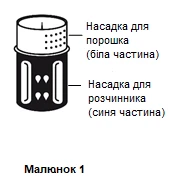
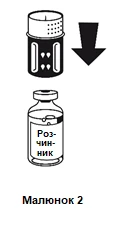
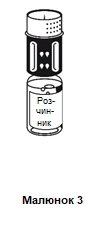
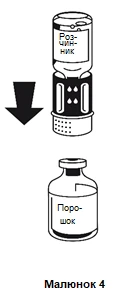
- Place the vial containing the powder on a flat, level surface and hold it firmly. Take the vial with the solvent together with the attached transfer system and invert it upside down. Position the white part on top of the vial containing the powder and press firmly downward until a click is heard (Figure 4). Do not twist when attaching. The solvent will automatically flow into the vial containing the powder.
- While both vials are still attached, gently and carefully rotate the vial containing the powder until the drug is completely dissolved.
Dissolution occurs within less than 10 minutes at room temperature. Minor foaming may occur during preparation. Separate the transfer system into two parts by unscrewing it (Figure 5). The foam will dissipate.
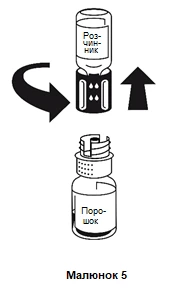
Dispose of the empty solvent vial together with the blue part of the transfer system.
Instructions for injection administration
As a precautionary measure, the patient's pulse rate should be monitored before and during administration of the injection. If an increased pulse rate is observed, the injection rate should be reduced or administration temporarily stopped.
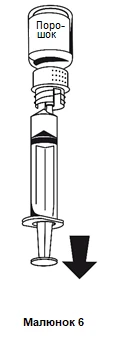
- 1. Attach the syringe to the white part of the transfer system. Turn the vial upside down and draw the solution into the syringe (Figure 6).
The solution should be clear or slightly opalescent.
Once the solution has been drawn up, firmly holding the syringe by the barrel, disconnect the syringe from the transfer system (Figure 7).
|
|
|
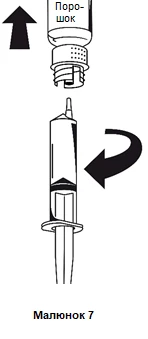
The empty vial should be disposed of together with the white part of the transfer system.
- 2. Disinfect the selected injection site with one of the alcohol swabs supplied in the package.
- Attach the supplied administration system to the syringe.
- Insert the injection needle into the appropriate vein. If a tourniquet (constricting band) is used to make the vein more visible, it should be loosened before starting the administration of Wilate.
Blood must not enter the syringe due to the risk of fibrin clot formation.
- Administer the solution intravenously very slowly, at a rate of 2–3 mL per minute.
If more than one vial of Wilate powder is used for a single administration, the same injection needle and syringe may be reused. The transfer system is intended for single use only (use only once)!
Any unused medicinal product or waste material must be disposed of in accordance with local requirements.
Children.
Von Willebrand disease (VWD)
There is insufficient data to recommend the use of WILATE in children under 6 years of age.
Haemophilia A
There is insufficient data to recommend the use of WILATE in children under 6 years of age with haemophilia A.
Overdose.
Symptoms of FVIII or VWF overdose in humans have not been reported. In case of significant overdose, thromboembolic complications may occur.
Adverse reactions.
Summary of safety profile
Hypersensitivity or allergic reactions (which may include: angioneurotic edema, burning and tingling at the injection site, chills, flushing, generalized urticaria, erythema, pruritus, rash, headache, urticaria, hypotension, somnolence, nausea, excitement, tachycardia, dyspnea, shortness of breath, stinging sensation, vomiting, wheezing/bronchospasm) are rare and in some cases may progress to severe anaphylaxis (including shock).
Von Willebrand disease (VWD)
In patients with VWD, particularly type 3, neutralizing antibodies to VWF may very rarely develop. If such inhibitors appear, this will manifest as a lack of expected clinical response. These antibodies may occur concomitantly with anaphylactic reactions. Therefore, patients experiencing anaphylactic reactions should be evaluated for the presence of inhibitors.
In all cases of anaphylactic reaction, it is recommended to consult a specialized hemophilia treatment center.
There is a risk of thrombosis, particularly in patients with known clinical or laboratory risk factors. Prophylaxis against venous thrombosis should be initiated in accordance with current guidelines.
In patients receiving VWF-containing products that also contain FVIII, persistently elevated levels of FVIII:C in plasma may increase the risk of thrombus formation.
Hemophilia A
In patients with hemophilia A who have been treated with factor VIII and the product WILATE, neutralizing antibodies (inhibitors) may develop, see section "Pharmacodynamic properties". If such inhibitors occur, the condition will manifest as an inadequate clinical response. In such cases, it is recommended to consult a specialized hemophilia treatment center.
Tabulated list of adverse reactions
The frequency of adverse reactions is assessed according to the following conventional categories: very common (≥ 1/10); common (≥ 1/100 to < 1/10); uncommon (≥ 1/1,000 to < 1/100); rare (≥ 1/10,000 to < 1/1,000); very rare (< 1/10,000), frequency not known (cannot be estimated from available data).
Table 4 lists adverse reactions observed in clinical trials, post-marketing safety studies, and those known from other post-marketing sources. Adverse reactions are categorized by MedDRA System Organ Classes (SOC) using preferred terms (PT), and are listed by frequency.
Table 4
| MedDRA System Organ Class (SOC) |
Adverse reaction |
Frequency |
| Immune system disorders |
Hypersensitivity Anaphylactic shock |
Uncommon Very rare |
| General disorders and administration site conditions |
Fever Chest pain |
Uncommon Frequency not known |
| Blood and lymphatic system disorders |
Factor VIII inhibitors Factor von Willebrand inhibitors |
Uncommon (PTPs)* Very common (PUPs) Very rare |
| Respiratory, thoracic and mediastinal disorders |
Cough |
Frequency not known |
| Nervous system disorders |
Dizziness |
Frequency not known |
| Gastrointestinal disorders |
Abdominal pain |
Frequency not known |
| Musculoskeletal and connective tissue disorders |
Back pain |
Frequency not known |
* Frequency is based on studies with all FVIII products conducted in patients with severe haemophilia A. PTPs – previously treated patients; PUPs – previously untreated patients.
Description of individual adverse reactions
For information on individual adverse reactions, see section "Special warnings and precautions for use".
Reporting of suspected adverse reactions
Reporting suspected adverse reactions after authorization of the medicinal product is important. It allows ongoing monitoring of the benefit/risk balance of this medicinal product. Medical and pharmaceutical personnel, as well as patients or their legal representatives, should report all suspected adverse reactions and lack of efficacy via the Automated Information System for Pharmacovigilance at the following link: https://aisf.dec.gov.ua.
Shelf life.
Powder for solution for injection – 3 years.
The stability of the reconstituted solution is maintained for 4 hours at room temperature (not above 25 °C). However, to avoid microbial contamination, the reconstituted solution should be used immediately.
Solvent shelf life – 4 years.
The solvent should be stored for 4 years at 2 to 8 °C, protected from light.
During this period, the solvent may be stored for up to 6 months at temperatures up to 25 °C; in this case, the shelf life ends 6 months after removal from refrigeration.
Storage conditions.
Store at 2 to 8 °C. Do not freeze.
Keep the vial in the cardboard package to protect from light.
Keep out of reach of children.
During the shelf life, the product may be stored at room temperature (not above 25 °C) for up to 2 months. In this case, the shelf life ends 2 months after the first removal of the product from the refrigerator.
The patient must indicate the new expiry date on the outer cardboard package.
The reconstituted solution is intended for single use only. Any unused solution remaining in the vial must be discarded.
Incompatibilities.
In the absence of compatibility studies, this medicinal product should not be mixed with other medicinal products or administered simultaneously with another intravenous product in the same infusion system. Only the supplied injection/infusion systems should be used, as treatment may be ineffective due to adsorption of factor VIII/ von Willebrand factor onto the internal surface of certain infusion equipment.
Packaging
Cardboard box No. 1: 1 vial containing powder for solution for injection (500 IU) and package leaflet.
Cardboard box No. 2: 1 vial containing solvent (water for injections with 0.1% polysorbate 80), 5 ml, together with an intravenous administration kit and 2 alcohol-impregnated swabs.
Intravenous administration kit contains: 1 single-use syringe, 1 transfer set, 1 infusion set.
Cardboard box No. 1 and cardboard box No. 2 are combined together with a plastic film.
Cardboard box No. 1: 1 vial containing powder for solution for injection (1000 IU) and package leaflet.
Cardboard box No. 2: 1 vial containing solvent (water for injections with 0.1% polysorbate 80), 10 ml, together with an intravenous administration kit and 2 alcohol-impregnated swabs.
Intravenous administration kit contains: 1 single-use syringe, 1 transfer set, 1 infusion set.
Cardboard box No. 1 and cardboard box No. 2 are combined together with a plastic film.
Prescription status. Prescription only.
Manufacturer. Octapharma Pharmazeutika Produktionsges.m.b.H.
Manufacturer's name and address of the place of business.
Obere Laaer Strasse 235, 1100 Vienna, Austria.