Vikalin®
Ukraine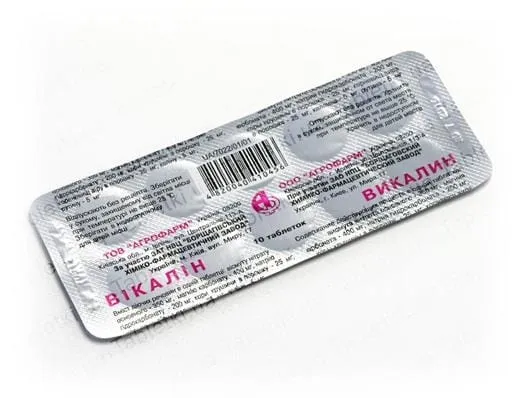
Table of Contents
INSTRUCTIONS FOR MEDICAL USE OF THE MEDICINAL PRODUCT VICALIN® (VICALIN)
Composition:
Active substances: Each tablet contains: bismuth nitrate subgallate, calculated as 282 mg of bismuth oxide – 350 mg; heavy magnesium carbonate, calculated as 168.5 mg of magnesium oxide – 400 mg; sodium bicarbonate – 200 mg; powdered buckthorn bark – 25 mg; powdered rhizomes of sweet flag (Acorus calamus) – 25 mg; quercetin – 5 mg; rutin – 5 mg;
Excipients: magnesium stearate, potato starch, talc.
Pharmaceutical form. Tablets.
Main physicochemical properties: light brown tablets with slight specks, oval-shaped, convex on both sides, with a score line on one side of the tablet.
Pharmacotherapeutic group. Agents for treatment of peptic ulcer and gastroesophageal reflux disease. ATC code A02BX.
Pharmacological properties.
Pharmacodynamics.
Vicalin® exerts a complex effect. Bismuth nitrate basic, sodium bicarbonate, and heavy magnesium carbonate exert an antacid and astringent effects; buckthorn bark has a laxative effect; calamus rhizome and keline have a spasmolytic effect; rutin reduces capillary permeability.
Pharmacokinetics. Data are lacking.
Clinical characteristics.
Indications.
As part of complex therapy for gastric and duodenal peptic ulcer, functional dyspepsia, hyperacid gastritis.
Contraindications.
Hypersensitivity to the components of the drug. Chronic inflammatory conditions of the intestine and gallbladder; hypochlorhydric gastritis; gastrointestinal bleeding; severe renal function impairment; acute conditions of typhoid fever.
Cortex Frangulae: neurogenic and endocrine constipation, spasmodic constipation, intestinal obstruction, hemorrhages, acute abdomen syndrome, appendicitis, acute gastroenterocolitis.
Special precautions.
A special diet should be followed during treatment.
Renal function and bismuth concentration in blood and urine should be monitored during therapy. Stool may turn dark green or black during tablet intake.
The drug should be taken 2 hours before or after the administration of other medicinal agents.
Interaction with other medicinal products and other forms of interaction. The absorptive effect of tetracyclines is reduced when used concomitantly with this drug, since complexes poorly absorbed in the gastrointestinal tract are formed upon interaction between tetracyclines and agents containing magnesium cations.
During treatment with Vicalin®, other bismuth-containing drugs should not be taken to avoid the risk of increased bismuth levels in blood.
Concomitant use with alkaloids, glycosides, enzyme preparations, and antibiotics is not recommended.
The drug reduces the absorption of coumarin derivatives.
Reduced absorption of other medicinal agents taken concomitantly with Vicalin® is possible. Therefore, the interval between administration of these drugs should be at least 2 hours.
Special precautions for use.
Antacid preparations and milk should not be taken within half an hour before or after taking the drug, as gastric juice is required for the formation of the protective layer.
Prolonged use of bismuth-containing compounds is not recommended due to the rare occurrence of encephalopathy. When following the recommended dosing regimen, the risk of this adverse effect is very low; however, during treatment with this drug, concomitant use of other bismuth-containing preparations is not recommended.
Use during pregnancy or breastfeeding. Vicalin® should not be used during pregnancy. During breastfeeding, use of the drug must be discontinued.
Ability to affect reaction speed while driving or operating machinery. Currently, there is no information indicating an adverse effect on reaction speed while driving or operating machinery.
Dosage and Administration.
Vikalyn® should be taken orally after meals.
Adults should take 1–2 tablets three times daily, swallowing with ½ glass of warm water (it is advisable to crush the tablets beforehand).
The duration of treatment is determined by the physician depending on the nature and severity of the disease.
Children. There is no experience with use in children.
Overdose.
Symptoms: nausea, vomiting, diarrhea.
Treatment: symptomatic.
Bismuth.
With frequent administration of high doses, bismuth overdose is possible, which may manifest after 10 days with symptoms characteristic of renal insufficiency (elevated bismuth levels in blood plasma).
Cascara bark.
Symptoms: colicky abdominal pain, tenesmus, feeling of discomfort.
Adverse reactions.
Gastrointestinal disorders: increased frequency of defecation, which resolves with dose reduction; nausea, vomiting, tongue pigmentation.
Central nervous system disorders: headache.
Blood and lymphatic system disorders: haemoglobinemia.
General disorders: gingival and eyelid edema.
Other: allergic reactions, including urticaria, rash, pruritus, and swelling.
Bismuth.
Skin and subcutaneous tissue disorders: rash, pruritus.
Gastrointestinal disorders: black or dark green discoloration of stools.
Cascara bark.
Gastrointestinal disorders: dehydration, reduced intestinal enzyme function, colonic atony, colicky pain.
Calamus rhizome.
Immune system disorders: urticaria, rash, pruritus, swelling.
Shelf life. 5 years.
Storage conditions. Store in the original packaging at a temperature not exceeding 25 °C.
Keep out of reach of children.
Packaging. Tablets: 10 in a strip; 10 in a blister; 10 in a blister, 2 blisters in a pack.
Availability category. Over-the-counter.
Manufacturer.
- JSC "Kyivmedpreparat".
- JSC "Halychfarm".
Manufacturer's address and place of business.
- 139 Saksaganskogo Street, Kyiv, 01032, Ukraine.
- 6/8 Opryshkivska Street, Lviv, 79024, Ukraine.
Marketing authorization holder.
JSC "Halychfarm".
Address of the marketing authorization holder.
6/8 Opryshkivska Street, Lviv, 79024, Ukraine.