Veroshpiron
Ukraine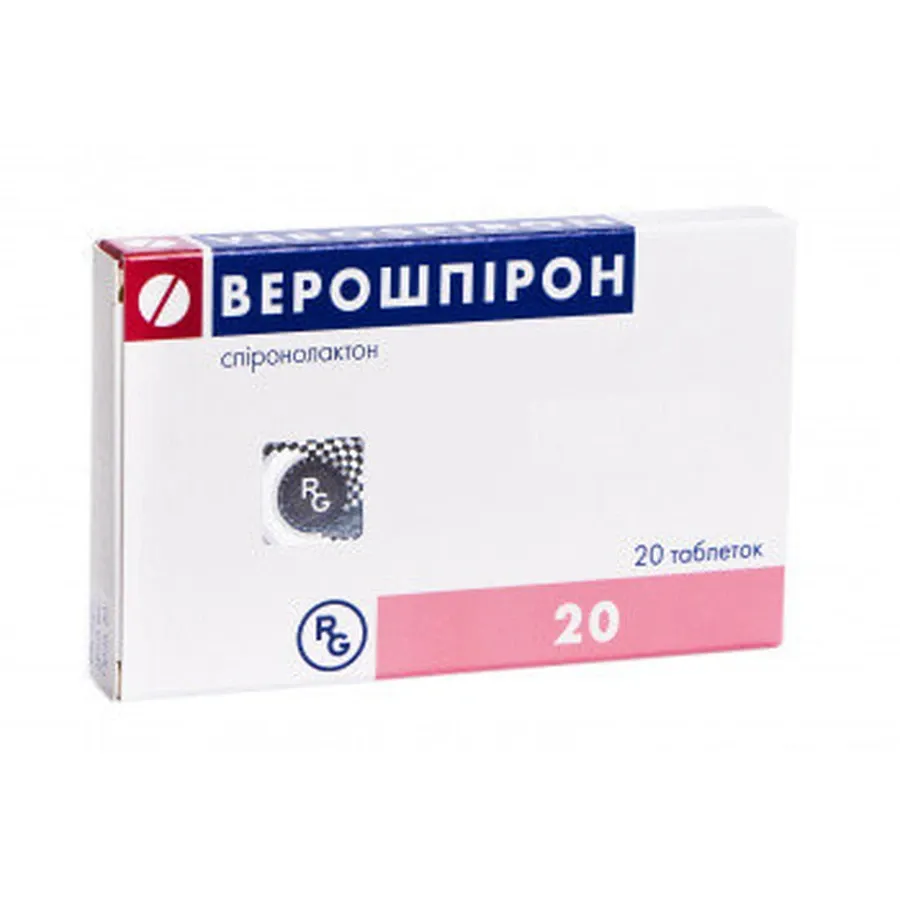
Table of Contents
INSTRUCTIONS FOR MEDICAL USE OF THE MEDICINAL PRODUCT VEROSSPIRON (VEROSPIRON)
Composition:
Active substance: spironolactone;
1 tablet contains 25 mg of spironolactone;
Excipients: colloidal anhydrous silicon dioxide, magnesium stearate, talc, maize starch, lactose monohydrate.
Pharmaceutical form. Tablets.
Main physicochemical properties: almost white, flat, round tablets with a bevelled edge, with a characteristic mercaptan odour, marked "VEROSPIRON" on one side, approximately 9 mm in diameter.
Pharmacotherapeutic group. Potassium-sparing diuretics, aldosterone antagonists.
ATC code C03D A01.
Pharmacological properties.
Pharmacodynamics.
Spironolactone is a competitive antagonist of aldosterone. It acts on the distal renal tubules.
By blocking aldosterone, it inhibits water and Na+ retention and promotes K+ retention, thereby not only increasing the excretion of Na+ and Cl− but also reducing the excretion of K+ in urine, as well as decreasing H+ excretion. As a result, the diuretic effect also has antihypertensive activity.
RALES Study
The Randomized Aldactone Evaluation Study (RALES) was a double-blind, multicenter trial involving 1663 patients with an ejection fraction of ≤35% and documented heart failure within 6 months prior to enrollment, classified as NYHA class IV at enrollment and presenting with NYHA class III–IV heart failure at randomization. All patients were receiving loop diuretics, 97% were taking ACE inhibitors, and 78% were receiving digoxin (beta-blockers were not widely used at the time of the study, with only 15% of patients receiving beta-blockers). Patients with baseline serum creatinine concentration >2.5 mg/dL or baseline serum potassium >5.0 mEq/L were excluded from the study. Patients who experienced a 25% increase in serum potassium compared to baseline were also excluded. Patients were randomized in a 1:1 ratio to receive either spironolactone 25 mg once daily or placebo. For patients tolerating the 25 mg daily dose well, the dose could be increased to 50 mg daily based on clinical judgment. For patients not tolerating 25 mg daily, the spironolactone dose was reduced to 25 mg every other day. The primary endpoint in the RALES study was all-cause mortality. After a mean follow-up of 24 months, the RALES study was terminated early because an interim analysis revealed a significant reduction in mortality in the spironolactone group. Spironolactone reduced the risk of death by 30% compared to placebo (p <0.001; 95% confidence interval from 18% to 40%). Furthermore, spironolactone significantly reduced the risk of cardiac death, particularly sudden cardiac death and death due to progression of heart failure, as well as the risk of hospitalization for cardiac causes. Improvements in NYHA functional class were more favorable in the spironolactone group. Gynecomastia and breast pain occurred in 10% of men receiving spironolactone compared to 1% in the placebo group (p <0.001). The incidence of severe hyperkalemia was similarly low in both patient groups.
Pharmacokinetics.
Spironolactone is rapidly and completely absorbed from the gastrointestinal tract. It is highly bound to plasma proteins (approximately 90%). Spironolactone undergoes rapid metabolism in the human body. The pharmacologically active metabolites of spironolactone are 7-alpha-thiomethylspironolactone and canrenone. Although the elimination half-life of unchanged spironolactone in blood is short (1.3 hours), the half-lives of the active metabolites are longer (ranging from 2.8 to 11.2 hours). Metabolites are primarily excreted by the kidneys, with minor amounts eliminated via the gastrointestinal tract. Spironolactone and its metabolites cross the placenta and are excreted in breast milk.
After administration of 100 mg spironolactone daily for 15 days to healthy volunteers under fasting conditions, the time to reach maximum plasma concentration (tmax), maximum plasma concentration (Cmax), and elimination half-life (t1/2) of spironolactone were 2.6 hours, 80 ng/mL, and approximately 1.4 hours, respectively. For the metabolites 7-alpha-thiomethylspironolactone and canrenone, tmax values were 3.2 hours and 4.3 hours, Cmax values were 391 ng/mL and 181 ng/mL, and t1/2 values were 13.8 hours and 16.5 hours, respectively.
Renal activity after a single dose of spironolactone peaks at 7 hours and persists for at least 24 hours.
Clinical Characteristics.
Indications.
- Congestive heart failure in cases where the patient does not respond to treatment with other diuretics or when there is a need to potentiate their effects.
- Essential arterial hypertension, primarily in cases of hypokalemia, usually in combination with other antihypertensive agents.
- In cases of liver cirrhosis associated with edema and/or ascites.
- For the treatment of primary hyperaldosteronism.
- For edema caused by nephrotic syndrome.
- For the treatment of hypokalemia when alternative therapy is not feasible.
- For the prevention of hypokalemia in patients receiving cardiac glycosides, when other approaches are considered inappropriate or unsuitable.
Contraindications.
- Hypersensitivity to the active substance or to any of the excipients.
- Anuria.
- Acute renal failure.
- Severe impairment of kidney function (glomerular filtration rate <10 mL/min).
- Heart failure if glomerular filtration rate is less than 30 mL/min or serum creatinine concentration exceeds 220 µmol/L.
- Hyperkalemia.
- Hyponatremia.
- Addison's disease.
- Concomitant use of eplerenone or other potassium-sparing diuretics.
- Pregnancy or breastfeeding.
Interaction with other medicinal products and other forms of interaction.
Concomitant administration of Verospiron with:
- other potassium-sparing diuretics, ACE inhibitors, angiotensin II receptor antagonists, aldosterone blockers, potassium supplements, or adherence to a potassium-rich diet, or use of potassium-containing salt substitutes, may lead to the development of severe hyperkalemia.
- Besides medicinal products that reliably cause hyperkalemia, concomitant use of trimethoprim/sulfamethoxazole (an antibiotic, so-called co-trimoxazole) with spironolactone may result in clinically significant hyperkalemia.
- Concomitant use of other diuretics enhances diuresis.
- Immunosuppressants, cyclosporine, and tacrolimus may increase the risk of hyperkalemia induced by spironolactone.
- Cholestyramine, ammonium chloride may also increase the risk of hyperkalemia and hyperchloremic metabolic acidosis.
- Tricyclic antidepressants and antipsychotic drugs may enhance the antihypertensive effect of spironolactone.
- Antihypertensive agents — spironolactone potentiates the effect of antihypertensive drugs; therefore, their dosage may need to be reduced and subsequently adjusted as necessary when used concomitantly with spironolactone. Since ACE inhibitors reduce aldosterone production, drugs of this class should not be used concomitantly with spironolactone on a long-term basis, especially in patients with established renal impairment.
- Concomitant use with nitroglycerin, other nitrates, or vasodilators may enhance the antihypertensive effect of spironolactone.
- Alcohol, barbiturates, or narcotic drugs may potentiate spironolactone-related orthostatic hypotension.
- Pressor amines (norepinephrine) — spironolactone reduces vascular responses to norepinephrine. Therefore, caution should be exercised during local or general anesthesia in patients taking spironolactone.
- Nonsteroidal anti-inflammatory drugs (NSAIDs) — in some patients, the use of nonsteroidal anti-inflammatory agents may reduce the diuretic, natriuretic, and antihypertensive effects of loop, potassium-sparing, and thiazide diuretics. Concomitant use of nonsteroidal anti-inflammatory agents (e.g., acetylsalicylic acid, indomethacin, mefenamic acid) with potassium-sparing diuretics may lead to the development of severe hyperkalemia. Thus, when spironolactone is used concomitantly with NSAIDs, careful monitoring of the patient is required to ensure the desired diuretic effect.
- Glucocorticoids, adrenocorticotropic hormone (ACTH) — may increase the rate of electrolyte excretion, particularly hypokalemia may occur.
- Digoxin — spironolactone may increase the half-life of digoxin, which can lead to increased serum digoxin concentration and, consequently, enhanced toxicity. Dose reduction of digoxin may be required when spironolactone is administered. Close monitoring of the patient is necessary to prevent digoxin overdose or inadequate digitalization.
- Effect of the drug on laboratory test results — several cases of spironolactone or its metabolites affecting digoxin concentration measurements by radioimmunoassay have been reported in the literature. The clinical significance of this interaction remains unclear.
- In fluorometric analysis, spironolactone may interfere with the measurement of compounds with similar fluorescence parameters (e.g., cortisol, adrenaline).
- Spironolactone binds to the androgen receptor and may increase prostate-specific antigen (PSA) levels in patients with prostate cancer receiving abiraterone. Concomitant use with abiraterone is not recommended.
- Antipyrine — spironolactone accelerates antipyrine metabolism.
- Lithium preparations — lithium preparations should generally not be used concomitantly with diuretics. Diuretics reduce renal clearance of lithium and increase the risk of lithium toxicity.
- Carbenoxolone — may cause sodium retention and, consequently, reduce the effectiveness of spironolactone. Concomitant use of carbenoxolone and spironolactone should be avoided.
- Carbamazepine — when used concomitantly with diuretics, the drug may cause clinically significant hyponatremia.
- Heparin, low molecular weight heparin — concomitant use with spironolactone may lead to severe hyperkalemia.
- Coumarin derivatives — the drug reduces the effectiveness of this group of agents.
- Spironolactone may enhance the effect of GnRH (gonadotropin-releasing hormone) analogs: triptorelin, buserelin, gonadorelin.
- Mitotane — spironolactone may reduce plasma mitotane levels in patients with adrenocortical carcinoma receiving mitotane; therefore, it should not be used concomitantly with mitotane.
Special precautions for use.
- Spironolactone should be used with special caution in patients whose underlying disease may provoke the development of acidosis and/or hyperkalemia.
- Patients with diabetic nephropathy have an increased risk of developing hyperkalemia.
- Administration of spironolactone may cause a transient increase in blood urea nitrogen (BUN), particularly in the presence of impaired renal function and hyperkalemia. Spironolactone may cause reversible hyperchloremic metabolic acidosis. Therefore, when administering the drug to patients with impaired renal or hepatic function, as well as elderly patients, regular monitoring of serum electrolytes and renal function is required.
- Concomitant use of spironolactone with agents that may cause hyperkalemia (e.g., other potassium-sparing diuretics, ACE inhibitors, angiotensin II receptor antagonists, aldosterone blockers, heparin, low molecular weight heparin, potassium supplements, potassium-rich diet, or use of potassium-containing salt substitutes) may lead to the development of severe hyperkalemia.
- Hyperkalemia may result in a fatal outcome. Monitoring and correction of potassium levels are critically important in patients with severe heart failure receiving spironolactone. The drug should not be used concomitantly with other potassium-sparing diuretics. Potassium supplements are contraindicated in patients with serum potassium levels above 3.5 mEq/L. Recommended monitoring frequency for potassium and creatinine levels is: one week after initiation of spironolactone or dose increase, monthly during the first 3 months, then quarterly for one year, and thereafter every 6 months. If serum potassium exceeds 5 mEq/L or creatinine exceeds 4 mg/dL, spironolactone should be temporarily or permanently discontinued (see section "Dosage and administration").
- Spironolactone should be used with special caution in patients with porphyria, as many drugs may provoke porphyria exacerbation.
- Alcohol consumption is prohibited during treatment with this drug.
- In patients with lactose intolerance, it should be noted that each Verospiron tablet contains 146.0 mg of monohydrate lactose. This medicinal product should not be administered to patients with such rare hereditary conditions as galactose intolerance, total lactase deficiency, or glucose-galactose malabsorption syndrome.
- This medicinal product contains less than 1 mmol (23 mg) of sodium per tablet, i.e., it is practically sodium-free.
Use during pregnancy or breastfeeding.
Pregnancy
Spironolactone has antiandrogenic effects in humans and therefore should not be used during pregnancy (see section "Contraindications"). Spironolactone or its metabolites cross the placental barrier. In pregnant rats treated with spironolactone, feminization of male fetuses has been observed, and endocrine disturbances were observed in offspring of both sexes after birth.
Breastfeeding
Metabolites of spironolactone have been detected in breast milk. If spironolactone treatment is necessary, breastfeeding should be discontinued and an alternative method of infant feeding should be used.
Ability to affect reaction speed when driving or operating machinery.
During the initial period, the duration of which is individual, driving vehicles and operating machinery associated with a high risk of injury is prohibited.
Subsequently, restrictions should be determined individually for each patient.
Method of Administration and Dosage
Dosage Regimens
Adults
Primary Hyperaldosteronism
For Diagnostic Purposes
Prolonged test: spironolactone is administered at 400 mg/day for 3–4 weeks. Correction of hypokalemia and arterial hypertension during treatment suggests the presence of primary hyperaldosteronism.
Short test: spironolactone is taken at 400 mg/day for 4 days. An increase in serum potassium levels during drug administration and a decrease after discontinuation suggest the presence of primary hyperaldosteronism.
Treatment
Prior to surgical treatment, spironolactone is administered at doses ranging from 100 to 400 mg/day. In patients not scheduled for surgery, the drug may be used as long-term maintenance therapy at the lowest effective dose, which should be determined individually. In such cases, the initial dose may be gradually reduced every 14 days until the minimum effective dose is reached. To reduce the severity of adverse effects during prolonged use, Verospiron is recommended to be used in combination with other diuretics.
Edema due to congestive heart failure or nephrotic syndrome
The initial daily dose is 100 mg, adjustable within the range of 25 to 200 mg/day, administered once or twice daily.
When higher doses are required, Verospiron may be used in combination with other diuretic classes acting in more proximal segments of the renal tubules. In such cases, Verospiron dosage should be adjusted accordingly.
Additional therapy in the treatment of severe heart failure (NYHA Class III–IV with ejection fraction ≤35%)
Based on results from randomized studies of spironolactone (RALES: see section "Pharmacodynamics"), if serum potassium does not exceed 5.0 mEq/L and serum creatinine concentration does not exceed 2.5 mg/dL, the initial dose of spironolactone should be 25 mg/day when added to standard baseline therapy. In patients who tolerate the 25 mg/day dose well, the dose may be increased to 50 mg/day based on clinical indications. For patients who do not tolerate the 25 mg/day dose, the dose may be reduced to 25 mg every other day (see section "Special Warnings").
Additional therapy in the treatment of arterial hypertension when previously used antihypertensive drugs are insufficiently effective
The initial dose of spironolactone when used concomitantly with other antihypertensive agents is 25 mg/day. If blood pressure has not reached target levels after 4 weeks, the dose may be doubled. In patients with arterial hypertension receiving drugs that may cause hyperkalemia (e.g., ACE inhibitors or angiotensin receptor blockers), serum potassium and creatinine levels should be evaluated before initiating spironolactone. Verospiron should not be administered to patients with serum potassium exceeding 5.0 mmol/L or serum creatinine exceeding 2.5 mg/dL. Serum potassium and creatinine levels should be closely monitored for 3 months after starting spironolactone.
Ascites and edema due to liver cirrhosis
If the urinary Na+/K+ ratio is greater than 1, the daily dose is 100 mg. If the ratio is less than 1, the dose should be between 200 and 400 mg/day.
The maintenance dose should be individually adjusted.
Hypokalemia
The drug is prescribed at a dose of 25–100 mg/day when potassium supplements or other potassium-sparing measures are insufficient.
Children
The initial daily dose is 1–3 mg/kg body weight, administered as a single dose or divided into 2–4 doses. For maintenance therapy or when used concomitantly with other diuretics, the dose of Verospiron should be reduced to 1–2 mg/kg body weight. A suspension may be prepared from crushed 25 mg tablets if necessary.
Elderly Patients
Treatment should begin with lower doses, gradually increasing until the maximum therapeutic effect is achieved. Hepatic and renal impairments should be taken into account, as they affect drug metabolism and excretion.
Additionally, when using the drug in elderly patients, the risk of hyperkalemia should be considered (see section "Special Warnings").
Method of Administration
The daily dose of spironolactone is generally taken after meals, once or twice daily. Administration of the full daily dose or the first portion of the daily dose is recommended in the morning.
Children
Use in pediatric practice only as prescribed by a physician.
Overdose
Symptoms
Spironolactone overdose may cause conditions and symptoms associated with adverse reactions observed during its use (e.g., drowsiness, confusion, maculopapular or erythematous rash, nausea, vomiting, dizziness, diarrhea). Hyponatremia or hyperkalemia may occur, particularly in patients with impaired renal function; in patients with severe liver disease, overdose may lead to hepatic coma.
Treatment: symptomatic; no specific antidote exists. Maintain fluid, electrolyte, and acid-base balance: administer potassium-wasting diuretics; parenteral administration of glucose with insulin; in severe cases, hemodialysis may be required.
Adverse reactions
Adverse reactions are caused by the competitive antagonism of spironolactone towards aldosterone (leading to increased potassium excretion) and by the antiandrogenic effect of spironolactone.
Adverse reactions are listed by system organ classes according to MedDRA and with frequency of occurrence as defined by MedDRA: very common (≥1/10); common (≥1/100 to <1/10); uncommon (≥1/1000 to <1/100); rare (≥1/10000 to <1/1000); very rare (<1/10000), frequency not known (cannot be estimated from the available data).
| Adverse reactions by system organ classes, according to MedDRA |
Very common |
Common |
Uncommon |
Rare |
Very rare |
Frequency not known |
| Benign, malignant and unspecified neoplasms (incl. cysts and polyps) |
Benign breast neoplasms |
|||||
| Blood and lymphatic system disorders |
Thrombocytopenia, agranulocytosis, eosinophilia, leukopenia |
|||||
| Immune system disorders |
Hypersensitivity |
|||||
| Endocrine disorders |
Hirsutism |
|||||
| Metabolism and nutrition disorders |
Hyperkalemia1 |
Hyperkalemia2 |
Hypokalemia, dehydration, porphyria |
Hyperchloremic acidosis |
||
| Psychiatric disorders |
Confusion |
|||||
| Nervous system disorders |
Somnolence3, headache |
Paralysis, paraplegia |
Dizziness, ataxia |
|||
| Cardiac disorders |
Arrhythmias4 |
|||||
| Vascular disorders |
Vasculitis |
Undesirable arterial hypotension |
||||
| Respiratory, thoracic and mediastinal disorders |
Change in voice pitch |
|||||
| Gastrointestinal disorders |
Nausea, vomiting |
Gastritis, ulcer, gastrointestinal hemorrhage, stomach pain, diarrhea |
||||
| Hepatobiliary disorders |
Hepatitis |
Liver function abnormalities |
||||
| Skin and subcutaneous tissue disorders |
Rash, urticaria |
Alopecia, eczema, annular erythema, lupus-like skin lesions |
Bullous pemphigoid6, hypertrichosis, Stevens-Johnson syndrome, pruritus, toxic epidermal necrolysis, drug reaction with eosinophilia and systemic symptoms (DRESS syndrome) |
|||
| Musculoskeletal and connective tissue disorders |
Osteomalacia |
Leg cramps |
||||
| Renal and urinary disorders |
Acute renal failure |
|||||
| Reproductive system and breast disorders |
Decreased libido, erectile dysfunction, gynecomastia (in males), breast tenderness, breast pain (in males), breast enlargement, menstrual disorders (in females) |
Infertility5 |
||||
| General disorders and administration site conditions |
Asthenia, fatigue |
|||||
| Investigations |
Increased blood urea nitrogen, increased serum creatinine |
Increased level of glycated hemoglobin (HbA1c) 6 |
1In patients with renal insufficiency and in patients receiving potassium-containing preparations.
2In elderly patients, in patients with diabetes mellitus, and in patients receiving concomitant ACE inhibitors.
3In patients with liver cirrhosis.
4In patients with renal insufficiency and in patients receiving potassium-containing preparations concomitantly with spironolactone.
5When the drug is used in high doses (450 mg/day).
6Usually during prolonged use.
Adverse effects usually resolve after discontinuation of spironolactone.
Reporting suspected adverse reactions
Reporting of adverse reactions following drug registration is of great importance. It enables continuous monitoring of the benefit-risk balance of the medicinal product. Healthcare professionals and patients or their legal representatives are encouraged to report all suspected adverse reactions and lack of efficacy via the automated pharmacovigilance information system at: https://aisf.dec.gov.ua/.
Shelf life. 5 years.
Storage conditions. Store in a place inaccessible to children, at a temperature not exceeding 25 °C.
Packaging. 20 tablets in a blister, 1 blister in a cardboard package.
Prescription status. Prescription only.
Manufacturers.
- Gedeon Richter Ltd., Hungary.
- Gedeon Richter Poland Sp. z o.o., Poland.
Manufacturer's name and address of the place of business.
- 19-21, Demrédi Street, H-1103 Budapest, Hungary.
- 5, Księdza J. Poniatowskiego Street, 05-825 Grójec Mazowiecki, Poland.